

You can, and it works — use a low-suction or shop vacuum with gentle attachments.
I’ve worked with artificial turf for years, testing cleaning methods on residential lawns and small commercial installs. This guide explains exactly how do you clean artificial turf with a vacuum, which vacuums work best, step-by-step techniques, common problems, and real-world tips I learned from hands-on use. Read on to learn safe, effective vacuum cleaning routines that keep turf fresh, extend its life, and save you time.
Why vacuum artificial turf?
Vacuuming removes loose debris fast. Leaves, sand, pet hair, and small grit sit on the turf surface and in the thatch layer. A vacuum pulls up these materials without the heavy wear that aggressive brushing or pressure washing can cause.
Vacuuming is especially useful when you want a quick clean between deeper maintenance sessions. It reduces odors by removing hair and organic matter that trap moisture. For pet owners, using a vacuum often prevents trapped waste from building up and making the turf smell.
Using a vacuum as part of your cleaning routine protects infill and fibers. Regular light vacuuming keeps the pile upright and evenly distributed. That helps the turf look natural longer and reduces the need for costly repairs.

Types of vacuums for artificial turf
Choosing the right machine matters. Different vacuums suit different debris and turf types.
-
Canister vacuums with adjustable suction
- Good for light debris and pet hair.
- Use low suction to avoid pulling fibers or displacing infill.
-
Upright vacuums with brush control
- Works if you can turn off the beater bar.
- Useful for surface cleaning but use caution to avoid fiber wear.
-
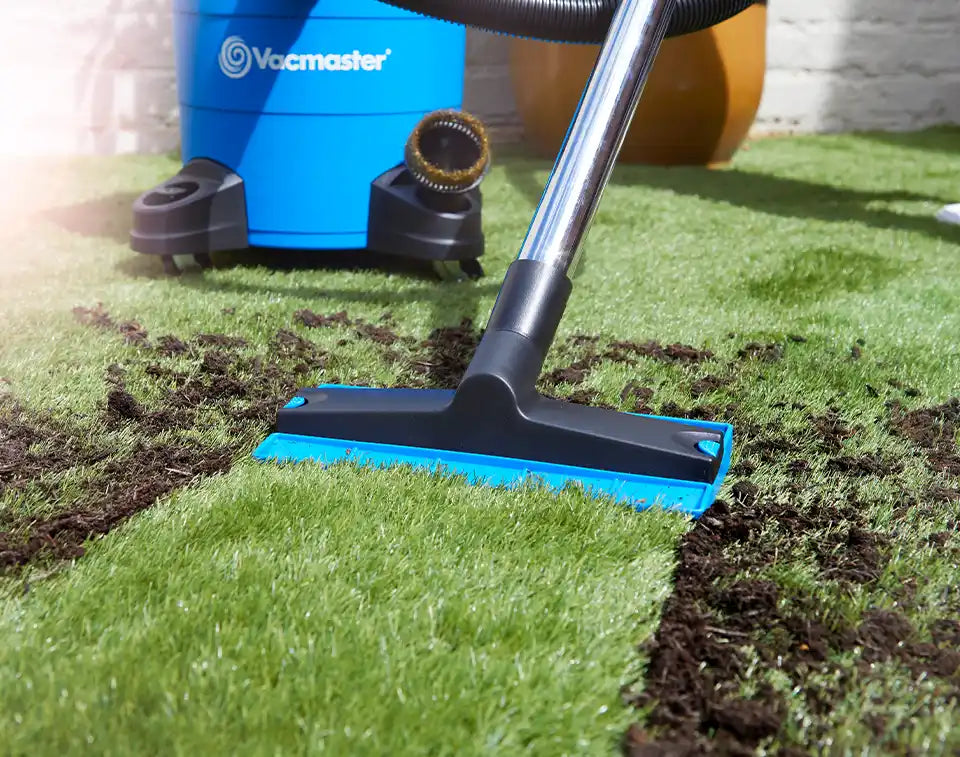
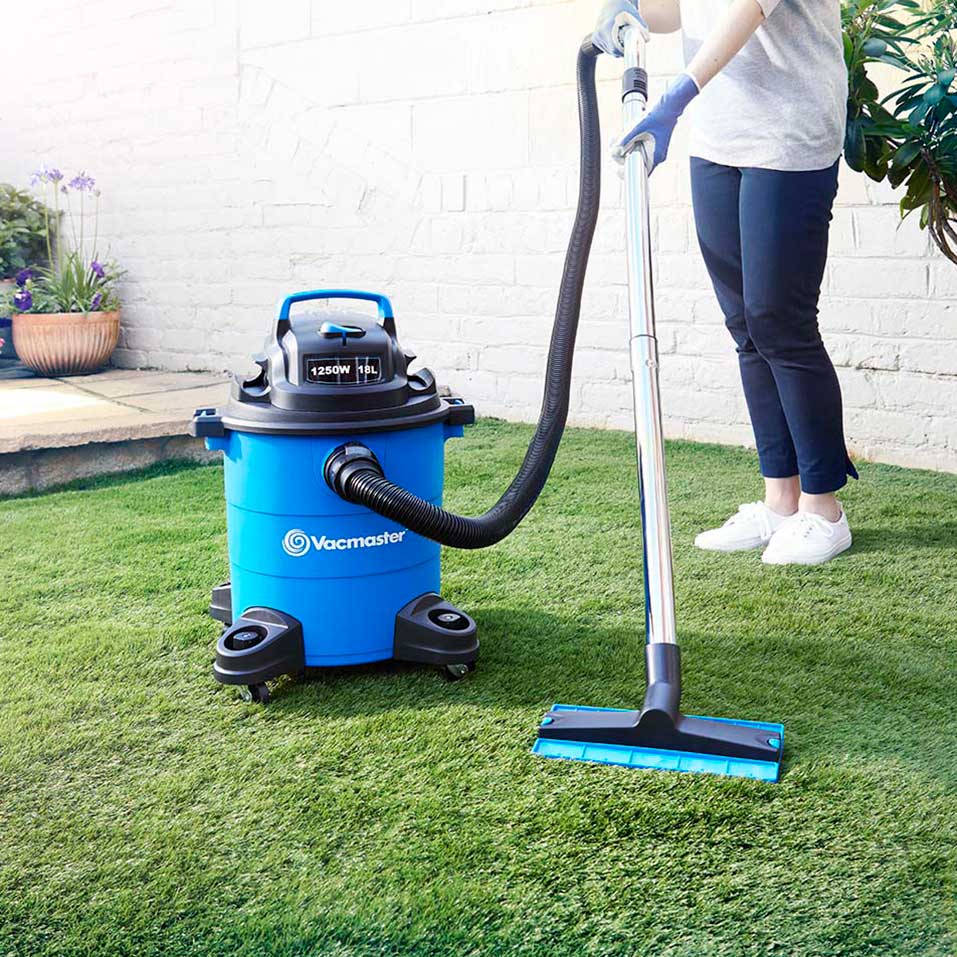
Wet/dry shop vacuums
- Best for heavy debris, sand, and liquid spills.
- Strong suction; use a wide nozzle and keep power low near seams.
-
Garden vacuums and leaf blowers with vacuum mode
- Great for leaves and bulky debris.
- Some models include collection bags; they’re handy but avoid too much suction.
-
Specialty turf vacuums
- Designed for athletic fields and plazas.
- They agitate, lift, and collect infill and debris but are expensive and usually for commercial use.
Match machine choice to the primary job. For pet hair and small debris, a canister or shop vac set to low power works best. For heavy leaves, a leaf-vac or blower combined with light vacuuming is efficient.
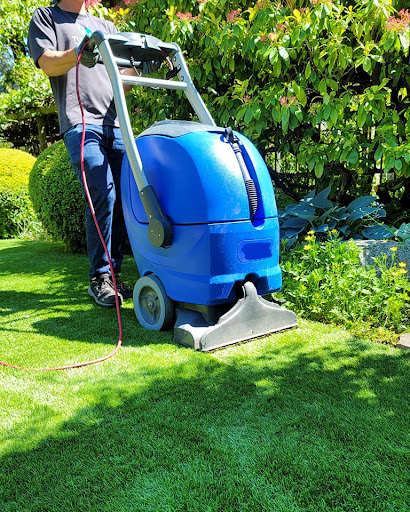
Step-by-step: How do you clean artificial turf with a vacuum?
Follow these clear steps for safe, effective vacuum cleaning.
-
Inspect the turf first
- Look for large items, broken glass, or loose seams.
- Remove sharp objects by hand to avoid damaging the vacuum or turf.
-
Choose the right vacuum and attachment
- Use a low-power setting if possible.
- Wide, soft nozzles work best to move over fibers without catching.
-
Test in a small area
- Vacuum a 2-foot square and check fibers and infill movement.
- If fibers lift or infill shifts, reduce suction or change tools.
-
Adjust direction and speed
- Move the vacuum along the grain of the turf pile.
- Use steady, slow passes rather than quick jerks to avoid pulling.
-
Handle pet waste and spills safely
- Remove solids by hand first, then vacuum the area.
- For urine or sticky spills, rinse lightly with water before vacuuming if your vacuum handles moisture.
-
Manage heavy debris
- Rake or use a leaf blower first to remove bulk material.
- Finish with a vacuum pass to capture the small grit and hair.
-
Finish with a light grooming
- Brush the turf lightly with a stiff broom or power rake to lift fibers.
- Redistribute any displaced infill as needed.
Personal tip: I once used a strong shop vac on a newly installed backyard turf and accidentally pulled a small patch of infill out from a seam. Now I always test and start on the lowest power. That single mistake taught me to respect suction settings and to keep seams and edges in mind.
Common challenges and solutions
Cleaning turf with a vacuum has pitfalls. Here are fixes that work.
-
Problem: Vacuum pulls up infill or lifts fibers
- Solution: Lower suction, use a wider nozzle, and work along pile direction.
-
Problem: Pet hair clings to fibers and resists vacuuming
- Solution: Use a rubber brush or pet-hair attachment before vacuuming. Repeat passes help remove embedded hair.
-
Problem: Sticky or oily spills clog the vacuum
- Solution: Blot and rinse the spot first. For oily stains, use a turf-safe degreaser diluted per label, rinse, then vacuum when mostly dry.
-
Problem: Debris builds in seams and edges
- Solution: Use a narrow crevice tool and low suction. Periodically inspect seams and reseal if debris keeps collecting.
-
Problem: Noisy or bulky equipment on residential turf
- Solution: Choose quieter canister vacuums or hand tools for small jobs. Schedule heavier cleaning for daytime.
I’ve tested solutions on various turfs. A rubber broom followed by a low-suction vacuum removed pet hair faster than vacuuming alone in my experience.

Maintenance schedule and tips
Set a routine to keep turf looking its best long-term.
-
Weekly
- Quick vacuum pass to remove leaves and hair.
- Spot clean pet accidents and rinse as needed.
-
Monthly
- Vacuum more thoroughly, including edges and seams.
- Inspect infill levels and redistribute if needed.
-
Quarterly
- Deep clean: power brush, rinse, and allow turf to dry completely.
- Check for wear, seam separation, and infill compaction.
-
Annually
- Consider professional deep cleaning for heavy traffic areas.
- Replenish infill and repair any seam or edge issues.
Extra tips
- Avoid high-pressure washing as a substitute for vacuuming; it can displace infill.
- Use eco-friendly cleaners when treating stains.
- Keep a small hand vacuum on hand for spot jobs — it saves time.
Routine vacuuming extends the life of turf by minimizing abrasive dirt and organic buildup. Small, frequent actions beat infrequent deep cleans.
Common search questions (PAA-style)
How often should I vacuum my turf?
- Vacuum high-traffic or pet areas weekly. Low-traffic lawns can be vacuumed every 2–4 weeks.
Can I use a household vacuum on artificial turf?
- Yes, but use the lowest suction and a wide, soft nozzle. Avoid rotating brushes and beater bars.
Will vacuuming remove sand infill?
- Light vacuuming removes loose sand at the surface but strong suction can pull infill. Use gentle passes or a shop vac on low.
Is vacuuming safe for turf fibers?
- When done with the right suction and attachment, vacuuming is safe. Always test in a small area first.
How long does turf take to dry after rinsing?
- Most turf dries in 2–12 hours depending on sun, airflow, and weather. Ensure full drying before heavy use.

Frequently Asked Questions of How do you clean artificial turf with a vacuum?
Can I use a regular vacuum cleaner on my artificial turf?
Regular vacuums can work for light debris if they allow low suction and have a soft nozzle. Avoid models with rotating brushes that can pull fibers.
How do I remove pet hair from artificial turf?
Start with a rubber broom or brush to loosen hair, then run a low-suction vacuum in the direction of the pile. Repeat short passes for best results.
Will vacuuming damage turf seams or edges?
Improper vacuuming with high suction can tug at seams. Protect edges by using low power and lighter tools near seams.
Should I vacuum after watering or rain?
Wait until the turf surface is mostly dry to prevent vacuuming wet debris that clogs the machine. Light vacuuming is fine once the grass feels dry to the touch.
What attachment works best for turf vacuuming?
A wide, flat nozzle or soft brush attachment spreads suction over a larger area and reduces fiber stress. Crevice tools help with edges and seams.
Conclusion
Vacuuming is a safe, effective way to keep artificial turf clean when you pick the right machine, use low suction, and follow a simple routine. Start with inspection and testing, remove big debris by hand, and finish with gentle vacuum passes and light grooming. Small, regular efforts prevent buildup, cut odors, and keep turf looking natural.
Try a low-suction vacuum routine this week. Monitor the results, adjust settings, and share your experience or questions below — I’ll respond with practical tips based on real tests and fieldwork.

