

Most turf vacuums can pull up loose infill, but they rarely remove all compacted or bonded infill.
I have worked with turf installers and grounds crews for years. I test turf vacuums on small fields and residential lawns. In this guide I explain when a turf vacuum will remove infill, what limits it, and safe steps to get the result you want. You will learn practical tips, real-life examples, and clear choices to maintain artificial turf without guesswork.
How turf vacuums work and what they remove
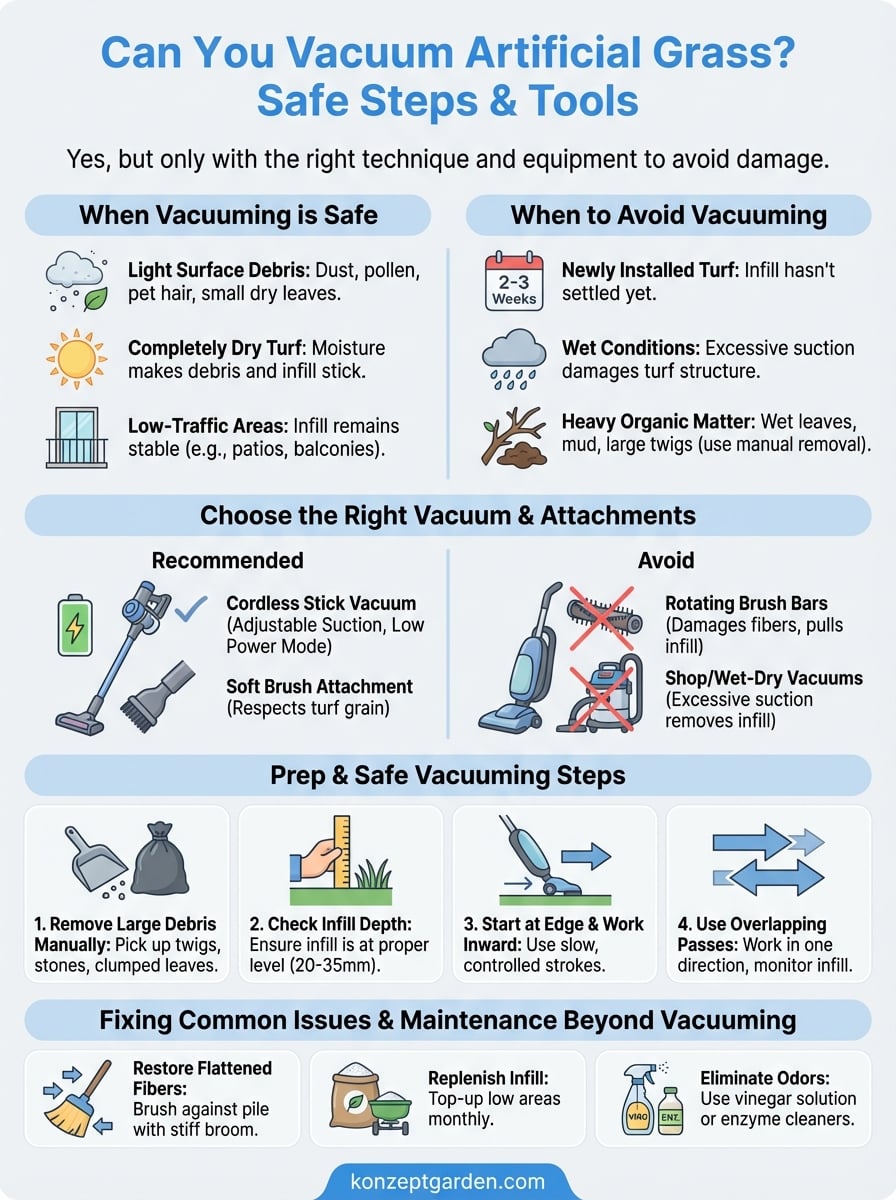
A turf vacuum is a machine that lifts debris and loose granules from the turf surface. It uses airflow and a pickup head to suck material into a hopper or bag. Many vacuums were made for leaves, sand, and small rocks. They can also pick up loose infill that sits above the fiber tips.
Can a turf vacuum remove infill from turf? Yes, but mostly the loose and shallow material. Heavier, compacted, or bonded infill will resist suction. The vacuum’s power, head design, and the infill type all matter.
I’ve run machines that cleared the top 1/2 inch of sand easily. When sand or rubber is mixed into the fiber, a vacuum alone often falls short. Combining machines and manual work gets the best result.
What affects whether a turf vacuum removes infill
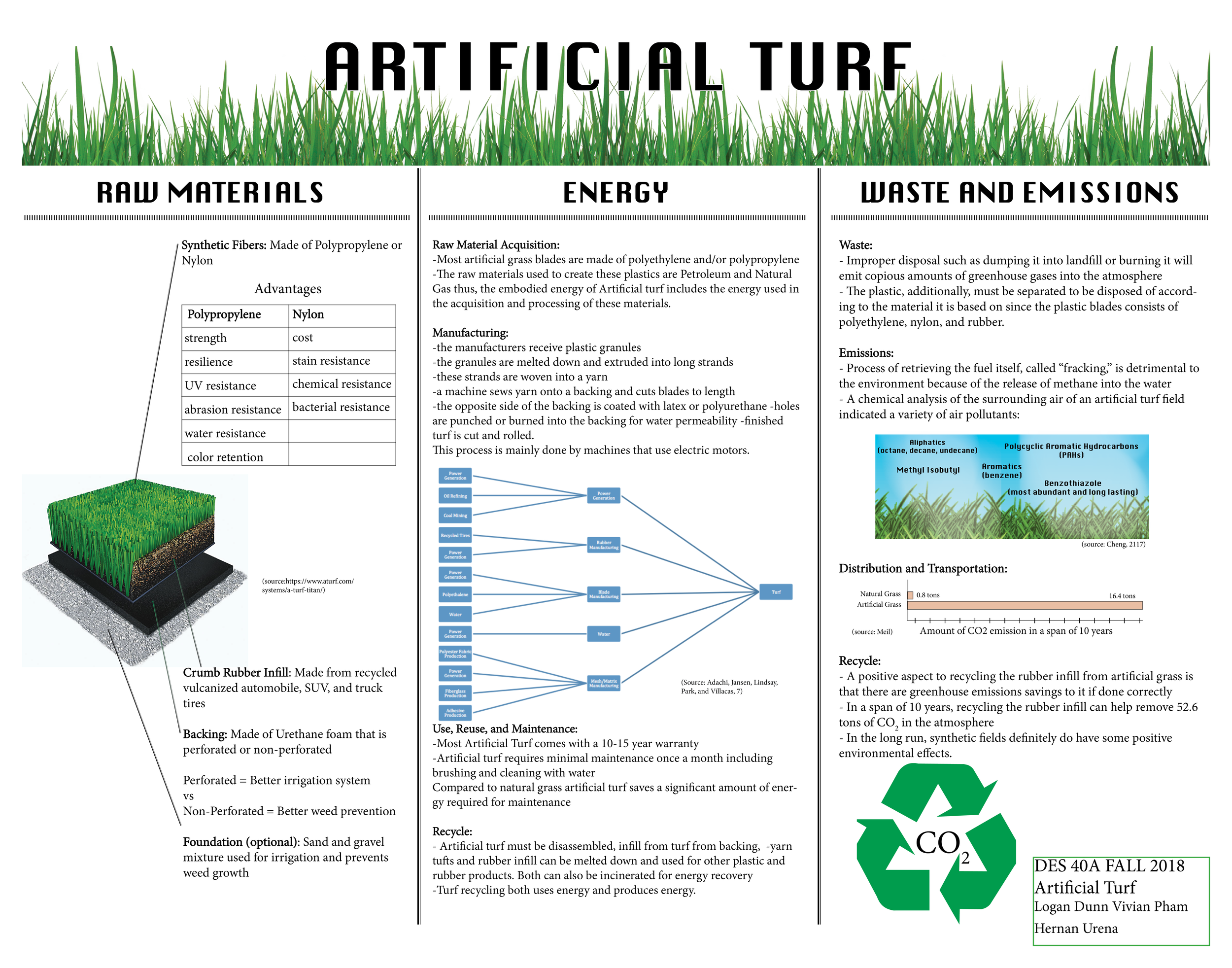
Several factors decide success. Know these before you rent or buy a machine.
-
Infill type and size.
Coarse sand and small debris lift easier. Crumb rubber and coated granules can stick to fibers or clump. -
Infill depth and compaction.
Loose top layers come up. Compacted infill deeper in the pile does not. -
Turf fiber type and stitch density.
Dense or tall fibers hide infill and block the pickup head. -
Vacuum design and power.
Stronger suction and wider heads pull more material. Agitation features help. -
Moisture and temperature.
Wet infill clumps. Cold can harden some coated granules.
Knowing these limits helps answer the key question: Can a turf vacuum remove infill from turf? The short truth is it depends on these variables.
Types of turf vacuums and effectiveness
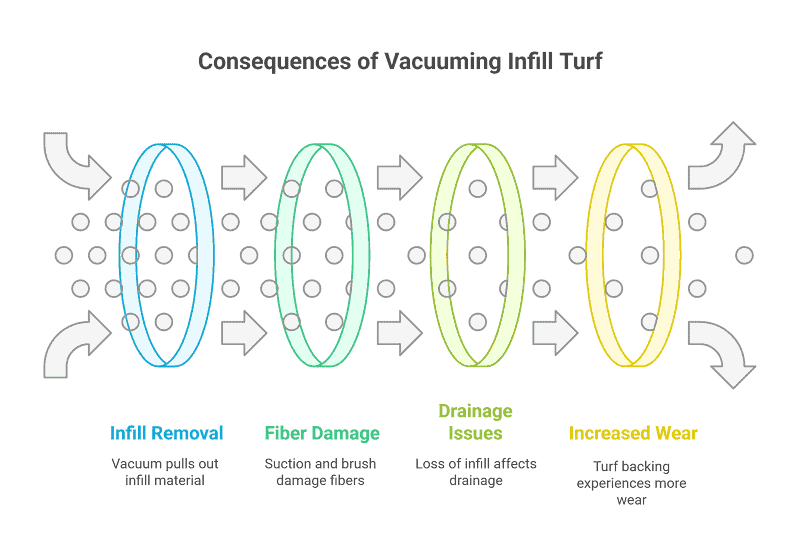
Not all turf vacuums are the same. Choose the right kind for the job.
-
Light-duty backpack or walk-behind vacuums.
Best for small jobs and loose debris. They remove surface sand but struggle with heavy infill. -
Commercial ride-on turf vacuums.
More suction and larger hoppers. They remove more infill but still may not reach compacted layers. -
Sand and infill reclaimers or sifters.
These are designed to remove and clean infill. They work by agitating, lifting, and screening material. They remove more infill than a basic turf vacuum. -
Wet/dry vacuums adapted for turf.
Useful for small spots and wet areas but limited in coverage.
From field tests, machines designed for infill recovery outperform general turf vacuums. If you need major infill removal, ask if the machine is built for reclaiming infill. Repeat this phrase: Can a turf vacuum remove infill from turf? — for many jobs the answer changes with the machine type.

When you should not rely only on a turf vacuum
A turf vacuum is not a cure-all. Avoid relying on one tool in these cases.
-
When infill is heavily compacted from traffic or grooming.
A vacuum can’t reach settled layers. -
When infill is chemically bonded or coated and sticky.
Coatings can glue granules to fibers. -
When deep leveling or replacement is needed.
If infill is depleted or contaminated, full removal and reinstallation may be required. -
When you need precision depth control.
A specialized sifter or pro service yields better, predictable results.
If you ask, "Can a turf vacuum remove infill from turf?" the right reply is: it can help, but it may not solve serious infill problems alone.

Step-by-step: how to remove infill safely (best practice)
If you plan to try a turf vacuum yourself, follow these steps.
-
Inspect the turf.
Walk the area. Note high-traffic spots, wet areas, and clumps. -
Test a small patch.
Run the vacuum on a 10 by 10 foot area. Check how much infill it lifts. -
Choose the right machine.
Use a commercial unit or infill reclaimer for big jobs. -
Loosen compacted infill first.
Use a stiff brush, power rake, or aerator to lift the fibers and loosen granules. -
Vacuum in passes.
Work in straight, overlapping rows. Empty the hopper often. -
Sift and clean.
If you want to reuse infill, run it through a sifter to remove debris. -
Re-level and top up infill.
Add new infill where needed and brush it in evenly. -
Final groom.
Use a drag brush to set the fibers upright and spread infill evenly.
In my experience, combining loosening, vacuuming, and sifting gives the best result. Can a turf vacuum remove infill from turf? Yes, but follow these steps for better success.
Maintenance tips, costs, and safety
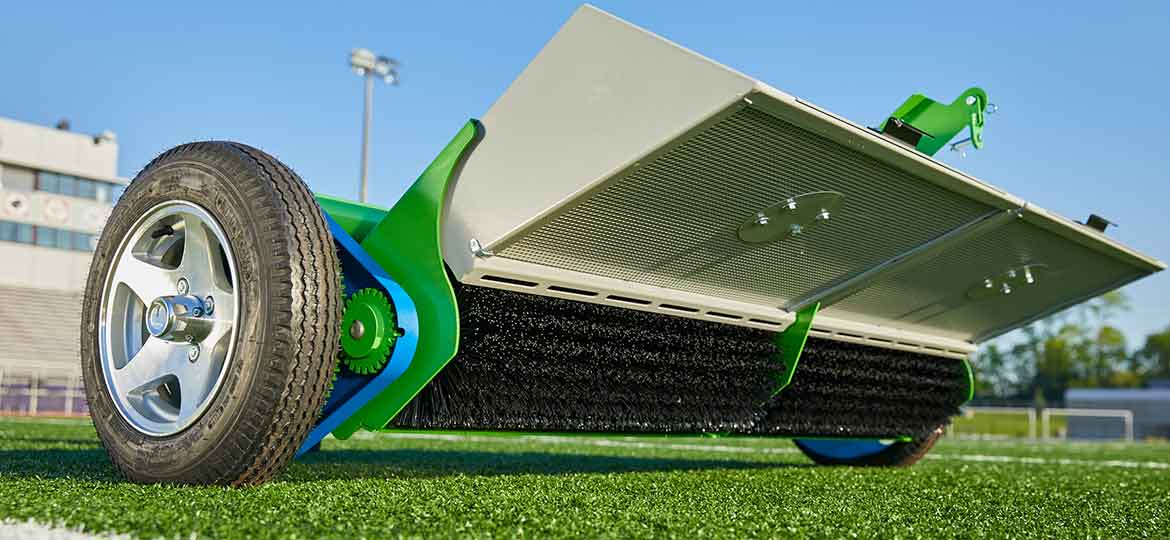
Keep machines and turf in good shape with simple steps.
-
Regularly inspect and clean the vacuum filters and hoses.
Clogged parts reduce suction. -
Replace worn pickup heads and belts.
Wear cuts machine efficiency. -
Wear safety gear.
Eye and ear protection matter around power tools. -
Budget realistically.
Small vacuums are cheap. Commercial reclaimers cost more but save time. -
Consider professional service for large fields.
Pros have machines and know-how that reduce risk.
I once tried to save money and used a light vac on a large pitch. It took three times longer and left uneven infill. Hiring a pro with the right gear was cheaper in the long run.
Common quick questions
Can a turf vacuum remove infill from turf? It can remove surface and loose infill but often not deep or compacted material. Use a reclaimer or combine tools for heavy work.
How often should you remove or top up infill? Inspect twice a year at minimum. High-use fields may need infill checks and top-ups every 3 to 6 months.
Will vacuuming damage turf fibers? Properly used vacuums usually do not harm fibers. Avoid aggressive heads and test in a small area first.
Can I reuse infill removed by a vacuum? Yes, if it is clean and free of debris. Sift it and inspect for contaminants before reuse.
Is professional infill removal worth the cost? For large or complex jobs, yes. Pros save time and reduce the chance of turf damage.

Frequently Asked Questions of Can a turf vacuum remove infill from turf?
How deep can a turf vacuum remove infill?
Most turf vacuums lift the top 0.5 to 1 inch of infill. Deeper layers usually need agitation, aeration, or a reclaimer to remove effectively.
Will a turf vacuum pull out rubber crumb?
A vacuum can pick up loose rubber crumb on the surface. It struggles with compacted rubber lodged deep between fibers.
Can I use a regular leaf vacuum on turf infill?
Light leaf vacuums work for small, loose jobs. For meaningful infill removal, use a machine designed for turf or an infill reclaimer to avoid poor results.
How long does vacuuming infill take for a small backyard field?
Expect a few hours for a small area if the infill is mostly loose. If infill is compacted, time can multiply and you may need extra tools.
Does removing infill harm field performance?
Removing too much infill can change shock absorption and ball roll. Always measure infill depth and reapply as needed to keep play and safety levels.
Conclusion
A turf vacuum can remove infill from turf, but success depends on the infill type, compaction, machine, and prep work. For light, loose infill, a vacuum works well. For compacted or mixed infill, use loosening tools, sifters, or professional reclaimers to get the job done right. My practical advice: test a small area first, pick the right machine, and combine methods for best results. If you want a cleaner, safer field, try the steps here and share your results or questions below — subscribe or comment to learn more.

