

Yes — with care: many regular vacuums can work on artificial turf if you follow precautions.
I’ve cleaned dozens of synthetic lawns and tested tools to see what works. This guide explains whether "Can you use a regular vacuum on artificial turf?" — when it’s safe, which vacuums are best, step-by-step methods, common risks, and smart alternatives. Read on to learn practical tips from real experience so you avoid damage and keep turf looking great.
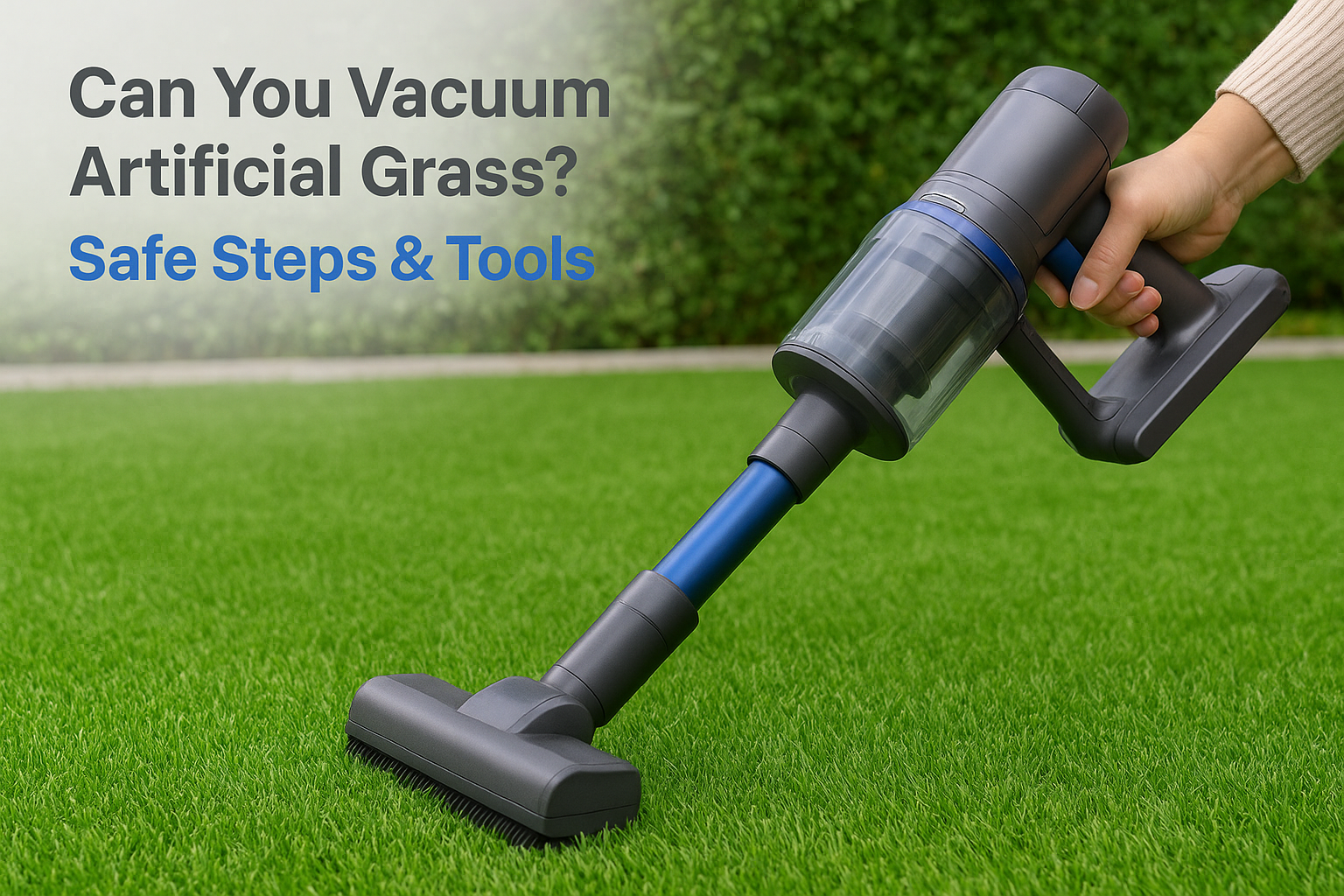
Why artificial turf needs specific cleaning
Artificial turf is made of synthetic fibers on a backing with infill material between the blades. Debris, pet hair, and fine dust collect in the turf and can make the surface look dull or trap odors. Regular cleaning keeps drainage working and reduces wear on the fibers. Using the wrong tool can pull seams, remove infill, or damage fibers, so choose your method wisely.

Can you use a regular vacuum on artificial turf?
Yes — you can use a regular vacuum on artificial turf, but you must pick the right vacuum type and settings. Upright vacuums with a powered brush roll can damage fibers or pull infill if the brush is aggressive. Canister vacuums and shop vacs often work better because you can control suction and avoid rotating brush bars.
Key points from experience:
- Turn off or disable the brush roll on uprights to prevent fiber fraying.
- Use low suction for loose infill and fine debris to avoid sucking up sand or crumb rubber.
- Test in a small hidden area before cleaning the full lawn.
I once used a standard canister vacuum on a small backyard turf and avoided the power head. It removed pet hair and leaves without pulling seams. That taught me to always test suction levels first and to fit a wide floor tool to spread pressure evenly.
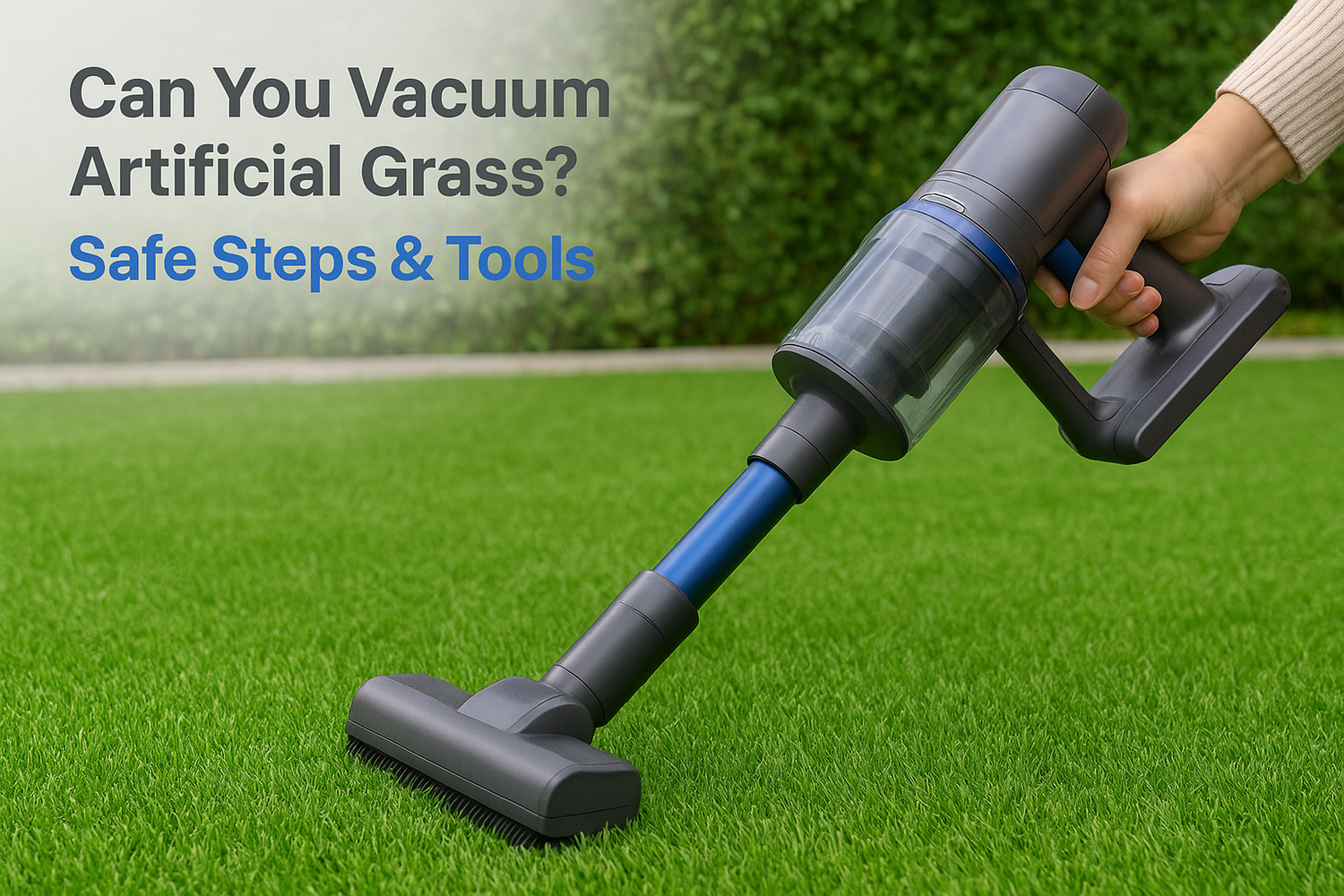
Best vacuums and alternatives for turf cleaning
Not every vacuum is equal. Choose tools based on debris type and turf construction.
Recommended vacuums
- Canister vacuum with adjustable suction and a wide floor nozzle. These are gentle and effective.
- Wet/dry shop vac for heavy debris or wet cleanup. Use a wide attachment and moderate suction.
- Battery-powered leaf vacuum for large yards with dry leaves. Works fast for surface debris.
Alternatives and supplements
- Leaf blower to remove loose leaves and dust without touching fibers.
- Turf rake or stiff nylon broom to lift fibers and redistribute infill.
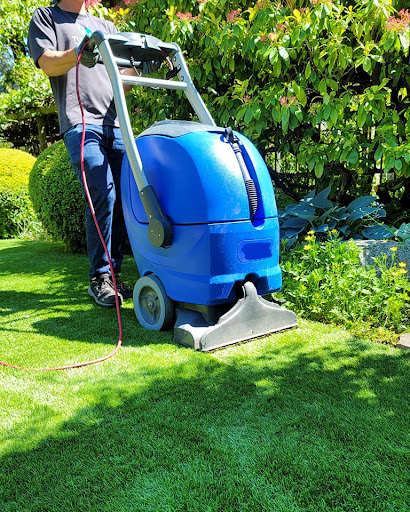
- Power broom or specialized turf sweeper for larger areas and commercial jobs.
- Hose and gentle spray for rinsing pet urine or dust (ensure proper drainage).
When choosing, consider turf pile height, infill type, yard size, and frequency of cleaning. For small jobs, a regular vacuum set carefully can be fine. For large or heavily soiled turf, a blower or power broom saves time and lowers risk.

Step-by-step guide to vacuuming artificial turf safely
Follow these steps to use a regular vacuum without causing harm.
- Inspect the turf
- Look for loose seams, exposed backing, or areas with sparse infill.
- Remove large debris by hand first.
- Adjust the vacuum
- Disable the rotating brush or set it to the highest height.
- Lower suction if possible to avoid pulling infill.
- Use the right attachment
- Fit a wide, flat floor tool or soft-bristle nozzle to spread suction.
- Avoid narrow or deep-bristled heads that dig into the pile.
- Work in sections
- Vacuum small sections with slow, even passes.
- Move across the grain of the turf to lift debris from between fibers.
- Check and refill
- Monitor the vacuum for clogs from infill or grit.
- Return any displaced infill with a turf rake or broom.
- Final touch
- Use a stiff nylon broom to lift fibers and restore appearance.
- Rinse only if needed and ensure water drains properly.
These steps minimize damage. If the vacuum tries to pull material, stop and switch to a blower or manual cleaning.
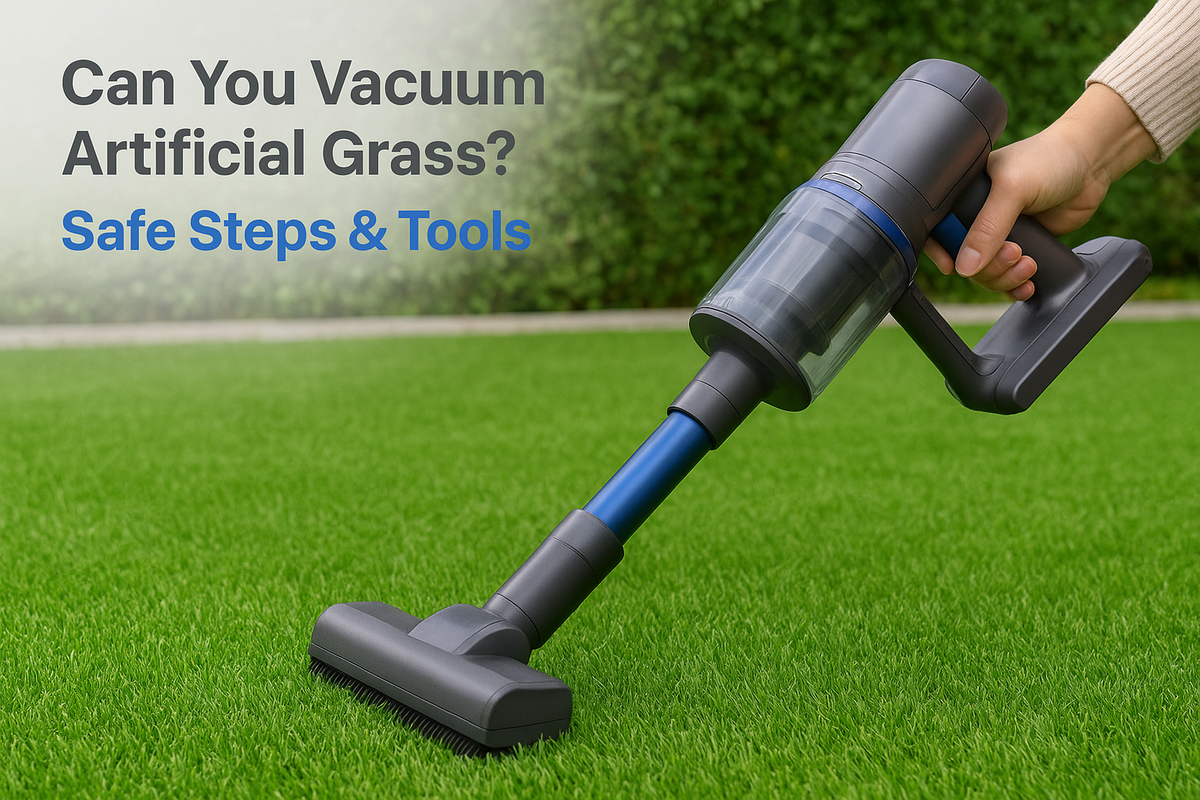
When not to use a regular vacuum and potential risks
There are times to avoid a regular vacuum. High-risk situations include:
- Freshly installed turf with loose seams or unfinished edges.
- Turf with loose crumb rubber or very fine sand infill that can clog or be sucked out.
- Areas with heavy pet waste or sticky spills that require rinsing.
Risks to watch for
- Pulled fibers or frayed edges from brush rolls.
- Loss of infill leading to uneven surfaces and premature wear.
- Clogged vacuum motors from sand and grit.
- Seams coming apart if vacuum head catches backing.
If you see any damage or the vacuum struggles, stop immediately and switch tools. Sometimes gentle hand raking or a blower is safer and faster.
Maintenance schedule and practical tips
A simple, regular plan keeps turf in top shape.
Routine schedule
- Weekly: Remove leaves and light debris with a blower or broom.
- Monthly: Vacuum low-suction or brush lightly to remove hair and dust.
- Quarterly: Deep clean with a power broom or professional service if high traffic or heavy pet use.
- Annually: Inspect seams, check infill levels, and perform any repairs.
Practical tips
- Always remove solid pet waste promptly and rinse the area.
- Use enzyme-based cleaners for odors and bacteria when needed.
- Keep sand and crumb rubber levels even; add infill only where low.
- Store vacuums away from outdoor moisture to prevent damage.
From my experience, a short monthly vacuum with cautious settings keeps most residential turf looking fresh without risking damage. For commercial turf, schedule professional cleanings.

Frequently Asked Questions of Can you use a regular vacuum on artificial turf?
What types of vacuums are safest for artificial turf?
Canister vacuums with adjustable suction and wide floor nozzles are safest. Wet/dry shop vacs work for heavy debris when used carefully without excessive suction.
Will a vacuum remove the infill from my turf?
High suction or a narrow nozzle can remove fine infill. Use low suction and wide tools, and test on a small area first to avoid infill loss.
Can I use the brush roll on my upright vacuum?
Avoid using the brush roll. The rotating bristles can fray fibers and pull seams. Disable the brush or use a suction-only mode.
How often should I vacuum artificial turf?
Light vacuuming or surface cleaning once a month is enough for most yards. Increase frequency if you have pets or heavy foot traffic.
Is a leaf blower better than a vacuum for turf?
Leaf blowers are excellent for removing loose debris without touching fibers. For embedded dirt and pet hair, a vacuum or broom may be more effective.
Conclusion
Using a regular vacuum on artificial turf is possible when you choose the right machine, adjust settings, and follow safe steps. Test on a small area, avoid rotating brush heads, and use low suction to protect fibers and infill. Take action by setting a simple maintenance routine, trying a gentle vacuum test this week, and switching to a blower or professional service if you spot damage. Share your experiences or questions below, and subscribe for more turf-care tips.

