

A few key accessories make a standing desk efficient, comfortable, and healthier to use.
I’ve helped design and test home and office setups for years. I know which add-ons make a real difference for posture, focus, and cable chaos. This guide answers What accessories do I need for a standing desk? and walks you through essential picks, comfort upgrades, tech helpers, and buying tips so you can set up a balanced workspace that lasts.
Why accessories matter for a standing desk
Accessories turn a desk that can move into a desk that works. When you ask What accessories do I need for a standing desk? you are asking how to protect your body, simplify technology, and keep focus across long days. A bare adjustable desk can raise your monitor, but accessories help you stand correctly, switch positions easily, and avoid pain or distraction.
Good accessories reduce strain. They cut clutter. They help you move more often. That lowers fatigue and improves comfort and productivity. Think of accessories as the bridge between furniture and healthy habits.
Essential accessories everyone should consider
What accessories do I need for a standing desk? Start with the items that protect posture and make standing practical. These are the must-haves.
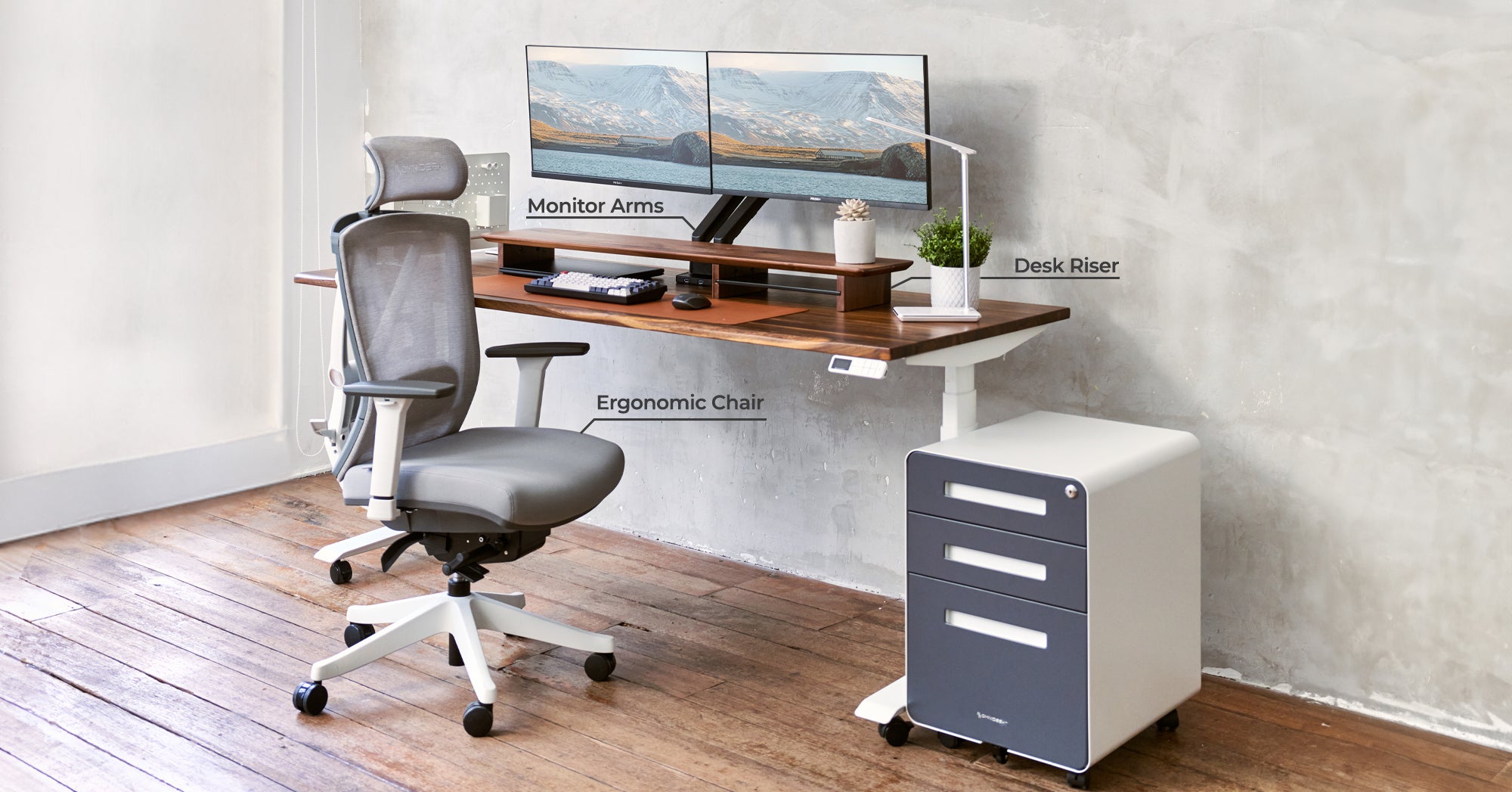
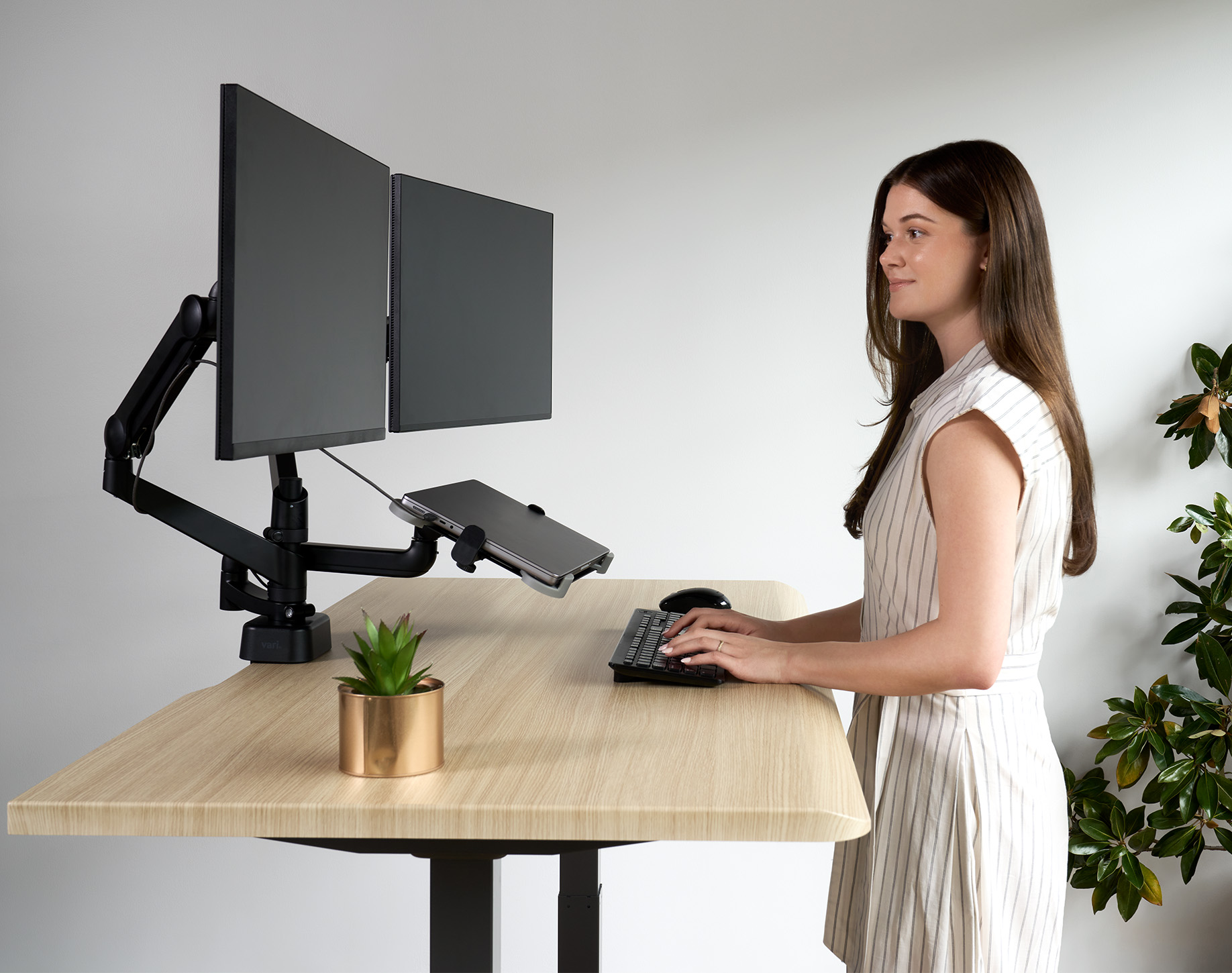
- Adjustable monitor arm — Raises and angles your screen to eye level. Keeps your neck neutral and reduces forward head posture.
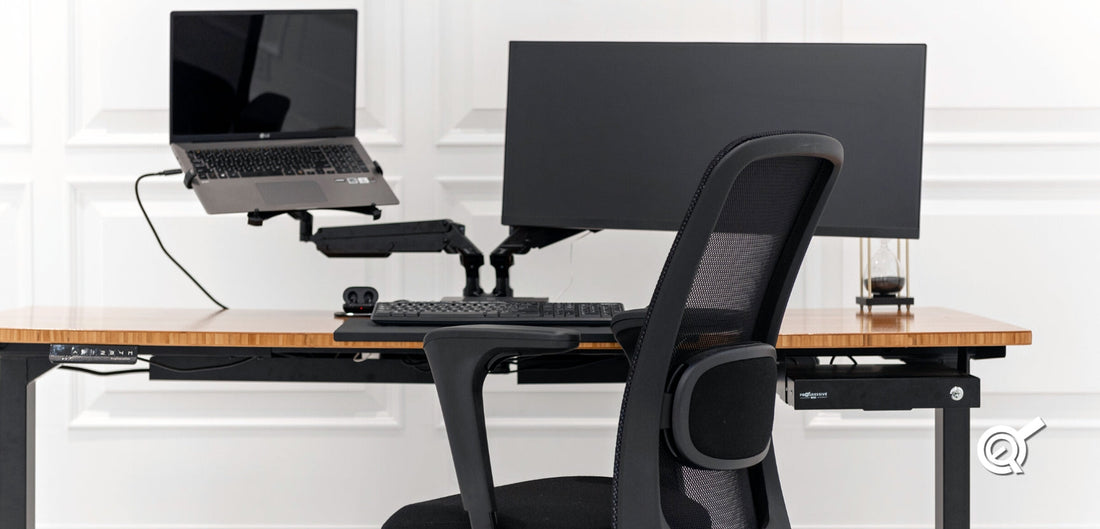
- Ergonomic keyboard tray or adjustable keyboard stand — Aligns wrists and forearms with your keyboard height to reduce strain.
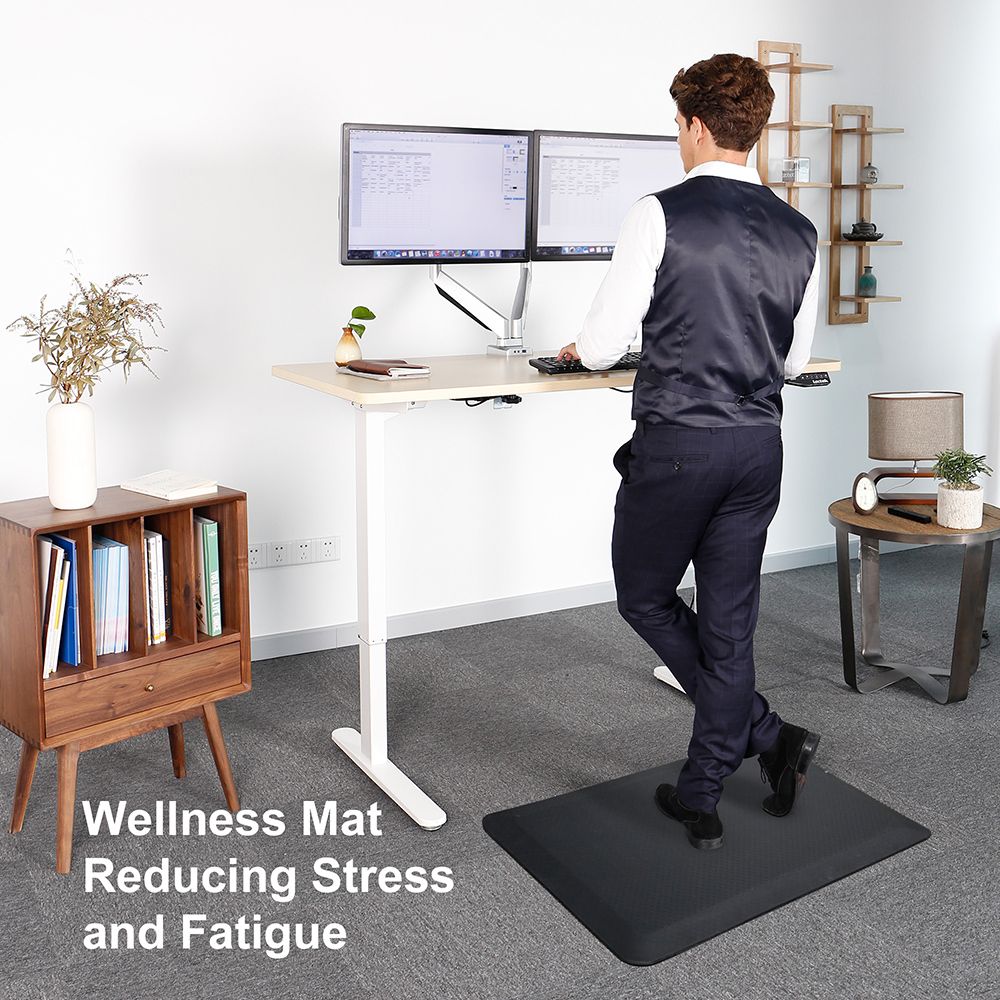
- Anti-fatigue mat — Cushions feet and encourages micro-movements to reduce leg and back fatigue.
- High-quality office chair — For sitting breaks, a supportive chair with lumbar support is vital.
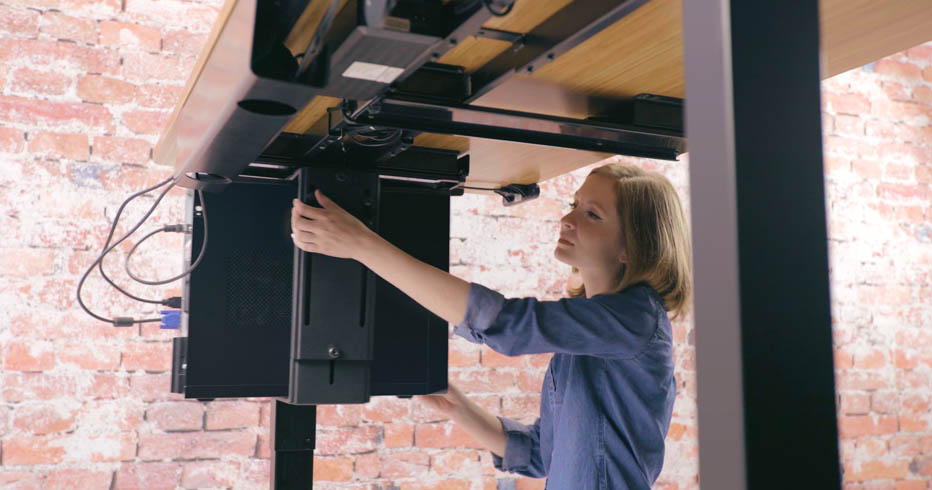
- Cable management system — Keeps wires tucked under the desk and off the floor for safety and neatness.
- Desk pad or surface protector — Protects finish and gives a consistent work surface for laptops and mice.
These basics solve most core issues. Spend on the mat and monitor arm first. They return comfort and focus fast.
Quick practical Q&A
What accessories do I need for a standing desk to be ergonomic? A monitor arm, adjustable keyboard solution, and an anti-fatigue mat are the core ergonomic items. They align your body and reduce strain when standing.
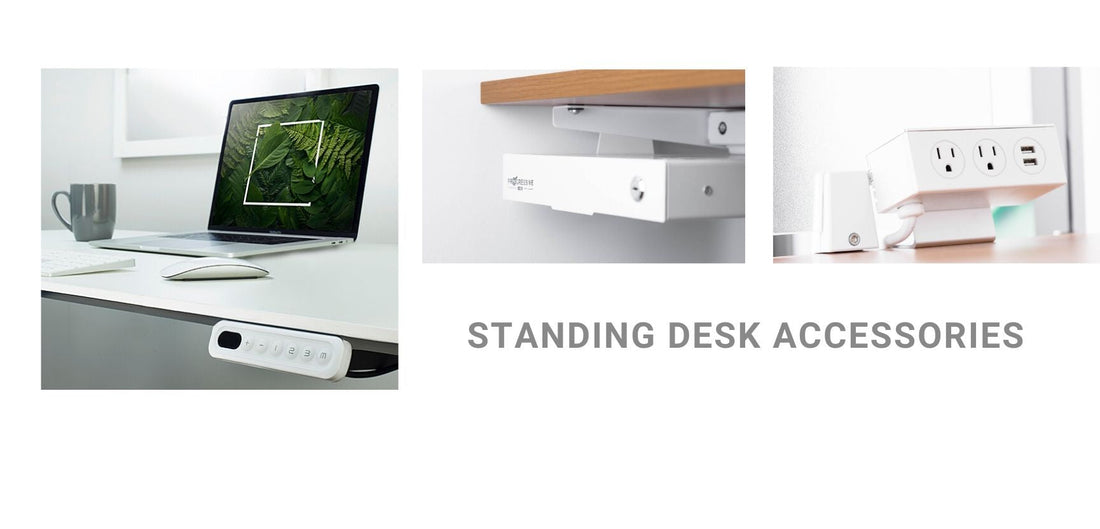
What accessories do I need for a standing desk to reduce clutter? Cable trays, clips, and a small power strip mounted under the desk will clear the surface and prevent tripping hazards.
Comfort and ergonomic upgrades
What accessories do I need for a standing desk? Beyond essentials, choose pieces that fine-tune comfort for long sessions.
- Footrest or foot rocker — Lets you shift weight and vary posture while standing or sitting.
- Wrist rest — Softens pressure on the palms when typing for long periods.
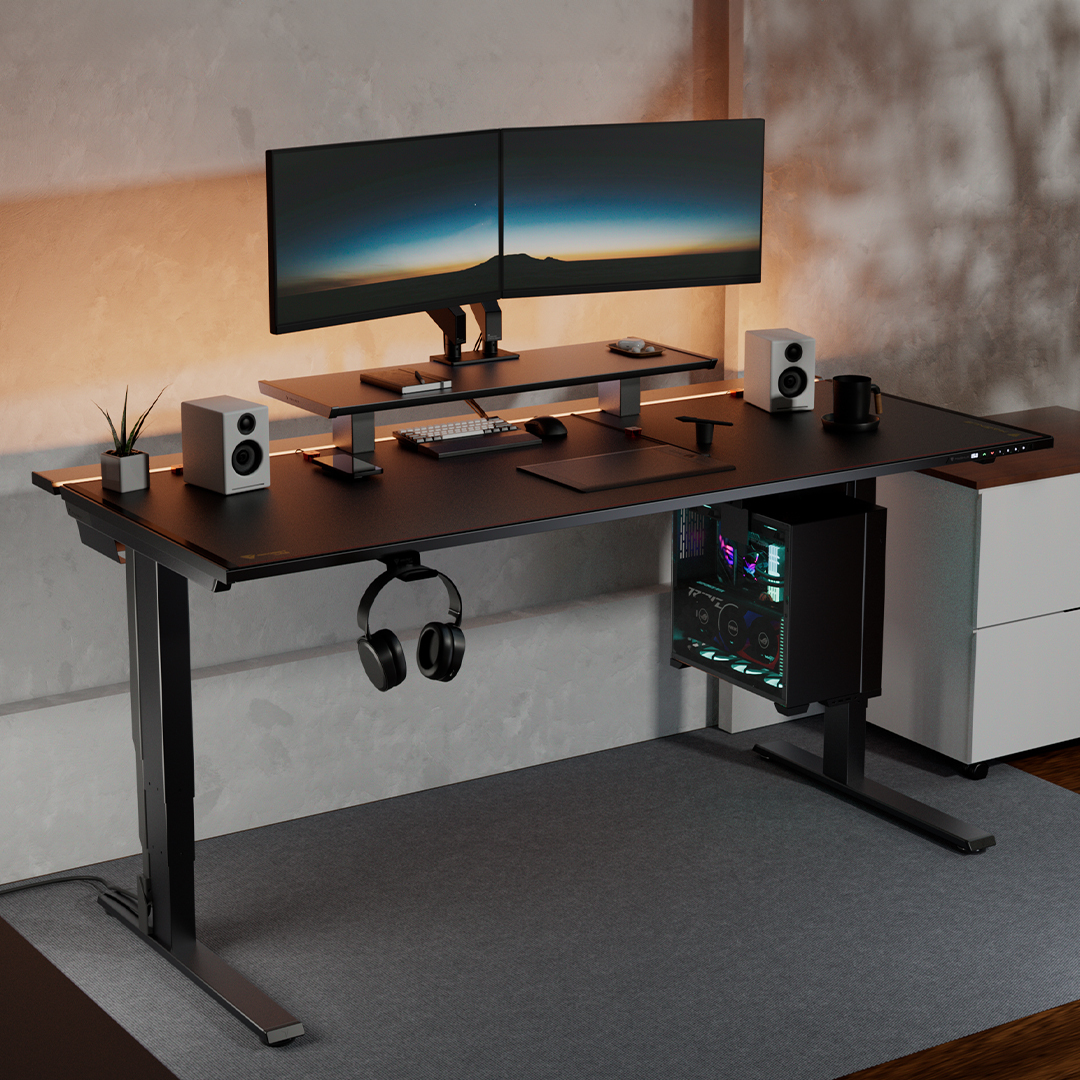
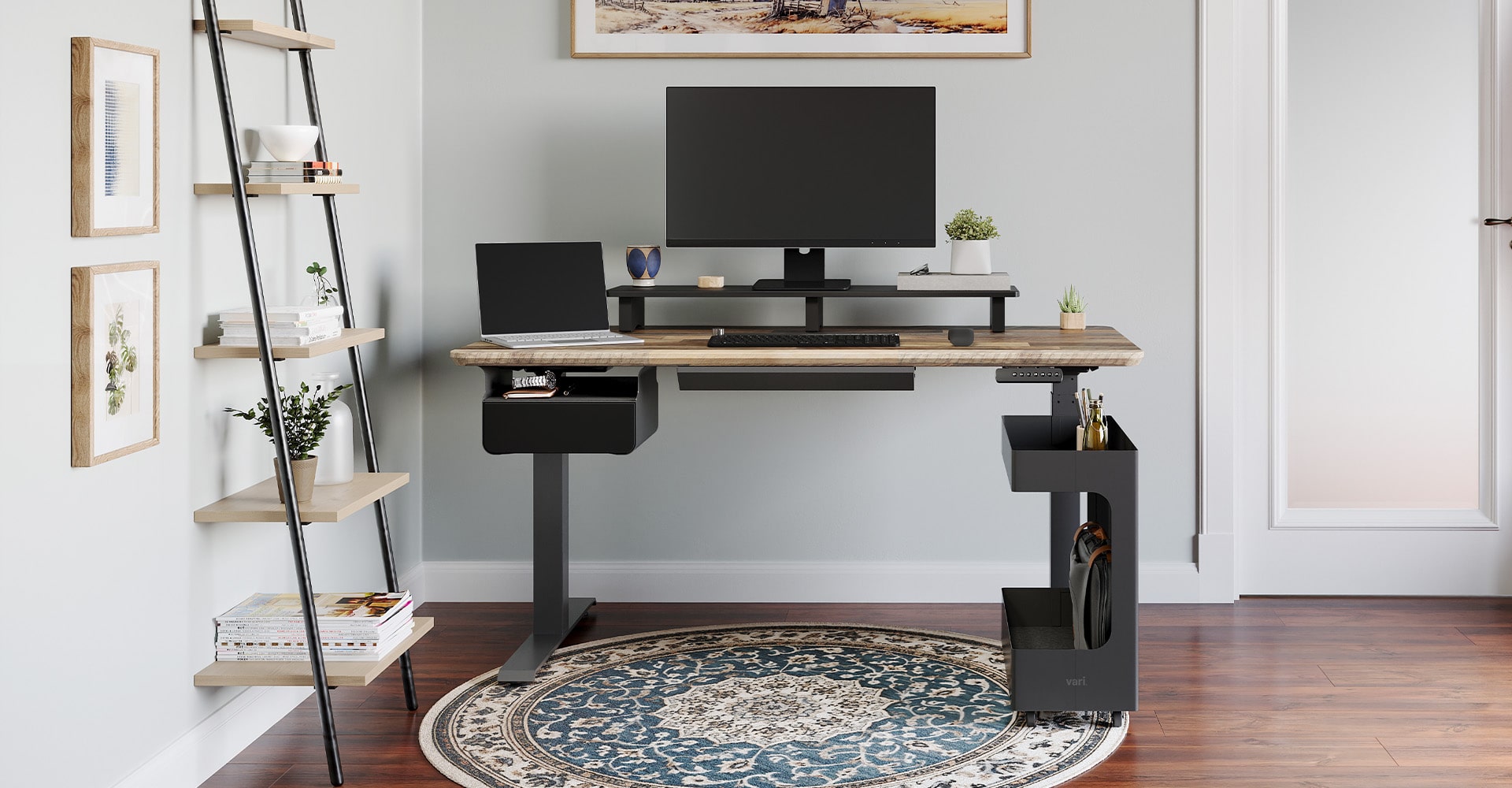
- Monitor risers or stacked shelves — Useful if you use a dual-screen setup or need extra storage near eye level.
- Lumbar support cushion — Helps with lower-back support on chairs you already own.
- Seat cushion or balance stool — Gives an alternative posture between sitting and standing and supports brief seated breaks.
Small adjustments create big comfort gains. I swapped an old flat mat for a thicker anti-fatigue mat and a foot rocker. My lower back pain dropped within days.
Tech and cable management tools
What accessories do I need for a standing desk? Technology and cable tools keep your setup usable and tidy as you move the desk up and down.
- Long, flexible power strip with mounting option — Keeps plugs accessible and follows desk travel.
- Cable sleeves and clips — Group cords and route them safely along legs or underside.
- USB hub or desk-mounted charging station — Keeps devices charged without crawling under the desk.
- Docking station for laptops — Makes switching between laptop and desktop seamless.
- Wireless peripherals — Reduce cable clutter and allow freedom of movement.
Plan cable paths before you buy. I once ran short cords after buying a tall desk. A longer surge protector solved the issue and saved a lot of frustration.
Accessories for productivity and health
What accessories do I need for a standing desk? Some items boost productivity and promote wellness while you work.
- Separate wireless headset or quality speakers — For calls without bending toward the mic.
- Desk plants or small air purifier — Improve air quality and reduce fatigue.
- Timer or focus lamp — Reminds you to change posture and take short breaks.
- Desk organizer and small drawers — Keep essentials close and surfaces clear.
- Blue-light filter or adjustable lighting — Cuts eye strain during long screen sessions.
A timer app or physical Pomodoro timer helps me remember to switch every 30–45 minutes. That habit protected my knees and kept energy steady.
How to choose the right accessories for your desk
What accessories do I need for a standing desk? Match gear to your habits, space, and budget. Use this step-by-step approach.
- Identify pain points — Note neck, back, wrist, or foot discomfort after a workday.
- Prioritize items that fix pain — Address posture first, then tech and productivity.
- Measure your space and desk travel — Ensure monitor arms and cable trays fit the range.
- Set a budget and buy in stages — Start with a mat and monitor arm, then add tech.
- Read return policies — Adjustable desks and arms can feel different in person.
If you share a desk or change jobs often, pick modular and easy-to-move accessories. My best tip: buy the mat and monitor arm first. They gave the biggest, fastest comfort gains.
Personal experience, tips, and mistakes to avoid
What accessories do I need for a standing desk? From my experience, these practical lessons help you avoid common pitfalls.
- Don’t skimp on the mat — Thin mats wear quickly and give little relief.
- Match monitor arm reach with desk depth — Arms that are too short force hunching.
- Test keyboard solutions — Tray angle and travel feel different for each person.
- Use flexible cable lengths — Too-short cords cause tension and unplugging when you move the desk.
- Try different standing intervals — Start with 15–20 minutes per hour and adjust.
I once bought an expensive monitor arm that was too weak for my heavier monitor. Return it and choose a stronger rated arm. That was an expensive lesson but worth sharing.
Frequently Asked Questions of What accessories do I need for a standing desk?
What accessories do I need for a standing desk to start standing safely?
Start with a stable anti-fatigue mat, a monitor arm to set screen height, and an adjustable keyboard solution to keep wrists neutral.
How much should I spend on accessories for a standing desk?
Expect to spend modestly at first: a reliable mat and monitor arm are mid-range purchases, while docks and full cable systems cost more. Prioritize comfort items first.
Do I need a special keyboard for a standing desk?
You don’t need a special keyboard, but an adjustable tray or a low-profile ergonomic keyboard helps maintain wrist and forearm alignment.
Are anti-fatigue mats worth it for a standing desk?
Yes. Anti-fatigue mats reduce leg and back fatigue and encourage subtle movement, which helps circulation and comfort during standing periods.
Can I use my existing chair with a standing desk?
Yes. Use a supportive chair with good lumbar support for sitting breaks. Consider a seat cushion or lumbar pad if the chair lacks support.
How do I manage cables with a sit-stand desk?
Use a mounted power strip, cable sleeves, and under-desk trays sized for the desk’s travel. Leave extra slack where the desk moves to avoid tugging.
Conclusion
Accessories turn a height-adjustable desk into a healthy, productive workspace. Focus first on posture: a monitor arm, adjustable keyboard solution, and an anti-fatigue mat will solve most problems. Add cable management, a good chair, and small productivity tools as you refine your setup. Start small, measure what helps, and upgrade in stages to build a comfortable routine.
Try one new accessory this week and note the change. Share your experience or questions below. Subscribe or bookmark this guide to revisit when you upgrade your gear.

