

A lawn sweeper for pine needles quickly clears needles without damaging grass, saving time and effort.
I have spent years testing lawn care gear and helping homeowners tackle needle-choked yards. In this guide I explain what a lawn sweeper for pine needles does, which models work best, and how to choose, use, and maintain one for tidy, healthy turf. Read on for clear, experience-based advice you can use this season.

Why pine needles are a problem for lawns
Pine needles pile up fast under conifers. They form a thick mat that blocks light and water. That mat can smother grass and invite mold or moss. A good lawn sweeper for pine needles clears the layer quickly without raking.
Removing needles improves grass health and appearance. Less debris lowers the risk of fungal issues in wet seasons. It also makes mowing easier and saves time when you compare repeated hand raking.

What is a lawn sweeper and how it works
A lawn sweeper is a tool with rotating brushes that lift debris into a hopper. As you push or tow the unit, brushes spin and sweep needles from the turf. Collected needles go into a built-in bag for easy disposal.
A lawn sweeper for pine needles uses stiff brushes and adjustable height to handle thin, sharp needles. It leaves the soil surface intact while removing surface debris. That gentle action protects grass crowns and roots better than aggressive raking.
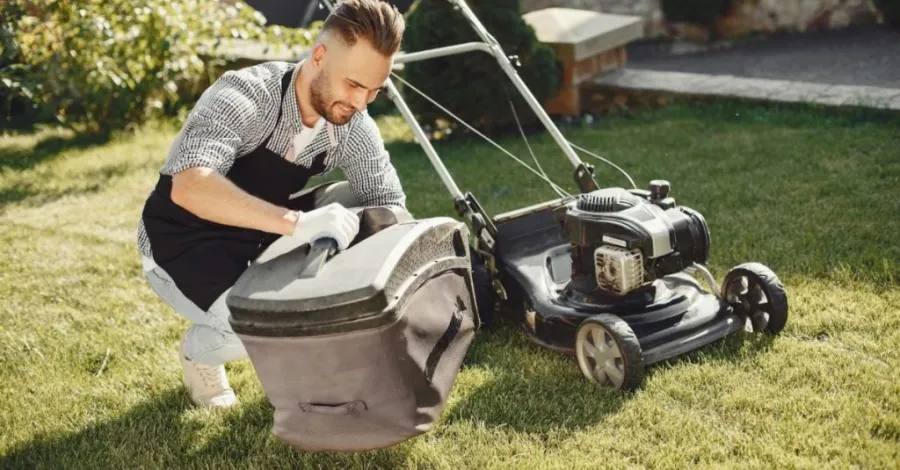
Types of lawn sweepers for pine needles
There are several designs suited to pine needles. Choose by yard size, tractor availability, and how often you clean.
- Push lawn sweepers
- Best for small yards and quick touch-ups. They are light and easy to store.
- Tow-behind lawn sweepers
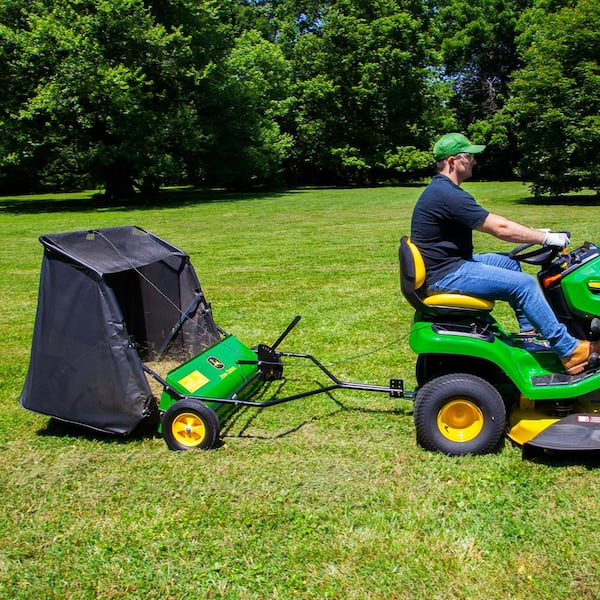
- Attach to a tractor or lawn tractor. They cover wide areas fast and are ideal for large properties.
- Walk-behind power sweepers
- Self-propelled units that blend power with maneuverability. Good for medium yards with uneven ground.
- Electric or battery lawn sweepers
- Quieter and lighter. They work well for frequent, small cleanups but may lack hopper capacity.
Will a lawn sweeper pick up wet pine needles?
- Many sweepers struggle with wet clumps. Dry mornings after dew or a day after rain are best for sweeping.
Can a lawn sweeper damage my lawn?
- Proper adjustment prevents damage. Set brush height so brushes contact needles, not soil.

How to choose the right lawn sweeper for pine needles
Match the sweeper to your yard and the needle load. Focus on these features.
- Brush type and stiffness
- Choose stiff, durable brushes for thin needles. Soft brushes miss dense layers.
- Hopper capacity
- Larger hoppers mean fewer stops. Tow-behind models have the biggest capacity.
- Sweep width
- Wider units cover more ground. For tight yards, a narrower unit is easier to steer.
- Height adjustment
- Critical for avoiding turf damage. Look for easy and precise adjustment.
- Drive type
- Tow-behind for acreage, push or electric for small yards, walk-behind for mid-size lots.
- Build quality and warranty
- Steel frames last longer. A decent warranty reduces long-term risk.
I recommend testing brush contact on a small patch before buying. Try to see the sweeper in action or read hands-on reviews to confirm claims.
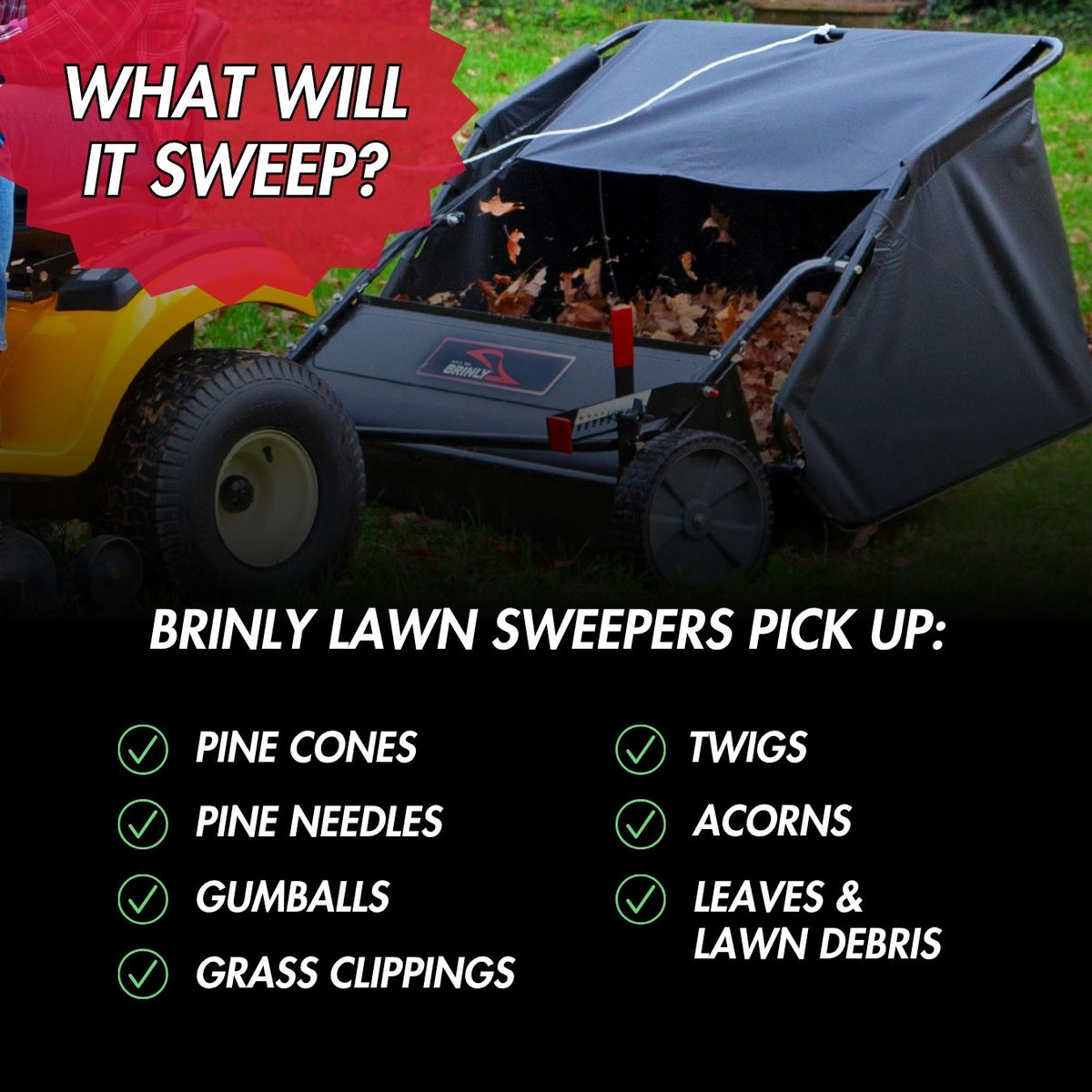
How to use and maintain your lawn sweeper for pine needles
Good technique makes the tool work well and last longer.
- Sweep during dry conditions
- Needles pick up best when dry. Early afternoon often works if dew is gone.
- Make multiple passes
- One slow pass then a cross pass catches what was missed the first time.
- Adjust brush height correctly
- Start higher and lower gradually until needles lift but soil does not scar.
- Empty hopper frequently
- Heavy loads reduce sweep efficiency and strain components.
- Clean brushes and bearings
- Remove trapped debris after each use. Lubricate moving parts per the manual.
- Store dry and covered
- Moisture accelerates rust and brush wear.
A simple maintenance checklist after each season keeps the sweeper ready year after year. Replace brushes when they flatten or shed heavily.

Alternatives and complementary tools
A lawn sweeper for pine needles is efficient, but other tools can help in specific cases.
- Leaf blowers
- Great for gathering piles into one area for final sweeper pick-up. Electric models are quiet and light.
- Manual rakes
- Useful for tight spots near beds and fences where a sweeper won't reach.
- Mulchers and mowers
- Mulching pine needles into smaller pieces can speed decomposition but may change soil acidity if left in place.
- Shop vacs or vacuums
- Handy for small patios and hard surfaces where sweepers can’t reach.
Often the best approach is a combo: blow to one spot, sweep the wide area, and rake edges.
Cost, value, and return on investment
Prices vary by type and build quality. Expect these ranges.
- Push sweepers
- Low cost and affordable for small yards.
- Walk-behind and electric sweepers
- Mid-range pricing with better power and comfort.
- Tow-behind sweepers
- Highest cost but best time savings on large lots.
Consider time saved and lawn health. A lawn sweeper for pine needles can cut cleanup time dramatically. Over a few seasons it can pay for itself in labor savings and fewer lawn repairs.

Common mistakes and how to avoid them
Avoid these frequent errors to keep the lawn safe and the sweeper effective.
- Sweeping wet needles
- Wet needles clump and clog. Wait for dry conditions.
- Lowering brushes too far
- That can gouge turf. Start high and adjust slowly.
- Overfilling the hopper
- It reduces performance and strains parts. Empty often.
- Skipping maintenance
- Rust, loose bolts, and worn brushes reduce lifespan. Follow the manual.
- Buying the wrong size
- Too big is hard to maneuver. Too small wastes time. Match to yard size.
Learning these small lessons saves time and money later.

Personal experience and practical tips
I have used push, tow-behind, and electric sweepers across varied yards. Here are hard-learned tips that help.
- Start with a dry test strip before full runs. It saves adjustment time.
- For heavy needle loads, two passes at perpendicular angles catch more material.
- If you have mixed debris—needles plus twigs—choose stiffer brushes and larger mesh hoppers.
- I once damaged a new lawn by setting brushes too low. That taught me to always test on a small patch first.
- Store spare brushes and fasteners. They wear faster than frames.
These simple habits keep cleaning quick and gentle. A lawn sweeper for pine needles becomes a favorite tool after a few uses.
Frequently Asked Questions of Lawn sweeper for pine needles
What is the best season to use a lawn sweeper for pine needles?
Use a lawn sweeper in late spring through fall when needles accumulate and are dry. Avoid sweeping right after heavy rain or when frost is present.
Can a lawn sweeper pick up small twigs along with pine needles?
Yes, most lawn sweepers handle small twigs, leaves, and pine needles together. For larger branches you should pick them up by hand first.
How often should I sweep my lawn for pine needles?
Sweep as needed based on needle fall; typically every 2 to 6 weeks in peak season. More frequent light passes work better than rare heavy cleanups.
Will sweeping change soil acidity because of pine needles?
Removing pine needles reduces the thick mat; it has minimal short-term effect on soil pH. If you leave large amounts to decompose, test soil pH periodically.
Do I need a special brush to pick up pine needles?
Stiff synthetic brushes work best for pine needles because they resist wear and lift thin debris. Replace brushes when bristles flatten or break.
Can I use a lawn sweeper on slopes?
Light slopes are OK for walk-behind or push sweepers, but steep slopes can be unsafe. Tow-behind models are best on gentle grades when pulled by a tractor.
Conclusion
A lawn sweeper for pine needles is a fast, gentle way to clear debris and protect your grass. Choose the right type, adjust the brushes carefully, and maintain the unit to get the best results. Start with dry conditions, plan short regular cleanups, and combine the sweeper with a blower or rake for edges. Try a small test run this weekend to see how much time you save and how much cleaner your lawn looks. If you found these tips useful, subscribe for more gear guides or leave a comment about your sweeper experience.

