

A lawn sweeper picks up leaves, grass clippings, and debris quickly and with minimal effort.
I have used, tested, and repaired many lawn sweepers. This guide explains how to use a lawn sweeper safely and well. You will learn when to use it, how to set it up, step-by-step operation, routine care, and common fixes. I blend clear how-to steps with real tips I learned on jobs and at home. Read on to master a tool that saves time and keeps your yard tidy.

Types of lawn sweepers and what each does
Lawn sweepers come in three main types. Push sweepers are small and light. Tow-behind sweepers hook to a lawn tractor and cover more ground. Powered sweepers use a motor for tougher jobs.
Push sweepers work well on small yards and tight spaces. Tow-behind sweepers handle large yards and heavy leaf fall. Powered sweepers help with damp or packed debris. Choose the type that fits your yard size and budget.

When you should use a lawn sweeper
Use a lawn sweeper after mowing to collect clippings. Use it in fall for leaves and in spring for debris and seed pods. It works best on dry days with low dew.
Avoid using a sweeper on very wet grass. Wet debris clogs brushes and slows work. Sweepers are great for routine cleanups and for prepping the lawn for overseeding.

How to use a lawn sweeper: step-by-step
Follow these steps to use a lawn sweeper safely and well.
-
Inspect the sweeper
- Check brushes for wear and tear.
- Tighten loose bolts and inspect the hopper.
- Make sure wheels turn freely.
-
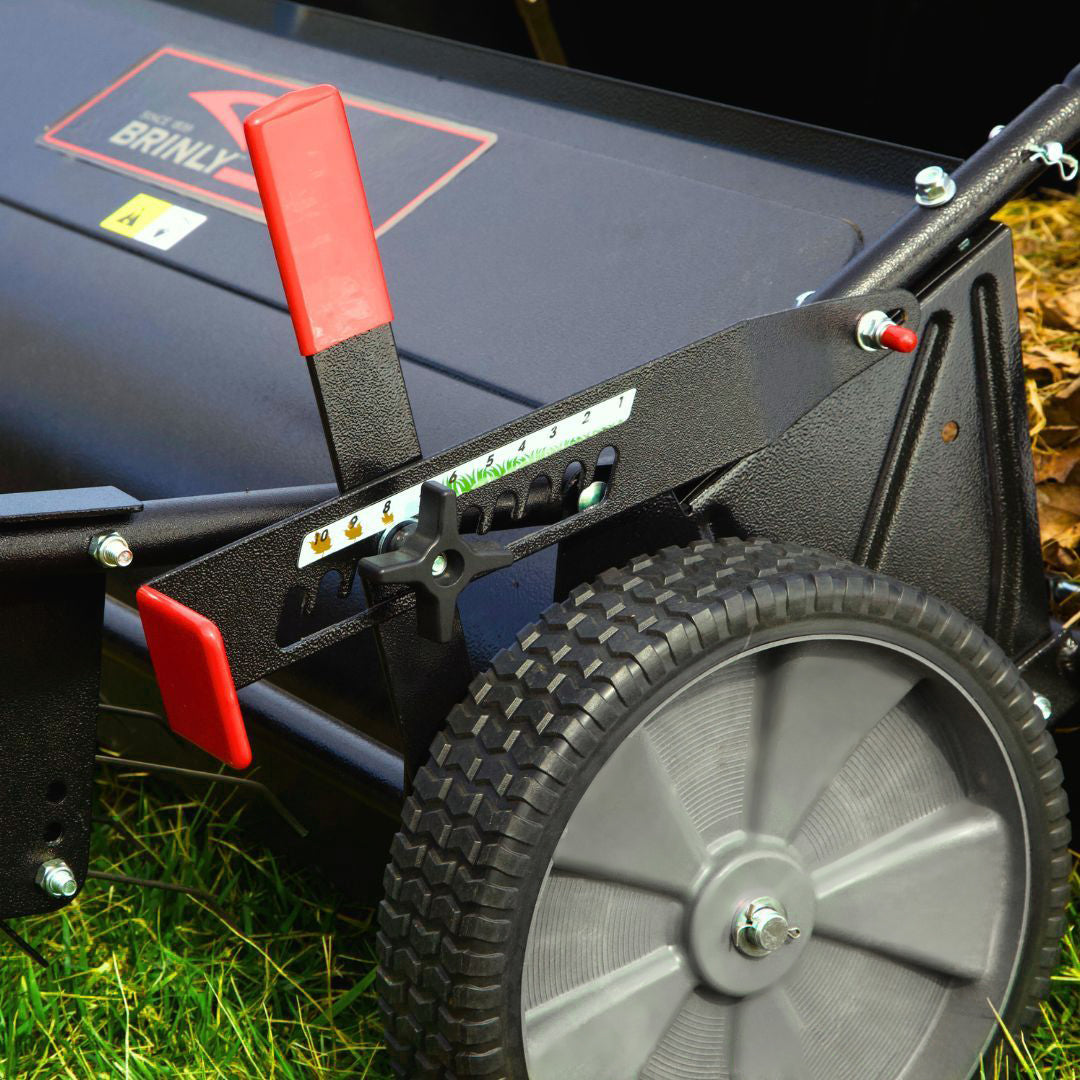
Choose the right brush height and hopper setting
- Set brush height so bristles touch the grass without digging.
- On most models, raise the brush for long grass and lower it for short grass.
- Adjust hopper angle if your model allows it for better pickup.
-
Set the ground speed
- Walk or drive at a steady, moderate speed.
- Too fast reduces pickup; too slow wastes time.
- For tow-behind sweepers, keep tractor speed to a steady 3 to 5 mph for best results.
-
Sweep in overlapping passes
- Start at one edge of the lawn.
- Make straight passes and overlap slightly to avoid missed strips.
- Empty the hopper when it is about two-thirds full.
-
Empty and finish
- Stop and empty the hopper in a compost pile or waste bag.
- Rake any missed spots or use the sweeper in a second pass.
- Inspect the lawn for debris like sticks that can jam the sweeper.
These steps show how to use a lawn sweeper for clean, even results.
:max_bytes(150000):strip_icc()/spr-agri-fab-44-in-tow-behind-lawn-sweeper-sara-luckey-05-ae43479260514cb9b433895fe90a7894.jpeg)
Setting up and adjusting your sweeper
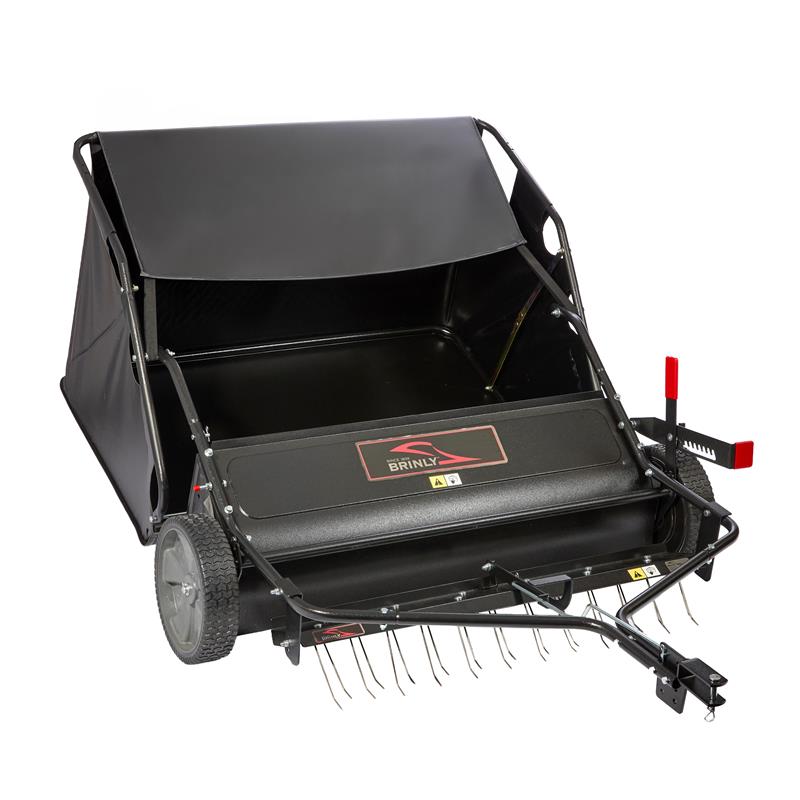
A good setup makes a big difference. Start with a clean tool. Replace worn brushes or parts before use.
Check wheel height and brush angle. Follow the user manual for model-specific settings. Balance the hopper load to avoid tipping or pulling.
If your machine is tow-behind, check the hitch pin and safety chains. For powered sweepers, check fuel, oil, and the spark plug. Proper setup saves time and prevents damage.
Maintenance and storage tips
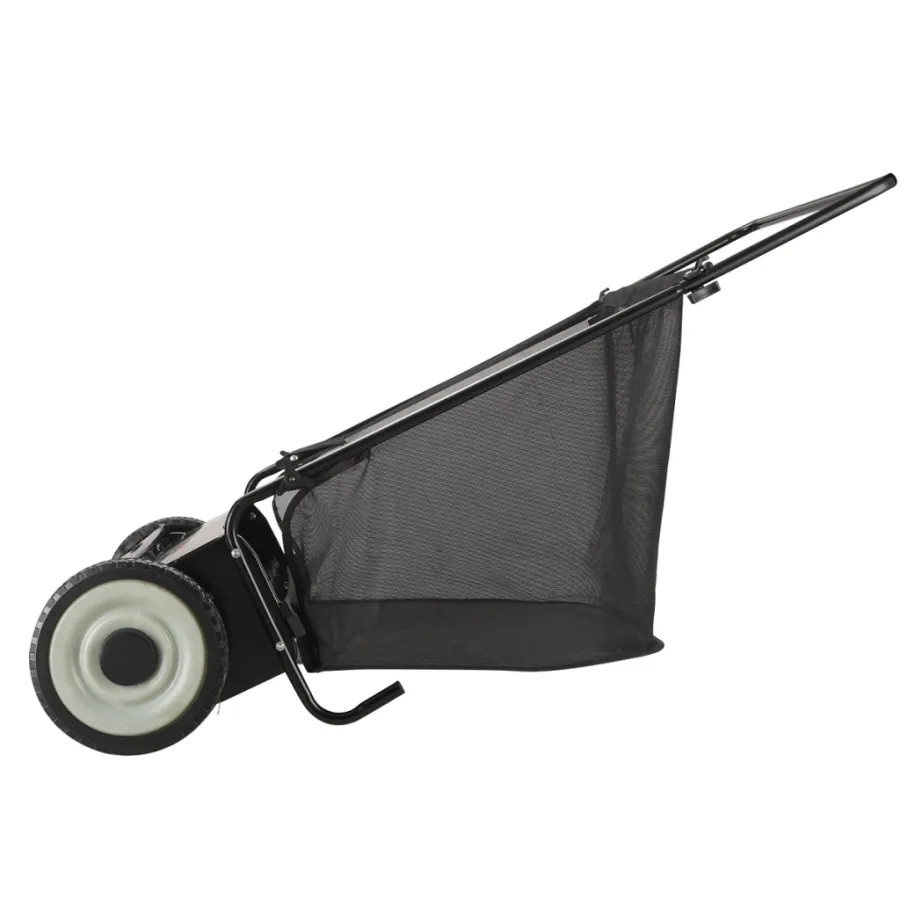
Routine care extends a sweeper’s life. Clean brushes after each use. Remove stuck debris from the hopper and brush drum.
Lubricate moving parts per the manual. Store the sweeper in a dry place. If storing for winter, clean it and cover it to prevent rust.
Perform a seasonal check. Replace worn brushes and test all fasteners. A small tune-up each year keeps the sweeper reliable.
Common mistakes and troubleshooting
Avoid these common errors.
- Running too fast
- Speed reduces pickup and increases wear.
- Using it on wet grass
- Wet debris clogs brushes and hoppers.
- Not adjusting brush height
- Too low will scalp the lawn; too high will miss debris.
- Overfilling the hopper
- Overweight hoppers reduce airflow and pickup.
Troubleshooting quick tips:
- If pickup is poor, raise brush slightly or slow down.
- If brush stops turning, check for wrapped twine or sticks.
- If hopper leaks debris, check hinges and seals.
Practical tips from my experience
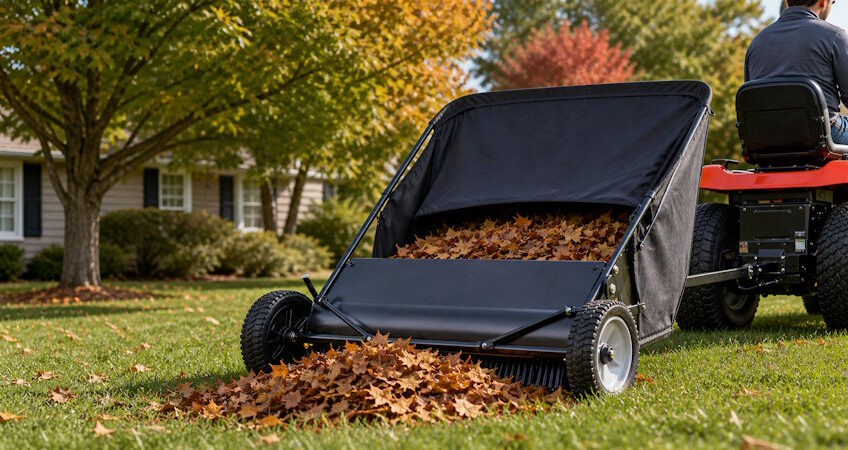
I learned a few things after years of yard work and equipment repair. A slow walk and steady hand beat sprinting across the lawn. I also learned to swap brushes as soon as they look worn. New brushes pick up leaves much better.
Use tarps to collect large piles before sweeping. That saves hopper trips. For mixed debris, run the sweeper twice: one pass for big leaves, one for fines.
When a lawn sweeper is not the right tool
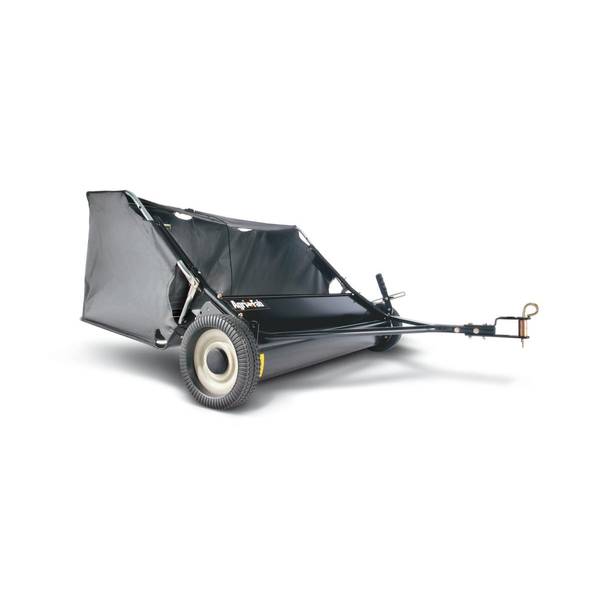
A lawn sweeper is not ideal for very wet conditions. It also struggles with thick brush and heavy sticks. For those, a rake, leaf blower, or chipper may be better.
Sometimes power raking or an aerator is needed for core lawn care. Use the sweeper as part of a broader maintenance plan.
Frequently Asked Questions of How to use a lawn sweeper
How often should I use a lawn sweeper?
Use a lawn sweeper after each mow in peak season or weekly during heavy leaf fall. Regular use keeps debris from building up and reduces lawn stress.
Can I use a lawn sweeper on wet grass?
You should avoid using it on wet grass. Wet debris clogs brushes and reduces pickup. Wait for dry conditions when possible.
How do I adjust the brush height?
Adjust brush height using the wheel or bracket settings on your model. Set it so bristles touch the grass without digging into soil.
Will a lawn sweeper damage my lawn?
When used correctly, a lawn sweeper will not harm the lawn. Avoid low brush settings and slow your pace to prevent scalping. Check settings before first use.
How full should I fill the hopper?
Fill the hopper to about two-thirds before emptying for best airflow. Overfilling reduces pickup and strains the sweeper. Empty often for consistent results.
Can I tow a sweeper behind my riding mower?
Yes, many sweepers are made to tow behind a tractor or mower. Keep speed steady and use a proper hitch for safety.
How long do brushes last?
Brush life varies with use, but expect 1 to 3 seasons under normal household use. Replace brushes sooner if you work rough terrain or heavy debris.
Conclusion
You now know how to use a lawn sweeper from setup to storage. Use steady speed, the right brush height, and regular maintenance. Start with small tests on your lawn and adjust settings for best pickup. Try one tip tomorrow: sweep after the next mow and notice how much cleaner the yard looks. If you found this helpful, leave a comment, subscribe for more tips, or try a sweeper on your next yard day.

