

An upright vacuum usually uses about 500 to 1,400 watts, depending on the model and settings.
If you have ever wondered whether your vacuum is a small energy user or a hidden power hog, you are not alone. In real-world use, upright vacuum electricity use depends on motor strength, suction settings, brush action, and how long you clean. I have tested enough household vacuums to know that the number on the label only tells part of the story, so let’s break down the full picture in a simple, practical way.

How much electricity does an upright vacuum use?
An upright vacuum uses electricity based on its wattage and how long it runs. Most upright vacuum cleaners draw between 500 and 1,400 watts, with many common models landing around 600 to 900 watts.
That means the vacuum does not use a huge amount of electricity during a normal cleaning session. In fact, even a fairly powerful upright vacuum often costs only a few cents to run for 30 minutes. The real cost depends on your local electricity rate and how often you vacuum.
To estimate electricity use, you can use this simple idea:
- Energy use in kilowatt-hours = watts ÷ 1,000 × hours used
- Cost = kilowatt-hours × your electricity rate
For example, if an upright vacuum uses 800 watts and runs for 1 hour:
- 800 ÷ 1,000 = 0.8 kWh
- If electricity costs $0.16 per kWh, the cost is about $0.13 for that hour
That is why upright vacuum electricity use is usually modest compared with larger appliances like air conditioners, ovens, or space heaters.

What affects upright vacuum electricity use?
Several things change how much electricity does an upright vacuum use in daily life. Two vacuums with the same wattage can still perform differently based on design and how you use them.
Motor wattage
Higher wattage usually means more power draw. A 1,200-watt upright vacuum will use more electricity than a 700-watt model if both run for the same amount of time.
Still, wattage alone does not tell the whole story. A well-designed lower-watt vacuum can clean efficiently, while a bulky high-watt model may waste energy if it needs multiple passes.
Cleaning time
The longer you vacuum, the more electricity you use. A 20-minute cleaning session uses far less power than a 90-minute deep clean.
This is one reason routine maintenance matters. If a vacuum works well and picks up dirt in fewer passes, it saves time and energy.
Suction settings and brush roll
Many upright vacuums have different cleaning modes. Carpet boost, max suction, and powered brush rolls can increase electricity use.
If you use the highest setting all the time, your vacuum may draw more power than needed. I learned this the hard way with a pet vacuum that stayed on max mode even on bare floors, which added noise, heat, and battery-style waste without much extra benefit.
Clogged filters and full bags
A dirty filter or full dust bag can make the motor work harder. That can reduce cleaning efficiency and may slightly raise power demand in some models.
More importantly, it can make you vacuum longer to get the same result. That is where the extra electricity use really piles up.
Corded versus cordless
This article focuses on upright vacuum electricity use, which usually means corded models. Cordless uprights do not draw power from the wall while in use, but they do use electricity during charging.
The charging cost is usually small, but the runtime is limited. Corded models are better for longer sessions and often have more consistent suction.
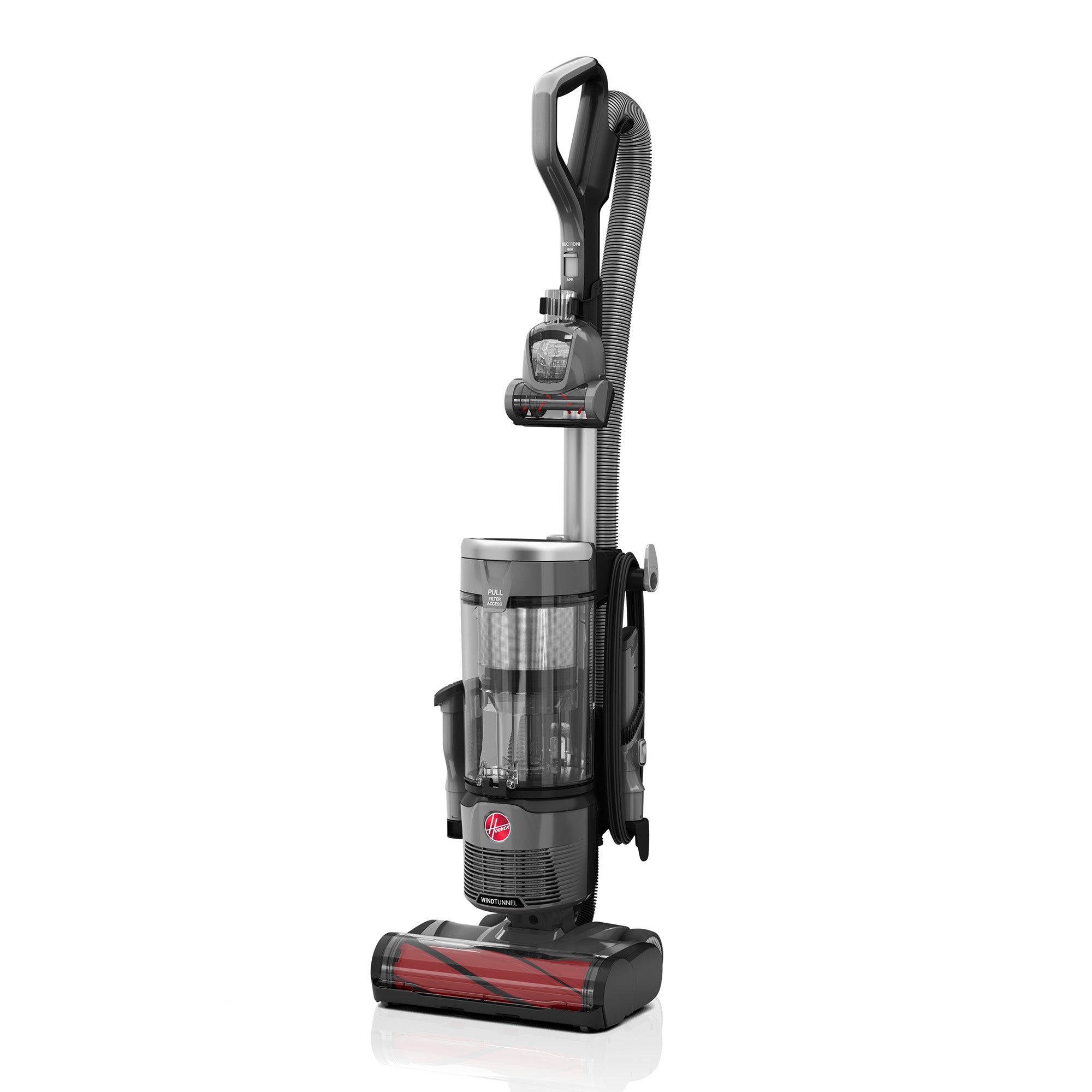
Upright vacuum electricity use by wattage
If you want a fast way to estimate power consumption, wattage is the best starting point. Here are common examples of how much electricity does an upright vacuum use in practice.
- 500 watts for 1 hour = 0.5 kWh
- 700 watts for 1 hour = 0.7 kWh
- 900 watts for 1 hour = 0.9 kWh
- 1,200 watts for 1 hour = 1.2 kWh
- 1,400 watts for 1 hour = 1.4 kWh
Now let’s turn that into rough cleaning costs using an electricity rate of $0.16 per kWh:
- 500 watts for 1 hour = about $0.08
- 700 watts for 1 hour = about $0.11
- 900 watts for 1 hour = about $0.14
- 1,200 watts for 1 hour = about $0.19
- 1,400 watts for 1 hour = about $0.22
For a typical 30-minute cleaning session, cut those numbers in half. That is why many homes can vacuum several times a week without seeing a noticeable jump in the electric bill.
How much electricity does an upright vacuum use in a month?
To estimate monthly use, multiply your vacuum’s kWh per session by how often you vacuum. This gives you a better sense of the real cost.
Here is a simple example:
- Upright vacuum wattage: 900 watts
- Daily use: 20 minutes
- Energy per day: 900 ÷ 1,000 × 0.33 hours = 0.30 kWh
- Monthly use: 0.30 × 30 = 9 kWh
- Monthly cost at $0.16/kWh: about $1.44
Even if you vacuum more often, the monthly cost usually stays low. For most households, upright vacuum electricity use is small enough that comfort and cleaning power matter more than energy cost.
Does a more powerful vacuum always use more electricity?
Usually yes, but not always in a meaningful way. A vacuum with more wattage generally uses more power, but the difference may be tiny in day-to-day use.
For example, the gap between a 700-watt model and a 1,000-watt model is real. But if you only vacuum for 15 to 20 minutes at a time, the cost difference may be just a few cents per session.
What matters more is how efficiently the vacuum cleans. A model that picks up dust faster can use less electricity overall because it finishes the job sooner.
Is a high-watt upright vacuum bad for energy bills?
Not necessarily. A high-watt upright vacuum can still be energy friendly if you use it for short periods and keep it maintained.
Think of it like driving a car. A larger engine can use more fuel, but if you only drive a few miles each week, the total cost stays low. Vacuuming works in a similar way.
Here are some ways to keep upright vacuum electricity use in check:
- Vacuum on the right setting for the floor type
- Empty the bag or dust bin often
- Clean or replace filters as recommended
- Remove hair from the brush roll
- Use slow, steady passes instead of repeated back-and-forth strokes
These small habits can improve cleaning performance and lower total energy use over time.
How upright vacuum electricity use compares with other appliances
Compared with many home appliances, an upright vacuum is not a major power consumer. It usually uses more electricity than a phone charger or fan, but far less than heating and cooling equipment.
A simple comparison looks like this:
- Phone charger: very low
- LED light bulb: low
- Upright vacuum: moderate
- Microwave: moderate to high
- Space heater: very high
- Air conditioner: very high
This is why most households do not worry much about the vacuum on the power bill. It is a useful appliance, but it does not typically run long enough to become expensive.
Tips to reduce upright vacuum electricity use
If you want to lower upright vacuum electricity use without sacrificing clean floors, a few smart habits go a long way.
- Choose the right vacuum for your home size and floor type
- Use normal mode instead of max mode when possible
- Vacuum regularly so dirt does not build up
- Keep the filter clean to help airflow
- Replace worn belts, brush rolls, or seals
- Store the vacuum properly so parts last longer
In my own experience, the biggest mistake people make is waiting too long between cleanings. A vacuum that has to fight through thick debris works harder, takes longer, and uses more electricity than one that keeps up with routine messes.
What is the average cost to run an upright vacuum?
For most households, the average cost is quite low. If an upright vacuum uses around 700 to 1,000 watts, the cost is often somewhere between 10 and 20 cents per hour, depending on local electricity rates.
If you vacuum for 30 minutes, the cost is usually only a few cents. That makes upright vacuum electricity use easy to manage for most budgets.
Frequently Asked Questions of How much electricity does an upright vacuum use?
How many watts does an upright vacuum use on average?
Most upright vacuums use about 500 to 1,400 watts, with many common models falling between 600 and 900 watts. The exact number depends on the motor, suction level, and cleaning mode.
Does vacuuming use a lot of electricity?
No, vacuuming usually uses a moderate amount of electricity, not a lot. Since most cleaning sessions are short, the total cost is usually small.
How much does it cost to run an upright vacuum for 1 hour?
At a typical electricity rate, an upright vacuum may cost about 8 to 22 cents per hour. The exact cost depends on the vacuum’s wattage and your local power price.
Do upright vacuums use more electricity than stick vacuums?
Often yes, because upright vacuums usually have larger motors and stronger suction. Stick vacuums, especially cordless ones, often use less wall power but may need charging more often.
Can a dirty filter make my vacuum use more electricity?
Yes, a clogged filter can make the motor work harder and reduce airflow. That may not dramatically raise power draw, but it can make cleaning take longer, which increases total electricity use.
Is it cheaper to use a bagged or bagless upright vacuum?
The electricity use is usually similar if the motor wattage is similar. The real difference is maintenance, since a clean bag or bin helps the vacuum work more efficiently.
Conclusion
An upright vacuum usually uses a moderate amount of electricity, with most models drawing between 500 and 1,400 watts. In everyday use, that often adds up to only a few cents per cleaning session, especially if you keep the machine clean and vacuum efficiently.
If you want the best balance of power and energy use, focus on the vacuum’s wattage, cleaning mode, and maintenance needs. A well-kept vacuum can save time, clean better, and keep your electricity costs low. If this helped, take a look at your own vacuum’s label, estimate your monthly use, and share your results or questions in the comments.


1 Comment
Pingback: How Do You Store An Upright Vacuum: Smart Space-Saving Tips - Vacuum Cleaner Tips