

A canister vacuum usually uses 500 to 1,200 watts, depending on the model and settings.
If you have ever wondered whether your canister vacuum is quietly driving up your power bill, you are not alone. I have tested and compared a lot of vacuum cleaners over the years, and the truth is simple: the electricity use of a canister vacuum depends on wattage, run time, and how efficiently the machine turns power into suction. Let’s break down how much electricity does a canister vacuum use in real life, what that means for your monthly bill, and how to choose a model that cleans well without wasting energy.
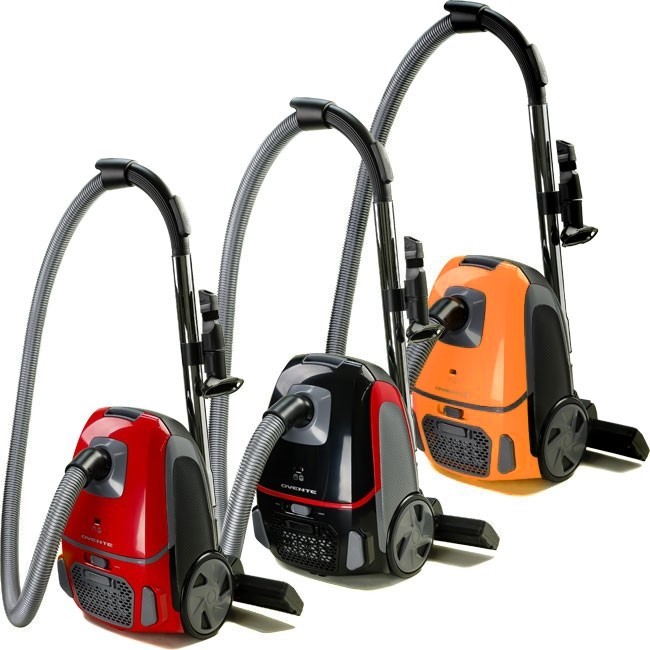
How much electricity does a canister vacuum use?
A canister vacuum uses electricity based on its wattage rating and how long you run it. Most models fall between 500 and 1,200 watts, while some older or heavy-duty units can go higher. That means a vacuum running at 1,000 watts for one hour uses 1 kilowatt-hour, or 1 kWh, of electricity.
In practical terms, the answer to how much electricity does a canister vacuum use depends on your cleaning habits. A small apartment cleaned for 20 minutes twice a week uses far less power than a large home vacuumed for an hour at a time. The vacuum’s suction setting, floor type, and motor efficiency also matter.
Here is the simplest way to think about it:
- 500 watts for 1 hour = 0.5 kWh
- 1,000 watts for 1 hour = 1 kWh
- 1,200 watts for 1 hour = 1.2 kWh
If your electricity rate is 16 cents per kWh, then a 1,000-watt canister vacuum costs about 16 cents per hour to run. That is one reason the real cost is often smaller than people expect.
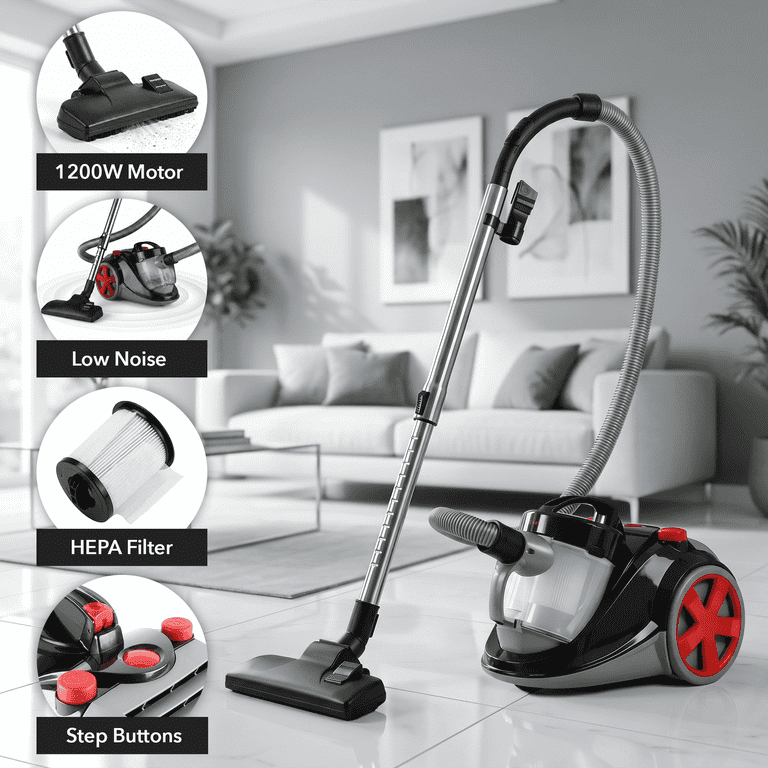
What affects how much electricity a canister vacuum uses?
Several things change how much electricity does a canister vacuum use in your home. Some are obvious, and some are easy to miss.
Motor wattage
Higher wattage usually means more electricity use. A 1,200-watt vacuum uses more power than a 600-watt vacuum if both run for the same amount of time. But wattage alone does not tell the whole story, because design and airflow can change cleaning performance.
Cleaning time
The longer you vacuum, the more power you use. A short cleanup after dinner may barely move the needle, while a deep clean of carpets and stairs can add up. Time matters just as much as wattage.
Suction setting
Many canister vacuums let you adjust suction. Higher suction levels often use more power, especially on thick carpet or rugs. On hard floors, a lower setting may clean just as well and save electricity.
Floor type
Carpet usually needs more effort than hardwood or tile. That does not always mean more wattage, but it can mean longer run time and more energy use overall. In my own experience, switching from carpet to bare floors often cuts vacuum time nearly in half.
Motor efficiency
A well-designed vacuum can clean well without using extra power. Some modern canister vacuums use better airflow paths and improved motors, so they do more with less electricity. That is why two vacuums with similar wattage can perform very differently.
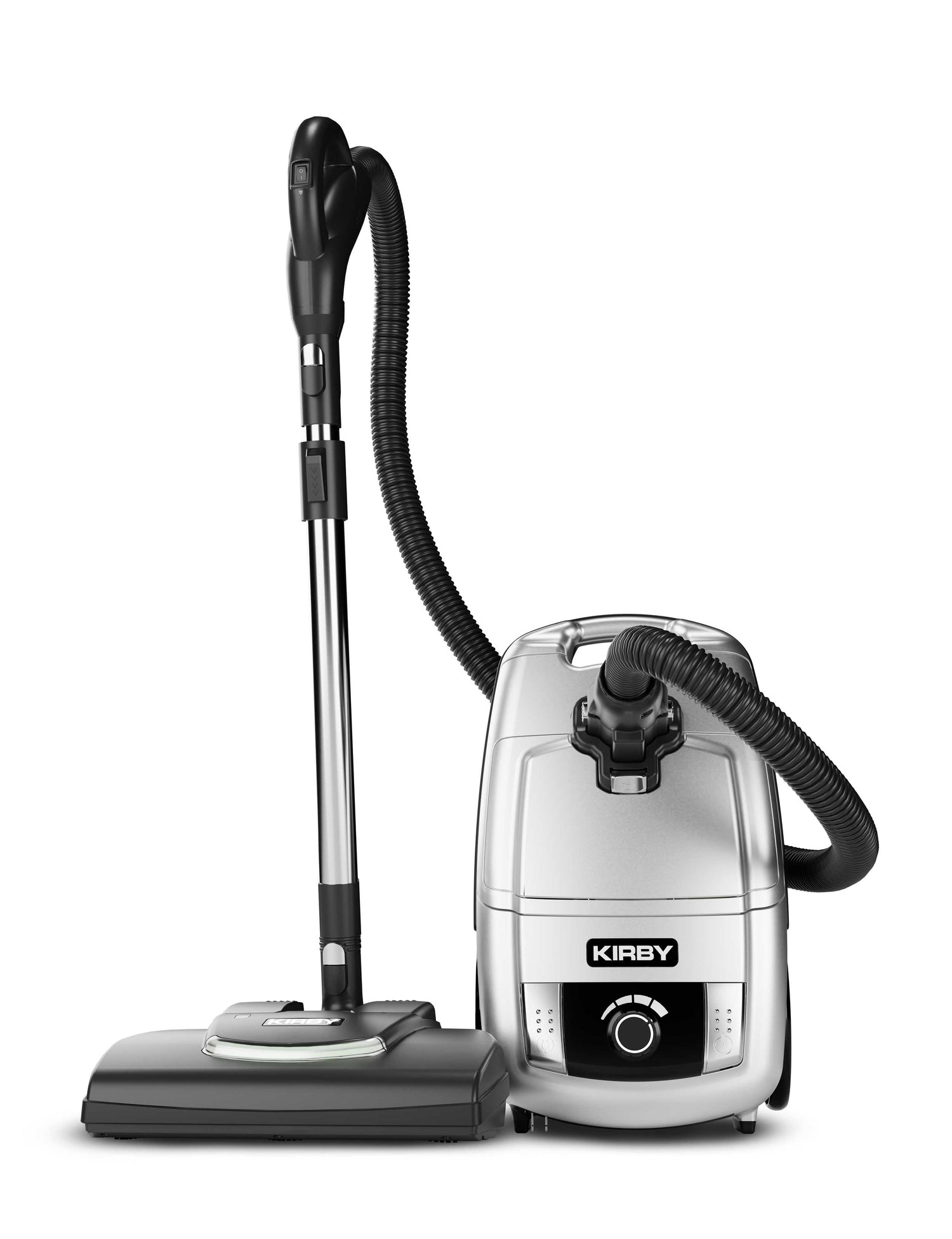
How to calculate canister vacuum electricity use
If you want a rough estimate of how much electricity does a canister vacuum use, the math is easy.
Use this formula:
- Wattage ÷ 1,000 = kilowatts
- Kilowatts × hours used = kWh used
- kWh used × electricity rate = cost
For example, if your canister vacuum is 900 watts and you use it for 30 minutes:
- 900 ÷ 1,000 = 0.9 kW
- 0.9 × 0.5 hour = 0.45 kWh
- 0.45 × $0.16 = $0.072
That is about 7 cents for one half-hour cleaning session.
Here are a few more examples:
- 600-watt vacuum for 30 minutes = 0.3 kWh
- 900-watt vacuum for 1 hour = 0.9 kWh
- 1,200-watt vacuum for 45 minutes = 0.9 kWh
If you vacuum two times a week, you can multiply the weekly use by four to estimate a monthly cost. This is a helpful way to compare brands before buying.
Is a canister vacuum expensive to run?
Usually, no. When people ask how much electricity does a canister vacuum use, they are often surprised by how low the cost is. Even a fairly strong vacuum tends to cost only a few dollars per month for average home use.
For example:
- 1,000 watts used 1 hour per week = about 4 kWh per month
- At 16 cents per kWh, that is about 64 cents per month
- If you vacuum 3 hours per week, it may still be under $2 per month in many homes
Of course, electricity rates vary by region. If your local rate is high, the cost goes up. But compared with major appliances like heating, cooling, or a dryer, a canister vacuum is usually a small part of the bill.
Canister vacuum wattage vs cleaning power
This is where a lot of people get confused. Higher wattage does not always mean better cleaning. A smart vacuum design can produce strong suction with less electricity use.
When I tested vacuums side by side, the better performer was not always the one with the biggest watt number on the label. Sometimes a 700-watt model picked up dust better than a 1,200-watt one because the airflow was smoother and the brush head fit the floor better.
Here is what matters beyond wattage:
- Airflow design
- Seal quality
- Hose and wand efficiency
- Brush head design
- Filter cleanliness
If you want lower energy use and good cleaning, focus on overall performance, not just power numbers. That is the practical answer to how much electricity does a canister vacuum use and how much cleaning you get from it.
How canister vacuums compare with other vacuum types?
Canister vacuums are often efficient because the motor unit is separate from the cleaning head. This can make them easier to move and sometimes better for stairs, furniture, and hard floors.
Compared with upright vacuums:
- Canister vacuums may use similar or slightly lower wattage
- Uprights can be better for thick carpet in some homes
- Canisters often feel lighter to push because the main body rolls behind you
Compared with cordless vacuums:
- Canister vacuums usually run longer without charging
- Cordless vacuums often use batteries, so electricity use is mostly from charging
- Canister models can be more powerful for deep cleaning sessions
Compared with robot vacuums:
- Canister vacuums use more power per session
- Robot vacuums use less power overall but clean more slowly and lightly
So, how much electricity does a canister vacuum use compared with others? Usually a moderate amount, but often with strong cleaning results for the power used.
Ways to reduce electricity use with a canister vacuum
You do not have to choose between clean floors and lower energy use. A few small habits can make a real difference.
- Vacuum on the right setting, not the highest one every time
- Empty the dust bag or canister often
- Clean or replace filters as recommended
- Check for blockages in the hose and wand
- Use the proper floor head for the surface
- Vacuum in shorter, regular sessions instead of long deep-clean marathons
- Buy a model with efficient suction and good airflow
One mistake I have seen many people make is running a vacuum with a full bag or clogged filter. That forces the motor to work harder, which can increase power use and reduce cleaning quality. It is like trying to breathe through a straw.
What is a good wattage for a canister vacuum?
A “good” wattage depends on your home and cleaning needs. For many households, a canister vacuum in the 600 to 900 watt range is a solid balance of power and efficiency. If you have thick carpet, pets, or a larger home, you may prefer a stronger unit.
Here is a simple guide:
- 500 to 700 watts: good for light cleaning and hard floors
- 700 to 900 watts: good all-around choice for mixed flooring
- 900 to 1,200 watts: stronger cleaning for carpet, pet hair, and larger spaces
Still, wattage should not be your only buying factor. A lower-watt model with better design can sometimes outperform a higher-watt one.
Frequently Asked Questions of How much electricity does a canister vacuum use?
How many watts does a canister vacuum use?
Most canister vacuums use between 500 and 1,200 watts. Compact models usually sit on the lower end, while more powerful models use more.
Does a canister vacuum use a lot of electricity?
Not usually. Even regular vacuuming tends to cost only a small amount per month in most homes, especially if you vacuum for short periods.
How much does it cost to run a canister vacuum for one hour?
At 1,000 watts and 16 cents per kWh, it costs about 16 cents per hour. Lower-watt models cost less, while higher-watt models cost a bit more.
Is a bagged canister vacuum more energy efficient?
A bagged model can stay efficient longer if the bag and filters are maintained well. When airflow stays clear, the motor does not need to work as hard.
How can I tell my vacuum’s electricity use?
Check the wattage label on the machine or manual, then use the wattage and your run time to estimate kWh use. If you know your electricity rate, you can also estimate the cost.
Conclusion
How much electricity does a canister vacuum use? For most homes, the answer is modest: usually somewhere between 500 and 1,200 watts, with real costs that are often lower than people expect. The biggest factors are wattage, run time, suction level, and how well the vacuum is maintained.
If you want the best mix of cleaning power and energy savings, choose a model that fits your floors, keep the filters clean, and vacuum in regular short sessions. That simple approach can save electricity and make your vacuum work better for longer. If this guide helped, share it with someone comparing vacuums or leave a comment with your own energy-saving tips.

