

An upright vacuum usually overheats because airflow is blocked, filters are dirty, or the motor is overworked.
If you have ever felt your vacuum getting hot, shutting off, or giving off a burning smell, you are not alone. I have seen this problem many times, and the cause is usually simple once you know where to look. In this guide, I’ll walk you through why an upright vacuum overheats, what signs to watch for, and how to fix the issue before it turns into a bigger repair.

Why an upright vacuum overheats
An upright vacuum overheats when its motor has to work harder than it should. That extra strain builds heat fast, especially when air cannot move through the machine the right way.
Most upright vacuums depend on steady airflow to cool the motor. When that airflow gets blocked by dust, hair, or a full bag, the machine can run hot in a hurry. In simple terms, it is like trying to breathe through a clogged straw.
The good news is that many overheating problems are fixable at home. In my experience, the issue is often not a bad motor at all. It is usually a clogged filter, a jammed brush roll, or a hidden blockage in the hose or wand.

Common reasons your upright vacuum is overheating
Clogged filters
Dirty filters are one of the most common reasons an upright vacuum overheats. They trap dust and fine debris, but once they get packed full, air cannot pass through well.
I have seen vacuums overheat simply because the pre motor filter had not been cleaned in months. Some filters need washing, while others need replacing. If the filter looks gray, stiff, or dusty, it is a strong clue.
Blocked hose or airway
A blockage anywhere in the vacuum path can cause the motor to heat up. This includes the hose, wand, nozzle, or dirt passage.
Small objects, pet hair, socks, or thick dust clumps can choke airflow. When that happens, the vacuum keeps trying to pull air, but the motor ends up doing too much work. That is one of the fastest ways to cause overheating.
Full dust bin or bag
A vacuum cannot breathe well if the bag or dust cup is packed. Even if the machine still picks up some dirt, restricted space can make the motor run hot.
I always tell people to empty the bin before it looks completely full. For bagged models, waiting too long can make the vacuum feel weak and warm at the same time. That is a clear sign the airflow is suffering.
Jammed brush roll
Hair, string, carpet fiber, and thread can wrap around the brush roll and stop it from spinning freely. When that happens, the motor works harder to keep the brush moving.
A brush roll jam may also create a burning smell. That smell often comes from belt friction or motor strain. If you hear the brush slowing down or squealing, check it right away.
Worn or slipping belt
The belt helps turn the brush roll. If it is stretched, cracked, or slipping, it can create heat and stress the motor.
A bad belt may also smell like warm rubber. In one case I looked at, the vacuum was overheating because the belt had become so loose that it kept slipping under load. Replacing it solved the problem quickly.
Wrong height setting for the floor
If the vacuum is set too low for a thick carpet, the brush roll and motor have to fight the surface. That extra drag can make the machine run hotter than normal.
This is easy to miss because the vacuum may still seem to clean. But if you notice resistance when pushing it, the setting may be too aggressive for the floor type.
Motor wear or internal electrical issues
Sometimes overheating comes from a deeper problem inside the motor or wiring. This is more likely if the vacuum overheats even after you clean the filters, clear blockages, and inspect the belt.
Motor bearings, fan issues, or electrical faults can all create excess heat. At that point, repair may be needed. If the vacuum shuts off repeatedly, it is best not to keep forcing it to run.
Signs your upright vacuum is running too hot
Knowing the warning signs can help you stop damage early. I have found that most vacuums give clues before they fully fail.
Watch for these signs:
- A hot plastic smell or burning odor
- The vacuum shuts off on its own
- Weak suction
- Loud motor noise
- The brush roll stops spinning normally
- The body of the vacuum feels very warm
- The power cord or plug area seems unusually hot
If you notice more than one of these at the same time, stop using the vacuum and check it before restarting.
How to fix an overheating upright vacuum
1. Turn it off and unplug it
Safety comes first. Let the vacuum cool before touching the brush roll, belt, or motor area.
If the machine has a thermal cutoff, it may need time to reset. Rushing it can make the problem worse.
2. Check for clogs
Look through the hose, wand, nozzle, and dirt path. Remove any visible buildup, hair, or debris.
A simple flashlight helps a lot here. I like to disconnect the hose and check both ends so I do not miss a hidden jam.
3. Clean or replace the filters
Take out every filter the manual lists. Tap out loose dust if allowed, wash washable filters if the brand recommends it, and let them dry fully before reinstalling.
Never put a damp filter back into the vacuum. That can damage the motor and create more problems later.
4. Empty the bin or replace the bag
If the bin is near full, empty it right away. For bagged vacuums, replace the bag if it looks packed or heavy.
This is one of the easiest fixes and one of the most overlooked. A clean collection system supports airflow and helps keep the motor cool.
5. Inspect the brush roll and belt
Flip the vacuum over and check for wrapped hair, string, or thread. Cut away debris carefully and make sure the brush roll spins freely.
Then inspect the belt for cracks, looseness, or wear. If it looks damaged, replace it with the correct part for your model.
6. Adjust the height setting
If you are vacuuming thick carpet, raise the height setting. For hard floors, use the setting that reduces drag without losing suction.
A vacuum that glides easily is usually one that runs cooler too. That small adjustment can make a big difference.
7. Let it cool before testing again
After cleaning and checking everything, give the vacuum time to cool down fully. Then test it on a short run.
If it still overheats fast, the issue may be deeper than a clog or filter. At that point, a service visit may be the safest choice.
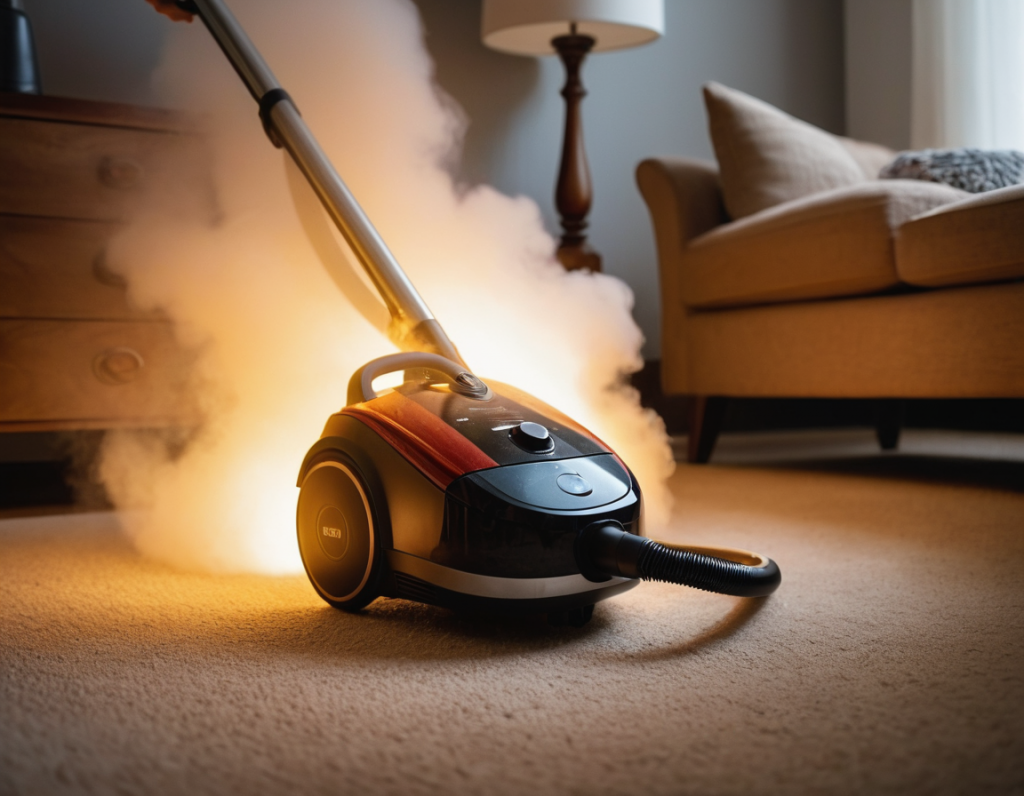
How to prevent your upright vacuum from overheating
Prevention is easier than repair. A little routine care goes a long way with upright vacuums.
Here are the habits that help most:
- Empty the dust bin before it gets too full
- Replace or clean filters on schedule
- Remove hair from the brush roll every few uses
- Check the hose for clogs once in a while
- Use the right height setting for each floor type
- Replace worn belts before they fail
- Avoid vacuuming large debris that can jam the system
I learned long ago that most vacuum heat issues start as small airflow problems. If you treat your vacuum like a tool that needs regular care, it usually lasts much longer.
When overheating means you need a repair
Some overheating issues are not worth trying to power through. If your upright vacuum keeps shutting down even after basic cleaning, a repair may be necessary.
You should consider professional service if:
- The motor smells burned
- The vacuum trips off every time you use it
- The cord or plug is damaged
- The brush roll still will not turn
- Suction stays weak after all cleaning steps
- You hear grinding, rattling, or high-pitched noise from the motor
In my experience, repeated overheating is often a warning that a part is wearing out. Catching it early can save the motor and prevent a more expensive replacement.
Why overheating matters for vacuum performance
An overheating vacuum does more than just feel hot. It can lose suction, clean poorly, and wear out faster.
Heat can damage belts, plastic parts, and electrical components. Over time, that can shorten the life of the machine. A vacuum that runs cool usually performs better and lasts longer.
This is why airflow matters so much. A clean path lets the motor do its job without strain. Think of it as giving the machine room to breathe.
Frequently Asked Questions of Why is my upright vacuum overheating?
Why does my upright vacuum shut off when it gets hot?
Most upright vacuums have a thermal safety feature that turns the machine off to protect the motor. This usually happens when airflow is blocked, the filter is dirty, or the motor is under too much strain.
Can a clogged filter cause vacuum overheating?
Yes, a clogged filter is one of the biggest causes of overheating. When air cannot pass through properly, the motor has to work harder and builds heat faster.
Why does my vacuum smell like burning rubber?
That smell often points to a slipping belt or a jammed brush roll. Hair and debris can create friction, which heats up the belt and nearby parts.
Is it safe to keep using a vacuum that gets hot?
No, it is better to stop and check the machine. Repeated overheating can damage the motor and other parts, and in some cases it can become a safety issue.
How often should I clean my vacuum filters?
It depends on the model and how often you use it. Many washable filters need cleaning every few weeks, while some foam or HEPA-style filters need less frequent care or replacement based on the manufacturer’s schedule.
Conclusion
An upright vacuum overheating is usually a sign of restricted airflow, a jammed brush roll, a full dust bin, or a worn belt. In many cases, the fix is simple once you inspect the main parts and clear out anything that blocks the machine from breathing.
The best approach is to stay ahead of the problem with regular cleaning and small checks. If your upright vacuum is overheating now, start with the filters, hose, brush roll, and bin before assuming the motor is bad. Take action early, and your vacuum will thank you with better suction, cooler running, and a longer life.
If this guide helped, explore more home care tips, save it for later, or leave a comment with your vacuum model and symptoms.


2 Comments
Pingback: Why Is My Upright Vacuum Shutting Off: Easy Fixes - Vacuum Cleaner Tips
Pingback: Why Is My Upright Vacuum Brush Not Spinning: Fixes - Vacuum Cleaner Tips