

A 10–20 gallon tank is ideal for a small group; 5 gallons is the absolute minimum for one frog.
I have kept African dwarf frogs for years and helped dozens of new owners set up tanks. This guide answers What size tank do African dwarf frogs need? with clear, practical advice. You will learn minimums, recommended sizes, setup tips, stocking rules, maintenance needs, and common mistakes. My aim is to help you give your frogs a healthy, calm home that fits your life and budget.
Why tank size matters for African dwarf frogs
Tank size shapes frog health, stress levels, and water quality. What size tank do African dwarf frogs need? matters because these frogs are aquatic but delicate. Small tanks change water chemistry fast. Bigger tanks are more stable. They also give frogs room to swim, hide, and behave naturally.
Good tank size reduces disease risk. It lowers ammonia spikes and helps keep temperature steady. A roomy tank allows for decorations, a gentle filter, and space for feeding. Choosing the right tank size now saves time and vet bills later.

What size tank do African dwarf frogs need? Minimum and recommended sizes
Short answers are helpful. What size tank do African dwarf frogs need? Here is a clear guide.
- 1 frog: 5 gallon minimum, but 10 gallon recommended for stability and enrichment.
- 2 frogs: 10 gallon minimum, 15 gallon recommended.
- 3–4 frogs: 20 gallon recommended for comfort and stable water.
- 5 or more frogs: 29 gallon or larger to avoid crowding and maintain water quality.
These numbers balance space, filter capacity, and maintenance. I always advise beginners to choose a slightly larger tank than they expect. It gives room to add plants, hides, and gentle filtration without stressing the frogs.
How to set up the tank for African dwarf frogs
A correct setup makes any tank size work. Follow these steps.
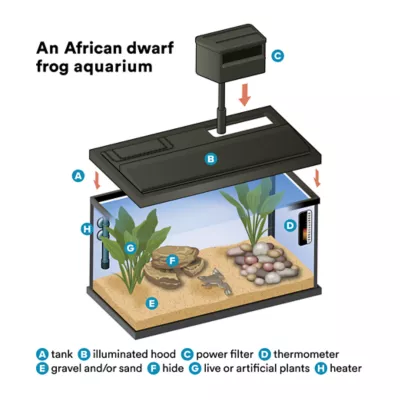
- Tank choice: choose a tank that offers surface area as well as volume. Frogs need to surface to breathe.
- Substrate: use smooth sand or bare bottom. Gravel can trap food and cause impaction.
- Filtration: pick a sponge or low-flow filter. Strong currents stress these frogs.
- Heating: aim for 75–80°F. Small tanks can shift temp quickly, so use a reliable heater and a thermometer.
- Plants and hides: add live or silk plants and hiding spots. Frogs rest among foliage.
- Lid: secure a lid. These frogs can escape during feeding or jumps.
I once set up a 10 gallon with a sponge filter and three floating plants. The frogs thrived and bred once water stayed stable. That taught me that size plus correct setup matters more than size alone.
Tank mates and stocking rules
Choosing tank mates affects what size tank you need. What size tank do African dwarf frogs need? can increase when you add peaceful fish.
- Safe tank mates: small rasboras, small peaceful tetras, and snails. Avoid aggressive or large fish.
- Avoid: fin-nippers, big cichlids, and fish that outcompete frogs for food.
- Stocking rule: add one compatible small fish per 5–10 gallons, depending on species and filter capacity.
If you want fish and frogs together, increase the tank size by 25–50% from the frog-only recommendation. This helps keep water quality stable and lowers stress.

Water quality, feeding, and maintenance
Water care is the top factor tied to tank size. Small tanks need more frequent attention.
- Water testing: test ammonia, nitrite, nitrate, and pH weekly. Small changes matter fast in small tanks.
- Water changes: do 25–50% weekly for tanks 10 gallons and under. Larger tanks can often go 20–30% weekly.
- Feeding: feed sinking pellets or frozen foods every other day. Remove uneaten food to avoid spikes.
- Filtration maintenance: clean sponge filters monthly and replace media as needed.
From experience, I find water testing twice a week for 5–10 gallon tanks keeps surprises away. Bigger tanks let you breathe easier, but you must still watch parameters.
Common mistakes and troubleshooting
Many mistakes come from underestimating space and stability. Here are common issues and fixes.
- Mistake: using gravel that traps food. Fix: switch to sand or a bare bottom.
- Mistake: strong current. Fix: use a sponge filter or deflector.
- Mistake: overcrowding. Fix: reduce number of frogs or upgrade tank size.
- Mistake: skipping water tests. Fix: buy simple test strips or a liquid test kit and test weekly.
If you see lethargy, loss of appetite, or skin problems, test water first. Water issues are the most common root cause.

Personal experience and practical tips
I started with a 5 gallon for one frog. It worked, but needed frequent water work. Upgrading to a 10 gallon cut my chores in half and the frog seemed calmer. A 20 gallon gave room for a live plant carpet and two frogs. My key lessons:
- Bigger is usually better. It buys stability and reduces stress.
- Gentle filtration is essential. Frog skin is sensitive.
- Keep feeding simple. Remove leftovers fast.
- Be patient when adjusting tank size. Cycle the tank before adding frogs.
These tips come from hands-on care and helping friends set up tanks. They work in real homes.

Frequently Asked Questions of What size tank do African dwarf frogs need?
How big of a tank for a single African dwarf frog?
A single African dwarf frog can live in a minimum 5 gallon tank, but a 10 gallon tank is much better for stability and enrichment.
Can African dwarf frogs live in a 2 gallon tank?
No. A 2 gallon tank is too small. It cannot maintain stable water conditions or provide enough space for breathing and activity.
How many African dwarf frogs in a 10 gallon tank?
You can keep two frogs comfortably in a 10 gallon tank. Three may be crowded and increase maintenance needs.
Do African dwarf frogs need a lid on the tank?
Yes. African dwarf frogs can climb and may escape. A secure lid prevents accidents and keeps the water warm.
Will a larger tank reduce disease risk?
Yes. A larger tank stabilizes water and dilutes waste. This lowers ammonia spikes and reduces stress, which helps prevent disease.
Conclusion
Choosing the right tank size protects health and makes frog care easier. What size tank do African dwarf frogs need? Aim for at least 5 gallons for one frog, but prefer 10 gallons or more for long-term health and lower maintenance. Bigger tanks give more stable water, more enrichment, and happier frogs.
Try a modestly larger tank than you think you need. Set it up with gentle filtration, soft substrate, and plants. Test water regularly and adjust stocking with care. Share your setup, subscribe for more care guides, or leave a comment with your questions or experiences.

