

Every day, people breathe in tiny particles and dust without even knowing it. These invisible contaminants can affect your health, especially if you have allergies or asthma. To keep indoor air clean, many homes and workplaces use air filters. But not all filters are equal. Two terms you’ll often hear are HEPA filters and standard filters. Are they the same? How do they differ? Knowing this can help you choose the right filter for your home, office, or even your car. Let’s explore the real differences, strengths, and weaknesses of HEPA and standard filters, so you make smarter choices for your air quality.
What Is A Hepa Filter?
HEPA stands for High Efficiency Particulate Air. This filter type is known for its impressive ability to trap very small particles. The technology behind HEPA filters was first developed during World War II to control radioactive dust. Today, you’ll find them in vacuum cleaners, air purifiers, hospital rooms, and airplanes.
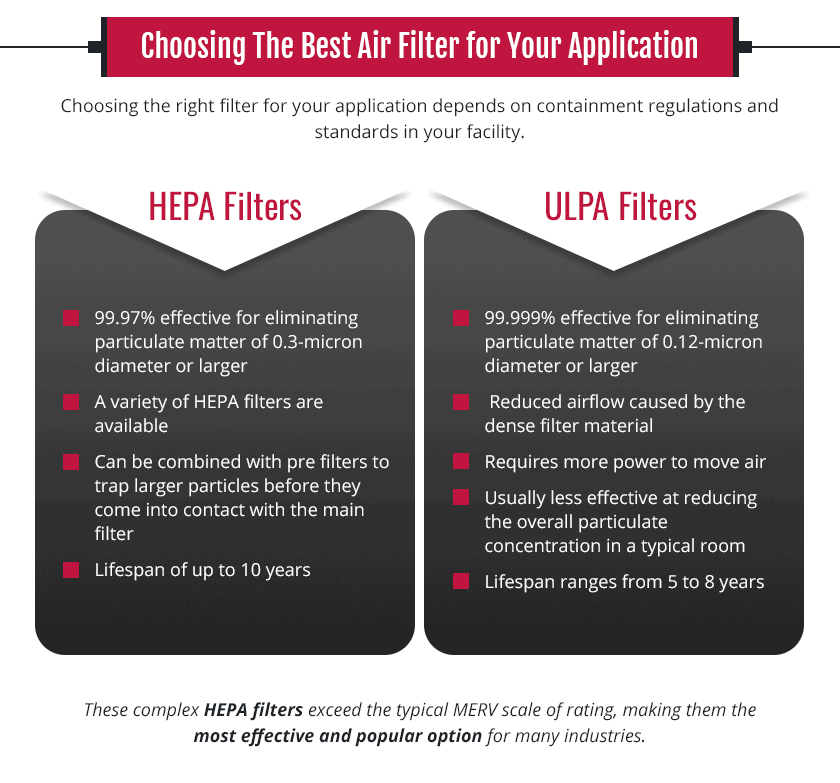
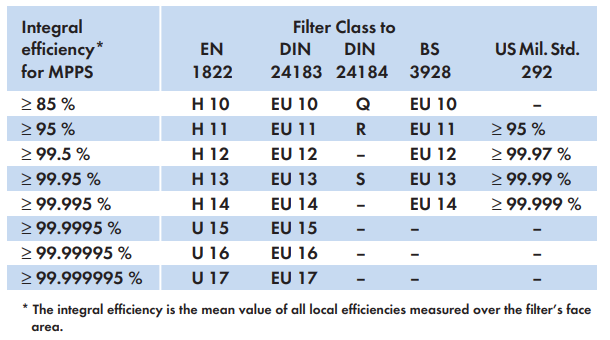
To be called a HEPA filter, a product must meet strict standards. In the United States, a true HEPA filter removes at least 99.97% of particles as small as 0.3 microns in diameter. For perspective, a human hair is about 50-70 microns wide, so HEPA filters catch particles hundreds of times smaller.
How Do Hepa Filters Work?
HEPA filters use a dense mat of fibers, usually made from glass or synthetic materials. As air moves through, several mechanisms trap particles:
- Interception: Particles follow airflow but stick to the fibers when they come close.
- Impaction: Larger particles can’t change direction quickly and crash into fibers.
- Diffusion: Tiny particles move randomly and eventually hit and stick to the fibers.
This combination makes HEPA filters extremely effective against dust, pollen, mold spores, pet dander, and even some bacteria and viruses.
What Is A Standard Filter?
The term standard filter covers many types of air filters that do not meet the HEPA standard. These are often found in home HVAC systems, window air conditioners, and basic air purifiers. The most common types are fiberglass, pleated, and electrostatic filters.
- Fiberglass filters: Cheap and disposable, these use a thin layer of spun glass.
- Pleated filters: Use folded sheets of cotton or polyester, offering more surface area.
- Electrostatic filters: Use an electric charge to help catch particles.
Standard filters are usually rated by the Minimum Efficiency Reporting Value (MERV) scale, which ranges from 1 to 16. The higher the MERV, the better the filter is at capturing small particles.
How Well Do Standard Filters Work?
Standard filters are designed mainly to protect HVAC equipment from large particles like dust and lint, not to clean air as thoroughly as HEPA filters. For example, a typical fiberglass filter (MERV 2-4) may only trap 10-20% of particles in the 3-10 micron range. Even a pleated filter (MERV 8) might capture 70-85% of these larger particles, but lets many smaller ones pass through.
Key Differences Between Hepa And Standard Filters
Understanding the differences goes beyond just numbers. Here’s a side-by-side comparison to highlight what sets HEPA filters apart from standard filters.
| Feature | HEPA Filter | Standard Filter |
|---|---|---|
| Particle Removal Efficiency | 99.97% (0.3 microns) | 10-90% (3-10 microns, varies by MERV) |
| Main Use | Allergy/asthma relief, cleanrooms, hospitals | Basic dust/lint removal, HVAC protection |
| Material | Dense glass or synthetic fibers | Fiberglass, polyester, or cotton |
| Cost | Higher | Lower |
| Maintenance | Less frequent, but essential | Frequent replacement/cleaning needed |
Where Each Filter Type Is Used
The choice between HEPA and standard filters is not just about price; it’s about the purpose and the space.
Common Places For Hepa Filters
- Air Purifiers: Most high-quality air purifiers use HEPA filters to remove allergens and pollutants.
- Hospitals: Operating rooms and isolation wards use HEPA filtration for infection control.
- Cleanrooms: Factories making electronics, medicines, or food need extremely clean air.
- Airplanes: Cabin air is recycled through HEPA filters to minimize germs.
Common Places For Standard Filters
- Home HVAC Systems: Most furnaces and central air units use standard filters to keep dust out of equipment.
- Window AC Units: Usually come with a simple mesh or fiberglass filter.
- Some Air Purifiers: Budget models may use a basic filter to catch large particles only.
Practical Examples: Why The Difference Matters
Imagine someone in your family has asthma. Using a standard filter in your HVAC system might remove dust and pollen, but tiny particles and allergens can still circulate. With a HEPA filter, these triggers are mostly removed, making the air much safer to breathe.
For workplaces like woodworking shops or nail salons, air can fill up with fine dust or chemical fumes. A standard filter will not offer enough protection. Only a HEPA filter can capture the dangerous fine particles that affect workers’ health.
Performance: Data And Real-world Results
Let’s compare how each filter performs in real conditions.
| Filter Type | Removes Pollen | Removes Mold Spores | Removes Smoke | Removes Bacteria |
|---|---|---|---|---|
| HEPA | Yes (99.97%) | Yes (99.97%) | Yes (most, 0.3 microns+) | Some (depends on size) |
| Standard (MERV 8) | Yes (80-90%) | Some (60-80%) | No | No |
This table shows why HEPA filters are the top choice for allergy or asthma sufferers. They are also better for spaces where health or cleanliness is critical.
Cost And Maintenance
Many people choose standard filters because they are cheaper. But there’s more to the story:
- HEPA filters cost more up front, sometimes 2-5 times the price of a standard filter.
- However, they last longer in many cases because they fill up more slowly.
- Standard filters are cheaper per unit but often need to be replaced every 1-3 months.
It’s important to check your system before upgrading. Not all HVAC systems can handle the dense material of a HEPA filter. Using the wrong filter can reduce airflow and damage your system.
Energy Efficiency Considerations
A filter’s density affects how hard your fan or blower must work. HEPA filters, while excellent at cleaning air, create more resistance. If your system isn’t designed for HEPA, it could use more energy or even overheat. Standard filters are less restrictive but don’t catch as much.
Some newer HEPA air purifiers use special fans and motors to handle this resistance without wasting energy. If you’re thinking about switching, always check the manufacturer’s guidelines.
Advanced And Hybrid Filters
Recently, some manufacturers have started making hybrid filters that combine HEPA with other technologies:
- Carbon filters: Trap odors and chemicals along with particles.
- UV filters: Use ultraviolet light to kill germs, but don’t catch particles.
- Electrostatic HEPA: Use an electric charge to catch even more particles.
While these can offer benefits, HEPA is still the gold standard for particle removal. Be wary of marketing terms like “HEPA-type” or “HEPA-like”—these often do not meet true HEPA standards.
Non-obvious Insights When Choosing A Filter
- Filter Size and Fit Matter: Even the best HEPA filter won’t work if there’s a gap around the edge. Air will leak past, bringing in dust and allergens. Always buy the exact size for your device.
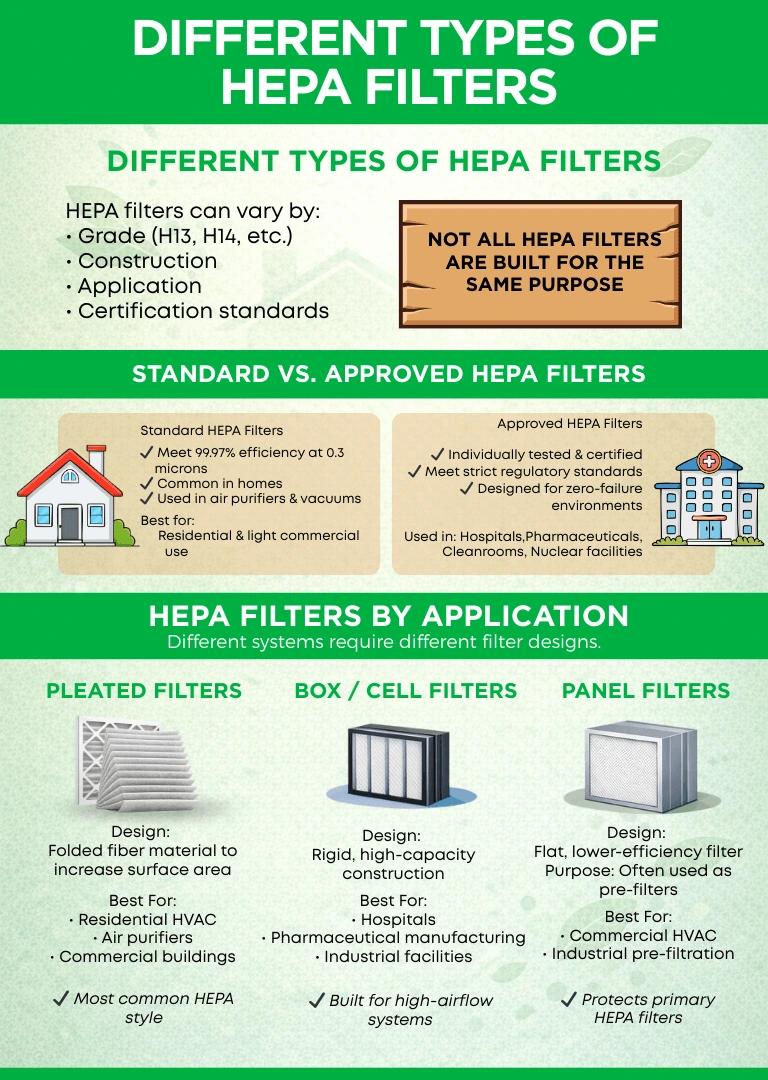
- Pre-Filters Extend Life: Many HEPA systems include a pre-filter to catch larger particles. This keeps the HEPA filter from clogging too fast and saves money over time.
- Check the Certification: Some filters say “HEPA” but do not meet official standards. Look for proof of certification, especially for medical or high-risk environments.
- Noise Can Increase: HEPA purifiers are sometimes louder because more power is needed to move air through the dense filter. Consider this if you need a quiet environment.
Which Filter Is Right For You?
The best filter depends on your needs:
- If you or your family have allergies or asthma, or want to remove smoke, viruses, or very fine dust, a HEPA filter is the best choice.
- If you need a low-cost option mainly to keep your HVAC system clean, a standard filter is enough.
- For workplaces with high air quality needs (labs, clinics), HEPA is the only safe choice.
If you’re unsure, start by upgrading to a higher MERV-rated standard filter. If you notice better air or fewer allergy symptoms, consider investing in a HEPA system.
Common Mistakes When Choosing Air Filters
- Assuming all filters are the same: Many people buy the cheapest option, not realizing how much they leave in the air.
- Not checking system compatibility: Forcing a HEPA filter into an HVAC system designed for standard filters can cause costly damage.
- Ignoring replacement schedules: Even the best filter stops working when clogged. Set a reminder to check filters regularly.
- Falling for vague marketing: “HEPA-type” or “hospital-grade” may not meet real HEPA standards.
- Overlooking whole-home solutions: Portable HEPA purifiers work for single rooms; they can’t clean all the air in a large house.
Quick Comparison: Hepa Vs. Standard Filters At A Glance
To summarize, here’s a straightforward comparison:
| Aspect | HEPA Filter | Standard Filter |
|---|---|---|
| Removes Fine Particles | Yes (0.3 microns+) | No (only 3 microns+) |
| Best For | Allergies, Asthma, Cleanrooms | Basic Dust Control |
| System Compatibility | Special units or retrofits | All standard HVAC systems |
| Average Cost | $20–$100+ | $5–$30 |
Final Thoughts
Choosing between a HEPA filter and a standard filter is more than picking a price. It’s about what you value: basic protection for equipment or the highest possible air quality for health. HEPA filters are unmatched for removing tiny, harmful particles. Standard filters are fine for basic needs and are easier on budgets and HVAC systems. The right filter can make a noticeable difference in how you breathe and feel at home or work.
If you want to dive deeper into the science behind air filtration standards, check out this resource from the Wikipedia: HEPA.
Frequently Asked Questions
What Does Hepa Stand For?
HEPA means High Efficiency Particulate Air. It refers to a filter that removes at least 99.97% of particles as small as 0.3 microns.
Are Hepa Filters Better For Allergies?
Yes. HEPA filters trap common allergens like pollen, pet dander, and dust mites much more effectively than standard filters. This can help reduce allergy symptoms indoors.
Can I Use A Hepa Filter In My Regular Hvac System?
Usually, no. Most home HVAC systems are not designed for the airflow resistance of HEPA filters. Installing one without checking can reduce system performance or cause damage. Use a high-MERV standard filter instead if HEPA is not compatible.
How Often Should I Replace Air Filters?
It depends. Standard filters may need replacing every 1-3 months, while HEPA filters can last 6-12 months in air purifiers. Always follow the manufacturer’s instructions for your specific filter and usage conditions.
What Is A Merv Rating?
MERV stands for Minimum Efficiency Reporting Value. It’s a scale from 1-16 that shows how well a filter removes particles. Higher MERV means better filtration. HEPA filters are above the MERV scale in efficiency.

