

What Pressure Washer Surface Cleaners Are All About
You know that feeling when you’ve spent hours scrubbing your patio, only to look back and see a confusing map of spray lines? It’s frustrating, right? Trying to get a consistent, clean finish on large, flat surfaces with just a standard pressure washer wand can feel like a losing battle.
That's where a pressure washer surface cleaner comes in. It’s a clever attachment designed to take the guesswork out of cleaning your driveways, decks, and other big outdoor areas. Manufacturer specifications for most common surface cleaners indicate they work by creating a contained, spinning spray pattern, typically around 12 to 20 inches wide, to blast away grime evenly and quickly.
The Pain of Splotchy Patios: Why Cleaners Exist
If you’ve ever tackled a dirty driveway or a grimy patio with a standard pressure washer wand, you've likely encountered the dreaded "streaks." This happens because it's incredibly hard to maintain a perfectly consistent distance and angle from the surface while moving the wand in a controlled manner. Your arm gets tired, you speed up in some spots, slow down in others, and the result is a patchy, uneven mess.
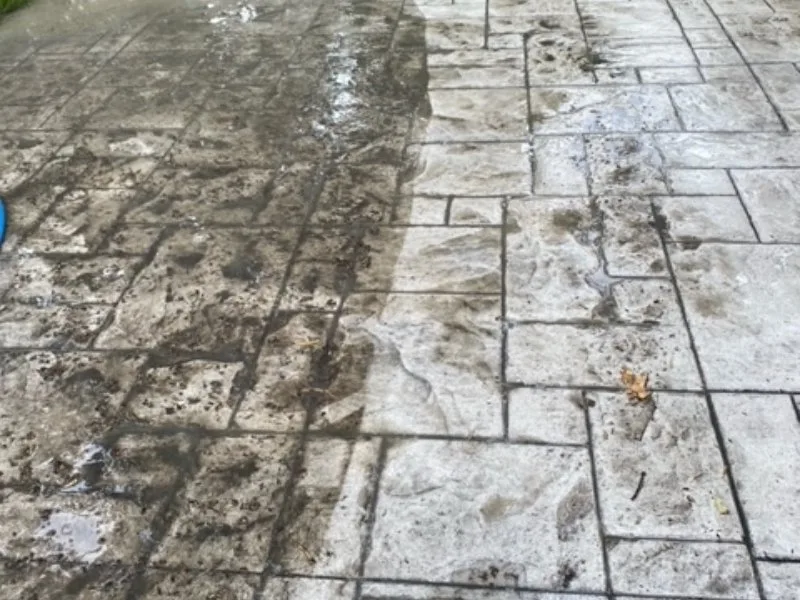
Image source: Web (Bing) / demarks.com (Web image (fair-use with source credit))
Aggregate user reviews frequently highlight this as the primary reason people look for alternatives. Trying to cover a large area means prolonged physical effort, which often leads to inconsistency. For instance, cleaning a 200-square-foot concrete patio might take an hour or more with just a wand, and the final result might not even be what you hoped for.
This leaves homeowners looking for a more efficient and effective solution to achieve a uniform clean.
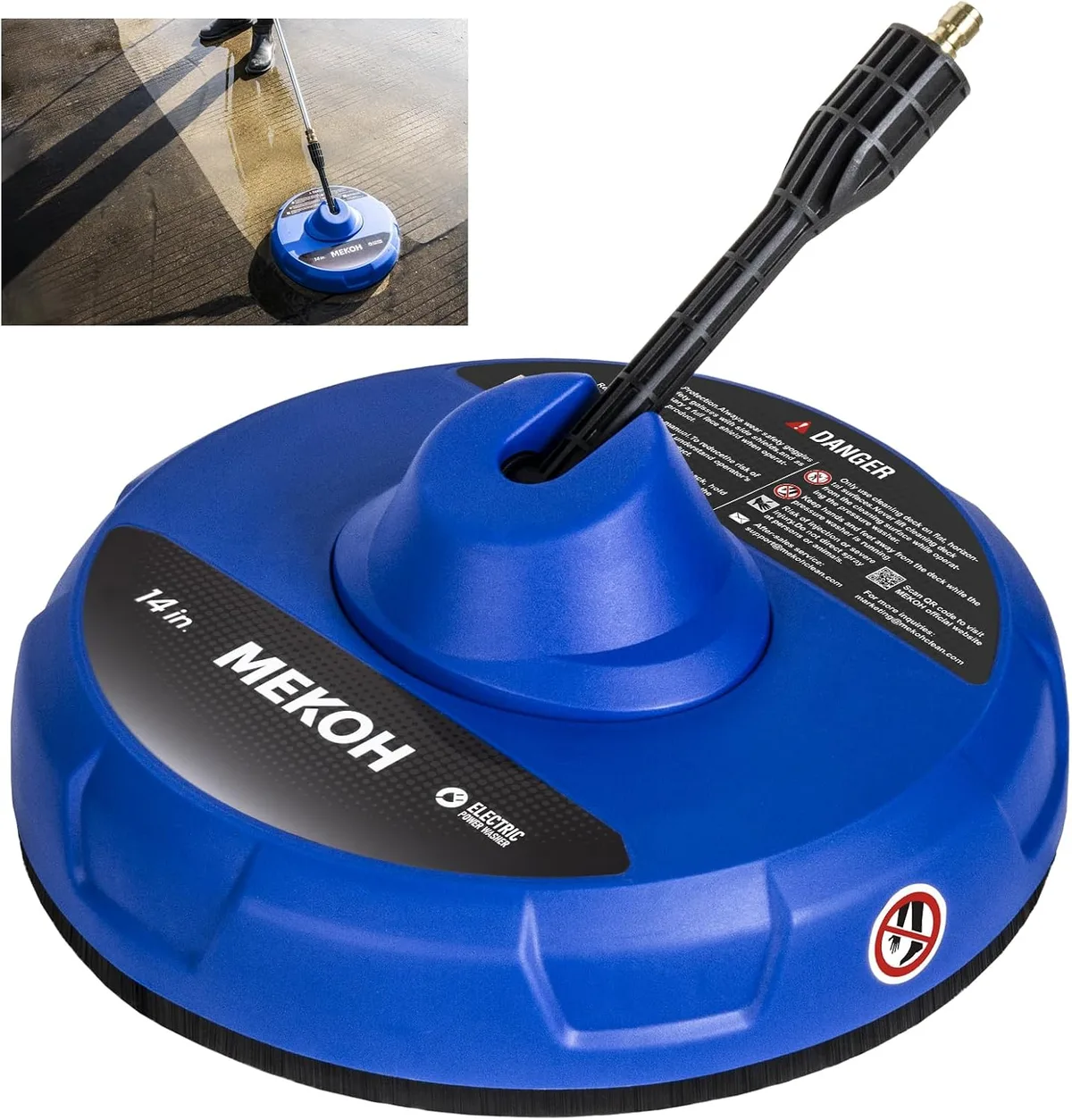
Image source: Web (Bing) / quickbidz.com (Web image (fair-use with source credit))
How Pressure Washer Surface Cleaners Actually Work
So, what makes a surface cleaner different? Think of it as a pressurized cleaning disk. It attaches to your pressure washer, and inside its housing, high-pressure water is directed through spinning nozzles.
These nozzles rotate rapidly, fanning out the water in a controlled, circular pattern.
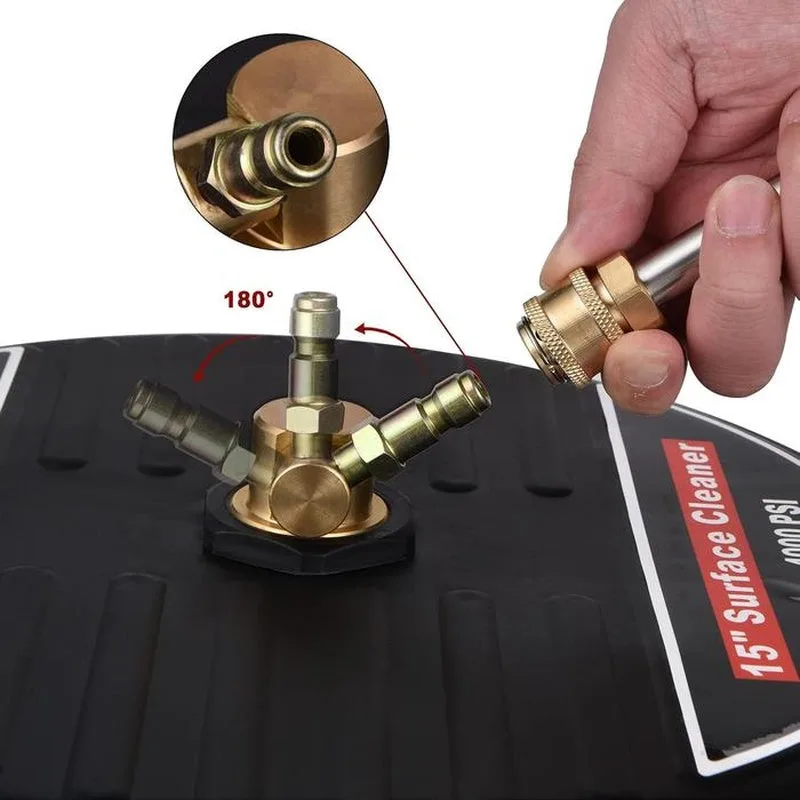
Image source: Web (Bing) / halri.com (Web image (fair-use with source credit))
This spinning action is key because it applies the water spray in an overlapping, fan-like motion across a wider area than a single nozzle. Per ASME standards for pressure washing equipment, this consistent application of force over a larger footprint helps to lift and remove dirt, grime, oil stains, and mildew much more uniformly. Instead of a concentrated jet hitting one spot at a time, you get a broader, more even blast.
This controlled dispersion is what prevents those unsightly streaks and ensures a cleaner finish across the entire surface.
What to Look For: Key Features and Specs
When you're looking at pressure washer surface cleaners, a few key features can make a big difference in performance and ease of use. The diameter is one of the most important specs. Common sizes range from about 12 inches to 20 inches.
A larger diameter, like 15 or 17 inches, will cover more ground with each pass, speeding up your cleaning time, but it also requires a more powerful pressure washer (usually at least 2000 PSI) to operate effectively.
- Diameter: Choose based on your pressure washer's power and the size of the areas you clean.
- PSI Requirement: Check the manufacturer's recommended PSI. Using one with a pressure washer that's too weak won't deliver good results. Our research indicates that most standard models perform best with 2000 PSI or higher.
- Nozzle Type: While most have standard rotating nozzles, some might offer different spray patterns or materials.
- Build Material: Most are made from durable plastic, but some higher-end models feature metal construction for added longevity.
Understanding these specs helps you match the cleaner to your pressure washer and your cleaning needs.
The Best Jobs for a Surface Cleaner
Surface cleaners truly shine when you have large, flat areas that have accumulated a good amount of dirt, mold, or mildew. They are purpose-built for these situations.
- Driveways: Concrete driveways are prime candidates. They can blast away oil spots, tire marks, and general grime, restoring a much cleaner look. For more challenging driveway stains, you might consult driveway cleaning equipment.
- Patios: Whether made of concrete, pavers, or stone, patios can become breeding grounds for algae and moss. A surface cleaner tackles this effectively. For delicate patio materials, you might consider a concrete cleaning tool with a gentler approach.
- Decks: Wooden or composite decks benefit greatly from the even cleaning action, preventing the splintering or gouging that can happen with a powerful wand. For larger deck projects, looking at deck cleaning pressure washers can also be helpful.
- Sidewalks and Walkways: These high-traffic areas often get quite dirty, and a surface cleaner makes quick work of them.
- Garage Floors: If you have a concrete garage floor, a surface cleaner can help you tackle accumulated dirt and oil spills efficiently.
Essentially, if it's a large, relatively flat expanse that needs serious cleaning, a surface cleaner is likely your best bet. For smaller, more intricate cleaning tasks or vertical surfaces, you'll likely still need your standard wand.
Downsides: When a Surface Cleaner Isn't the Answer
While fantastic for their intended purpose, pressure washer surface cleaners aren't a one-size-fits-all solution. They have limitations, and knowing them upfront helps you avoid frustration. The most significant drawback is their inability to handle intricate details or curves.
- Edges and Corners: Surface cleaners are designed for open, flat spaces. You cannot effectively clean the edges of a deck, tight corners around planters, or the sides of steps with one. You'll always need a standard wand for these areas.
- Uneven Surfaces: If your patio has significant cracks, large aggregate, or is very uneven, a surface cleaner might not make full contact, leading to inconsistent cleaning.
- Power Requirements: As mentioned, most effective surface cleaners require a decent amount of power. Manufacturer specifications often cite a minimum of 2000 PSI. If your pressure washer is a lower-PSI electric model, you might find the results underwhelming. You can explore options like an electric pressure washer if power is a concern, but always check the cleaner's compatibility.
- Weight and Maneuverability: While they guide easily on flat surfaces, some larger or heavier models can be a bit cumbersome to maneuver, especially if you have a lot of obstacles on your cleaning area. For portability, considering a portable pressure washer might influence your attachment choice.
Getting Started: A Simple How-To Guide
Using a pressure washer surface cleaner is quite straightforward once you've attached it to your machine. The process is designed to be intuitive, letting the tool do most of the work.
- Connect the Cleaner: Securely attach the surface cleaner to your pressure washer's spray gun or hose. Ensure the connection is tight to prevent leaks under pressure.
- Power Up: Start your pressure washer. Ensure it’s running at the appropriate PSI for the surface cleaner.
- Begin Cleaning: Place the surface cleaner flat onto the surface you intend to clean. You’ll hear the internal nozzles start to spin as the water is released.
- Guide the Cleaner: Gently push or pull the surface cleaner across the surface in slow, steady, and overlapping passes. Don't rush the process; a steady, consistent movement is key to avoiding lines.
- Move to the Next Section: Lift the cleaner slightly to move to the next uncleaned area, ensuring your passes overlap slightly with the previously cleaned section. Continue this motion until the entire area is clean.
For very stubborn stains, you might need to make a second pass over the area. Remember to keep the cleaner moving to prevent water from concentrating in one spot for too long, which can damage some surfaces.
Frequently Asked Questions About Surface Cleaners
What PSI is needed for a surface cleaner?
Most standard surface cleaners perform best with a pressure washer rated at 2000 PSI or higher. Lower PSI units might not generate enough force for effective cleaning.
Can a surface cleaner be used on wood decks?
Yes, surface cleaners are often used on wood decks to provide a more even clean than a wand. However, always ensure the cleaner is compatible with your pressure washer and test it on an inconspicuous area first, especially with softer woods.
Will a surface cleaner remove tough stains like oil?
Surface cleaners are very effective at removing general grime, mildew, and some lighter stains. For deeply set oil stains, you might still need a specialized degreaser or a second pass with a targeted approach after using the surface cleaner.
How do I maintain a surface cleaner?
After each use, rinse the surface cleaner thoroughly with fresh water to remove any debris. Store it in a dry place. Periodically check the spinning nozzles for any clogs and clean them if necessary.


