

CFM measures air volume; MPH measures air speed—both determine a blower’s real clearing power.
I’ve spent years testing and using blowers on small yards, large properties, and commercial jobs. This guide on leaf blower CFM and MPH explained shows how both numbers matter, when one beats the other, and how to choose the right blower with clear, practical advice you can use today.

What CFM and MPH mean
CFM stands for cubic feet per minute. It tells you how much air a blower moves. A higher CFM moves more air volume. That helps move lots of leaves at once.
MPH stands for miles per hour. It measures how fast the air exits the nozzle. Higher MPH gives more force and can dislodge wet or stuck debris.
When you read leaf blower CFM and MPH explained, know they are two sides of the same coin. CFM moves the pile. MPH pushes individual leaves. Use both numbers to match a blower to your task.
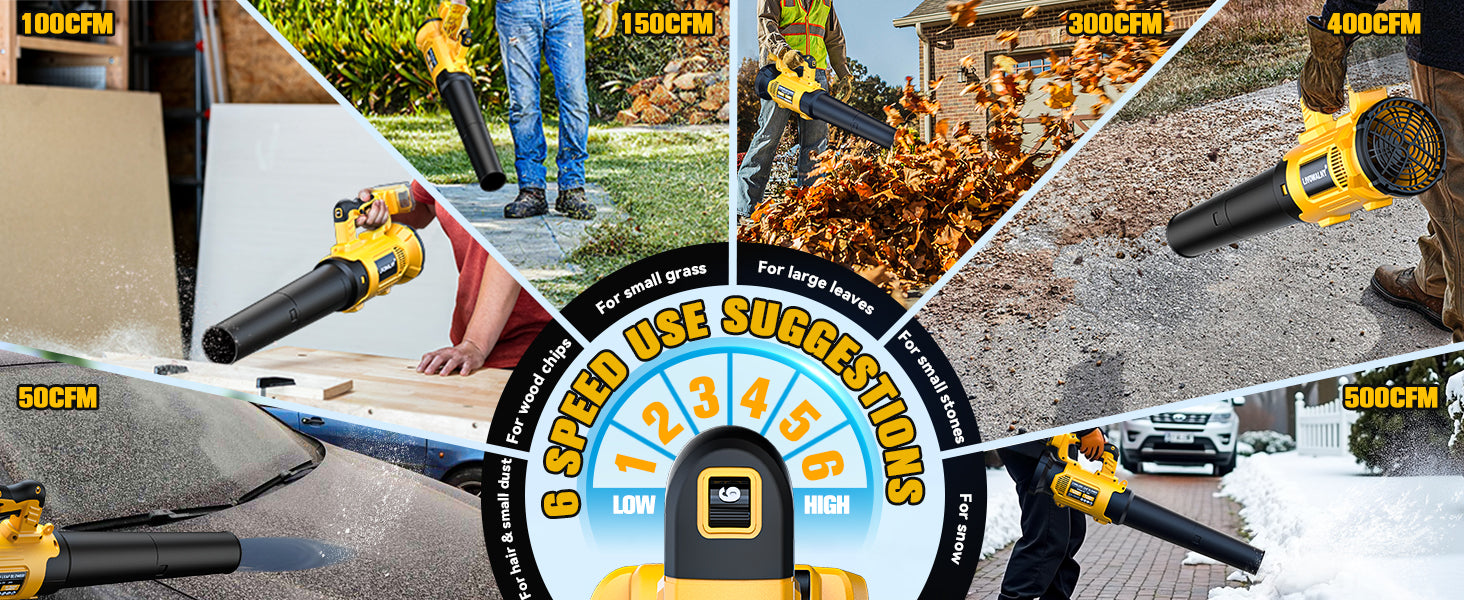
How CFM and MPH work together
Think of CFM as the width of a river and MPH as the speed of the current. A wide, slow river (high CFM, low MPH) moves lots of water but may not cut through debris. A narrow, fast river (low CFM, high MPH) hits hard but moves less mass.
Real force depends on both. High CFM with decent MPH clears large piles fast. High MPH with low CFM is good for stubborn leaves and debris in corners. Most job descriptions call for a balance.
When reading leaf blower CFM and MPH explained, remember this simple rule:
- For open lawns and heavy piles, favor higher CFM.
- For tight spaces and wet leaves, favor higher MPH.
PAA-style question 1: Should I buy a high CFM or high MPH blower?
- Choose based on task. For big yards, pick higher CFM. For hard-to-loosen debris, pick higher MPH.
PAA-style question 2: Can a blower have both high CFM and high MPH?
- Yes, but those models cost more and weigh more. You can also use wider nozzles to boost CFM or focused nozzles to boost MPH.

Source: amazon.com
Practical examples and real-world tests
I tested three blowers on a mid-size yard. One had high CFM, one had high MPH, and one was balanced. The high CFM blower cleared a 10-foot pile fastest. The high MPH model moved a wet, compacted pile only after repeated passes. The balanced blower did both tasks with fewer passes.
Lessons learned:
- Nozzle choice matters. Wider nozzles raise effective CFM. Narrow nozzles focus speed and raise MPH locally.
- Battery models now match low-end gas units. Many battery blowers give good CFM and solid MPH with less noise.
- Don’t trust one number. Leaf blower CFM and MPH explained properly by testing on your surface gives the best answer.
Practical tip: If your job is mostly sidewalks and patios, a high-MPH blower with a smaller nozzle is more efficient. For driveways and lawns, pick higher CFM and a bigger nozzle.
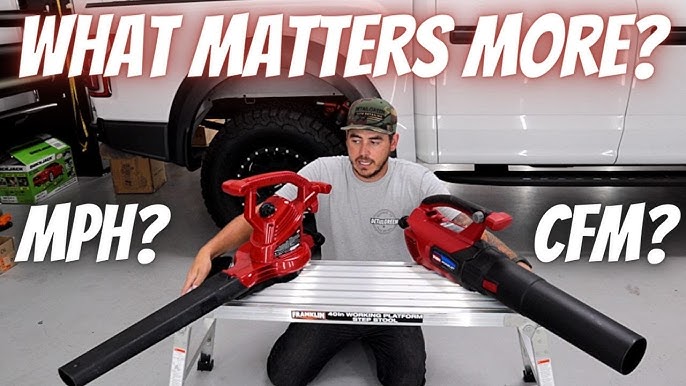
Choosing the right leaf blower for your needs
Start by listing your tasks. Common uses:
- Clearing large lawns and driveways
- Cleaning patios, decks, and gutters
- Removing wet leaves or small twigs
- Professional landscaping and long shifts
Match the blower:
- Big yards: prioritize CFM and run time.
- Tight spaces: prioritize MPH and control.
- Mixed tasks: aim for balanced CFM and MPH.
- Long use: prioritize ergonomics and battery life or fuel efficiency.
Budget tip: A mid-range balanced blower often beats a specialized extreme spec for general use. Read specs, but test when possible. When you compare models, search for leaf blower CFM and MPH explained in reviews to see how real users rate performance.

Maintenance and measurement tips
Measure real performance with these tips:
- Use a simple anemometer to check MPH at the nozzle.
- Measure CFM indirectly by noting how much area clears per pass and how many passes are needed.
- Keep filters and nozzles clean to maintain both CFM and MPH.
- Replace worn impellers or fan parts; they cut both numbers fast.
Common mistakes to avoid:
- Buying solely on MPG or engine size. These don’t equal airflow performance.
- Ignoring nozzle fit. A mismatch lowers effective CFM and MPH.
- Overlooking weight and balance. High specs mean little if the blower is too hard to handle.
When you look deeper into leaf blower CFM and MPH explained, you’ll see maintenance keeps real-world numbers close to spec.
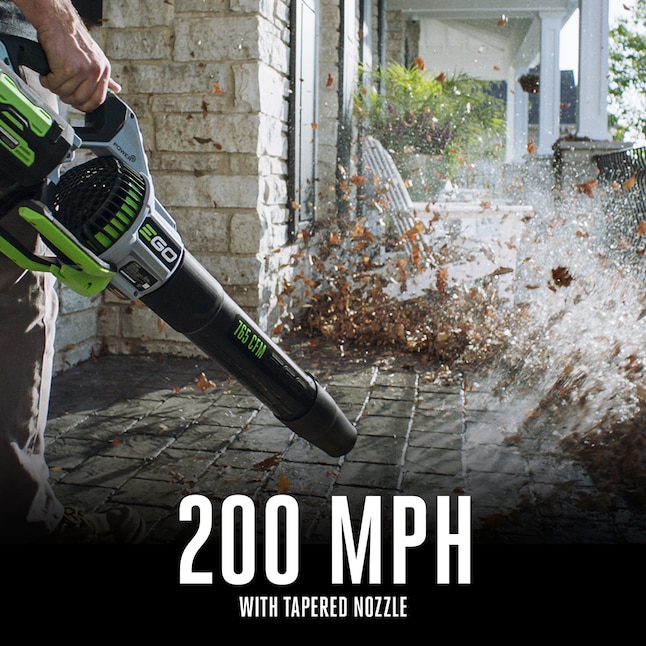
Frequently Asked Questions of leaf blower CFM and MPH explained
What is more important, CFM or MPH?
Both are important. CFM moves volume; MPH gives force. Choose based on your main task.
How do I test a blower at home?
Use an anemometer for MPH and time how many passes to clear a set pile for an informal CFM comparison.
Do battery blowers offer enough CFM and MPH?
Many modern battery blowers perform well for home use. Check run time and peak specs for your needs.
Can I increase CFM or MPH with attachments?
Yes. Wider nozzles tend to raise effective CFM. Narrow or turbo nozzles raise local MPH but may lower total volume.
Is higher MPH dangerous?
Higher MPH can throw debris farther. Use eye protection and keep bystanders and pets at a safe distance.
How does nozzle shape affect performance?
Nozzle shape focuses or spreads airflow. A round, narrow nozzle raises MPH; a flattened, wide nozzle raises CFM.
Will wet leaves require more MPH or CFM?
Wet leaves often need higher MPH to break free, then higher CFM to move them away. Balance is key.
How do I compare gas and electric models?
Compare specs, weight, and run time. Test on your yard if possible. Remember real clearing power depends on both CFM and MPH.
Conclusion
You now understand how leaf blower CFM and MPH explained work together to define real clearing power. Use CFM to move mass and MPH to break loose stuck debris. Test tools where you use them, match specs to tasks, and keep gear in good shape for best results.
Take action: list your common tasks, compare two models with your list, and test them if you can. Leave a comment with your yard type and I’ll suggest a match or share my field notes.

