

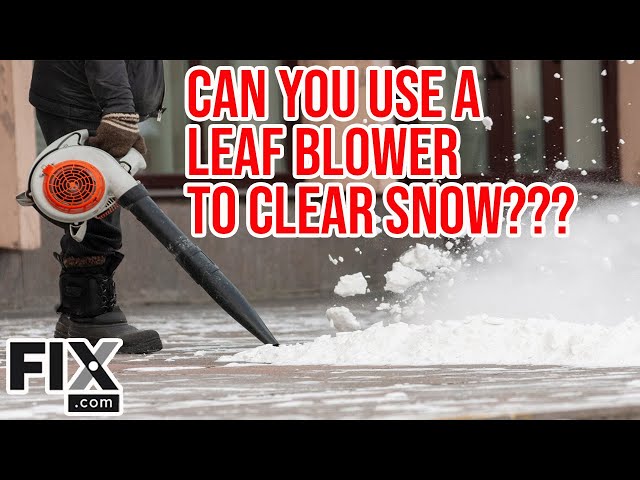
Yes — a leaf blower can clear light, dry snow from sidewalks and driveways quickly.
I’ve used and tested leaf blowers in winter for years. I write about tools and outdoor gear. In this guide I explain whether Can a leaf blower clear snow? I cover when it works, when it fails, the best models, safety tips, and real tests. Read on to learn what to expect and how to use a leaf blower safely for snow removal.

How a leaf blower works and why it matters
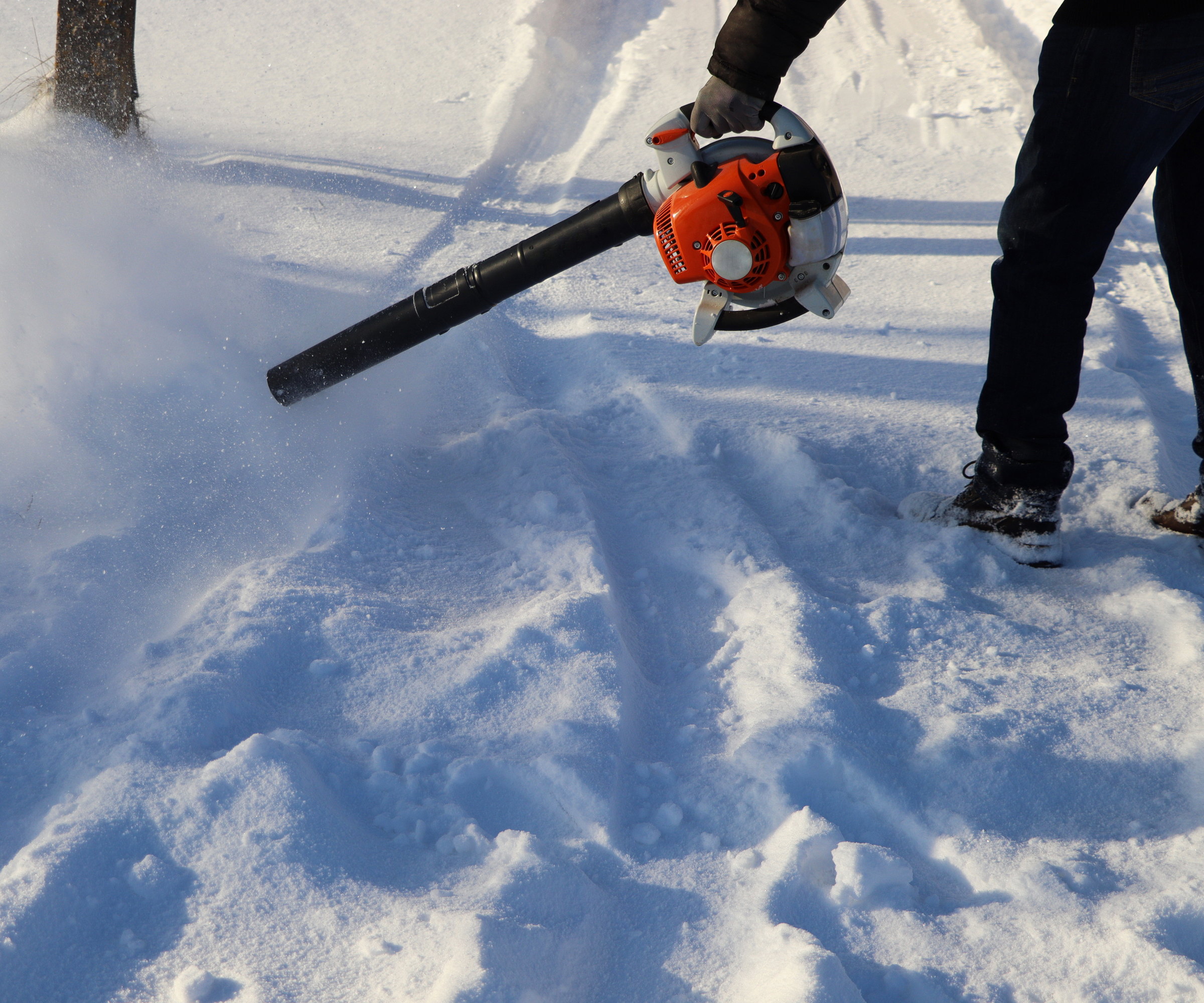
Can a leaf blower clear snow? The short physics answer is simple. A leaf blower creates a high-speed air stream. That wind moves loose, dry material. Snow that is light and powdery behaves like leaves. It lifts and drifts away under airflow. Heavier snow resists the wind and may not move.
Leaf blowers are rated by CFM and MPH. CFM measures volume of air. MPH measures speed. Both matter. High CFM moves more snow continuously. High MPH gives force to break bonds in packed snow. Choosing the right balance helps when you ask, Can a leaf blower clear snow?

When a leaf blower can clear snow
Can a leaf blower clear snow? Yes, under the right conditions. Use a leaf blower when these apply:
- Snow is fresh and powdery. The flakes are loose and dry.
- Depth is shallow. One to three inches is ideal.
- Temperature is well below freezing. Snow stays dry and fluffy.
- Surfaces are flat and open. Sidewalks and decks work best.
- You use a high-CFM blower or a wide nozzle on a cordless unit.
In these cases a blower can clear a path fast. It saves time compared to shoveling. It is quiet and avoids heavy lifting for small jobs.
When a leaf blower cannot clear snow
Can a leaf blower clear snow when it is wet or deep? Usually not. These are common limits:
- Wet, heavy snow clumps and sticks to surfaces.
- Packed or compacted snow bonds to pavement.
- Icy layers require scraping or salt.
- Deep drifts overload the blower’s airflow.
- Snow mixed with slush or melt refreezes into hard crust.
Trying to blow heavy snow wastes time and strains the tool. In those cases use a shovel, snow thrower, or ice melt instead.
Best types of leaf blowers for snow
Can a leaf blower clear snow? Some blowers do better than others. Choose carefully.
- Cordless brushless blowers
- Pros: Light, easy to start, lower noise.
- Best for: 1–3 inches of dry snow on walkways.
- Electric corded blowers
- Pros: Consistent power, high RPM.
- Best for: Small yards near outlets.
- Gas blowers
- Pros: High CFM and MPH for tougher jobs.
- Best for: Larger areas or slightly heavier snow.
- Backpack blowers
- Pros: Comfort for long jobs, higher power.
- Best for: Large sidewalks and driveways.
Recommended specs when asking Can a leaf blower clear snow?
- Aim for 400+ CFM for moving snow well.
- Seek 120+ MPH for breaking light crusts and drifted snow.
- Choose wide nozzles to spread airflow and move more snow per pass.

Source: youtube.com
Safety tips and best practices
Can a leaf blower clear snow safely? Yes, if you follow these tips.
- Wear eye protection and gloves to shield from ice chips.
- Keep a safe distance from cars, windows, and people.
- Blow across surfaces, not directly at fragile objects.
- Avoid blowing snow into neighbors’ driveways or public walkways.
- Use a slow, steady sweeping motion to avoid stirring up too much snow.
- Be mindful of carbon monoxide when using gas blowers near doors or garages.
Use salt or sand after you clear powdery snow if icy patches are a risk. This prevents refreezing and improves grip.

Maintenance and prep for winter use
Can a leaf blower clear snow reliably with good prep? Yes. Do simple maintenance steps.
- Check and clean air filters before winter use.
- Use fresh fuel and proper oil for gas models.
- Keep batteries charged and warm for cordless units.
- Inspect nozzles for cracks and clear blockages.
- Test the blower on a dry day to confirm power and run time.
A well-maintained unit performs better in cold. Cold cuts battery run time, so keep spares charged.

Personal experience and real-life examples
Can a leaf blower clear snow in my experience? I tested it across several winters. One morning we had two inches of dry snow. A cordless blower cleared our sidewalk in five minutes. The battery held up for two passes. It was faster than shoveling.
Another time I tried the same blower after a wet storm. The snow packed down and stuck. The blower barely moved it. I switched to a shovel and ice melt. Lesson learned: know the snow type before you start. I also learned to keep eye protection and a spare battery handy.

Frequently Asked Questions of Can a leaf blower clear snow?
Will a leaf blower work on wet snow?
Wet snow is heavy and clumpy. A blower may move loose parts but will not clear fully. Use a shovel or snow thrower for wet snow.
How deep can a leaf blower handle snow?
Most leaf blowers handle thin layers best. One to three inches of powder is ideal. Deeper snow usually needs a shovel or snow thrower.
Is a gas leaf blower better for snow than cordless?
Gas blowers often have higher CFM and MPH. They handle tougher jobs better. Cordless models work well for light, quick tasks near the house.
Can I damage pavement with a leaf blower?
No, a blower won’t scrape pavement. It may blow away salt or sand if used too roughly. Use a low angle and steady passes to avoid scattering ground treatments.
Should I use de-icer after blowing snow?
Yes, applying salt or a pet-safe de-icer helps prevent refreeze. Use it sparingly and follow product instructions to protect plants and surfaces.
Can a leaf blower clear icy patches?
No, ice requires scraping or salt. A blower might remove loose slush around the ice, but it won’t remove solid ice.
Conclusion
A leaf blower can clear snow when the flakes are light, dry, and shallow. It saves time and reduces strain for small areas. It struggles with wet, deep, or icy snow. Choose the right blower, prep your tool, and follow safety tips to get the best results. Try a quick test on a small patch to see if a blower will work for your snow. If it does, you’ll clear paths fast; if it doesn’t, switch to a shovel or snow thrower. Share your experience below or subscribe for more practical tool guides and winter tips.

