

Most vacuum belts should be replaced every six to twelve months, or sooner when they show wear.
Knowing how often should you replace a vacuum belt can protect your cleaner, improve suction, and prevent damage to the brush roll. The right schedule depends on the belt type, how often you vacuum, the floor surfaces in your home, and whether the brush roll becomes blocked. This guide explains the warning signs, replacement steps, costs, and simple habits that help a vacuum belt last longer.
How often should you replace a vacuum belt?
For most upright vacuums, replace the belt every six to twelve months. A busy home with pets, children, thick rugs, or frequent cleaning may need a new belt every three to six months.
Light use may allow a belt to last closer to 12 to 18 months. However, time alone should not decide how often should you replace a vacuum belt. A belt that looks worn or no longer turns the brush roll needs attention, even if it is only a few months old.
Check the owner’s manual first. Some vacuum models use flat belts, while others use geared, ribbed, or stretch belts. A few newer machines have belts designed to last several years, so the manufacturer’s schedule matters more than a general rule.
A simple guide looks like this:
• Occasional use: Inspect every six months and replace every 12 to 18 months if it remains in good shape.
• Regular home use: Inspect monthly and replace about every six to twelve months.
• Heavy use: Inspect monthly and expect replacement every three to six months.
• Commercial or high-traffic use: Inspect often and follow the service schedule for the exact model.

What does a vacuum belt do?
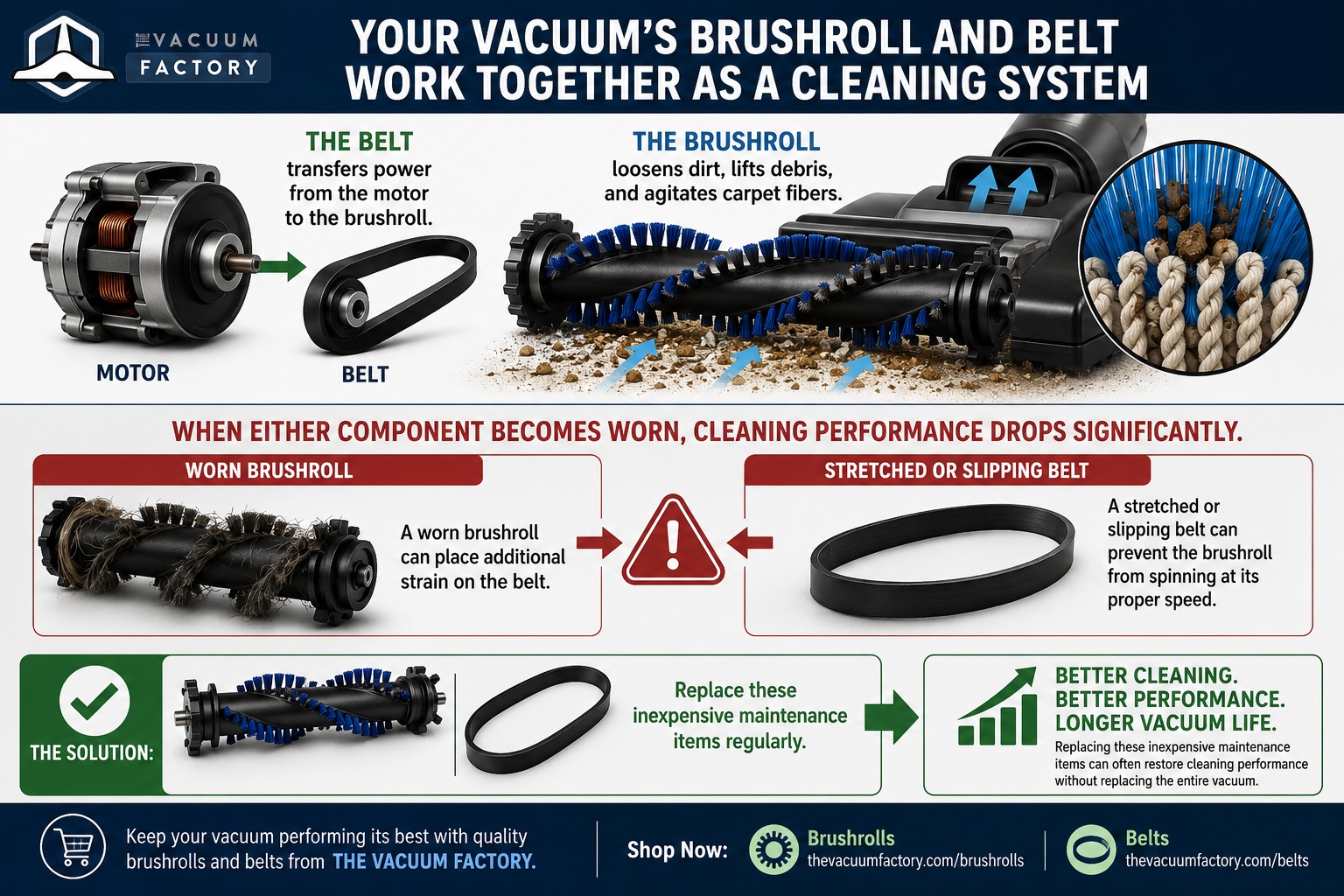
A vacuum belt is a small rubber or reinforced band that transfers power from the motor shaft to the brush roll. When the motor runs, the belt spins the brush roll. The rotating brush then lifts dirt, hair, and crumbs from carpet fibers.
Think of the belt as a bicycle chain made from rubber. If it stretches, slips, or breaks, the motor may still sound normal, but the brush roll will slow down or stop.
A worn belt can affect cleaning in several ways:
• The brush roll may stop turning.
• Carpet may look clean on top but hold dirt below the surface.
• Pet hair may remain trapped in the fibers.
• The vacuum may smell like burning rubber.
• The belt may create a loud squeal.
• The motor may work harder than normal.
A vacuum belt does not usually control suction by itself. Still, a stopped brush roll can make the vacuum seem weak, especially on carpet. This is why learning how often should you replace a vacuum belt can help you solve a cleaning problem before replacing the whole machine.

Signs that your vacuum belt needs replacement
Your vacuum often gives clear clues before the belt fails. Pay attention to changes in sound, smell, and brush roll movement.
The brush roll does not spin
Turn the vacuum off, unplug it, and check the brush roll by hand. It should move with some resistance but should not feel locked. If the motor runs while the brush roll stays still, the belt may be broken, loose, or stretched.
Some vacuums have a brush roll switch. Make sure that switch is on before buying a new belt.
You smell burning rubber
A hot rubber smell often means the belt is slipping against the motor shaft or brush roll. Hair, thread, or carpet fibers may also be wrapped around the brush roll and place extra strain on the belt.
Stop using the vacuum if you notice this smell. Continued use can damage the belt, brush roll, or motor.
The vacuum makes a squealing sound
A high-pitched squeal can come from a loose belt. It can also come from a worn brush roll bearing or another moving part. Inspect the belt before assuming the motor has failed.
The vacuum leaves dirt behind
When the brush roll turns too slowly, it cannot agitate carpet well. If the filters are clean and the nozzle is clear, a weak or worn belt may be the cause.
The belt looks cracked or shiny
Remove the lower cover if your model allows it. Replace the belt if you see:
• Cracks or splits
• Frayed edges
• A glossy, polished surface
• Flattened areas
• Stretching or slack
• Melted spots
• Oil or chemical damage
A shiny belt may be slipping even when it is not broken. Visual checks are one of the best ways to judge how often should you replace a vacuum belt.

What causes a vacuum belt to wear out?
Normal use causes gradual stretching, but several problems can shorten belt life. Finding the cause can help you avoid another early failure.
Hair and thread buildup
Long hair, string, and rug fibers can wrap around the brush roll. The belt must then pull against extra resistance. Over time, it stretches and heats up.
Vacuuming large objects
Coins, toy parts, paper clips, and other hard objects can jam the brush roll. Even a short jam can strain the belt. Pick up large items before vacuuming.
Thick carpet and rugs
Dense carpet creates more resistance than smooth flooring. Some vacuums also struggle when the height setting is too low. Use the correct height setting for the surface.
Incorrect belt installation
A belt that is too loose, too tight, or installed on the wrong side may fail quickly. Always use the exact belt made for your vacuum model.
Age and heat
Rubber slowly loses flexibility as it ages. Heat from the motor and friction can make it brittle. A vacuum stored in a hot garage may need more frequent inspection.
Wrong replacement part
Universal belts may fit many machines, but they are not always a safe choice. A belt with the wrong width or length can slip, stretch, or overload the motor. The model number is the best guide.

How to inspect a vacuum belt safely
Inspecting a belt takes only a few minutes on many upright vacuums. Always follow the instructions for your model.
-
Turn the vacuum off and unplug it from the outlet.
-
Place the vacuum on a flat surface.
-
Remove the lower plate or brush-roll cover.
-
Look for cracks, fraying, stretching, or a shiny surface.
-
Remove hair and thread from the brush roll.
-
Check whether the brush roll spins freely.
-
Compare the belt with the replacement listed in the manual.
-
Reinstall the cover before plugging the vacuum back in.
Never inspect the belt while the vacuum is connected to power. Keep fingers away from the brush roll, since some machines can start unexpectedly if a switch is pressed.
When helping with vacuum maintenance, one common mistake is checking only the belt. A jammed brush roll can make a new belt fail within days. Cleaning the brush roll and checking its end bearings are just as important as installing the replacement belt.

How to replace a vacuum belt
Most upright vacuum belts can be replaced at home with a screwdriver and the correct part. The exact design differs, so treat these steps as general guidance.
-
Unplug the vacuum and lower the handle.
-
Remove the screws or clips holding the brush-roll cover.
-
Lift out the brush roll if the design allows it.
-
Remove the old belt from the motor shaft and brush roll.
-
Clean hair, thread, and debris from the brush roll.
-
Install the new belt around the motor shaft.
-
Stretch the belt around the brush roll pulley.
-
Place the brush roll back into its slots.
-
Turn the brush roll by hand to confirm that the belt moves smoothly.
-
Replace the cover and tighten the screws.
A new belt may feel tight. That is normal for many upright vacuums. Do not force a belt that seems far too small, since the wrong size can strain the motor.
After installation, run the vacuum for a few seconds while watching and listening. A brief rubber smell can occur with some new belts, but a strong smell, smoke, or loud squealing means you should turn the machine off and recheck the installation.

How to make a vacuum belt last longer
Good care can reduce wear and improve cleaning. These habits also make it easier to judge how often should you replace a vacuum belt.
• Remove hair from the brush roll at least once a month.
• Pick up coins, toys, cords, and other large items before vacuuming.
• Use the correct height setting for carpet and bare floors.
• Do not vacuum wet debris unless the machine is designed for it.
• Replace clogged filters as the manual recommends.
• Empty the dust bin or bag before it becomes overfilled.
• Use the correct belt for the exact model.
• Stop the vacuum quickly if the brush roll becomes jammed.
• Store the vacuum in a dry, moderate-temperature area.
• Inspect the belt whenever cleaning performance changes.
In homes with pets, a small brush-roll cleaning tool can make a major difference. Removing wrapped hair takes pressure off the belt and helps the brush roll spin at its proper speed.
Can a vacuum belt damage the motor?
A worn belt does not always damage the motor, but continued use can create extra heat and resistance. A slipping belt may rub against the motor shaft and produce friction. A jammed brush roll can place even more load on the motor.
Turn off the vacuum and unplug it if you notice a burning smell, smoke, repeated belt breakage, or a brush roll that will not turn. These signs may point to a blockage, seized bearing, electrical fault, or motor problem.
Replacing the belt is usually much cheaper than replacing a motor. However, a new belt will not solve every problem. If the belt breaks again soon after installation, inspect the brush roll, end caps, bearings, height setting, and motor shaft.
How much does vacuum belt replacement cost?
A replacement vacuum belt often costs about $5 to $20, depending on the brand and design. Some specialty belts or belt kits cost more. Professional service may add labor charges, but many upright vacuum belts are simple to replace at home.
The lowest-priced belt is not always the best choice. Check the vacuum model number and compare the belt’s shape, width, and length with the manufacturer’s specifications.
Replacing a belt can extend the useful life of an otherwise healthy vacuum. If the machine also has a failing motor, cracked housing, damaged brush roll, and poor suction, repair may not be the most economical option.
Flat belts, geared belts, and stretch belts
Not all vacuum belts work in the same way. Knowing the type can help you understand how often should you replace a vacuum belt.
Flat belts
Flat belts are common in older upright vacuums. They stretch over time and may need replacement about every six to twelve months with regular use.
Geared or toothed belts
Geared belts have teeth that match grooves on the brush roll and motor drive. They are less likely to slip, but they can still crack, stretch, or break. Follow the model’s service instructions.
Stretch belts
Stretch belts are installed without a separate tension adjustment. They may feel very tight during installation. Use the recommended tool or method rather than forcing the belt with a sharp object.
Brushless or belt-free systems
Some newer vacuums use direct-drive technology. These models may not have a traditional belt at all. If your vacuum has no belt, inspect the brush-roll motor and follow the manufacturer’s maintenance guide instead.
When should you call a professional?
DIY belt replacement is usually safe when the vacuum has a simple, accessible design. Professional help makes sense when the repair involves electrical parts or the cause is unclear.
Contact a repair technician if:
• The replacement belt breaks repeatedly.
• The motor runs but becomes very hot.
• The brush roll will not spin after a new belt is installed.
• You see smoke or melted plastic.
• The vacuum trips a circuit breaker.
• The brush roll bearings are seized.
• The model requires special tools.
A technician can test the motor, inspect the drive system, and identify hidden damage. This can prevent repeated belt purchases and reduce the risk of electrical injury.
Frequently Asked Questions About How Often Should You Replace a Vacuum Belt
How often should you replace a vacuum belt if you have pets?
Homes with pets often need a new belt every three to six months. Long hair and pet fur can wrap around the brush roll and increase belt strain, so monthly inspections are helpful.
Can a vacuum belt last for years?
Some belts can last several years with light use, while others wear out within a few months. The belt type, vacuum design, floor surface, and brush-roll care all affect service life.
Should I replace the belt if it still looks fine?
Not always. If the brush roll spins correctly and the belt has no cracks, stretching, fraying, or shiny areas, you may continue using it. Replace it when performance changes or the manufacturer’s schedule says it is due.
Why does my new vacuum belt keep breaking?
A jammed brush roll, wrong belt size, damaged pulley, seized bearing, or incorrect installation may cause repeated breakage. Find and fix the underlying problem before installing another belt.
Can I use any belt that fits my vacuum?
No. A belt may look similar but have the wrong length, width, or material. Use the belt listed for your exact vacuum model to avoid slipping and motor strain.
Does a vacuum belt affect suction?
The belt does not usually create suction directly. However, a worn or broken belt can stop the brush roll, which reduces carpet cleaning and may make the vacuum seem weaker.
Conclusion
For most upright vacuums, replace the belt every six to twelve months and inspect it more often if you have pets, thick carpet, or heavy cleaning needs. Cracks, stretching, a burning smell, squealing, and a nonmoving brush roll are strong signs that the belt needs attention.
Use the correct replacement part, clean the brush roll, and unplug the vacuum before inspecting it. With these simple steps, you can keep your vacuum working well and avoid costly motor damage. Check your belt this month, and share your maintenance tips or questions in the comments.


1 Comment
Pingback: 10 Best Upright Vacuum Cleaners: Top Picks For Every Home - Vacuum Cleaner Tips