

Most canister vacuums use about 500 to 1,200 watts, depending on the model and power setting.
If you have ever compared vacuums and felt confused by the watt numbers, you are not alone. I have tested and used enough canister vacuums to know that watts can be helpful, but only when you understand what they really mean for cleaning power, energy use, and daily performance.
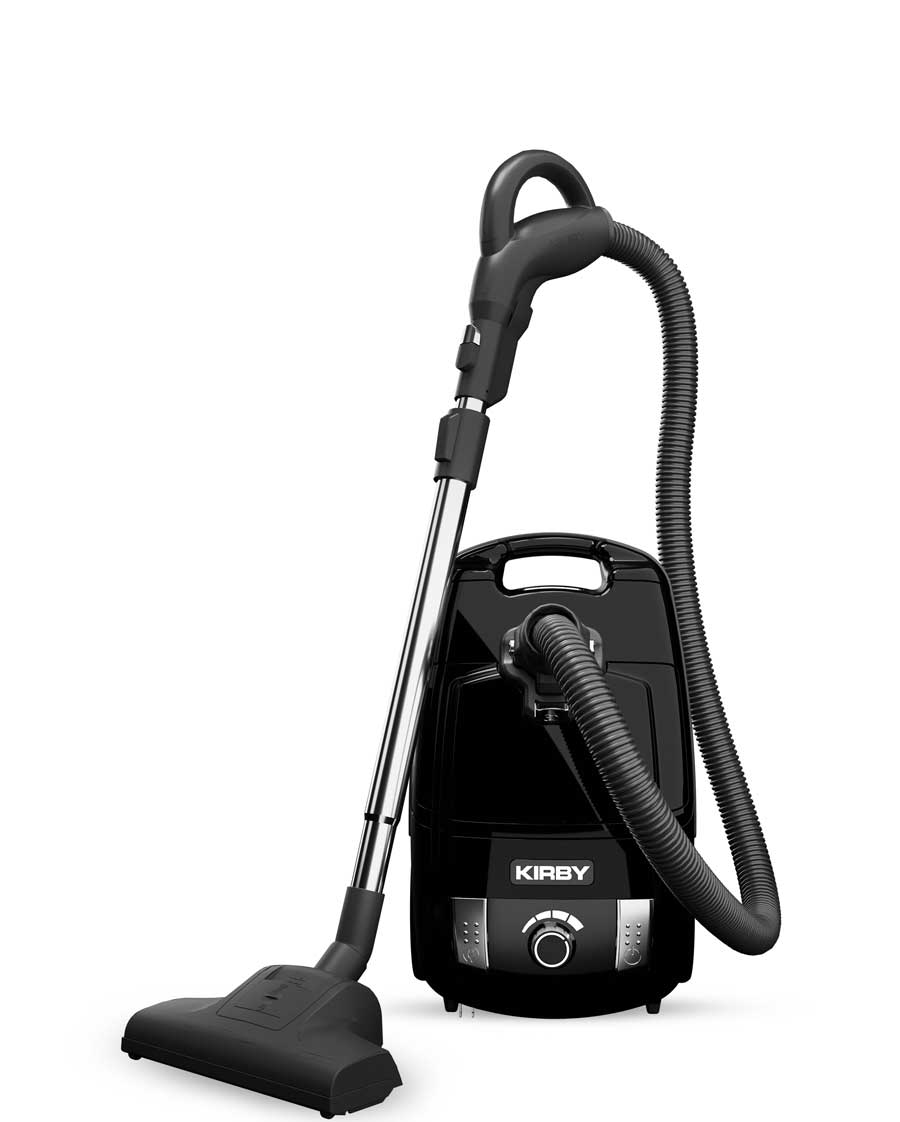
What does wattage mean in a canister vacuum?
Wattage tells you how much electrical power a canister vacuum uses while it runs. It does not always tell you how strong the suction is, but it does give you a good idea of energy demand.
A vacuum with higher watts may use more electricity, but that does not automatically mean it cleans better. Motor design, airflow, brush heads, filters, and seals all matter too. In real use, I have seen lower watt machines clean better than louder, higher watt models because the airflow path was simply smarter.
When people ask how many watts does a canister vacuum use, they usually want two things:
• A simple idea of electricity use
• A sense of how powerful the vacuum will feel on carpet and hard floors
That is why wattage should be read as part of the full picture, not the whole story.
How many watts does a canister vacuum use on average?
Most canister vacuums use between 500 and 1,200 watts. Compact models may sit closer to 500 to 800 watts, while full-size models often land between 900 and 1,200 watts.
Here is a simple breakdown:
• Small or lightweight canister vacuums: 500 to 800 watts
• Standard home canister vacuums: 700 to 1,000 watts
• High-performance canister vacuums: 1,000 to 1,200 watts
• Older or more powerful models: sometimes 1,400 watts or more
In many modern markets, you will also see lower-watt vacuums that still clean well. That is because newer motors and better airflow can do more with less power. I have seen this firsthand when a 700-watt model outperformed an older 1,300-watt one on sealed hard floors.

Why wattage varies so much
The answer to how many watts does a canister vacuum use depends on several factors. No two vacuums are built the same, and manufacturers design them for different homes and jobs.
Motor size and design
A bigger motor usually uses more watts, but not always more efficiently. Modern motors can create strong suction with less power because they waste less energy as heat.
Floor type
Carpet needs more agitation and airflow than bare floors. That means some vacuums increase power when used on rugs or deep pile carpet.
Filtration system
HEPA filters and multi-stage filtration can slightly affect airflow. A well-designed system keeps the vacuum efficient, but a clogged or restrictive filter can make a unit work harder.
Attachments and settings
Many canister vacuums have adjustable suction. When you use a brush tool, upholstery head, or turbo nozzle, the power draw may change a bit.
Age and condition
Older vacuums often draw more power than they should because of worn seals, dirty filters, or full dust bags. I have made the mistake of assuming a vacuum was “weak” when it was really just overdue for maintenance.
Watts, suction, and cleaning performance are not the same thing
This is one of the biggest misunderstandings. People often think more watts automatically means better cleaning, but that is not true.
Watts measure electrical input. Suction depends on how well that power is turned into airflow and pressure. A vacuum can use a lot of watts and still clean poorly if the design is inefficient.
Think of it like a car engine. A larger engine may burn more fuel, but a lighter, better-tuned car can still go faster on less gas. The same idea applies to canister vacuums.
What matters most is the balance of:
• Airflow
• Suction seal
• Brush roll design
• Filtration
• Floorhead match
• Maintenance
That is why the question how many watts does a canister vacuum use is useful, but it should never be the only thing you check.
How much electricity does a canister vacuum use?
Once you know how many watts does a canister vacuum use, you can estimate energy cost. The formula is simple:
• Watts ÷ 1,000 = kilowatts
• Kilowatts × hours used = kilowatt-hours
For example, a 1,000-watt canister vacuum used for 1 hour consumes 1 kWh of electricity. If your electricity rate is 16 cents per kWh, that hour costs about 16 cents.
Here are rough examples:
• 700-watt vacuum for 30 minutes = 0.35 kWh
• 1,000-watt vacuum for 1 hour = 1.0 kWh
• 1,200-watt vacuum for 20 minutes = 0.4 kWh
For most households, vacuuming does not use a huge amount of electricity because the machine runs for short periods. Still, if you clean often or have a large home, lower-watt models can save a little over time.
What wattage is good for different cleaning needs?
The best wattage depends on your home and habits. I always tell people to choose based on use case, not just on a bigger number.
For apartments and hard floors
A canister vacuum in the 500 to 800 watt range is often enough. These models are usually lighter, easier to store, and gentler on hard surfaces.
For mixed flooring
A range of 700 to 1,000 watts usually works well for homes with both carpet and hard floors. This gives enough power for rugs without being overkill.
For thick carpet or pet hair
A strong canister vacuum around 900 to 1,200 watts may perform better. Pair that with a motorized head or turbo brush for better pickup.
For allergy concerns
Wattage matters less than filtration here. A vacuum with a good seal and HEPA filtration is more important than simply chasing higher watts.
Does a higher watt canister vacuum use more energy?
Yes, usually it does, but the difference is often smaller than people think. A 1,200-watt vacuum uses more electricity than a 700-watt model if both run for the same amount of time.
Still, real-world cost depends on how long you clean. If a lower-watt vacuum needs two passes to do the same job, it may not save much in the end. In my experience, the smartest choice is a vacuum that cleans well in one or two passes and matches your floor type.
How to check a vacuum’s wattage before buying
If you want to know how many watts does a canister vacuum use before you buy it, look in these places:
• Product listing or box label
• User manual
• Rating plate on the machine
• Manufacturer specifications page
If you are shopping online, be careful with vague listings. Some retailers list suction power or motor power, while others list maximum watts. Those are not always the same thing.
A few buying tips I use myself:
• Check wattage, but also check airflow and filtration
• Read reviews from people with the same floor type as yours
• Look for adjustable suction if you have rugs and delicate curtains
• Avoid assuming the highest number is the best choice
Real-world example from vacuum testing
I once used two canister vacuums in the same home: one around 800 watts and one close to 1,200 watts. The lower-watt model cleaned hardwood floors faster because it had smoother airflow and a better floor tool.
The higher-watt model did better on a thick area rug, but only with the right head attached. That taught me a lesson I still give readers today: wattage helps, but the floorhead and design matter just as much.
Common mistakes people make when comparing watts
A lot of buyers focus on the wrong number. I have seen this lead to disappointment more than once.
Watch out for these mistakes:
• Assuming more watts always means more suction
• Ignoring floor type
• Forgetting about maintenance needs
• Comparing old vacuums to new efficient models without context
• Not checking whether the vacuum has adjustable power
If you remember one thing, let it be this: how many watts does a canister vacuum use is only one piece of the buying puzzle.
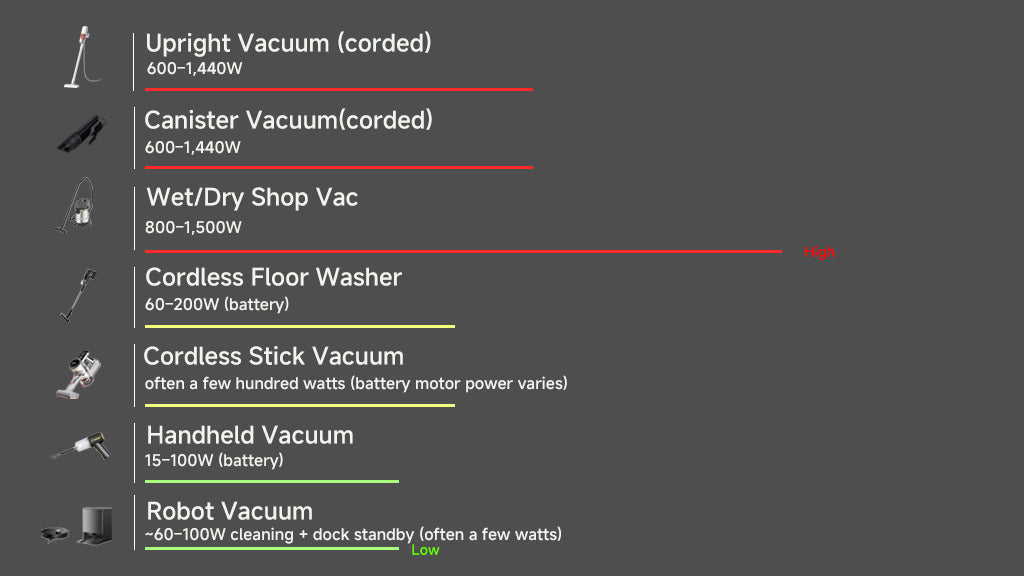
Frequently Asked Questions of How many watts does a canister vacuum use?
How many watts does a typical canister vacuum use?
A typical canister vacuum uses about 500 to 1,200 watts. Smaller models use less, while full-size or high-performance units sit at the upper end of that range.
Is 1,200 watts too much for a canister vacuum?
Not necessarily. A 1,200-watt canister vacuum can be a good choice for thick carpet, pet hair, or larger spaces, but it may be more than you need for mostly hard floors.
Does a lower watt vacuum clean worse?
Not always. Many newer low-watt vacuums clean very well because they use better motors and airflow design, so wattage alone does not decide performance.
How much does it cost to run a 1,000-watt canister vacuum?
If electricity costs 16 cents per kWh, a 1,000-watt vacuum costs about 16 cents for one hour of use. Most people use a vacuum for much less than an hour at a time, so the cost is usually small.
What wattage is best for carpet?
For carpet, especially medium or thick carpet, a canister vacuum around 900 to 1,200 watts often performs well. A motorized brush head can make a big difference too.
Do canister vacuums use more watts than upright vacuums?
Not always. Some uprights use similar wattage, while others are lower or higher depending on the model and motor design. The shape of the vacuum does not decide wattage by itself.
Conclusion
When you ask how many watts does a canister vacuum use, the short answer is usually 500 to 1,200 watts. But the better answer is that wattage is only one part of the story, and it works best when you compare it with suction design, floor type, filtration, and cleaning habits.
If you are shopping for a vacuum, think about what your home really needs. A well-matched canister vacuum can clean better, cost less to run, and feel easier to use than a bigger machine with a flashy watt number. Take a closer look at the specs, compare a few models, and choose the one that fits your floors and your routine best.

