

How long does a handheld vacuum battery last? The honest answer depends on which question you're really asking. Runtime per charge is one thing.
Total lifespan is another. Most people mix them up, and that's where the confusion starts.
Manufacturer specifications show most handheld vacuums run 8 to 25 minutes per charge and manage 300 to 500 charge cycles before capacity fades. That works out to roughly three to five years of normal use as of 2026. The exact number depends on battery chemistry, how you charge, and how often you clean.
Let's unpack it.
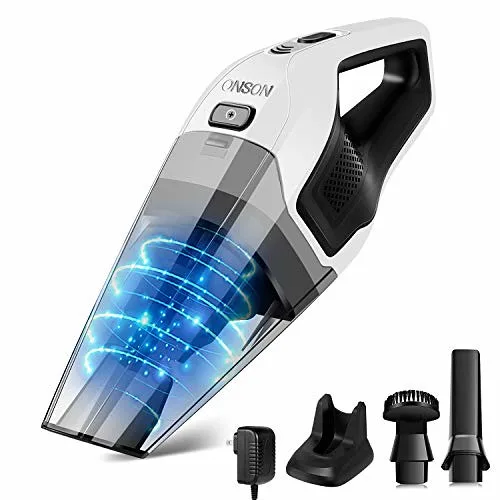
First, separate "runtime per charge" from "total battery lifespan"
Think of runtime as the distance a gas tank takes you. Lifespan is how long the engine lasts. A handheld vacuum with a 20-minute runtime, charged twice a week, burns through about 100 charge cycles per year.
At 500 cycles, that's a five-year lifespan. Charge it daily and that same battery can fall apart in under two years.
A charge cycle is a full drain from 100% to 0%, or combined partial drains that equal a full one. Partial top-ups are fine on modern lithium-ion packs. They don't cause the "memory effect" that old nickel-metal hydride cells suffered from.
But they also don't stop the clock on chemical aging.
That's the core insight. Every rechargeable battery starts dying from day one, even if you never use it. The calendar is one enemy.
The charge cycle count is the other.
How lithium-ion batteries actually wear out in handheld vacuums
Inside a lithium-ion pack, energy is stored as moving lithium ions. Each charge pushes them to the anode, each discharge pulls them back. Repeat that hundreds of times and the electrode material slowly degrades.
Capacity shrinks, even if the suction power still feels strong at the start.
One key thing happens as the pack ages. Internal resistance rises. The battery voltage sags early in a cleaning session, the motor slows down, and the vacuum seems weaker even though the battery reports a partial charge.
Heat accelerates all of this. Leaving a handheld vacuum in a hot garage, charging it in direct sunlight, or running it in a hot car all stress the cells. The battery management system limits how fast charging happens, but it can't fix ambient temperature.
For a plain-language breakdown of how these cells work and why they fade, the U.S. Department of Energy has the full technical story.
Most handheld vacuums made as of 2026 use lithium-ion cells. Older budget models still run on nickel-metal hydride, which has a shorter lifespan and a memory effect. If your vacuum is more than six or seven years old, check the manual before assuming you have Li-ion.
Quick answer: typical runtime and lifespan benchmarks
Here's the honest baseline you can expect from most handheld vacuums sold today:
| Metric | Typical range |
|---|---|
| Runtime per charge | 8 to 25 minutes |
| Charge time | 3 to 4 hours |
| Total charge cycles | 300 to 500 |
| Expected lifespan | 3 to 5 years |
| Replace battery when | Runtime drops to half of original |
Those numbers come from manufacturer datasheets and aggregate reviews, not a single test unit. High-end models with larger cells hit the top of the range. Small dustbusters with 7.2-volt packs sit closer to the bottom.
The bigger point: the published runtime is measured on a bare floor with a fresh battery. On carpet, upholstery, or with a clogged filter, you'll get less. That's not a defect, it's physics.
Key variables that change the answer: voltage, capacity, and battery chemistry
Four variables decide how long your vacuum runs and how long the battery survives. Here's the quick rundown:
| Variable | What it does | Typical range |
|---|---|---|
| Voltage | Drives motor suction power | 7.2V to 24V |
| Capacity (mAh) | Determines runtime on a full charge | 1,500 to 3,000+ mAh |
| Chemistry | Lithium-ion vs. nickel-metal hydride | Li-ion is now standard |
| Battery design | Removable pack vs. sealed internal battery | Varies by model |
Higher voltage usually means stronger suction, but it also drains the pack faster. A 20-volt model with a 2,000 mAh cell might run 15 minutes. A 12-volt model with a 2,500 mAh cell can run longer, though with less pickup power.
More mAh always means more runtime, assuming the motor is the same.
If you're on a shared tool battery platform, adding a second battery changes the whole conversation. You can keep one charging while the other runs. If you're stuck with a sealed unit, you're tied to the dock, and the countdown starts the moment the vacuum leaves the factory.
Step by step: how to check if your battery is still healthy
Don't guess. Do a simple controlled test and you'll know exactly where your battery stands.
- Fully charge the vacuum.
- Run it on a bare hard floor with a clean filter until it stops.
- Time it with your phone.
- Compare that number to the rated runtime from the manual.
If your vacuum is rated for 20 minutes and it stops at 8, the battery is failing. If it stops at 14 or 15 after three years of regular use, that's normal aging. If it still hits 19 or 20, you're in great shape.
Also watch for these physical warning signs. A swollen pack is the big one. Heat during charging, a chemical smell, or visibly deformed plastic are all reasons to stop using the vacuum immediately.
That kind of failure is a safety issue, not a performance one.
If the pack is removable, you can also check the contacts for corrosion. Dirty or pitted contacts cause poor connection that mimics battery death. Clean them with a dry cloth and retest before spending money on a new pack.
Decision guide: replace the battery or buy a new handheld vacuum?
If your runtime is down to half of what it used to be, you have a real decision to make. Start with one question: is the battery removable? If yes, you have the easy path.
If the pack is sealed inside the chassis, the decision gets math-heavy.
Work through these branches in order.
| Condition | Recommended action |
|---|---|
| Battery is removable and replacement costs under half of a new vacuum | Replace the battery |
| Battery is removable but replacement is hard to find or overpriced | Buy a new vacuum |
| Battery is sealed and vacuum is under 3 years old | Check warranty, then contact the manufacturer |
| Battery is sealed and vacuum is over 3 years old | Replace the vacuum |
| Other issues exist: weak motor, cracked plastic, dying filter seal | Replace the vacuum regardless |
A sealed battery on a three-year-old vacuum means replacing the whole unit is usually smarter. You're paying for a new battery assembly plus labor, and that search often lands near 70% of the price of a fresh machine.
The only time to fix an older sealed unit is when the vacuum itself is a premium model. Some high-end cordless tools offer official battery replacement services. Even then, check the quote before you commit.
Use cases: how much battery life you really need for each cleaning task
Runtime only matters relative to the job. A 10-minute vacuum is perfect for a quick kitchen counter sweep. It's useless for an entire car detail.
Here's what real cleaning tasks actually demand:
| Cleaning task | Typical time needed | Minimum runtime recommended |
|---|---|---|
| Kitchen counter crumbs | 1 to 3 minutes | 5+ minutes |
| Bathroom touch-up | 2 to 4 minutes | 5+ minutes |
| Car seats and floor mats | 10 to 15 minutes | 15+ minutes |
| Pet hair on stairs and furniture | 10 to 20 minutes | 15+ minutes |
| Workshop and garage messes | 15 to 30 minutes | 20+ minutes |
| Full-home spot cleaning | 20+ minutes | 25+ minutes |
If you only use your handheld vacuum for small indoor jobs, a short battery life isn't a flaw. It's a spec you never need to push. But if you plan to detail cars or clean up after a pet, don't buy a vacuum with less than 15 minutes of rated runtime.
Also remember that the motor draws more power on high settings. Many models have a turbo mode that cuts runtime by nearly half. Read the manual to see whether the rated runtime is on standard or max suction.
Mistakes that kill handheld vacuum batteries early
Most battery failures are caused by how people treat the vacuum, not by manufacturing defects. Here are the biggest culprits we see in aggregate reviews and repair forums.
Leaving the vacuum on the charging dock 24/7. Modern chargers stop at full, but they still top off every time the battery loses a tiny bit. That keeps the pack at 100%, which stresses lithium-ion cells more than a 50% state of charge.
Running the battery all the way to zero before recharging. Lithium-ion doesn't need full discharges. Deep discharges strain the pack and shorten its cycle count.
The old "drain it completely" advice was for nickel-metal hydride batteries, not lithium-ion.
Storing the vacuum in a hot garage, trunk, or shed. High heat accelerates chemical aging. Leaving a vacuum in a car during summer can permanently cost you minutes of runtime.
Using an off-brand charger from a marketplace. The voltage doesn't always match, and lithium-ion cells don't tolerate overvoltage well. Use the charger that came in the box.
Letting the filter clog. A dirty filter makes the motor work harder and pull more current. That drains the battery faster and adds unnecessary heat.
Best practices for charging, storing, and extending battery life
You can't stop battery aging, but you can slow it down noticeably. These habits add months, sometimes years, to a handheld vacuum battery.
Keep the battery between 20% and 80% for everyday use. That's the sweet spot for lithium-ion. If you clean for 10 minutes and still have half a charge, you don't need to dock the vacuum yet.
Store the vacuum at room temperature. A hallway closet, pantry, or indoor utility room is fine. Avoid garages, porches, and anywhere the temperature swings.
If you're parking it for months, store at partial charge. Around 50% is ideal. A fully charged battery left in storage ages faster.
So does a fully drained one.
Charge in a cool, dry place. Don't charge immediately after running the vacuum hot. Let it cool down for 15 or 20 minutes first.
Clean the filter and debris bin on schedule. Check the manual, but most filters want a rinse or tap-out every month with regular use. A clean filter lets the motor run efficiently, which means less strain on the battery.
Costs and specs: replacement battery prices vs. new vacuum prices
Money makes the decision practical. Here's what you're likely to see as of 2026.
| Item | Typical price range |
|---|---|
| OEM replacement battery (removable pack) | $25 to $60 |
| Third-party replacement battery | $15 to $35 |
| Sealed battery replacement service | $60 to $120 |
| New budget handheld vacuum | $30 to $60 |
| New mid-range handheld vacuum | $60 to $120 |
| New premium handheld vacuum | $120 to $250 |
Set a simple rule: if the replacement battery costs more than half the price of a comparable new vacuum, buy the new vacuum. You'll also get fresh filters, a new motor, and a full warranty.
Third-party batteries tempt you with lower prices, but read reviews carefully. Some use lower-grade cells that fade quickly. Others lack the overcharge protection of the original.
A dead third-party battery in six months isn't the bargain it seemed on the first day.
OEM batteries cost more, but they match the original chemistry and capacity spec. That consistency matters for runtime and safety. If the vacuum is worth keeping, pay for the real thing.
Safety and disposal: handling lithium-ion batteries the right way
Battery safety deserves serious attention. A lithium-ion pack stores a lot of energy in a small space. If it fails, it can overheat quickly, and in rare cases, catch fire.
Watch for swelling, cracked plastic, or a strong chemical smell. These are warning signs that the battery is damaged. Stop using the vacuum immediately and move it away from anything flammable.
Don't store the vacuum in extreme heat. Keep it out of direct sunlight and hot garages. Charge it on a hard surface like a countertop, not on a couch or carpet that can trap heat.
Never charge a damaged pack. If the battery has swollen or leaked, put it in a non-flammable container and take it to a local household hazardous waste drop-off.
When the battery finally dies, don't throw it in the trash. Rechargeable batteries contain reactive materials that can spark fires in garbage trucks and landfills. Many retailers, hardware stores, and recycling centers accept them for free.
Use a take-back program like Call2Recycle to find a drop-off near you. The EPA has clear guidelines on safe battery handling and recycling. Check your local regulations, since some states mandate proper disposal.
One more rule that surprises people. Don't pack loose lithium-ion batteries in checked luggage when you fly. Airlines ban them there because of fire risk.
Keep them in your carry-on instead.
Frequently Asked Questions
Can I leave my handheld vacuum on the charger all the time?
It's not ideal. Most modern chargers stop at full capacity, but they keep topping the battery off as it slowly drains. That keeps the pack at a constant 100% state of charge, which stresses lithium-ion cells.
Once it's charged, unplug it.
How do I know when my handheld vacuum battery needs replacing?
Run a timed test. Fully charge the vacuum, then run it on a clean hard floor until it stops. If the runtime drops below half the original rating, the battery is past its useful life.
Also watch for swelling or heat during charging.
Are third-party replacement batteries safe?
Some are fine, but many use cheaper cells and no overcharge protection. Read verified reviews carefully and avoid unknown brands. If the vacuum is worth keeping, the original equipment battery is the safest bet.
Why does my vacuum die faster on carpet than on hard floors?
Carpet creates more resistance, so the motor draws more current to maintain suction. That drains the battery faster. The published runtime is almost always measured on a bare, flat surface.
Expect 20% to 30% less runtime on thick rugs.
Can I use a higher voltage battery to get more power?
Only if the battery is from the same system and explicitly compatible. Voltage beyond the motor's rating can burn out the motor or damage the battery management system. Don't force a mismatched pack into the vacuum.
Final verdict: the honest bottom line
So how long does a handheld vacuum battery last? Expect 8 to 25 minutes per charge and roughly three to five years of service. That's the practical reality for most consumer models sold today.
The exact number comes down to battery chemistry, charging habits, and storage conditions. Lithium-ion packs dominate the market for good reason. They hold more energy and handle partial charges better than older nickel-metal hydride cells.
Here's the decision guide in one sentence. If the battery is removable and costs less than half a new vacuum, replace it. If the pack is sealed and the vacuum is more than three years old, buy a new machine.
In our research, the most common battery killers are simple to avoid. Don't leave it charging indefinitely. Keep it out of hot cars and garages.
Clean the filter regularly. Charge after the vacuum cools down.
Follow those habits and you'll get closer to the five-year mark. Ignore them and you might be shopping for a new handheld vacuum in year two.

