

If you love playing darts, you know how important it is to set up your dartboard correctly. The distance from the board to where you stand, called the throw line or oche, is not just a random guess. It’s a precise measurement that affects the game’s fairness and accuracy. Many beginners miss this step, and their games feel off. In this article, you’ll learn exactly how to measure dart board distance, why it matters, the tools and methods you can use, and common mistakes to avoid. Whether you play for fun or want to join competitions, getting this right will make your game more enjoyable and professional.
Why Dart Board Distance Matters
Having the correct dart board distance is more than just following rules. It shapes your skill development and ensures every player has the same challenge. If your board is too close, you might hit higher scores, but your skill won’t grow. If it’s too far, even the best players struggle. The right distance:
- Creates fairness between players
- Builds muscle memory for consistent throws
- Prepares you for league or tournament play
- Reduces injuries by keeping the space safe
Professional tournaments use strict rules for distance. If you plan to compete or invite friends who play often, your setup should match these standards.
Official Dart Board Measurements
Different types of darts have slightly different rules. The most common are steel tip and soft tip dartboards.
| Type | Board Height (Bullseye) | Throw Line Distance |
|---|---|---|
| Steel Tip (Standard) | 5 ft 8 in (173 cm) from floor | 7 ft 9.25 in (237 cm) from board face |
| Soft Tip | 5 ft 8 in (173 cm) from floor | 8 ft (244 cm) from board face |
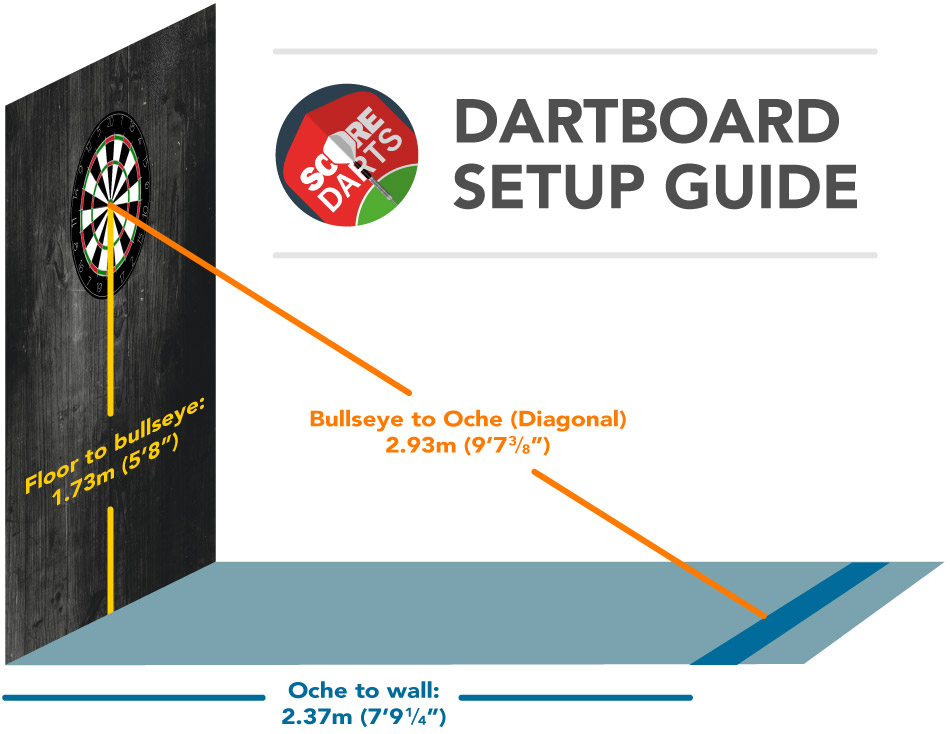
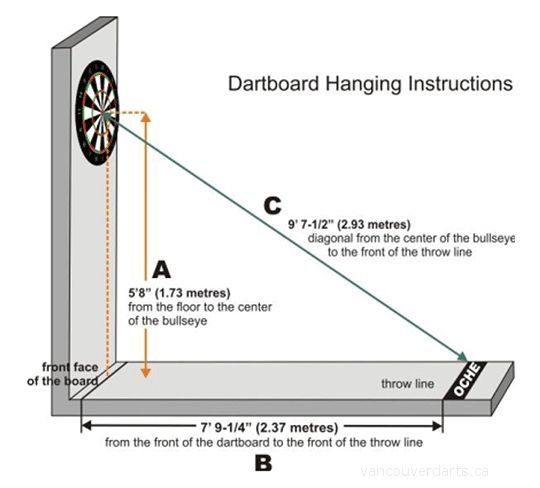
Always measure from the front face of the dartboard, not the wall behind it. The height is measured from the floor to the center of the bullseye. The throw line is the horizontal distance from the board to the oche.

Tools You Need For Measuring
You don’t need expensive equipment. But using the right tools makes your setup fast and accurate.
- Tape Measure – A standard tape measure (at least 10 feet long) is essential.
- Spirit Level – For checking that your dartboard hangs straight.
- Marker or Tape – To mark the throw line on the floor.
- Pencil – For light marks on the wall or floor.
Some dartboard kits come with a measuring tape or template. If not, use what you have at home.
Step-by-step Guide: Measuring Dart Board Distance
Setting up your dartboard is easy if you follow these steps. This guide uses the steel tip standard, which is most popular.
Step 1: Find The Bullseye Height
- Place your tape measure flat on the floor, stretching upward.
- Measure 5 ft 8 in (173 cm) from the floor.
- Mark this spot on the wall. This is where the center of the bullseye should be.
If you play soft tip, the height is the same.
Step 2: Hang Your Dartboard
- Use a spirit level to make sure the board is straight.
- Center the bullseye at your marked spot.
- Secure the board tightly so it doesn’t move when hit.
Step 3: Measure The Throw Line
- Place your tape measure at the board’s face (not the wall).
- Measure 7 ft 9.25 in (237 cm) straight out on the floor.
- Mark this spot with tape, a sticker, or paint. This is your oche.
Soft tip boards use 8 ft (244 cm) instead.
Step 4: Double-check Everything
- Stand at the throw line and look at the board.
- The bullseye should be at eye level for most adults.
- The board should not tilt or wobble.
Step 5: Mark The Oche
- Use a strip of tape, a wooden block, or a mat to show the throw line.
- Make sure it’s visible but not slippery.
Some players use a raised oche. This makes it easier to feel with your foot.
Vertical Vs Diagonal Measurement
Some people try to measure diagonally from the bullseye to the throw line. This is common in older dartboard setups. Here’s how the two methods compare:
| Method | Distance (Steel Tip) | Accuracy |
|---|---|---|
| Horizontal (Board Face to Oche) | 7 ft 9.25 in (237 cm) | Very Accurate |
| Diagonal (Bullseye to Oche) | 9 ft 7.5 in (293 cm) | Used for double-checking |
If you want to confirm your setup, measure diagonally from the bullseye to the oche. It should be 9 ft 7.5 in (293 cm) for steel tip. This checks both height and distance at once.
Common Mistakes And How To Avoid Them
Many people make simple errors when setting up their dartboards. Fixing these improves your game.
1. Measuring From The Wall, Not The Board Face
Always measure from the board’s front surface, not the wall behind it.
2. Incorrect Height
If the bullseye is too high or low, your throws will feel awkward.
3. Uneven Floor Or Wall
If the board hangs on a slanted wall or your floor is uneven, the setup won’t be accurate.
4. Oche Not Marked Clearly
Make the throw line visible. If you’re unsure, use a piece of wood or a mat.
5. Ignoring Diagonal Measurement
Double-checking with the diagonal distance catches small errors.
Setting Up For Different Spaces
Not every room is perfect for darts. Sometimes you need to adjust your setup.
Small Rooms
If your space is tight, measure carefully. Make sure there’s enough room behind the throw line for players to stand comfortably. Avoid placing the board near windows or fragile objects.
Outdoor Areas
Wind and uneven surfaces make outdoor setups tricky. Use heavier boards and mark the oche with something sturdy.
Shared Spaces
If your dartboard is in a living room or garage, make a removable oche marker. This keeps the area flexible and safe.
Dart Board Distance For Kids
For children, standard distances are often too difficult. Adjust the setup:
- Lower the dartboard height (about 4 ft for young kids)
- Move the throw line closer (5–6 ft)
- Use soft tip darts for safety
Always supervise kids when playing.
How Dart Board Distance Affects Your Game
Playing at the correct distance helps you develop real dart skills. It builds consistency and muscle memory. If you change the distance often, your aiming and throwing technique will suffer. Professional players always practice at regulation distances. This prepares them for tournaments.
Beginners sometimes overlook this. They focus on scoring, but their skills stay limited. Practicing at the right distance teaches you how to control the dart, read the board, and improve your accuracy.
Advanced Tips For Measuring Dart Board Distance
A few advanced tricks can make your setup more professional:
- Use a laser measuring tool for quick and precise measurements.
- Install a permanent oche with a raised edge to feel with your foot.
- Use a dartboard surround to protect your wall and help frame the board visually.
- Check the floor level with a spirit level before marking the oche.
These steps are not necessary for casual play, but they help if you want a tournament-quality experience.
Comparing Dart Board Distances Internationally
Different countries may use slightly different rules, but most follow the standards set by the World Darts Federation.
| Country | Throw Line Distance | Board Height |
|---|---|---|
| USA | 7 ft 9.25 in | 5 ft 8 in |
| UK | 7 ft 9.25 in | 5 ft 8 in |
| Japan | 8 ft (soft tip) | 5 ft 8 in |
| Australia | 7 ft 9.25 in | 5 ft 8 in |
No matter where you play, checking the rules for your region is wise. For official tournaments, always follow the World Darts Federation guidelines.
Non-obvious Insights Beginners Miss
- The board’s thickness matters – If your board is thick, the face is farther from the wall. Always measure from the board’s face, not from where it hangs.
- Flooring changes affect distance – If you install carpet or a mat after marking the oche, the height changes slightly. Re-check your measurements whenever you change flooring.
- Lighting influences accuracy – Poor lighting makes it hard to see the board and oche. Good lighting is as important as proper distance.
Many players set up their dartboards and never re-check. But small changes in the room can affect accuracy.
Practical Examples
Imagine you have a dartboard with a face 2 inches thick, hung on a wall in a garage. You measure from the wall and mark 7 ft 9. 25 in. But you forgot about the board’s thickness. Your actual throw line is too close.
Measure from the front face, and you’ll get the correct distance.
Or you put down a thick rug after marking the oche. The bullseye is now lower. Adjust the board height, and re-measure the throw line.
Where To Find Official Dart Board Rules
For the most accurate and up-to-date rules, check the World Darts Federation website. If you want more detailed guides and diagrams, the official rules are available at World Darts Federation.
Frequently Asked Questions
What Is The Standard Dart Board Distance?
The standard distance for steel tip dartboards is 7 ft 9.25 in (237 cm) from the board face to the oche. For soft tip boards, it’s 8 ft (244 cm). Always measure from the board’s front surface.
Can I Use A Laser Measure Instead Of A Tape Measure?
Yes, a laser measuring tool is accurate and easy to use. Just make sure you measure from the board’s face, not the wall.
How High Should The Dartboard Be?
The bullseye should be 5 ft 8 in (173 cm) from the floor. This matches professional standards and ensures fair play.
What If My Room Is Too Small?
If your room is tight, make sure you have at least 7 ft 9.25 in from the board to the throw line, plus extra space behind the oche. Move furniture or use a smaller dartboard if needed.
Does Dart Board Distance Affect My Score?
Yes, playing at the correct distance helps you develop true skill and accuracy. If the board is too close or too far, your scores will not reflect your real ability.
Setting up your dartboard with the correct measurements is simple but vital. With the right tools and careful steps, you’ll enjoy a fair and fun game every time. If you check your setup often and avoid common mistakes, your darts skills will grow quickly.
Whether you play for fun or want to join tournaments, measuring dart board distance correctly is the foundation of great darts.

