

Many people see a dartboard and think about hitting the center. The bullseye is famous, but what is its true value? In darts, the bullseye is more than just a target—it has a specific worth that affects scoring and strategy.
Whether you play for fun or compete, understanding the bullseye’s value helps you make better choices during the game. Let’s explore what the bullseye is worth, how it fits into different games, and why it matters so much in darts.
Bullseye Basics: What Is It?
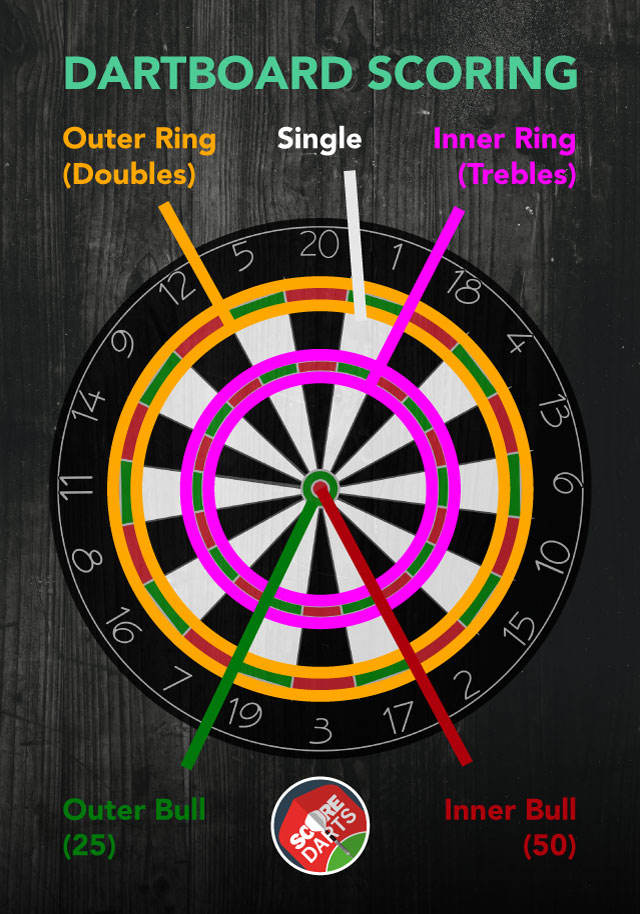
The bullseye sits at the center of every standard dartboard. It’s easy to spot—usually a small red circle surrounded by a green ring. The bullseye is divided into two parts:
- Inner bullseye (also called “double bull” or “bull”): The very center, colored red.
- Outer bullseye (also called “single bull” or “25”): The green ring around the inner bull.
Each part has its own point value, which changes depending on the game you play.
Bullseye Worth: Standard Scoring
In most traditional darts games, the bullseye’s value is clear:
| Bullseye Area | Points | Common Names |
|---|---|---|
| Inner Bullseye | 50 | Double Bull, Bull |
| Outer Bullseye | 25 | Single Bull, 25 |
So, the inner bullseye is worth 50 points and the outer bullseye is worth 25 points. If your dart lands in the red center, you get 50 points. If it lands in the green ring, you get 25 points.
How Bullseye Fits Into Different Dart Games
The bullseye’s value does not change, but its importance shifts based on the rules of the game.
501 And 301
These are the most popular darts games, especially in tournaments. Players start with a score (501 or 301) and subtract their points until they reach zero. The bullseye can help you finish quickly, but in most cases, you must hit a double to win.
The inner bullseye counts as a double, so it can end the game.
Example: If you need 50 points to finish, hitting the inner bullseye lets you win.
Cricket
In Cricket, players must “close” certain numbers and the bullseye. Here, the inner bull counts as two marks, and the outer bull counts as one mark. The bullseye is essential to finish the game, so aiming for it is a key strategy.
Around The Clock
In this simple game, the bullseye is often the last target. Players must hit every number on the board in order, ending with the bullseye.
Other Games
Some games ignore the bullseye, while others make it a bonus. Always check the rules before playing.
Why The Bullseye Is Important
The bullseye is more than just a scoring spot—it affects strategy and skill.
- High points: Only the triple 20 (60 points) is worth more than the inner bullseye (50 points).
- Finish shots: The bullseye can end games, especially when you need exactly 50 points.
- Skill test: Hitting the bullseye is hard. It’s small, so accuracy matters.
- Pressure moments: In competitions, bullseye shots can decide the winner.
Comparing Bullseye To Other Dartboard Areas
To see how the bullseye stacks up, let’s compare its value to other scoring parts of the board.
| Area | Points | Color |
|---|---|---|
| Triple 20 | 60 | Red/Green (depending on board) |
| Inner Bullseye | 50 | Red |
| Outer Bullseye | 25 | Green |
| Single 20 | 20 | Black/White |
| Triple 19 | 57 | Red/Green |
Most skilled players aim for triple 20 (worth 60 points) for the highest possible score. The bullseye is harder to hit, but in some games and situations, it’s the best choice.
How To Aim For The Bullseye
Hitting the bullseye takes skill and practice. Here’s how to improve your chances:
- Grip your dart correctly: Hold the dart firmly but not too tight.
- Stand in the right position: Find a comfortable stance. Keep your feet steady.
- Focus on the target: Look at the bullseye, not the dart.
- Smooth throw: Throw the dart with a relaxed arm.
- Practice: The more you aim for the bullseye, the better you get.
Many beginners make these mistakes:
- Aiming at the dart instead of the board
- Throwing too hard
- Moving their body during the throw
Focus and practice are key. Try to hit the bullseye consistently. Start with aiming for the outer bull, then move to the inner bull as your accuracy improves.
Bullseye In Professional Darts
In professional darts, the bullseye is a pressure spot. Players often need to hit it to finish a game or earn a bonus. Some famous moments in darts history happened when a player landed the bullseye under stress.
Statistics: In televised tournaments, the average bullseye hit rate for top players is around 15–20%. This means even professionals find it challenging.
Example: In the PDC World Championship, players sometimes win with a bullseye finish. These moments are exciting and show the value of the bullseye.
Dartboard Design And Bullseye Dimensions
The bullseye is small. Here are the official measurements:
- Inner bullseye (red center): 12.7 mm (about 0.5 inches) in diameter
- Outer bullseye (green ring): 31.8 mm (about 1.25 inches) in diameter
This makes the bullseye one of the hardest targets. The triple 20 section is larger, so players often aim there instead.
| Area | Diameter (mm) | Difficulty |
|---|---|---|
| Inner Bullseye | 12.7 | Very Hard |
| Outer Bullseye | 31.8 | Hard |
| Triple 20 | 8 | Very Hard |
| Single 20 | 40 | Medium |
The bullseye’s small size means you need precise aim. For beginners, it can be frustrating. For experts, it’s a chance to show skill.
Non-obvious Insights About The Bullseye
Beginners often miss these points:
- The bullseye is not always the best scoring choice. Most players aim for triple 20 instead, because it’s worth more and slightly easier to hit repeatedly.
- In some games, the bullseye’s value changes. For example, in “Cricket,” hitting the bullseye closes that target, which can be more important than points.
- Practice from different distances. Most people stand at the standard distance (7 feet 9.25 inches), but practicing from closer or farther can improve accuracy.
- The bullseye can end games. In games like 501, finishing on the bullseye is allowed and sometimes necessary.
- Not all dartboards have the same bullseye size. Cheap or electronic boards can vary, making practice less effective.
Bullseye Myths And Common Misunderstandings
Many believe hitting the bullseye is always best. But in real matches, players often aim for other sections. The bullseye is more a symbol than a main scoring zone.
- Myth: The bullseye is the highest score. Reality: Triple 20 is worth more.
- Myth: Only professionals can hit the bullseye. Reality: Anyone can, with practice.
- Myth: Bullseye shots are always game-winning. Reality: Not in every game.
How Bullseye Affects Strategy
Choosing when to aim for the bullseye is part of dart strategy.
- In 501, aim for triple 20 unless you need a double to finish.
- In Cricket, close the bullseye early to limit your opponent’s scoring.
- In practice, use the bullseye to improve focus and accuracy.
Some players use the bullseye as a mental reset—hitting it can boost confidence. Others avoid it unless the game demands it.
Bullseye And Dartboard Materials
Not all dartboards are made the same. High-quality boards use sisal fibers, which keep the bullseye firm. Cheaper boards may wear out quickly, making the bullseye less reliable.
If you’re serious, buy a board with a strong bullseye area. This improves both practice and play.

Bullseye In History And Culture
The bullseye has become a symbol for accuracy and perfection. In language, “hitting the bullseye” means getting something exactly right. The design has changed little over time, showing its importance.
Darts started as a pub game, but the bullseye helped make it popular worldwide. Today, it’s a sign of skill and focus, not just in darts but in other sports and games.
Frequently Asked Questions
What Is The Bullseye Worth On A Dartboard?
The inner bullseye is worth 50 points, and the outer bullseye is worth 25 points. This is standard for most dartboards and games.
Is The Bullseye The Highest Score On The Dartboard?
No, the triple 20 (worth 60 points) is the highest score. The bullseye is second, with 50 points for the inner bull.
Can You Finish A Game On The Bullseye?
Yes, in games like 501 or 301, you can finish with a bullseye if you need exactly 50 points. The inner bullseye counts as a double, which is required to end the game.
Why Do Professionals Aim For Triple 20 Instead Of The Bullseye?
Triple 20 is worth 60 points and is slightly larger than the bullseye. It’s easier to hit repeatedly, making it better for high scores.
Are All Bullseyes The Same Size?
No. Official boards have strict sizes: the inner bull is 12.7 mm and the outer bull is 31.8 mm. Cheap or electronic boards may differ, so check before practicing.
If you want more detailed info about dartboard standards and bullseye rules, you can visit the Wikipedia Dartboard page.
The bullseye is the heart of the dartboard. It’s not always the best scoring spot, but it’s a powerful symbol and an important part of many games. Knowing its true worth helps you play smarter and enjoy darts more—whether you aim for the center or look for other ways to win.
Practice, learn the rules, and remember that hitting the bullseye is both a skill and a thrill.


