Dart games are fun, social, and competitive. But one thing can ruin the experience—bounce-outs. When your dart hits the board, then falls to the floor, it’s frustrating. Bounce-outs cost points and break your focus. If you want to improve your game and reduce bounce-outs, you’re in the right place. This guide shows you practical ways to fix this problem, whether you’re a beginner or an experienced player. You’ll learn about board types, dart choices, throwing techniques, and smart habits that can make a big difference. Let’s dive in and give your darts a better chance to stick.
Understanding Dart Board Bounce-outs
A bounce-out happens when your dart hits the board but doesn’t stay. Instead, it rebounds and falls off. This can happen for several reasons:
- The dart hits a wire or metal part instead of the scoring surface.
- The dart isn’t sharp enough.
- The dart’s angle is wrong.
- The board is worn out or low quality.
Bounce-outs are more common with certain boards and darts. Understanding the causes helps you fix them.
Main Causes Of Bounce-outs
- Board quality: Old or low-quality boards have hard surfaces and thick wires.
- Dart condition: Dull tips or bent points don’t penetrate well.
- Wire design: Thick or raised wires deflect darts easily.
- Throwing technique: Poor aim or wrong angle increases bounce-outs.
A beginner often misses these details. Many think bounce-outs are just bad luck, but small changes can make a big impact.
Choose The Right Dart Board
Your board affects bounce-out rates more than you might realize. There are several types, but not all are equal.
Board Types Compared
Here’s a quick comparison:
| Board Type | Bounce-Out Rate | Durability | Wire Thickness |
|---|---|---|---|
| Bristle/Sisal | Low | High | Thin |
| Cork | Medium | Medium | Medium |
| Electronic | High | Low | Plastic Grid |
| Paper | Very High | Very Low | Thick |
Bristle boards are the best for reducing bounce-outs. They have thin wires and a soft surface. Electronic boards often cause bounce-outs because of hard plastic holes. Beginners usually pick cheap boards, but investing in a quality bristle board pays off.
Wire Technology
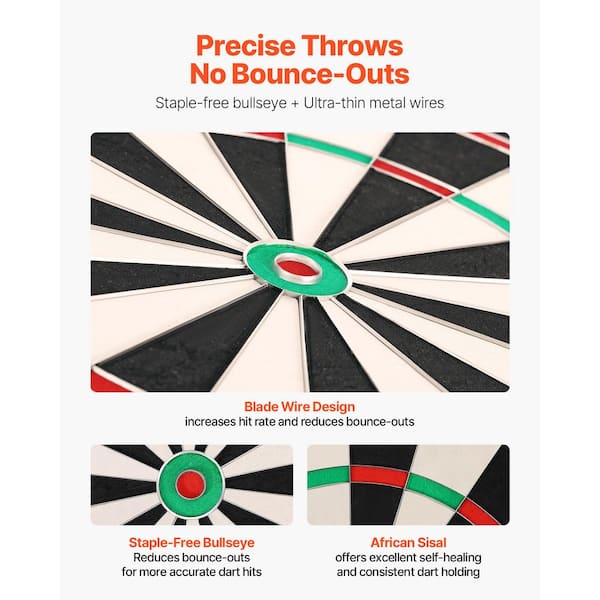
Modern boards use blade wires instead of round wires. Blade wires are thin and angled, so darts slide into the scoring area instead of bouncing off. If you’re shopping for a board, look for:
- Blade wire design
- Staple-free bullseye
- Tightly packed sisal fibers
These features are common in professional boards. If you want fewer bounce-outs, avoid boards with thick, round wires and staples.

Pick Darts That Suit Your Board
Darts matter just as much as the board. The tip, weight, and shape all affect bounce-outs.
Dart Tip Types
Steel tips are used for bristle boards, while soft tips are for electronic boards. Steel tips stick better in sisal boards. Soft tips can bounce out from plastic holes if they are too thick or blunt.
Steel Tip Vs. Soft Tip Comparison
| Tip Type | Board Compatibility | Bounce-Out Risk | Durability |
|---|---|---|---|
| Steel Tip | Bristle/Sisal | Low | High |
| Soft Tip | Electronic | High | Medium |
Dart Weight
Heavy darts (23–26 grams) penetrate deeper. Light darts (16–20 grams) may bounce out more often. However, the best weight depends on your throwing style. Try a few weights and see which feels best.
Dart Point Condition
Keep your dart points sharp and straight. Dull or bent points glance off wires and surfaces. Use a dart sharpener every few games. If you notice frequent bounce-outs, check your dart tips. Many players ignore this step, but it can cut bounce-outs by half.
Improve Your Throwing Technique
How you throw has a big impact. Even with a good board and darts, poor technique causes bounce-outs.
Throw Angle
Aim for a slight downward angle. If your dart hits the board flat or upward, it’s more likely to bounce. Adjust your grip and wrist motion to control the angle.
Follow-through
A smooth follow-through helps the dart land firmly. Avoid jerky or rushed throws. Practice a consistent motion. Watch pro players—most have a relaxed, steady release.
Power
Throwing too hard or too soft can cause bounce-outs. Find a balance. Too much force can make the dart hit the wire and bounce. Too little force fails to penetrate the board.
Stand And Aim
Stand with your dominant foot forward. Keep your eye level steady. Aim for the scoring area, not the wire. Small changes in stance can improve accuracy.
Maintain Your Dart Board
A well-maintained board keeps bounce-outs low. Neglecting your board causes hard spots, loose fibers, and worn wires.
Board Rotation
Rotate your board regularly. Most boards have a removable number ring. Turn the ring so the high-traffic area (like the 20 segment) gets a break. This spreads wear and keeps the surface even.
Clean The Board
Dust and dirt make the board harder. Wipe your board with a dry cloth. Never use water or harsh chemicals; they damage the fibers.
Board Age
Boards last about 12–18 months for regular players. If you notice lots of bounce-outs and the surface feels hard, it’s time for a new board.
Common Mistakes That Increase Bounce-outs
Many players make simple mistakes without realizing it. Fixing these can quickly reduce bounce-outs.
- Using old or blunt darts: Always check your points before playing.
- Throwing too hard: Power isn’t everything. Focus on technique.
- Buying cheap boards: Low-quality boards have thick wires and hard surfaces.
- Ignoring board maintenance: Rotate and clean your board often.
- Bad aiming habits: Aiming for the wire or edge increases bounce-outs.
Beginners often miss these points. Improving just one can make a difference.

Advanced Tips For Serious Players
If you’re already doing the basics, these advanced tips can help.
Experiment With Dart Flights
Dart flights affect the dart’s path. Larger flights stabilize your dart, helping it hit at the right angle. Try different shapes and sizes to find what works best.
Use Professional Boards
Top brands like Winmau and Unicorn use advanced wire technology. Their boards have blade wires, staple-free bullseyes, and dense sisal. This reduces bounce-outs dramatically.
Check Room Lighting
Shadows can affect your aim. Make sure your board is well-lit. Use a ring light or spotlights to reduce glare and help you see wires clearly.
Track Your Bounce-outs
Keep a notebook or use an app. Track where and when bounce-outs happen. Patterns often emerge, showing which segments or situations are causing the problem.
Data: Bounce-out Rates By Board And Dart Type
Real numbers help you choose wisely. Here’s a data table:
| Board Type | Dart Tip | Average Bounce-Outs per 100 Throws |
|---|---|---|
| Bristle (Blade wire) | Steel | 2 |
| Bristle (Round wire) | Steel | 6 |
| Electronic | Soft | 15 |
| Cork | Steel | 8 |
| Paper | Steel | 20 |
This shows why most serious players use bristle boards with blade wires.
Practical Steps To Reduce Bounce-outs
Let’s put it all together in an action plan:
- Buy a quality bristle board with blade wires.
- Use sharp, straight steel-tip darts for sisal boards.
- Choose the right dart weight for your style.
- Rotate and clean your board every week.
- Practice your throw angle and follow-through.
- Experiment with flights and track results.
- Check lighting and avoid shadows.
- Replace old boards and darts as needed.
Following these steps can reduce bounce-outs by up to 80% for most players. Many overlook the importance of board rotation and lighting, but these are proven fixes.
Frequently Asked Questions
Why Do Darts Bounce Out Even On New Boards?
New boards can have hard spots, especially if the sisal fibers are tightly packed. Make sure your darts are sharp and your throw angle is correct. Some new boards need a few sessions to “break in. ” If bounce-outs continue, check for thick wires or staples.
Can I Sharpen Soft-tip Darts?
No, soft-tip darts are made of plastic. Sharpening them damages the tip and can make bounce-outs worse. If your soft-tip darts are worn, replace them. For steel-tip darts, a dart sharpener works well.
Is There A Perfect Dart Weight To Prevent Bounce-outs?
There’s no single best weight. Most players use darts between 18 and 26 grams. Heavier darts penetrate more, but if your technique is poor, even heavy darts can bounce. Try several weights and see which suits your style.
Does Humidity Or Temperature Affect Bounce-outs?
Yes. High humidity can soften the board, making darts stick better. Low humidity or cold rooms can harden the board, increasing bounce-outs. Keep your board in a stable environment, away from direct sunlight or dampness.
Are Expensive Boards Always Better?
Not always. Price doesn’t guarantee quality. Look for boards with blade wires, staple-free bullseyes, and dense sisal. Some mid-priced boards are excellent. Read reviews and check specs before buying. For more details on board technology, see Wikipedia’s dartboard article.
Reducing dart board bounce-outs is about smart choices and consistent habits. With the right board, darts, and technique, you’ll play better and enjoy the game more. Try these steps, track your progress, and you’ll notice fewer bounce-outs almost immediately.