

Canister vacuums usually win for power and flexibility, while stick vacuums win for speed and convenience.
Choosing between a canister vacuum vs stick vacuum: which is better? depends on how you clean, what floors you have, and how much storage space you can spare. I’ve tested both styles in real homes, and the “best” one is rarely about brand hype. It comes down to the way the vacuum fits your daily life, from quick crumb cleanup to deep carpet cleaning and pet hair control.
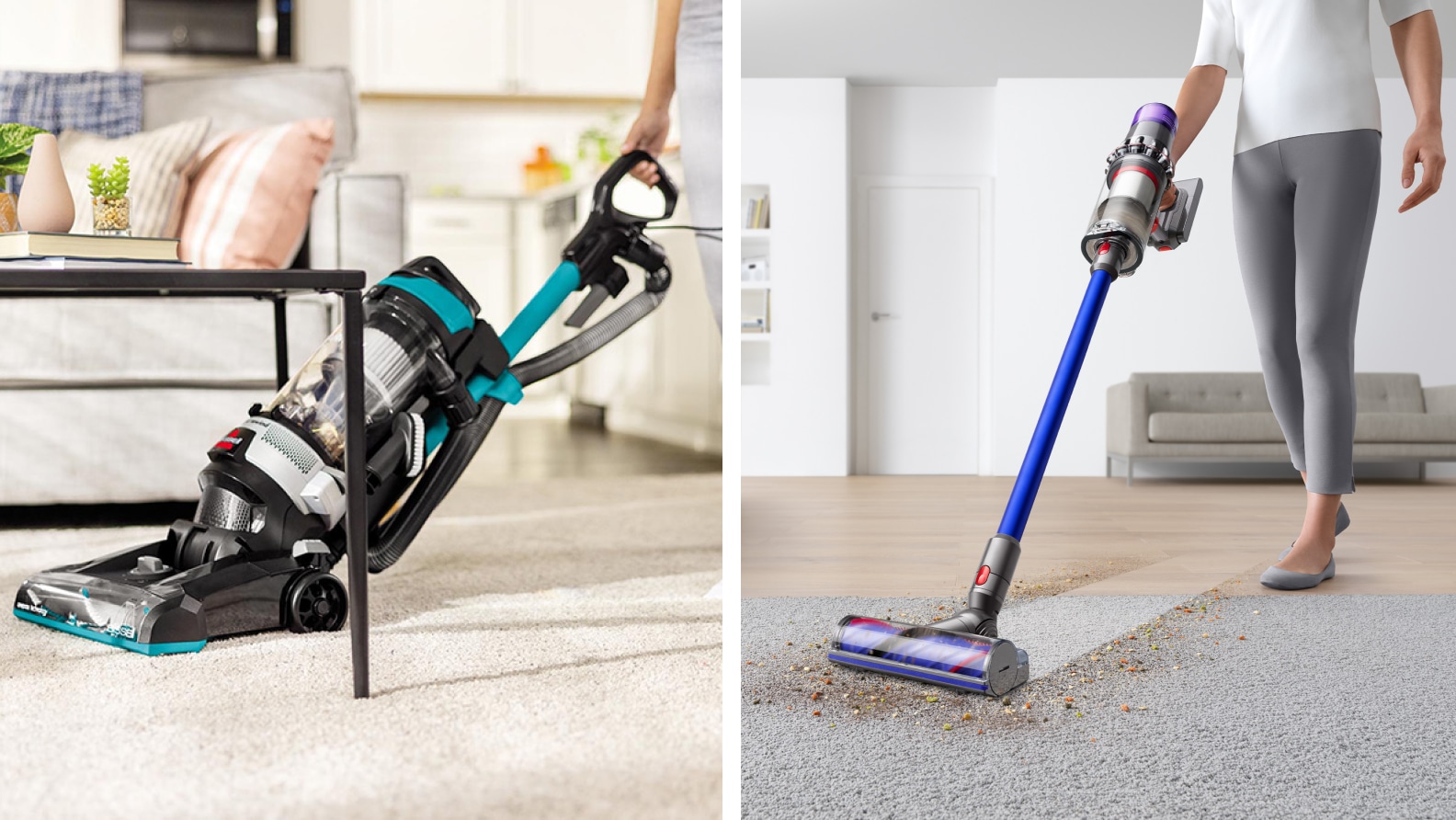
Canister vacuum vs stick vacuum: which is better?
A canister vacuum and a stick vacuum can both clean well, but they are built for different jobs. A canister vacuum has a separate body on wheels with a hose and wand, which usually gives it stronger suction, better reach, and more attachment options. A stick vacuum is lighter, easier to grab, and much faster for everyday messes.
If you want one machine for deep cleaning, stairs, curtains, and mixed floors, a canister vacuum often has the edge. If you want something slim, easy to store, and simple to use every day, a stick vacuum may be the better fit. The real answer to canister vacuum vs stick vacuum: which is better? is that it depends on your space, your habits, and your cleaning goals.
What is a canister vacuum?
A canister vacuum has two main parts: a wheeled body that holds the motor and dust bin, and a long hose with a cleaning head. This design makes it easier to clean under furniture, along baseboards, and above-floor areas like drapes or shelves. Many models also come with useful tools such as a crevice tool, upholstery brush, and a motorized carpet head.
In my experience, canister vacuums feel a lot like a strong workhorse. They are not always the flashiest option, but they tend to be reliable when you need deep cleaning power. If you have thick carpet, a lot of area rugs, or a home that collects dust fast, this style can be a smart choice.
What is a stick vacuum?
A stick vacuum is a slim, lightweight vacuum built for quick use and easy handling. Most are cordless, though some corded models still exist. They are popular because they are simple to carry, easy to store, and fast to use for daily messes.
I often recommend stick vacuums to people who hate dragging out a heavy machine for a five-minute cleanup. They shine in apartments, smaller homes, and busy households that need fast touch-ups. When people ask canister vacuum vs stick vacuum: which is better?, the stick vacuum often wins on convenience and speed.
Canister vacuum vs stick vacuum: key differences
The best way to compare canister vacuum vs stick vacuum: which is better? is to break the choice down into the details that matter most.
Suction power
Canister vacuums usually offer stronger and more stable suction. That makes them better for deep carpet cleaning, pet hair, and embedded dirt. Stick vacuums have improved a lot, but many still trade some power for portability.
Weight and handling
Stick vacuums are far lighter and easier to carry around the house. Canister vacuums are still manageable, but you are moving both the hose and the wheeled body. If stairs are part of your routine, the lighter stick can feel much less tiring.
Storage
Stick vacuums are easier to tuck into a closet, laundry nook, or corner. Canister vacuums need more space because of the main unit and hose. If storage is tight, this difference matters more than most shoppers expect.
Attachments and versatility
Canister vacuums often come with more attachments and more cleaning reach. They can be better for upholstery, vents, curtains, and tight spaces. Stick vacuums can also include tools, but they are usually less flexible overall.
Battery life or corded consistency
Many stick vacuums are cordless, which is convenient but limited by battery life. A canister vacuum is often corded, so it can run longer without fading. For larger homes, that steady power can be a big advantage.
Noise
Canister vacuums can be noisy, but so can stick vacuums depending on the model. In general, sound levels vary more by design and quality than by category alone. Still, many people find lightweight stick vacuums less intimidating for quick use.

Which vacuum is better for carpets?
For carpets, especially medium to thick carpet, a canister vacuum usually performs better. It tends to have stronger suction and better brush roll options, which helps lift dirt from deeper fibers. That makes it a stronger pick for homes that want a real deep clean.
A stick vacuum can still work well on low-pile carpet and area rugs. But if your carpet traps pet dander, grit, or crumbs often, you may notice the difference after the first pass. In my own use, the canister vacuum usually leaves carpet looking more refreshed after a full clean.
Which vacuum is better for hard floors?
Stick vacuums are often excellent on hard floors because they are light and quick to move. They are easy to sweep across tile, vinyl, laminate, and hardwood without much effort. Many also have soft rollers or floor heads that reduce the chance of scattering debris.
Canister vacuums can also be great on hard floors, especially if they include a soft brush head. If your home has mostly hardwood or tile, either one can work well. The better choice in canister vacuum vs stick vacuum: which is better? often comes down to whether you want a deeper clean or faster daily cleanup.
Which vacuum is better for pet hair?
Canister vacuums usually do better with pet hair, especially if your pet sheds heavily. Their stronger suction and wider attachment choices help lift hair from carpet, stairs, sofas, and corners. A motorized upholstery tool can also make a big difference.
Stick vacuums can handle light pet hair fine, especially on hard floors and low-pile surfaces. But if you have multiple pets or a lot of fur buildup, the battery may run out before you finish. That is one of the most common reasons people upgrade from a stick to a canister.
Which vacuum is better for small homes and apartments?
Stick vacuums often win in small spaces. They are easy to store, fast to grab, and perfect for quick cleanup after cooking, kids, or guests. If your space is compact, you may use it more often simply because it feels easier.
That said, a small home with lots of rugs or pets may still benefit from a canister vacuum. I’ve seen people buy a lightweight stick, then later wish they had stronger cleaning power. So for canister vacuum vs stick vacuum: which is better?, the size of your home matters, but so does the mess level.
Which vacuum is better for large homes?
Canister vacuums are usually better for large homes. They often have longer cords, stronger suction, and better runtime than cordless stick models. That means fewer stops, fewer battery worries, and more consistent cleaning.
A large home can make a stick vacuum feel limited, even if the vacuum itself works well. Battery charging breaks can turn a simple task into a longer chore. If you clean many rooms at once, a canister vacuum is often the more practical tool.
What to consider before buying
Before deciding canister vacuum vs stick vacuum: which is better?, think about your real routine, not just specs on a box.
Floor type
• Mostly carpet: choose a canister vacuum
• Mostly hard floors: a stick vacuum may be enough
• Mixed flooring: compare floor heads and attachments carefully
Home size
• Small apartment: stick vacuum is often easier
• Medium to large home: canister vacuum may save time
• Multi-level home: consider weight and stair use
Storage space
• Tight storage: stick vacuum has the advantage
• Utility closet or larger storage area: canister vacuum is easier to keep
Cleaning habits
• Daily quick cleanups: stick vacuum is convenient
• Weekly deep cleaning: canister vacuum is stronger
• Both habits: some homes benefit from owning both
Pets and allergies
If you have pets or allergies, look for strong filtration, sealed systems, and a good HEPA filter if available. Those features matter more than many buyers realize. A vacuum that traps fine dust well can make the air feel cleaner, not just the floor.
My real-world advice from using both
If I had to simplify years of hands-on use, I’d say this: the vacuum you use often is usually better than the vacuum that looks best on paper. I have seen people buy a heavy canister because it promised power, then avoid using it because it felt like a chore. I’ve also seen people love a stick vacuum at first, then get frustrated when it could not keep up with pet hair or full-home cleaning.
My biggest mistake early on was focusing too much on suction ratings and not enough on comfort. A vacuum can be powerful, but if it feels awkward, it ends up living in the closet. The best choice in canister vacuum vs stick vacuum: which is better? is the one that matches your cleaning style so well that you actually use it.
Pros and cons of canister vacuums
Pros
• Stronger suction in many models
• Better for deep carpet cleaning
• More attachments for different tasks
• Good reach under furniture and above floors
• Often better for pet hair and bigger homes
Cons
• Bulkier to store
• Less convenient to carry around
• Can feel less friendly for quick cleanups
• Usually takes more time to set up
Pros and cons of stick vacuums
Pros
• Lightweight and easy to carry
• Great for quick daily cleaning
• Simple to store in small spaces
• Easy to use on hard floors
• Often cordless for more freedom
Cons
• Battery life can be limited
• Usually less powerful than canister vacuums
• Smaller dust bins
• May struggle with thick carpet or heavy pet hair
• Fewer attachment options on some models
How to choose the right vacuum for your home
A good way to settle canister vacuum vs stick vacuum: which is better? is to ask how you clean on a normal week.
• Choose a canister vacuum if you need deep cleaning, strong suction, and more tools
• Choose a stick vacuum if you want speed, light weight, and easy storage
• Choose both if you have a large home and want one tool for quick cleanups and one for deep cleaning
If you are still unsure, try to picture the vacuum on an ordinary Tuesday, not just on a rare spring-cleaning day. That everyday test usually gives the clearest answer.

Frequently Asked Questions
Are canister vacuums better than stick vacuums?
Canister vacuums are usually better for deep cleaning, carpet, and pet hair. Stick vacuums are better for quick jobs, small spaces, and easy storage.
Do stick vacuums work on thick carpet?
Some stick vacuums can clean thick carpet, but many struggle compared with canister models. If your home has a lot of thick carpet, a canister vacuum is usually the safer pick.
Which vacuum is better for seniors or people with back pain?
A stick vacuum is often easier to handle because it is lighter and easier to lift. A lightweight canister can also work well if the hose and wand are comfortable to use.
How long do cordless stick vacuum batteries last?
Battery life varies by model, but many cordless stick vacuums run for about 20 to 60 minutes per charge. That is often enough for quick cleaning, but it may not be enough for a full house.
Should I buy a canister vacuum if I have pets?
Yes, if your pets shed a lot, a canister vacuum is often the better choice. The stronger suction and better attachment options help remove pet hair from carpets, furniture, and stairs.
Conclusion
When it comes to canister vacuum vs stick vacuum: which is better?, the best choice depends on your home, your floors, and how often you clean. Canister vacuums usually win for power, deep cleaning, and larger homes, while stick vacuums win for speed, storage, and everyday convenience.
If you want the most practical answer, match the vacuum to your real life, not just your wish list. Think about your floors, your pets, your storage space, and how much effort you want to spend each week. If you found this guide helpful, explore more home cleaning tips, compare a few models, and leave a comment with the kind of vacuum you use now.

