

Can Robot Vacuums Replace Traditional Vacuums?
Robot vacuums are becoming more common in homes, promising easy cleaning with just the press of a button. You may wonder, can these smart devices fully take the place of traditional vacuums? It’s a question many homeowners ask before investing in a robot vacuum.
Understanding the differences, strengths, and weaknesses is important before making a decision. This article will guide you through what robot vacuums can do, where they fall short, and if they’re ready to replace your old vacuum cleaner.
How Robot Vacuums Work
Robot vacuums are compact machines that use sensors, cameras, and algorithms to navigate around your home. They automatically clean floors, avoid obstacles, and return to their charging dock when finished or low on battery. Most models are circular and low to the ground, making them good at reaching under furniture.
Main Features
- Autonomous cleaning: Robot vacuums operate without human help.
- Scheduling: Many allow you to set cleaning times.
- Sensors: Detect walls, stairs, and objects to avoid collisions.
- Mapping: Some use smart mapping to remember your home’s layout.
- App control: You can start, stop, or monitor cleaning from your phone.
Common Limitations
- Dust bin size: Small bins mean frequent emptying.
- Battery life: Most run for 60–120 minutes before recharging.
- Cleaning power: Not all models are strong enough for thick carpets or deep dirt.
Traditional Vacuums: Still Reliable
Traditional vacuums come in many forms: upright, canister, stick, and handheld. They have been the standard for decades, known for their power and flexibility.
Core Advantages
- Strong suction: Capable of deep cleaning carpets and picking up large debris.
- Versatility: Attachments for furniture, stairs, and tight spaces.
- Large capacity: Bigger dust bins mean less frequent emptying.
- Manual control: You decide where and how to clean.
Downsides
- Effort required: You must operate the vacuum yourself.
- Noise: Most are louder than robot vacuums.
- Storage: Larger and harder to store in small homes.
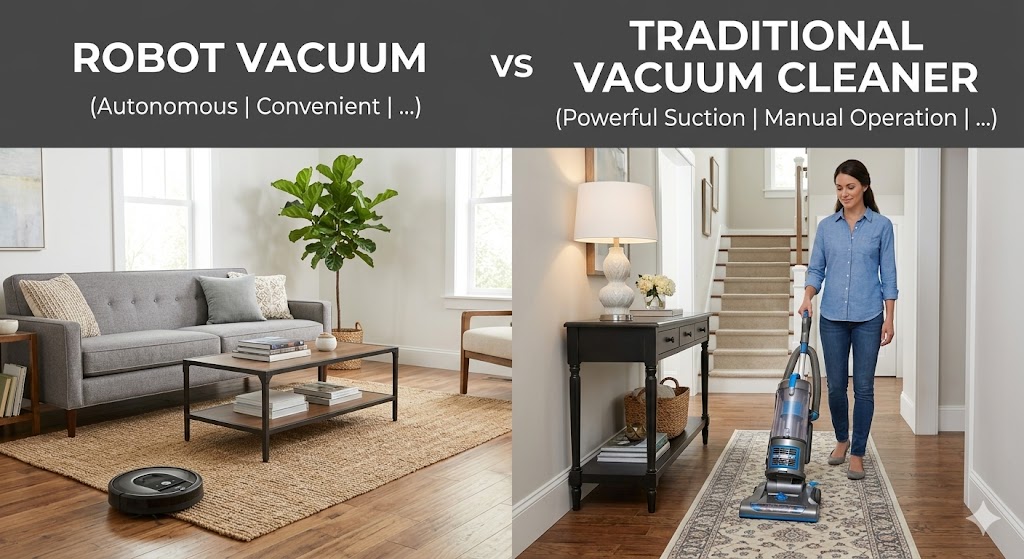
Comparing Robot And Traditional Vacuums
To help you see the differences at a glance, here’s a comparison table:
| Feature | Robot Vacuum | Traditional Vacuum |
|---|---|---|
| Suction Power | Moderate | High |
| Ease of Use | Automatic, hands-free | Manual, requires effort |
| Dust Bin Capacity | Small | Large |
| Cleaning Coverage | Good for open floors | All surfaces, corners, stairs |
| Price Range | $150–$900 | $50–$600 |
Cleaning Performance: Floor Types And Dirt
Robot vacuums are best for hard floors like tile, wood, or laminate. They handle daily dust and crumbs well. On low-pile carpets, they can pick up surface dirt but struggle with deep cleaning. Traditional vacuums are much better for high-pile carpets and thick rugs, where strong suction is needed.
Cleaning Corners And Edges
Robots often miss corners and edges because of their round shape. Some models use side brushes to help, but results can vary. Traditional vacuums with attachments can reach tight spaces easily.
Pet Hair And Allergens
If you have pets, robot vacuums can pick up fur from floors but may not remove hair embedded in carpets. Traditional vacuums with HEPA filters are more effective at capturing allergens and deep pet hair.

Smart Features: What Robot Vacuums Offer
Modern robot vacuums use technology to make cleaning smarter.
- Mapping: Advanced models create maps for efficient cleaning.
- Zone cleaning: Set specific rooms or areas to clean.
- Obstacle avoidance: Some use cameras or lasers to avoid objects.
- Voice control: Compatible with Alexa or Google Assistant.
However, these features can increase the price and are not available in all models. Beginners often overlook the need to update maps or clear obstacles, which can reduce cleaning efficiency.
Maintenance: What You Need To Know
Robot vacuums require regular maintenance:
- Empty dust bins after every use or two.
- Clean brushes to prevent jams.
- Replace filters every few months.
- Check sensors for dust buildup.
Traditional vacuums also need maintenance but usually less often. Their parts are larger and easier to access.

Cost And Value: Which Is Worth The Investment?
Robot vacuums range from $150 for basic models to $900+ for premium units. Traditional vacuums start around $50 and can go up to $600 for high-end brands.
Here’s a simple cost comparison:
| Model Type | Average Price | Estimated Lifespan | Annual Maintenance Cost |
|---|---|---|---|
| Robot Vacuum | $350 | 4–6 years | $40–$80 |
| Traditional Vacuum | $180 | 6–10 years | $25–$50 |
Robot vacuums offer convenience but can cost more over time. Maintenance parts like brushes and filters are often pricier.
Real-life Scenarios: Who Should Choose What?
Robot Vacuums Are Best For:
- Busy people: If you have little time for cleaning, robots can help.
- Small apartments: Easy to maintain clean floors.
- Open layouts: Fewer obstacles mean better coverage.
- Frequent cleaning needs: Good for daily dust and pet fur.
Traditional Vacuums Are Best For:
- Large homes: More surface area and complex layouts.
- Carpeted rooms: Deep cleaning needed.
- Families with allergies: HEPA filters and strong suction.
- Heavy messes: Spills, sand, and stubborn dirt.
Some people use both—a robot for everyday cleaning and a traditional vacuum for weekly deep cleaning.
Common Mistakes When Choosing
Many buyers assume all robot vacuums work the same. In reality, performance varies a lot between brands and price points. Here are mistakes to avoid:
- Ignoring floor type: Not all robots handle carpets well.
- Overestimating automation: Robots need regular maintenance and setup.
- Buying too cheap: Low-cost models may miss spots or break easily.
- Not considering obstacles: Homes with many toys, cables, or pets may confuse robots.
- Skipping research: Always check reviews and specs before buying.
Data And Statistics: What Studies Show
Research shows robot vacuums can remove up to 92% of surface dust from hard floors, but only 67% from carpets. Traditional vacuums remove 98% from carpets, making them better for deep cleaning. According to a survey by the Consumer Technology Association, 42% of robot vacuum owners still use a traditional vacuum for bigger jobs.
Practical Tips For Getting The Most Out Of Robot Vacuums
- Clear the floor: Remove toys, cables, and obstacles before cleaning.
- Schedule regular runs: Daily or every other day works best.
- Update maps: Use app features to improve cleaning routes.
- Maintain brushes: Clean hair and debris often.
- Use boundary markers: Keep robots away from problem areas.
One non-obvious tip: Place the charging dock in a central, open location—this helps the robot find its home faster and clean more efficiently.
Another insight: Don’t rely on robots for deep cleaning or heavy spills. Use them for light, frequent cleaning to keep floors tidy.
Technology Trends: Future Of Robot Vacuums
Robot vacuums are getting smarter. New models use artificial intelligence to recognize objects, adjust cleaning modes, and even empty their own bins. Some can mop floors as well. However, these advanced features push prices higher.
Experts predict robot vacuums will keep improving, but traditional vacuums will still be needed for deep cleaning and special tasks for years to come.
For more in-depth technical details, you can read about the evolution of robotic cleaning devices at Wikipedia.
Frequently Asked Questions
Can A Robot Vacuum Clean Stairs?
No, robot vacuums cannot clean stairs. Their design only allows them to clean flat surfaces. You will need a traditional vacuum or handheld vacuum for stairs.
How Often Should I Empty A Robot Vacuum’s Dust Bin?
Most robot vacuums have small bins. You should empty them after every 1–2 cleaning cycles, especially if you have pets or lots of dust.
Do Robot Vacuums Work With All Floor Types?
They work best on hard floors and low-pile carpets. Thick carpets, shag rugs, and uneven surfaces can reduce cleaning performance.
Are Robot Vacuums Safe For Homes With Pets?
Yes, they are safe and can help pick up pet hair and dander. However, you should check for accidents or spills before running the robot to avoid messes.
Can Robot Vacuums Replace Traditional Vacuums Completely?
For light, daily cleaning, robot vacuums are very useful. However, for deep cleaning, heavy messes, and special tasks, traditional vacuums are still needed. Most homes benefit from having both.
Robot vacuums offer a new level of convenience, but they are not a perfect replacement for traditional vacuums. If you want spotless floors and deep cleaning, traditional vacuums still have the upper hand. For everyday maintenance and saving time, robot vacuums are a smart addition to your home.
Choosing the best option depends on your space, cleaning needs, and lifestyle.

