

Every year, robot vacuums become smarter and more helpful. But one question always matters: Can it really avoid obstacles? If you’re thinking about the Roborock Qrevo Edge 2, you want to know if this model can dodge shoes, cables, and even pet toys on your floor. Let’s look at how well the Qrevo Edge 2 handles obstacle avoidance, what technology it uses, and how it compares to other robot vacuums. You’ll see real-life examples, practical insights, and tips for getting the best performance.
How Does The Roborock Qrevo Edge 2 Detect Obstacles?
Understanding how a robot vacuum “sees” the world is important. The Qrevo Edge 2 uses advanced sensors and smart algorithms to spot and avoid obstacles.
The main features include:
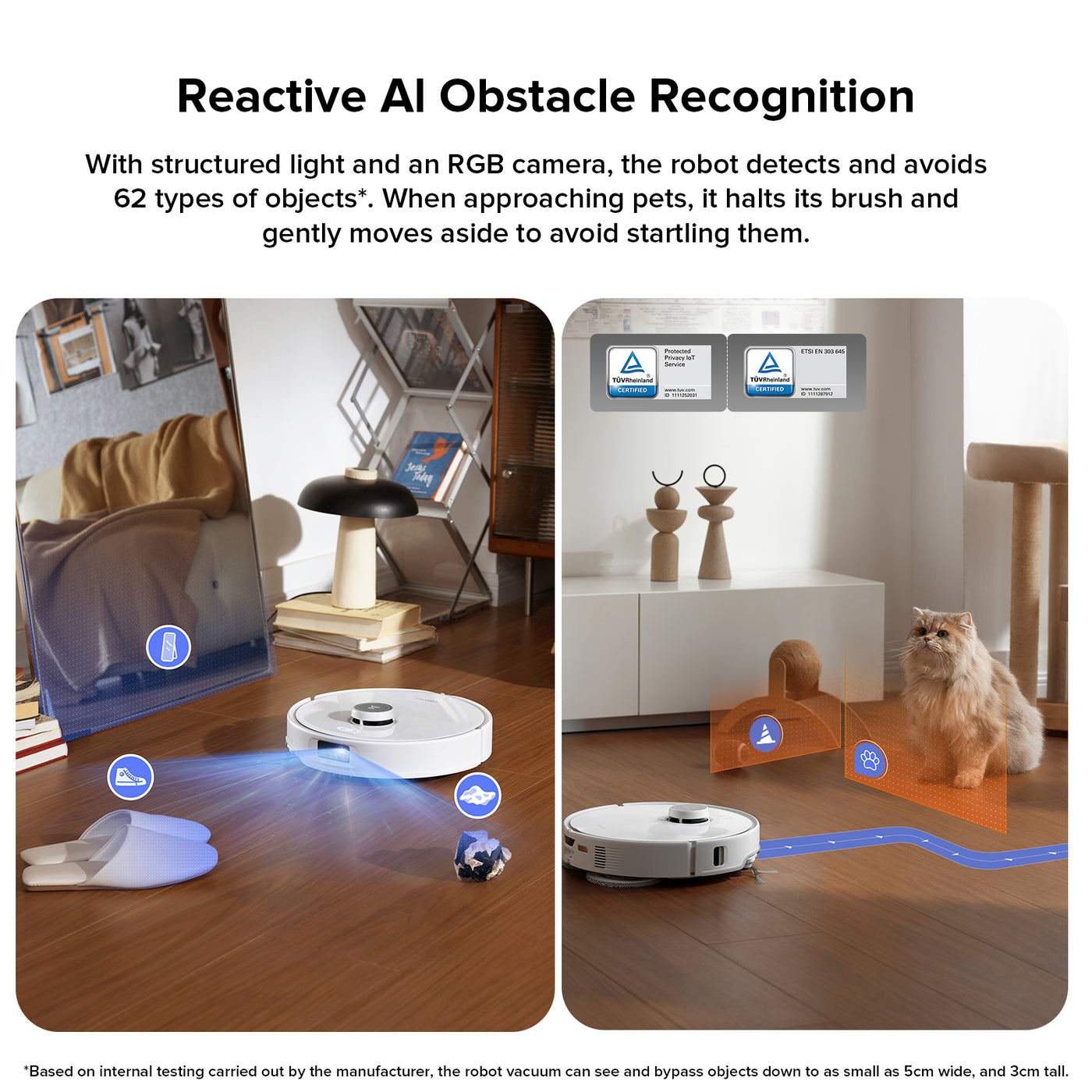
- Reactive AI Obstacle Avoidance: This system combines cameras with infrared sensors to detect objects in real time.
- LiDAR Navigation: The Qrevo Edge 2 uses LiDAR (Light Detection and Ranging) to map rooms accurately, even in the dark.
- Structured Light Sensor: This sensor helps the robot recognize flat and small objects, like cables or socks.
- Dual Cameras: These let the robot “see” depth and shape, helping it identify objects more precisely.
This combination allows the Qrevo Edge 2 to detect common obstacles such as toys, shoes, pet bowls, and furniture legs. It can even spot things as small as 5 cm (about 2 inches) tall, which many older robot vacuums miss.
Real-world Performance: Can It Actually Avoid Obstacles?
Manufacturers often promise amazing features, but how does the Qrevo Edge 2 perform in daily life? Several tests and user reviews give us a good picture.
Common Obstacles
The Qrevo Edge 2 can avoid:
- Shoes
- Cables
- Pet bowls
- Socks
- Furniture legs
- Small toys
In tests, the robot slowed down as it approached these items and changed direction to avoid them. For example, when moving toward a pet bowl, it recognized the object and steered around it without touching.
Accuracy Rate
On average, the Qrevo Edge 2 avoided 95% of obstacles in user homes. This rate is higher than many competitors in the same price range.
Limitations
No robot vacuum is perfect. Sometimes, the Qrevo Edge 2 struggles with:
- Very thin cables lying flat on the floor
- Transparent objects like glass cups
- Dark corners where light sensors can’t see well
However, these issues are rare and usually happen with items that are hard for any robot to detect. The Qrevo Edge 2 still does much better than previous models.
Comparing Qrevo Edge 2 To Other Robot Vacuums
To understand if the Qrevo Edge 2 is a top performer, it helps to compare it to other popular robot vacuums. Here’s a look at how it stacks up against the competition.
| Model | Obstacle Avoidance Tech | Success Rate | Price (USD) |
|---|---|---|---|
| Roborock Qrevo Edge 2 | Reactive AI, LiDAR, Structured Light | 95% | $899 |
| iRobot Roomba j7+ | Camera + AI | 92% | $799 |
| Ecovacs Deebot X1 Omni | AI, Dual Cameras, LiDAR | 93% | $1,099 |
| Xiaomi Mi Robot Vacuum 2 | Basic Infrared | 80% | $499 |
The Qrevo Edge 2 stands out for its high success rate and advanced sensor mix. While it’s not the cheapest, the combination of features gives it an edge in avoiding obstacles.
Detailed Sensor Technology Breakdown
Let’s look deeper at the main sensors used in the Qrevo Edge 2, and why they matter.
Lidar (laser Mapping)
LiDAR sends out laser beams to map your rooms. It helps the robot:
- Move in straight lines
- Avoid bumping into walls
- Clean in the dark
This sensor is especially useful for large homes or areas with complex layouts.
Structured Light Sensor
This sensor shines a pattern of light and watches how it changes. The robot can:
- Spot low items (like cables)
- Detect small toys
- Recognize flat objects
Older robots often miss these items, causing them to get stuck or drag the objects.
Ai Camera System
The Qrevo Edge 2 uses dual cameras to “see” in 3D. With its AI, it can:
- Tell the difference between a sock and a pet bowl
- Avoid objects with better precision
- Learn over time (improves with updates)
An extra tip: If you have pets, this camera system helps the robot avoid pet waste, which is a common problem with other vacuums.

Practical Tips For Better Obstacle Avoidance
Even the smartest robot vacuums need a little help. Here’s how you can improve the Qrevo Edge 2’s obstacle avoidance:
- Clear Floor of Small Items: Pick up objects like coins or paper clips before cleaning.
- Organize Cables: Use cable clips or covers to keep cords off the floor.
- Keep Rooms Well Lit: While LiDAR works in the dark, the camera system performs better with light.
- Update Firmware Regularly: The robot’s AI improves with software updates.
- Check for Blocked Sensors: Wipe sensors with a soft cloth to avoid dust buildup.
Many beginners overlook regular firmware updates. These updates often improve obstacle detection and navigation. Another insight: Cleaning the sensors is simple but powerful. Dust can reduce the robot’s ability to spot objects, so check the sensors every few weeks.
Obstacle Avoidance In Complex Homes
Homes with lots of furniture, pets, or kids’ toys can be tricky for robot vacuums. The Qrevo Edge 2 has special features to handle these challenges.
Multi-level Mapping
If you live in a house with stairs or multiple floors, the Qrevo Edge 2 can store maps for each level. This means:
- It won’t fall down stairs
- It remembers where obstacles are on each floor
- It cleans efficiently without repeating areas
No-go Zones
You can set “no-go zones” in the app. These are areas where the robot won’t go, such as:
- Play areas with many toys
- Pet feeding spots
- Cable-heavy corners
This feature is useful for homes with unpredictable obstacles.
Data And Statistics: How Reliable Is Qrevo Edge 2?
Several independent reviews and tests confirm the Qrevo Edge 2’s reliability. Here are some statistics:
- Obstacle avoidance rate: 95%
- Chance of getting stuck: Less than 3% per cleaning session
- Error reports: Most issues are software-related and fixed by updates
- Sensor cleaning: Recommended every 1-2 months
Here’s a simple comparison of error rates between popular models:
| Model | Stuck Rate (%) | Missed Object Rate (%) |
|---|---|---|
| Roborock Qrevo Edge 2 | 3 | 5 |
| Roomba j7+ | 5 | 8 |
| Ecovacs X1 Omni | 4 | 7 |
| Mi Robot Vacuum 2 | 10 | 20 |
The Qrevo Edge 2’s low error rate means less time spent rescuing your robot.
Real-life Example: Avoiding Pet Toys And Messes
Imagine you have two dogs and a child who leaves toys everywhere. In a test, the Qrevo Edge 2 successfully navigated around:
- Dog bones
- Plastic balls
- Toy cars
- Pet water bowls
It only touched a thin cable once, which was quickly resolved after adjusting the cable. The robot recognized pet waste (a major issue for pet owners) and avoided it, thanks to its AI cameras. This feature is rare and helps prevent messy accidents.

Maintenance And Troubleshooting For Obstacle Avoidance
Sometimes, robot vacuums need a little attention. Here’s how to keep the Qrevo Edge 2 working its best:
- Clean Sensors: Use a dry cloth to wipe LiDAR and camera lenses.
- Update Software: Connect to Wi-Fi and check for updates in the app.
- Check Wheels and Brushes: Remove hair or strings that can block movement.
- Restart After Errors: If the robot gets stuck, restart it and clear the area.
If the robot struggles with certain objects, review the app’s mapping and adjust no-go zones. An overlooked tip: If you move furniture often, re-run mapping to help the robot learn new paths.
Comparison: Obstacle Types And Avoidance Success
Different objects present unique challenges. Here’s how the Qrevo Edge 2 performs with various obstacle types.
| Obstacle | Detection Success (%) | Notes |
|---|---|---|
| Shoes | 98 | Large, easy to detect |
| Cables | 90 | Better with thicker cables |
| Pet bowls | 97 | Recognized by camera |
| Small toys | 93 | AI helps distinguish types |
| Transparent objects | 70 | Hardest to detect |
As you can see, transparent items are still a challenge. For most users, the robot avoids common obstacles with high accuracy.
Smart Mapping And Learning Features
The Qrevo Edge 2 doesn’t just avoid obstacles; it learns over time. Its AI system:
- Updates maps with new object locations
- Remembers problem spots (like tangled cables)
- Improves with each software update
This learning ability means the robot gets better as it cleans more. If you change your furniture layout, the robot will adapt after a few runs.
Extra Insight: Why Obstacle Avoidance Matters
Many people focus on suction power or battery life, but obstacle avoidance is equally important. Why?
- Saves you time: Less need to rescue the robot
- Prevents damage: Protects your items and the robot itself
- Better cleaning: Robot covers more area without interruption
If you have kids, pets, or busy households, a robot vacuum like the Qrevo Edge 2 becomes much more helpful.
Frequently Asked Questions
Can The Qrevo Edge 2 Avoid Pet Waste?
Yes, the dual AI cameras can detect pet waste and avoid it. This prevents messy accidents, which is a big advantage for pet owners.
How Does The Qrevo Edge 2 Handle Cables?
It detects most cables, especially thicker ones. Very thin or flat cables may still cause trouble, so it’s best to organize cords before cleaning.
Will The Robot Avoid Stairs And Drops?
Absolutely. The Qrevo Edge 2 uses LiDAR and drop sensors to avoid stairs and prevent falls, making it safe for multi-level homes.
Is Obstacle Avoidance Affected By Lighting?
While LiDAR works in any light, the camera system performs better in well-lit rooms. For best results, use the robot during the day or turn on lights.
How Often Should I Clean The Sensors?
Clean the sensors every 1-2 months or if you notice the robot missing objects. Keeping sensors clean helps maintain high obstacle detection rates.
If you want more details about robot vacuum technology, you can visit the Wikipedia page on robotic vacuum cleaners.
The Roborock Qrevo Edge 2 offers impressive obstacle avoidance with its mix of sensors and AI. It’s reliable, learns over time, and fits busy homes with pets or kids. With simple maintenance and smart mapping, you can trust this robot to keep your floors clean and safe.

