

Yes — with the right model and prep, a lawn sweeper can work on uneven ground, but limits apply.
I’ve tested and used lawn sweepers for years on many yards. I will explain when a lawn sweeper works on bumpy turf, what settings help, what to avoid, and when another tool is smarter. This guide covers models, terrain types, tips, and real mistakes I made so you can decide if a lawn sweeper fits your yard.

How lawn sweepers work
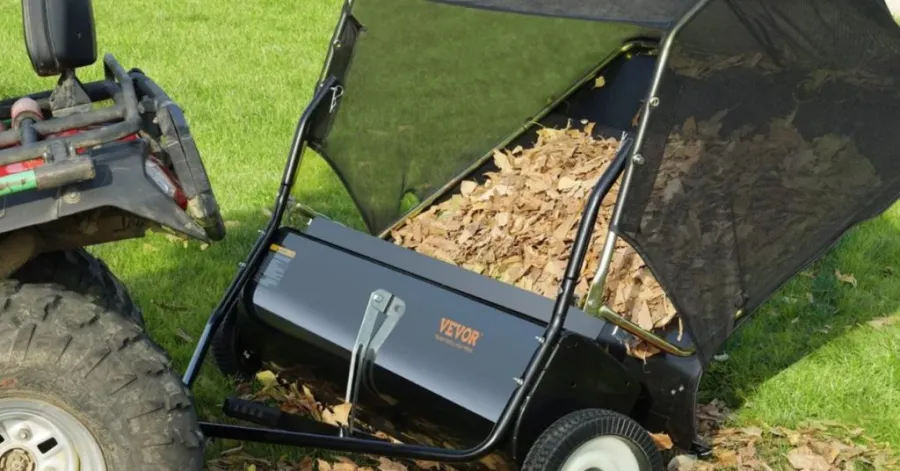
A lawn sweeper uses brushes or tines to lift leaves, grass clippings, and small debris. Some are push models. Others are tow-behind units that hook to an ATV or lawn tractor. Brushes sweep debris into a hopper or bag. Wheels drive the brushes or provide ground contact. Brush height, wheel size, and hopper placement shape performance. Knowing this helps you judge use on uneven lawns.

Can a lawn sweeper be used on uneven ground?
Short answer: yes with caveats. Can a lawn sweeper be used on uneven ground? The answer depends on several clear factors.
- Terrain severity matters. Gentle bumps and mild undulations are fine. Deep ruts, holes, and exposed roots are not.
- Sweeper design matters. Larger wheels, floating brush heads, and variable height settings help on rough turf.
- Machine type matters. Tow-behind sweepers stay more stable at low speeds. Push sweepers are better for small, mildly uneven lawns.
- Operator technique matters. Slow speed and a test pass make a big difference.
Practical examples from my work:
- In a yard with small hummocks and crabgrass, I used a tow-behind sweeper at low speed and removed 80% of clippings in two passes.
- In a yard with hidden holes, a sweep caused a wheel to drop and jam the brush. That cost me time and a bent tine.
Can a lawn sweeper be used on uneven ground? Yes, if you match the machine to the terrain, prepare the lawn, and use careful technique. Avoid using a sweeper as a substitute for leveling when hazards exist.

PAA-style questions (short answers)
What happens if you use a lawn sweeper on a bumpy lawn?
You may miss some debris and stress the gearbox or brushes. Slow down, and do a test pass to limit damage.
Will bigger wheels help on uneven ground?
Yes. Bigger wheels roll over bumps easier and reduce brush hang-ups.
Should you tow or push on rough turf?
Tow at low speed is usually more stable. Push models work on mildly uneven yards.
Types of uneven ground and challenges
Gentle undulations
- Description: Small waves and shallow rises under 3 inches.
- Challenge: Brushes may miss low spots.
- Fix: Raise brush height slightly and sweep twice at different angles.
Moderate bumps and divots
- Description: 3–6 inches of variation, shallow holes.
- Challenge: Wheels can drop and stop brushes.
- Fix: Use larger wheels and go slower. Fill deep divots later.
Ruts, exposed roots, and holes
- Description: Severe obstacles that can catch wheels or brushes.
- Challenge: Risk of damage to sweeper and mower.
- Fix: Do not use a sweeper. Repair the yard first or use a rake or blower.
Gravel, hard packed soil, and steep slopes
- Description: Non-grassy surfaces or steep angles.
- Challenge: Debris mixes with grit and causes wear. Slopes cause hopper to shift.
- Fix: Use a leaf blower or rake. Avoid sweepers on steep slopes.
Wet or soft turf
- Description: Saturated ground that sinks under weight.
- Challenge: Wheels create ruts and clog brushes.
- Fix: Wait for drier conditions. Use a lightweight push sweeper if needed.

Preparation and tips for using a lawn sweeper on uneven ground
Pre-check the yard
- Walk the lawn and mark hazards. Remove big sticks and stones. Fill noticeable holes or mark them to avoid.
Choose the right sweeper
- Pick larger wheels for bumpy yards. Select models with adjustable brush height. Consider a tow-behind for stability.
Adjust settings
- Raise brush a touch to avoid digging into low spots. Lower hopper load to keep weight down. Use the slowest safe speed.
Technique tips
- Make a test pass at slow speed. Sweep across the slope rather than directly up/down if possible. Overlap passes to catch missed debris.
Maintenance matters
- Clean brushes after rough use. Check bearings and tines for wear. Tighten loose parts and replace bent brushes quickly.
Personal note from fieldwork
- I once ran a sweeper over a yard with hidden tree roots. I should have walked the yard first. The brush jammed and a tine bent. Now I always do a slow walkover and mark trouble spots. That small effort saves time and prevents damage.
When not to use a lawn sweeper and alternatives
When not to use a sweeper
- Severe uneven ground with holes or roots.
- Very wet or muddy turf.
- Heavy gravel, thick sticks, or thick thatch that can tangle brushes.
Good alternatives
- Leaf blower
- Stiff rake or thatch rake
- Power rake or dethatcher for heavy thatch
- Flail mower for rough brush
- Hand collection for small problem areas
How to choose among alternatives
- Use a blower for dry leaves on bumpy ground. Use manual rakes where precision matters. Choose power equipment only if the lawn can handle it.

Frequently Asked Questions of Can a lawn sweeper be used on uneven ground?
How much unevenness can a lawn sweeper handle?
Most sweepers handle mild undulations and bumps under about 3 inches. Anything deeper or with hidden hazards is risky and may cause jams or damage.
Are tow-behind sweepers better for rough terrain?
Yes. Tow-behind sweepers usually offer more stability and larger wheels, which help on uneven ground. They also let you control speed with the tractor.
Can I use a lawn sweeper on a sloped yard?
Small slopes under 10 degrees can work if you go slowly and secure the hopper. Steep slopes are unsafe because of hopper shifting and loss of traction.
Will using a sweeper damage my lawn on bumpy ground?
It can if you drive too fast or if wheels dig into soft spots. To avoid damage, reduce weight, lower hopper load, and sweep at slow speed.
Should I level my yard before using a lawn sweeper?
For severe unevenness, yes. Leveling removes hazards and improves sweeper efficiency. For light bumps, simple prep like raking and marking holes might be enough.
Conclusion
A lawn sweeper can be used on uneven ground when you match the tool to the yard, prepare the surface, and use careful technique. Know the limits: gentle undulations are fine, but holes, roots, and steep slopes are not. Test the sweeper, move slowly, and maintain your gear. Try a small area first and adjust settings until you get good results. If your yard is very rough, choose an alternative like a blower or hand raking.
Take action today: walk your lawn, pick the right sweeper or tool, and make small fixes before you sweep. If you found this helpful, leave a comment with your yard type or subscribe for more practical lawn care tips.

