

Are robot vacuums good for carpets? Honestly, it depends on the carpet and the robot. If you have low-pile or medium-pile carpet, a modern robot vacuum can handle daily dirt, dust, and pet hair surprisingly well.
But if you have thick plush, Berber, or shag carpet, you might end up disappointed.
In our research, the Carpet and Rug Institute’s certification program tests soil removal, dust containment, and carpet appearance retention. That tells you carpet performance is measurable. The real question is where your robot lands on that scale, and whether your carpet matches its design.
Let’s walk through it.
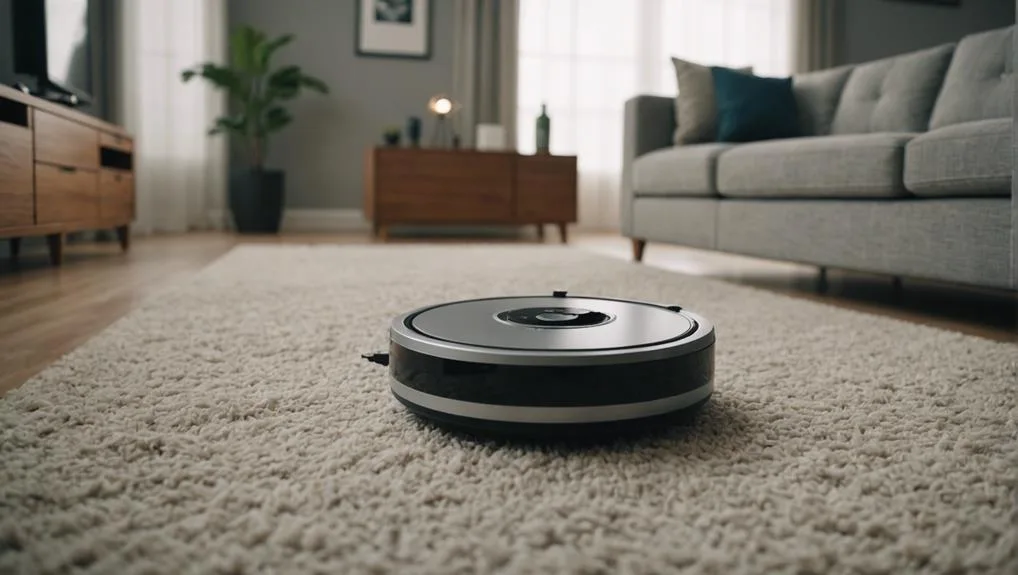
Image source: Web (Bing) / bestvacuumexpert.com (Web image (fair-use with source credit))
Quick Answer
Yes, robot vacuums are good for low-pile and medium-pile carpets. Most modern models clean them reliably every day. High-pile or shag carpet is a different story.
You may still need a manual vacuum for those. For deep cleaning, nothing replaces a full-size vacuum.
What “Good for Carpets” Actually Means
A robot vacuum is “good” on carpet when it removes embedded dirt, not just surface crumbs. That means strong suction, proper brush contact, and enough cleaning time. It also means the robot can navigate carpet without getting stuck or tangled.
Carpet holds onto dust, pet dander, and allergens. A vacuum that works well on bare floors may do very little on carpet. The standard should be simple.
Does it actually pick up what’s deep in the fibers?
Automated cleaning is a bonus. But “good for carpets” has to mean real cleaning power, not just convenience.
The First Condition: Carpet Pile Height and Texture
The single most important factor is pile height. Pile height is the length of the carpet fiber from base to tip. The deeper the pile, the harder it is for a small robot to move and clean.
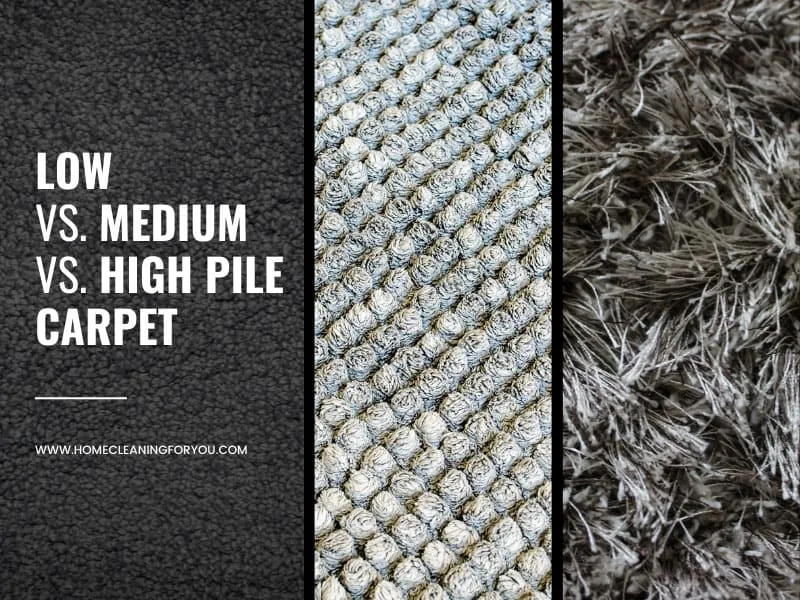
Image source: Web (Bing) / storage.googleapis.com (Web image (fair-use with source credit))
Here’s a quick reference table:
| Carpet type | Typical pile height | Robot vacuum friendly? |
|---|---|---|
| Low-pile (office or commercial) | Under 1/4 inch | Yes, good airflow |
| Medium-pile (common in bedrooms) | 1/4 to 1/2 inch | Yes, with carpet boost |
| Plush or velvet | Around 1/2 inch | Borderline, depends on suction |
| Berber (tight low loops) | Low but dense | Yes, if no snagged loops |
| High-pile or frieze | Over 1/2 inch | Generally no |
| Shag | 3/4 inch or more | No, brush roll stalls |
Aggregate user reviews show the biggest complaints happen on high-pile and shag carpet. Robots sink in, tilt, lose traction, or stop with errors. The brush roll also pulls at loops in Berber and can damage the carpet over time.
The Second Condition: Suction Power, Brush Roll, and Carpet Boost
Suction power is measured in Pascals (Pa). Older robots produced around 1,000 to 1,500 Pa, which was genuinely weak. Many 2026 models now reach 5,000 to 8,000 Pa.
That range is enough for carpet in most homes.
But raw suction alone doesn’t win. The brush roll does the real digging. Rubber extractor rollers are better than bristle brushes on carpet.
They flex, resist hair tangling, and grip carpet fibers more evenly.
Carpet boost also matters. This feature raises suction when the robot detects carpet, then drops back on hard floors. It saves battery and delivers more power exactly when needed.
| Suction range | Realistic carpet performance |
|---|---|
| 2,000 Pa or less | Only low-pile |
| 2,500 to 4,000 Pa | Low to medium-pile |
| 4,500 to 6,000 Pa | Good on most residential carpets |
| 7,000 Pa and above | Best for plush and heavily soiled carpet |
The Third Condition: Sensor Sensitivity and Threshold Climbing
Even a strong robot fails if its brain doesn’t read carpet correctly. Most robots use a floor-type sensor to detect the surface. Some use LiDAR mapping.
Others use cameras. On carpet, the important part is how they handle transitions.
Threshold climbing is the clearance between the bottom of the robot and the floor. Most robots handle 0.5 to 0.9 inches. That covers low-pile carpet edges and most area rugs.
Higher rugs will stop them cold.
Then there’s dark carpet. Dark fibers absorb the infrared used by cliff sensors, so the robot thinks it’s at the top of stairs and backs away. If you have dark gray or black carpet, you may need virtual boundaries or a model with better object avoidance.
Decision Tree: Should You Get a Robot Vacuum for Your Carpet?
Use these branches as a quick self-check. Match your carpet, then follow the recommendation.
Branch 1: Low-pile carpet and tight rugs
Then yes. Buy a robot with at least 3,000 Pa and a rubber brush roll. It will keep high-traffic areas clean with almost no help from you.
Branch 2: Medium-pile carpet
Then maybe. It works if the robot has carpet boost and strong suction. Look for at least 4,000 Pa and a tangle-resistant brush roll.
You’ll still need a manual vacuum every week or two for deeper dirt.
Branch 3: High-pile, plush, shag, or fringed rugs
Then skip it. High-pile and shag carpet cause the most stuck errors, tangled brush rolls, and sensor failures. Fringes wrap around the roller too.
Save your money and use a canister or upright vacuum instead. If you go this route, you'll want an upright that won't fight your carpet.
Branch 4: Mixed carpet and hard-floor homes
Then choose a hybrid model with carpet boost and a detachable mopping pad. It gives you the best of both worlds. Set no-go zones in the app so the mop never touches the carpet.
Features That Actually Matter for Carpeted Homes
Not every feature is worth paying for. These ones are:
- Carpet boost or auto suction adjustment
- Rubber or tangle-resistant brush roll
- Suction of 4,000 Pa or more
- Obstacle avoidance, especially for cords
- No-go zones and virtual walls
- Battery life of 150 minutes or more
- Self-emptying dock, if you vacuum often
- HEPA filter, if allergies are a concern
The mopping function matters less. If you have wall-to-wall carpet, a mopping robot won’t help you. Focus your budget on suction and navigation instead.
What Robot Vacuums Handle Well on Carpet
Here’s what the research and verified buyer feedback show robots do well:
- Daily dust and surface dirt
- Pet hair, especially with rubber brush rolls
- Cleaning under beds and sofas
- Keeping high-traffic areas fresh between deep cleans
- Reducing how often you need to pull out a full-size vacuum
If allergies are a priority, pair your robot with HEPA-rated models for better allergen containment. The robot handles daily upkeep, while a HEPA vacuum tackles deeper cleaning.
Where Robot Vacuums Fall Short on Carpet
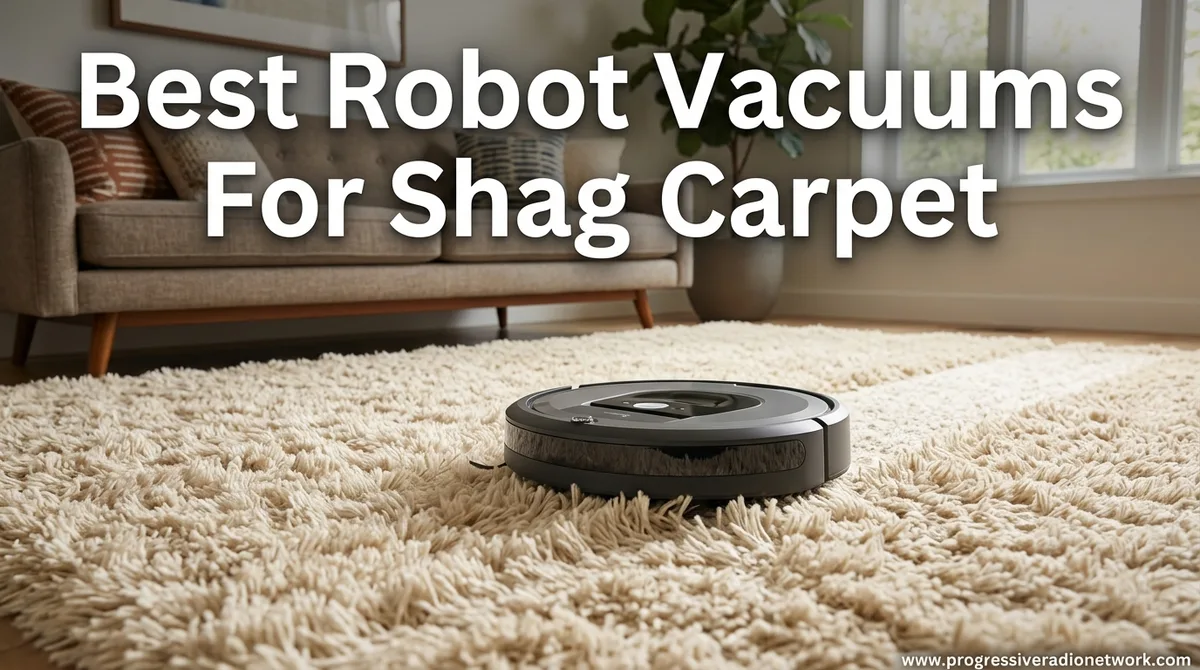
Image source: Web (Bing) / progressiveradionetwork.com (Web image (fair-use with source credit))
This is where the excitement fades. Shag carpet is the worst enemy of a robot vacuum. The brush roll digs in, stalls, and sometimes shuts the robot down.
Other problem areas include:
- Fringed area rugs that get chewed up
- Dark carpets that confuse cliff sensors
- Thick carpet underlays that drain battery fast
- Ground-in dirt that needs deep agitation
- Cords and small objects hidden in carpet fibers
A robot vacuum also cannot deep-clean. It passes over the surface, but it doesn’t beat the carpet fibers the way a full-size vacuum does. For truly embedded dirt and dust, an upright is still the better tool.
If you’re worried about the wrong machine harming your flooring, this article on avoiding carpet damage explains what to watch out for.
Robot Vacuum vs. Upright and Stick Vacuums on Carpet
The comparison comes down to effort versus depth.
| Criterion | Robot vacuum | Upright or stick vacuum |
|---|---|---|
| Cleaning depth | Surface-level daily cleaning | Deeper carpet agitation |
| User effort | Set and forget | Manual, but complete |
| Under furniture | Excellent | Difficult |
| High-pile carpet | Struggles | Usually fine |
| Pet hair | Good with rubber roller | Great with powered brush |
| Price range | $200 to $1,200 | $150 to $700 |
For mostly carpeted homes, an upright is still hard to beat. If that sounds like your situation, our guide to choosing a full-size upright vacuum walks through the important specs. Many people conclude that uprights are worth the investment when carpet is the main flooring.
Who Should Buy One and Who Should Skip It
Buy a robot vacuum if:
- You have low-pile or medium-pile carpet
- You have pets that shed daily
- You want a tidier home without manual effort
- You have mixed flooring and need daily maintenance
- You travel or work long hours and want scheduled cleaning
Skip it if:
- Your home has shag, high-pile, or fringed rugs
- You expect a robot to replace deep cleaning
- You have a tight budget and can only afford a weak model
- You want one machine to handle everything
For homes with mostly hard floors and a few thin rugs, a robot is easier to recommend. Check this list of hard-floor robot vacuums for models that transition well between surfaces.
Common Mistakes People Make When Using Robot Vacuums on Carpet
Most negative buyer reviews trace back to a few avoidable mistakes:
- Ignoring pile height before buying
- Letting fringe hang loose instead of tucking it under
- Running the robot over cords and pet toys
- Skipping no-go zones for high-pile areas
- Never cleaning the brush roll
- Expecting a robot to replace a full-size vacuum
The fix is simple. Read your carpet, map your home, and set realistic expectations. Most robots work great once you understand what they can’t do.
Setup, Maintenance, and Scheduling Tips for Carpet
These steps get the best results from any robot vacuum:
- Run a full mapping pass before scheduling anything.
- Set no-go zones for shag, fringe, and dark carpet.
- Pick up cords, socks, and toys before each run.
- Schedule daily cleaning for high-traffic areas.
- Clean the brush roll weekly, especially after pet shedding seasons.
- Replace the filter every two to three months.
| Maintenance task | How often |
|---|---|
| Empty the bin or dock | Every 1 to 2 days |
| Clean the brush roll | Weekly |
| Check cliff sensors | Monthly |
| Check wheels and side brushes | Monthly |
| Replace filter | Every 2 to 3 months |
If the robot gets stuck on carpet, lift it out gently. Never yank it sideways. That can stress the wheel mount and throw off the sensors.
Real-World Expectations: Battery, Noise, and Cleaning Time
Carpet is harder to clean than hard floors, so the battery drains faster. Carpet boost mode makes it even quicker. Most robots run 90 to 180 minutes on a full charge.
On thick carpet, expect 40 to 60 percent less runtime.
| Factor | Typical range |
|---|---|
| Battery runtime | 90 to 180 minutes |
| Runtime with carpet boost | 40 to 60 percent less |
| Noise level | 55 to 75 dB |
| Cleaning time per room | 5 to 15 minutes |
| Charging time | 3 to 5 hours |
Most modern robots return to their dock when the battery gets low. Some will recharge and resume where they left off. That feature is worth looking for if your home is mostly carpet.
Frequently Asked Questions
Will a robot vacuum deep-clean carpet?
No. Robots lift surface dirt but not deeply embedded, ground-in soil. Use an upright vacuum every week or two for a deeper clean.
Verified buyer reviews show robots work best as a daily maintenance tool, not a deep-cleaning machine.
Can a robot vacuum damage high-pile carpet?
Yes, it can. On shag or high-pile carpet, the brush roll can pull and twist fibers. It may also stall and leave visible marks.
The Carpet and Rug Institute recommends using a certified vacuum that’s appropriate for your pile height.
Does a robot vacuum work on Berber carpet?
It depends. Berber is low-profile but has tight loops. A robot with a rubber brush roll is safer than one with bristles.
Bristle brushes can snag the loops and cause pulling.
How often should I let a robot vacuum carpet?
Most homes benefit from daily runs in high-traffic areas. On low-pile carpet, every day is fine. On medium-pile, three to four times a week is enough.
Let the robot map the space first, then set a schedule.
Do I still need an upright vacuum if I have a robot?
Probably, yes. A robot handles daily surface dirt, while an upright provides the deep agitation carpet needs. Many homes use both.
That combination gives you convenience and real cleaning power.
Final Verdict: What We’d Recommend for Your Home
Are robot vacuums good for carpets? Yes, but with conditions. They’re excellent on low-pile and medium-pile carpet, especially for daily maintenance.
They struggle on shag, high-pile, fringed, and dark-colored carpet.
If your carpet matches the first group, a robot with strong suction and carpet boost is worth the money. If it doesn’t, you’ll get more value from a quality upright. The Carpet and Rug Institute’s certified vacuum list is a good place to start when comparing options.
Match the machine to your carpet, and you’ll know the right answer for your home.

