

Electric standing desks offer more convenience and precision, while manual desks win on price and simplicity.
I’ve spent years testing workspaces and writing about ergonomic gear. I will walk you through the real differences, trade-offs, and when to choose each option. This guide covers performance, ergonomics, costs, upkeep, and real-life tips so you can answer: Are electric standing desks better than manual ones? Read on to make a smart choice for your health and budget.
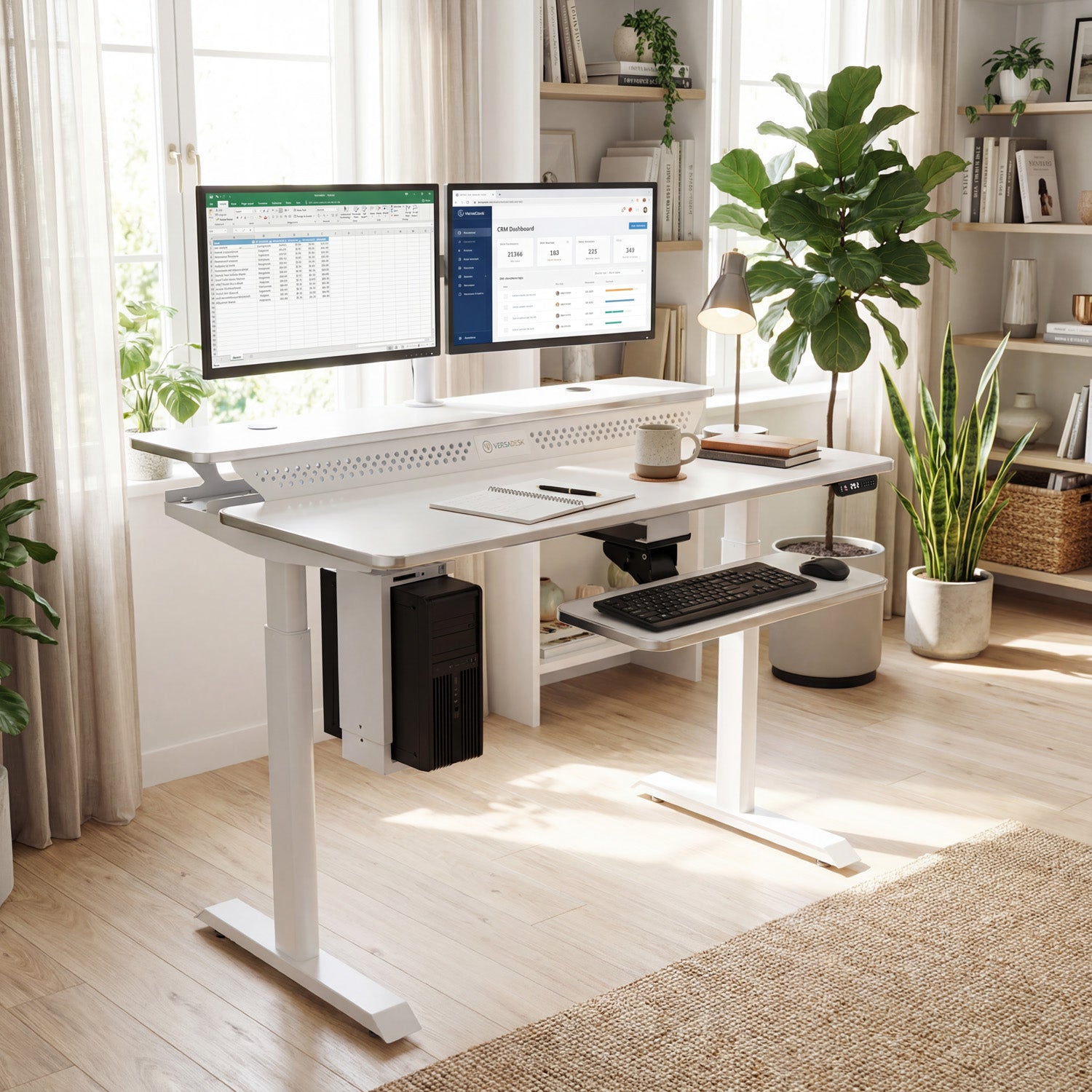
How electric and manual standing desks work
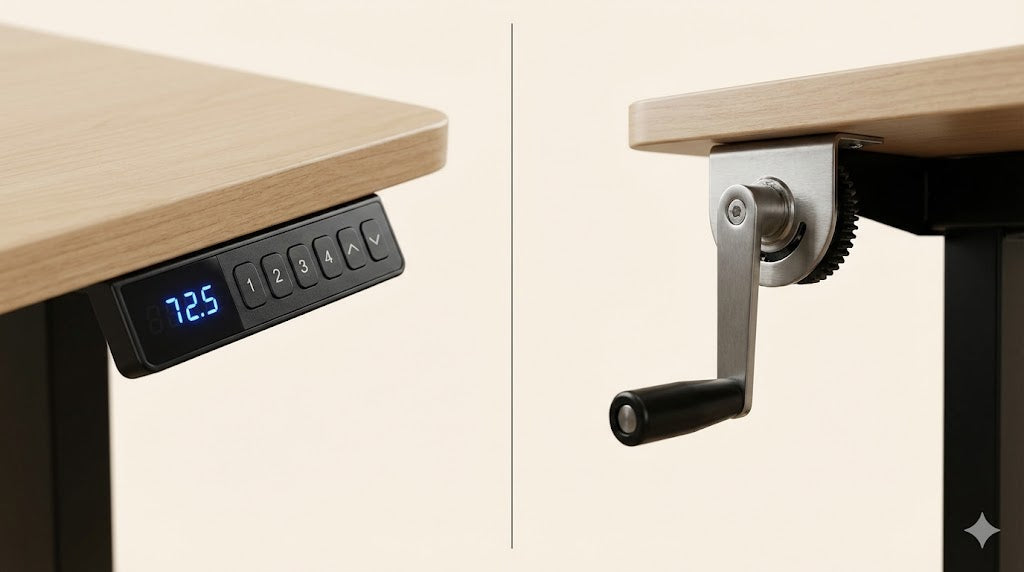
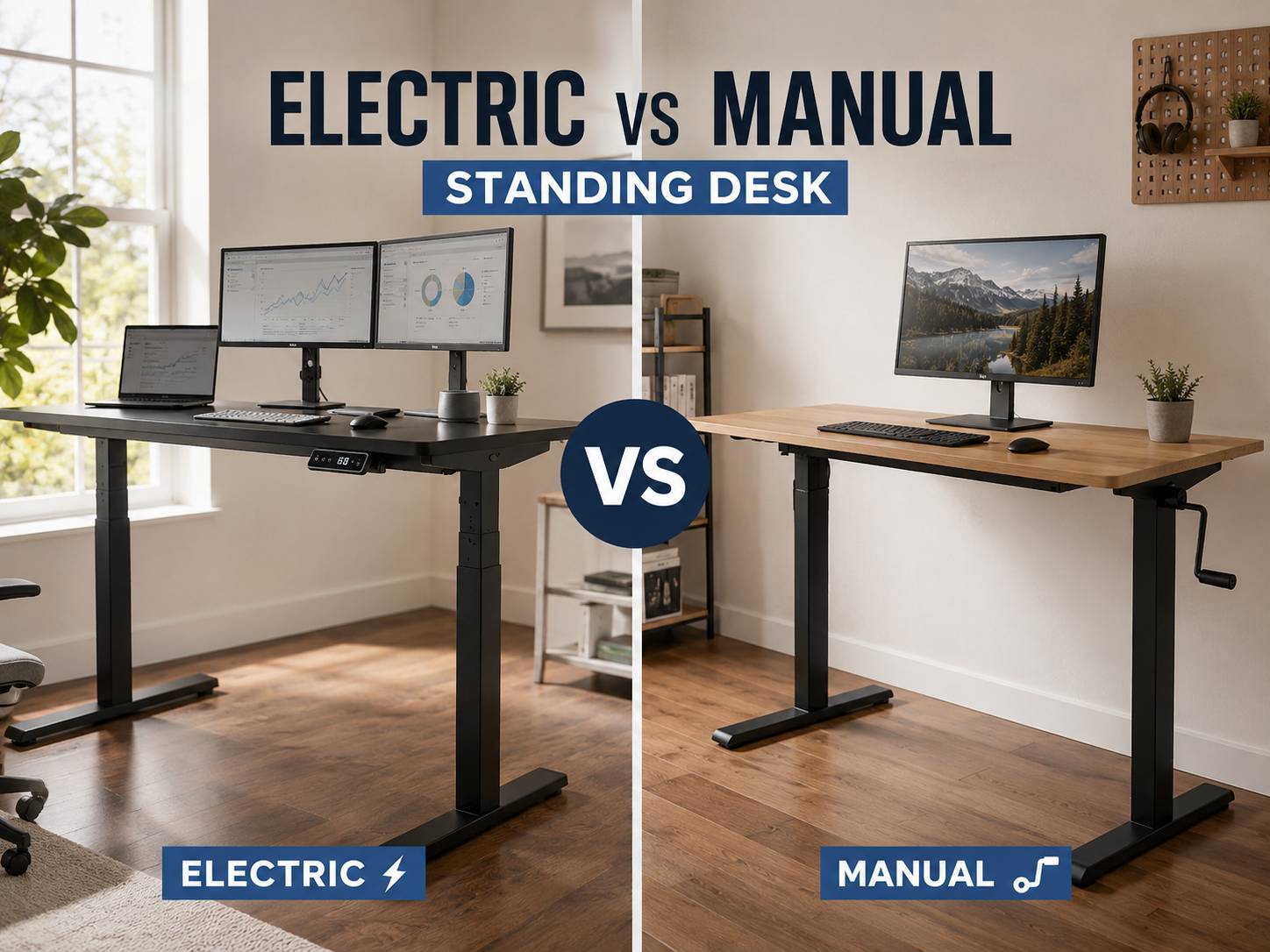
Electric standing desks use motors and controllers to raise and lower the desktop. You press a button and the desk moves smoothly to a preset height. Manual standing desks use a crank, gas spring, or counterweight. You turn the crank or lift a lever to change height.
Electric systems give precise control. They often include memory presets and quieter motion. Manual desks are simpler. They need no power and have fewer parts that can fail.
When asking Are electric standing desks better than manual ones? think about how often you will change positions. If you move several times a day, electric desks save time and strain. If you rarely change height, a manual desk may be fine.
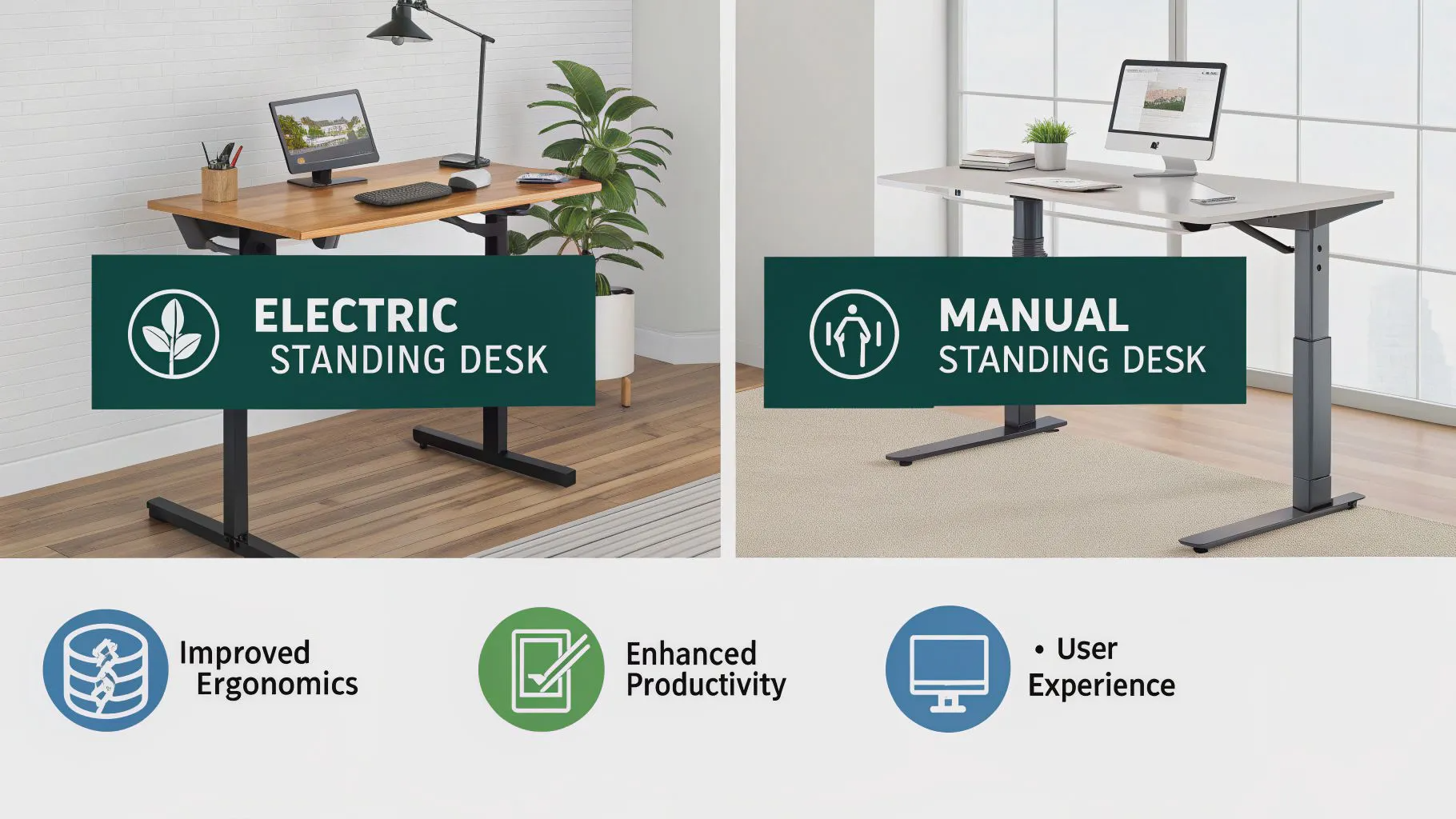
Performance and ergonomics
Electric desks deliver smooth, consistent motion. That reduces jolts and helps keep monitors stable. Many electric desks allow multi-user presets. This helps teams or shared desks dial in their preferred heights fast.
Manual desks can be perfectly ergonomic if adjusted properly. A good crank or gas-lift design can lock at comfortable heights. The downside is the effort to change height. That effort reduces how often people switch between sitting and standing.
PAA-style quick questions
- Do electric desks move faster than manual ones? Yes. Electric desks move faster and require no physical effort, making frequent changes easy.
- Are manual desks less stable? Not always. High-quality manual desks can be quite stable but may wobble more under heavy load.
- Do presets matter for ergonomics? Presets save time and help maintain proper posture, especially in shared setups.
Are electric standing desks better than manual ones? For ergonomics and ease of use, most people prefer electric desks. For low-use situations, manual desks still work well.

Cost, value, and long-term savings
Electric desks cost more up front. The motor, controls, and electronics add to the price. Manual desks are cheaper and can fit tighter budgets. Still, value depends on use.
Consider time and health. If you stand and sit many times a day, an electric desk can improve comfort and reduce fatigue. That may boost productivity and cut back on pain over time. For occasional standing, a manual desk gives good value.
Think about warranties and repairs. Electric desks often include multi-year warranties on motors. Repairs can be costly if a motor fails. Manual desks are easier and cheaper to fix.
Are electric standing desks better than manual ones? If budget allows and you need frequent height changes, electric desks offer better long-term value for many users.
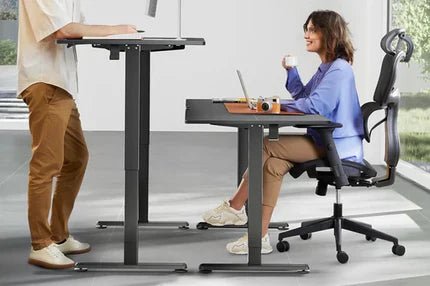
Durability, maintenance, and reliability
Electric desks have more parts that can fail. Motors, controllers, and switches are extra points of failure. Regular cleaning and avoiding spills helps. Many electric models have strong warranties to offset risks.
Manual desks are mechanically simple. They often last longer in rough environments because there are no electronics. The crank or gas spring may wear out, but replacements are usually simple.
If you plan to move the desk often, manual designs can be lighter and easier to disassemble. Electric desks can be heavier and more awkward to relocate.
Are electric standing desks better than manual ones? For reliability over decades in heavy-use environments, manual desks can have the edge. For home or office use with good care, electric desks are reliable.

Environmental impact and energy use
Electric desks use a small amount of power when adjusting. Idle power draw is minimal if the desk has proper design. Over a year, energy use is very low compared to other office devices.
Manual desks need no power. They have a smaller carbon footprint in manufacturing if fewer electronics are used. Repairability also affects sustainability. Easier-to-fix manual desks can last longer and create less waste.
Are electric standing desks better than manual ones? Environmentally, manual desks can be greener, but the difference is small for normal consumer use. Consider product lifespan and repair options for a fuller view.
Which should you choose: use cases and recommendations
Consider these scenarios:
- You switch positions many times a day
- Electric desks are better. Presets and smooth motion save time and effort.
- You work in a shared space
- Electric desks make quick adjustments simple for multiple users.
- You have a tight budget
- Manual desks give similar ergonomic benefits at lower cost.
- You favor low maintenance
- Manual desks are easier to repair and have fewer failure points.
- You move frequently or need portability
- Manual desks are often lighter and simpler to reassemble.
Are electric standing desks better than manual ones? The best choice depends on how you work. Match the desk to your routine and your budget.
Personal experience and practical tips
I tested both desk types in offices and at home. I used electric desks for months while editing, and a manual crank desk in a shared studio. My notes:
- I changed height more often with an electric desk. It felt effortless.
- The manual desk kept me honest about value. I used it when I planned to stand for long sessions.
- One electric motor failed after heavy use, but the warranty covered it. That taught me to check warranty length.
Tips from real use
- Test the range of heights before buying.
- Check the weight capacity if you use multiple monitors.
- Look for anti-collision and safety features on electric models.
- For manual desks, practice the crank or lift motion to see how easy it feels.
Are electric standing desks better than manual ones? From my experience, electric desks improve daily comfort. But a well-built manual desk still offers great value.
Frequently Asked Questions of Are electric standing desks better than manual ones?
Do electric desks use a lot of electricity?
Electric desks use very little electricity. They draw power mainly while moving and have minimal idle consumption.
Are electric desks noisy?
Most modern electric desks are quiet. High-quality models move smoothly and make little noise.
Can manual desks support heavy monitors?
Yes. Many manual desks have high weight capacities and can hold multiple monitors securely.
How often should I switch between sitting and standing?
Aim to change position every 30 to 60 minutes. Frequent short changes help reduce fatigue and improve circulation.
Are electric desks worth the extra cost for home use?
If you switch positions often or share the desk, electric desks are worth it. If you stand rarely, a manual desk may be more cost-effective.
Can I convert a manual desk to electric later?
Some desks offer upgrade kits or converter frames. Check compatibility before buying if you plan to upgrade.
Conclusion
Both electric and manual standing desks have clear benefits. Electric desks win for convenience, repeatable settings, and ease of use. Manual desks win for cost, simplicity, and low maintenance. Your work habits, budget, and priorities decide which is best.
Pick a desk that you will actually use. Test height ranges, check stability, and read warranty terms. Try changing your setup for a week and track how you feel. That small experiment will show whether an electric or manual desk fits your life.
If you found this helpful, try one change this week: stand for 20 minutes every hour for three days and note the difference. Share your experience below or subscribe for more practical guides on ergonomic workspaces.

