

Yes — a lawn sweeper can pick up most fresh and dried grass clippings when adjusted and used correctly.
I’ve spent years testing yard tools and helping homeowners improve lawn cleanup. This article explains how a lawn sweeper works, why a lawn sweeper can pick up grass clippings in many situations, what limits performance, and practical tips from hands-on experience so you can decide if a lawn sweeper fits your routine.
Can a lawn sweeper pick up grass clippings? How they work
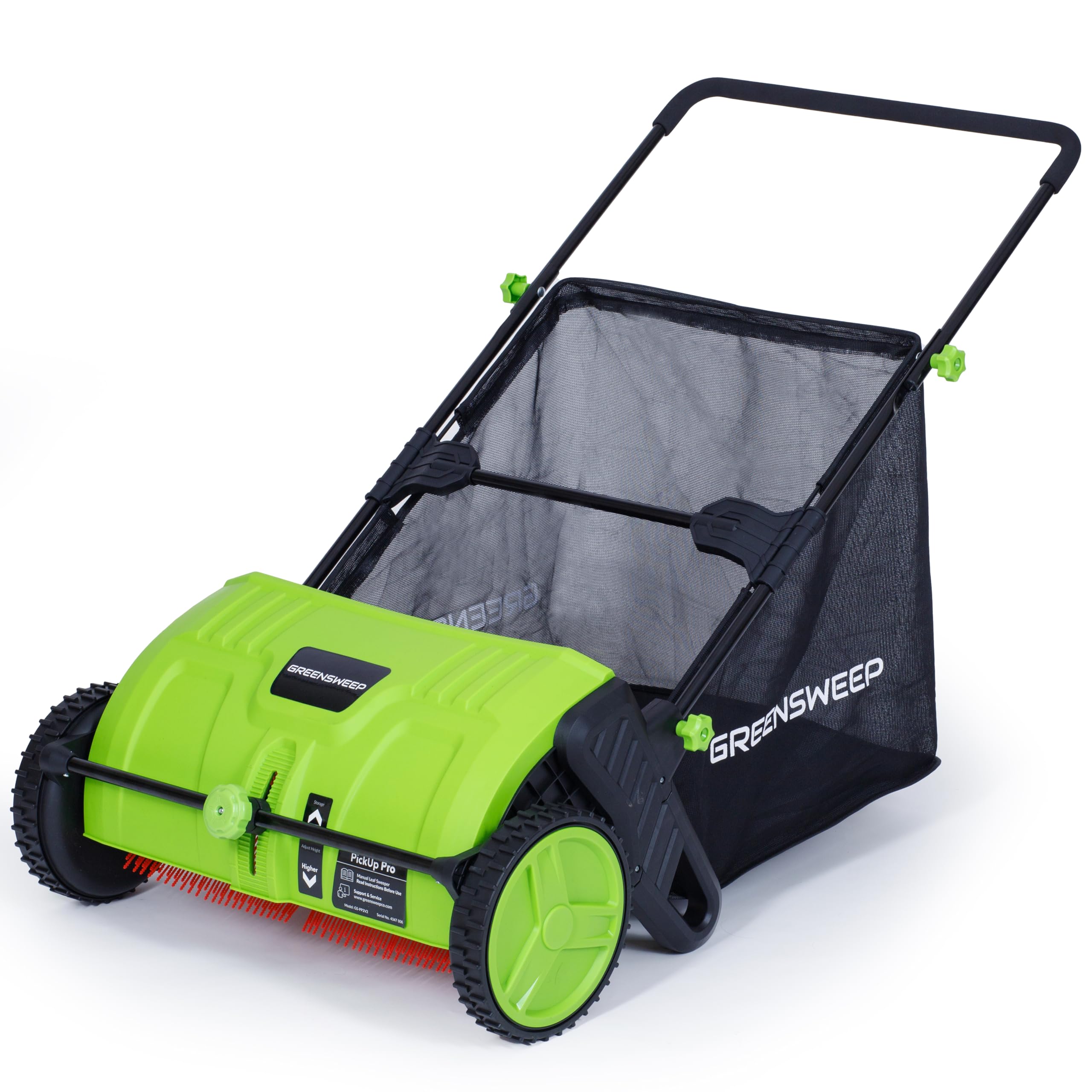
A lawn sweeper uses rotating brushes and a hopper to lift debris off turf and collect it. When you tow or push the sweeper, bristles spin and sweep clippings into the collection bag. The basic mechanics mean a lawn sweeper can pick up grass clippings that are loose and not overly wet or matted.
A few simple adjustments make the difference between success and frustration. Brush height, brush speed, ground speed, and hopper size all affect whether a lawn sweeper can pick up grass clippings well. I’ll show clear steps to tune those variables and common pitfalls to avoid.

Key factors that determine pickup success
Several things change how well a lawn sweeper can pick up clippings. Understand these to get reliable results.
- Grass moisture
Freshly cut grass that is damp clumps and resists brushing. Dry clippings sweep much easier. If clippings are wet, wait a few hours or sweep when dew is gone. - Clipping size and density
Fine clippings from a mulching mower are harder to pick up than long clumps. A lawn sweeper picks up bulk clippings and leaves better than tiny, lightweight fragments. - Sweeper type and brush style
Tow-behind sweepers tend to have larger hoppers and stronger brushes than push models. Stiffer brushes lift denser debris, while softer brushes are gentler on the turf. - Ground speed and overlap
Moving too fast lowers pickup. A steady, moderate speed with slight overlap in passes improves collection and reduces missed clumps. - Turf condition and terrain
Thick thatch, uneven ground, or tall grass reduces contact between brush and clippings. Level lawns with short grass sweep best.

Best practices to get the most from a lawn sweeper
Follow these practical steps to ensure a lawn sweeper picks up grass clippings efficiently.
- Mow before sweeping
Cut at your normal height and let clippings cool and dry for 30–60 minutes if possible. - Check and set brush height
Adjust the broom so bristles touch the turf lightly. Too high and clippings stay; too low and you scalp the lawn. - Use the right brush type
Choose stiffer brushes for heavy clippings and leaf mixes. Swap to softer brushes for delicate lawns. - Empty hopper often
A full hopper reduces pickup power. Stop and empty before it overflows. - Work in rows with overlap
Sweep in straight lines and overlap passes by a few inches to catch stray clippings. - Test and tune
Do a short test run, then tweak brush height and speed. I learned this the hard way by sweeping a wet lawn and ending with a clumped hopper; a quick test run would have saved time.
Limitations and good alternatives
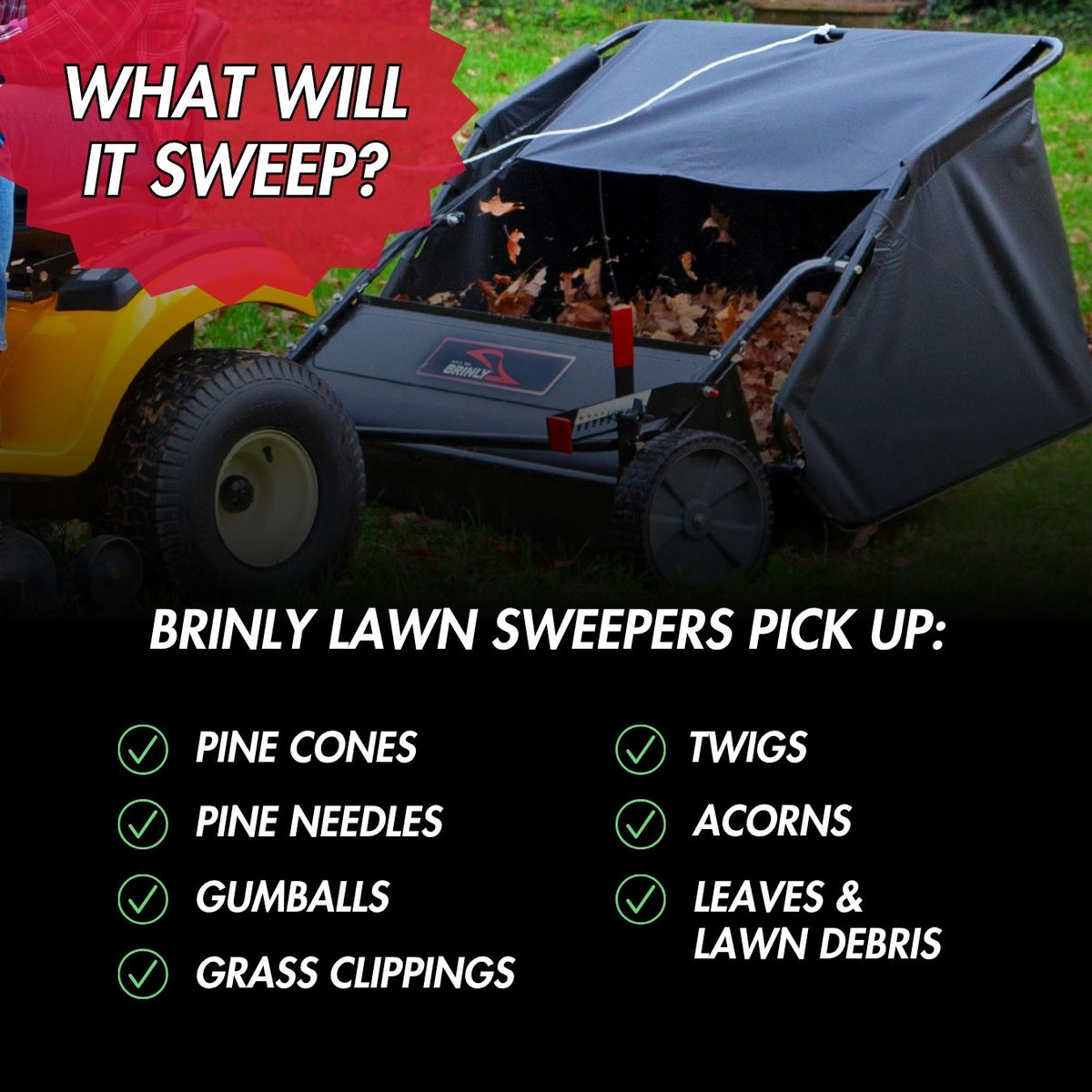
A lawn sweeper is useful, but it is not perfect for every job. Know when to use alternatives.
- Wet clippings and heavy mats
If grass is wet or clumped, a sweeper will struggle. Raking or using a power rake works better in those cases. - Fine mulched clippings
Small, lightweight fragments often blow away or pass through brushes. A vacuum-style collector or bagging mower may be better. - Tight corners and slopes
Sweepers work best on open, level lawns. For steep slopes, hand raking or backpack blowers are safer. - Large debris
Twigs and stones can jam brushes. Remove large items before sweeping.

Choosing and maintaining the right lawn sweeper
Pick the right model and care for it to keep pickup strong over time.
- Match size to lawn
Smaller push sweepers suit compact yards. Tow-behind models save time on larger properties. - Hopper capacity matters
Bigger hoppers mean fewer stops, but heavier loads can strain your tractor or wagon. - Brush materials
Nylon bristles are common. Polypropylene or wire-wire mixes work for heavier jobs. - Regular maintenance
Clean brushes, check for worn bristles, lubricate moving parts, and inspect the hopper seams. Store out of sun to prevent brittle plastic and faded bristles. - Simple upgrades
Consider a different brush kit or a hopper liner to improve pickup and reduce wear.

Personal experience and lessons learned
I used a tow-behind lawn sweeper on a half-acre yard for three seasons. Early on I tried sweeping right after mowing. The hopper filled with wet clumps and performance dropped. After switching to a short dry wait, lowering the brushes slightly, and slowing my tractor speed, pickup improved dramatically. The biggest lesson: small settings changes make big differences.
I also learned to empty the hopper more often than feels necessary. A half-full hopper already reduces suction and brush contact. Emptying early keeps the sweeper working like new.

Practical checklist before you sweep
Use this quick list when you plan to sweep clippings.
- Wait for drier conditions or late morning after dew lifts.
- Adjust brush height for light ground contact.
- Choose the correct brush stiffness.
- Remove large debris by hand first.
- Plan a steady, moderate speed and overlap passes slightly.
- Empty hopper before it’s full.
Frequently Asked Questions of Can a lawn sweeper pick up grass clippings?
Will a lawn sweeper pick up wet grass clippings?
A lawn sweeper can pick up some wet clippings, but performance drops and clumps can clog the hopper. It is best to wait until grass is drier for reliable results.
Can a lawn sweeper handle long grass clippings?
Long clumps are easier to sweep than tiny fragments, but very long or matted clippings can tangle in brushes. Cut long grass first and let it lay briefly before sweeping.
Are tow-behind sweepers better than push sweepers for clippings?
Tow-behind sweepers usually have larger hoppers and stronger brushes, which makes them better for bigger jobs and heavier clippings. Push sweepers work well for small yards and light debris.
How often should I empty the hopper when sweeping clippings?
Empty the hopper frequently, ideally when it is half to two-thirds full, to keep pickup power high and avoid compaction. Frequent emptying improves performance and prevents clogs.
Can a lawn sweeper replace a mower with a bagging system?
A lawn sweeper is a good supplement but not always a full replacement for a bagging mower. Bagging mowers collect clippings at the blade and work best for fine debris, while sweepers do well with bulk and leaves.
Conclusion
A lawn sweeper can pick up grass clippings effectively when you match the tool to the job, adjust settings, and follow simple best practices. Know the limits: avoid sweeping wet or matted clippings, choose the right brush, and empty the hopper often. Try a short test run on your lawn, tune brush height and speed, and you’ll quickly see whether a lawn sweeper fits your cleanup needs. If you found these tips useful, try them this weekend, leave a comment about your results, or subscribe for more hands-on lawn care advice.

