

Yes — when used correctly and with the right settings, turf vacuums are safe for artificial grass.
I’ve worked on dozens of synthetic lawns and studied how tools affect them. This article explains whether Are turf vacuums safe for artificial grass? by breaking down how these machines work, the risks, best practices, and real-world tips you can use today. Read on to learn expert-backed advice and simple checks that keep your artificial lawn clean and intact.
Are turf vacuums safe for artificial grass? Detailed analysis
Many homeowners ask: Are turf vacuums safe for artificial grass? The short answer is yes, they can be safe when used properly. Safety depends on machine type, nozzle, suction power, brushes, and operator technique.
Turf vacuums remove leaves, pet hair, sand infill, and debris quickly. But misuse can pull infill, roughen fibers, or stress the backing. I’ll show you how to avoid those problems and get safe, effective results.
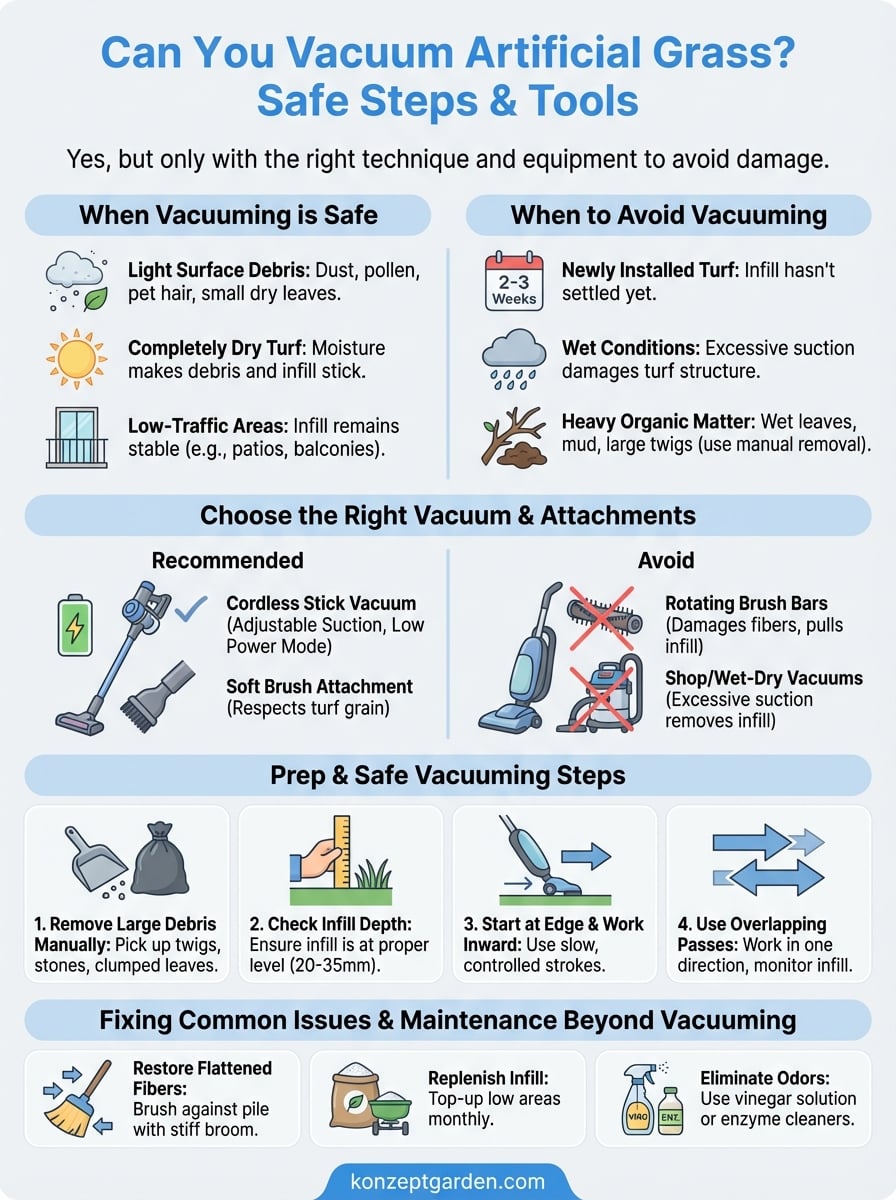
How turf vacuums work
Turf vacuums use air or mechanical suction to lift debris from the turf surface. Some models use rotating brushes to loosen material before suction. Others rely on pure suction and adjustable nozzles.
Key parts that matter for safety are suction power, brush type, and wheel/foot design. Higher suction removes more debris but can also suck infill if not adjusted. Understanding these parts helps you choose the right settings.
Main safety concerns for artificial grass
When people ask Are turf vacuums safe for artificial grass? they worry about a few core risks. Here are the main concerns and how to manage them.
- Pile damage: Aggressive brushes or high-speed rotating heads can fray fibers. Use soft brushes or suction-only heads to reduce wear.
- Infill loss: Strong suction can remove silica sand or crumb rubber. Lower suction and test a small area first.
- Backing stress: Pulling on fibers can stress the turf backing and seams. Avoid prolonged agitation at the same spot.
- Drainage clogging: Vacuumed debris can build in collection hoses and cause backup. Clean filters and empty the hopper often.
- Warranty issues: Some manufacturers list improper tools as voiding conditions. Check your warranty before heavy machine use.
These risks are manageable. With care, the benefits outweigh the downsides for most installations.
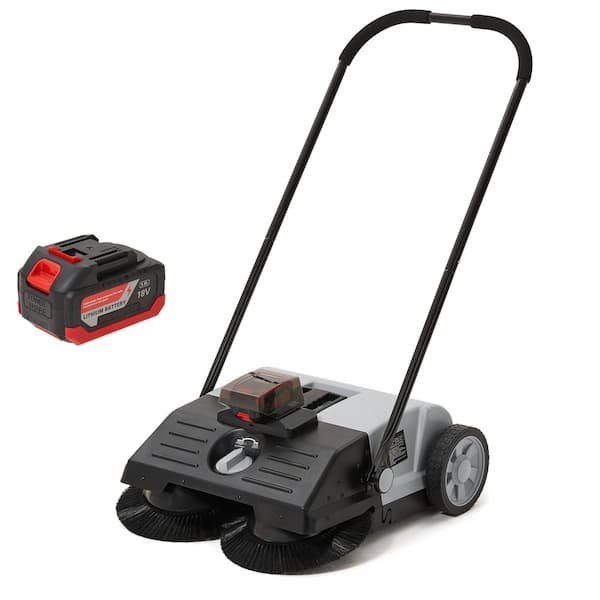
Types of turf vacuums and which are safest
Different vacuums suit different jobs. When deciding if Are turf vacuums safe for artificial grass? the type of machine matters a lot.
- Walk-behind vacuums
- Good for small to medium lawns.
- Choose models with variable suction and soft brush options.
- Ride-on vacuums
- Best for large fields or commercial jobs.
- Use units designed for synthetic turf and with adjustable heads.
- Backpack or handheld units
- Great for edges and tight spots.
- Lower suction models reduce infill loss risk.
- Suction-only nozzles
- Least abrasive for fibers.
- Ideal for delicate turf or new installations.
- Brush-assisted vacuums
- Effective for embedded debris but use soft or nylon brushes only.
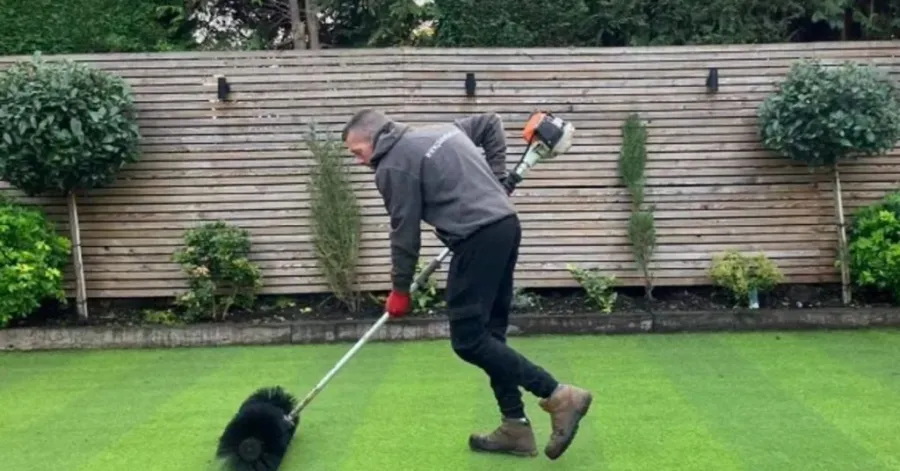
Match the tool to the task. For fine grooming, a turf rake or brush may be better than a vacuum.
Best practices for using turf vacuums on artificial grass
Follow steps that protect turf and deliver clean results. These rules answer Are turf vacuums safe for artificial grass? with practical actions.
- Inspect first
- Walk the lawn and check seams, repairs, and loose edges.
- Note areas with low infill or visible backing.
- Test a small area
- Try the vacuum on a 2–4 square foot spot.
- Check for pile lift, infill loss, or fiber damage.
- Set suction low
- Start on the lowest setting that picks up debris.
- Increase slowly only if safe.
- Use the right nozzle
- Wide, flat nozzles spread suction and reduce pull.
- Avoid narrow nozzles that concentrate force.
- Avoid aggressive brushes
- Use soft-bristled or nylon brushes if brushing is needed.
- Do not use wire or hard brushes.
- Move steadily
- Keep the nozzle moving to avoid overworking one area.
- Use overlapping passes, not repeated scrubbing.
- Monitor infill
- If you see sand or rubber in the hopper, reduce suction.
- Replenish infill after heavy cleaning if needed.
- Maintain equipment
- Clean filters and empty the hopper often.
- Check wheels and footings for sharp edges.
I learned the hard way to always test a corner first. Once I tested, I avoided removing a surprising amount of sand from a customer’s field.
When not to use a turf vacuum and alternatives
Knowing when to skip the vacuum keeps turf safe. If you ask Are turf vacuums safe for artificial grass? sometimes the answer is “not right now.”
- Newly installed turf
- Allow proper settling and infill distribution first.
- Use gentle brushing, not strong suction.
- Loose seams or repairs
- Fix seams before vacuuming to avoid catching edges.
- Heavy wet debris
- Wet leaves clump and can be better removed by a rake or blower.
- Very low infill areas
- Top up infill before vacuuming.
Alternatives include:
- Leaf blowers for loose debris.
- Manual rakes and stiff brushes for grooming.
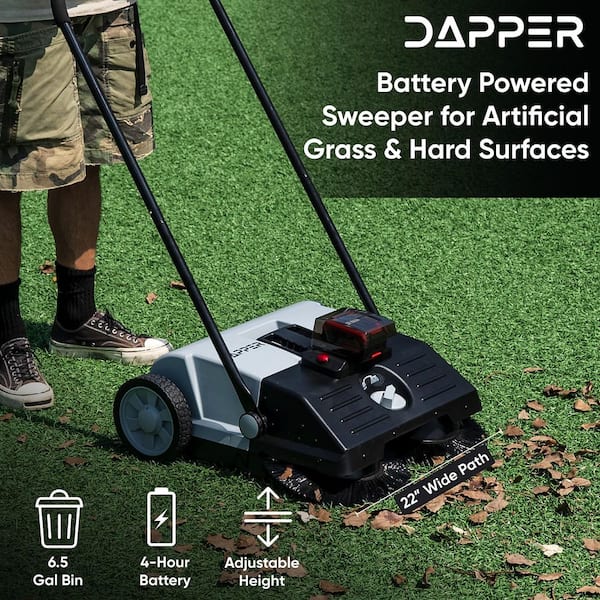
- Power brooms designed for synthetic turf.
- Spot cleaning with gentle detergents for stains.
Real-world testing and my experience
I’ve cleaned dozens of artificial lawns with both vacuums and manual tools. Here are real lessons I learned on jobs.
- Test first: A quick test prevents big mistakes. On one job, testing revealed a suction setting that pulled 10% of the sand in one pass.
- Match tool to turf: Low-pile turf handled vacuums well. Deep, fluffy pile needed soft brushing instead.
- Replenish infill after heavy cleanings: I once restored an area with new silica sand and avoided future problems.
- Keep client warranties in mind: Checking the manufacturer’s care guide saved me from warranty disputes.
These simple checks cut call-backs and kept lawns looking great.

Environmental and health considerations
People often wonder if Are turf vacuums safe for artificial grass? and how they affect health and the environment.
- Dust and fine particles
- Vacuums can stir dust. Use models with HEPA or fine filters when pet dander or pollen is a concern.
- Waste disposal
- Empty debris into garden waste or trash. Avoid washing contaminant runoff into storm drains.
- Noise
- Some vacuums are loud. Use during allowable hours in residential areas.
- Chemical runoff
- Avoid vacuuming liquids unless the machine is rated for wet use.
Use proper PPE when handling waste. This protects you and the neighborhood.
Choosing a professional vs. DIY
Deciding whether to hire a pro or do it yourself matters. Are turf vacuums safe for artificial grass? Yes, but experience matters.
- DIY benefits
- Lower cost.
- Immediate control and scheduling.
- DIY risks
- Mistakes can lead to infill loss or fiber wear.
- Professional benefits
- Trained operators know safe settings and pre-checks.
- Pros often have turf-specific machines.
- Professional drawbacks
- Higher cost, but often worth it for larger or high-value lawns.
If your lawn is new or has warranties, a pro can be a smart investment.
Maintenance checklist after vacuuming
Simple care keeps turf healthy after cleaning.
- Check for visible infill loss and top up if needed.
- Groom fibers with a soft brush to restore pile direction.
- Inspect seams and edges for tension or pulling.
- Clean the vacuum filter and empty the hopper.
- Document work and note any areas to monitor.
Routine maintenance reduces long-term wear and keeps the lawn looking fresh.
Practical buying tips
If you plan to buy a turf vacuum, these features help answer Are turf vacuums safe for artificial grass? in the best way.
- Variable suction control
- Wide suction head options
- Soft-bristle brush attachments
- HEPA or fine particle filters
- Adjustable height or skid plates
- Spare parts and service availability
Test rentals before buying. Rent a model and test on your turf to confirm safety.
Frequently Asked Questions of Are turf vacuums safe for artificial grass?
Are turf vacuums safe for artificial grass?
Yes. Turf vacuums are safe when you use the right machine, correct settings, and test a small area first.
Will a turf vacuum remove infill from my artificial lawn?
Heavy suction can remove infill. Use low suction, wide nozzles, and test small spots to avoid losing sand or rubber.
How often should I vacuum my artificial turf?
Light vacuuming or grooming every 1–3 months is common. Increase frequency for heavy pet use or after storms.
Can I use a lawn vacuum on newly installed synthetic turf?
No. Wait until infill and seams settle. Usually wait at least a few weeks and follow the manufacturer’s guidance.
Does vacuuming damage the turf fibers over time?
It can if you use aggressive brushes or high suction. Use soft brushes, move steadily, and avoid prolonged agitation.
Is a professional service worth hiring for turf vacuuming?
Yes for large or warranty-covered lawns. Professionals use turf-specific machines and know safe settings.
Wrap up and next steps
Turf vacuums can be safe for artificial grass when used with care. The main rules are to test first, use low suction, choose soft attachments, and monitor infill. Follow simple checks and you will clean debris without harming pile, backing, or warranty.
Take action: inspect a small area and test a gentle setting. If unsure, hire a pro for the first session and learn from their setup. If you found this useful, try a test run, subscribe for more turf care tips, or leave a comment about your experience with turf vacuums.

