

Yes — standing desks can be worth it for many people when used correctly and consistently.
I’ve tested standing desks in home and office settings and studied the research. This guide covers how standing desks work, real benefits you can expect, common myths, ergonomic setup, cost vs value, and practical tips from my own experience so you can decide if a standing desk fits your life and work.

How standing desks work and the main types
Standing desks let you work while standing or alternate between sitting and standing. They change your posture and movement across the day.
Common types of standing desks
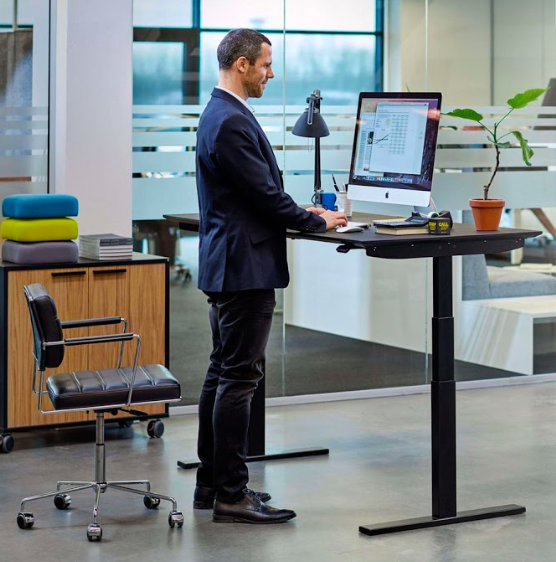
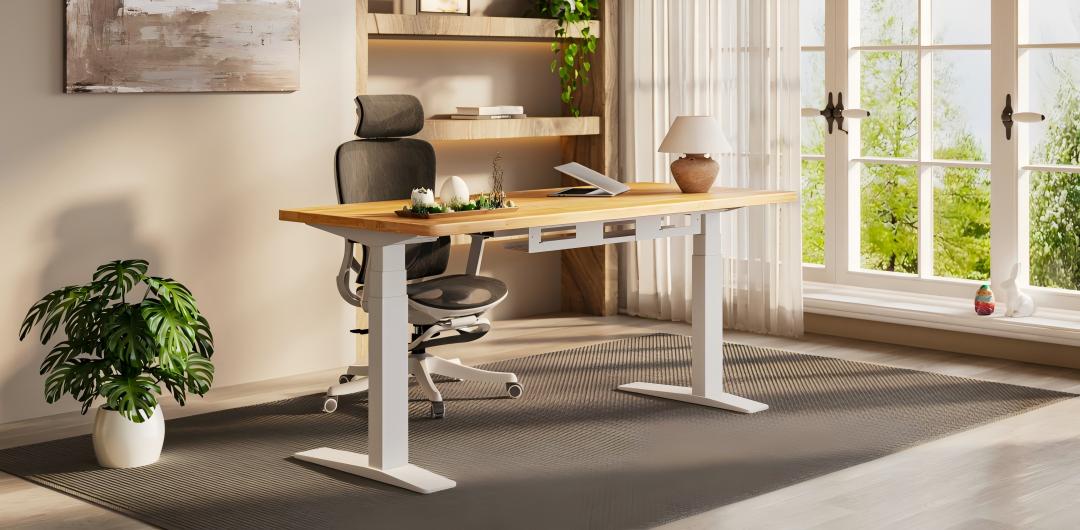
- Sit-stand electric desks: Easy to raise or lower with a motor. They are smooth and ideal for frequent shifts.
- Manual crank desks: Lower cost, but slower to adjust.
- Fixed-height standing desks: Simple and sturdy, but no sitting option.
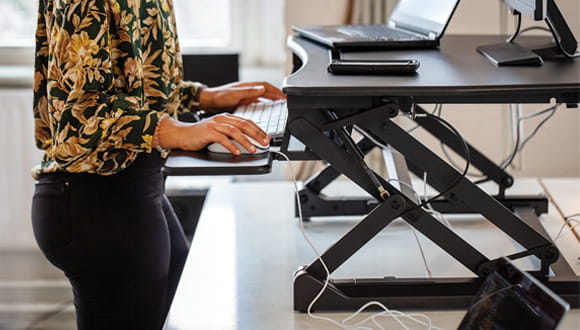
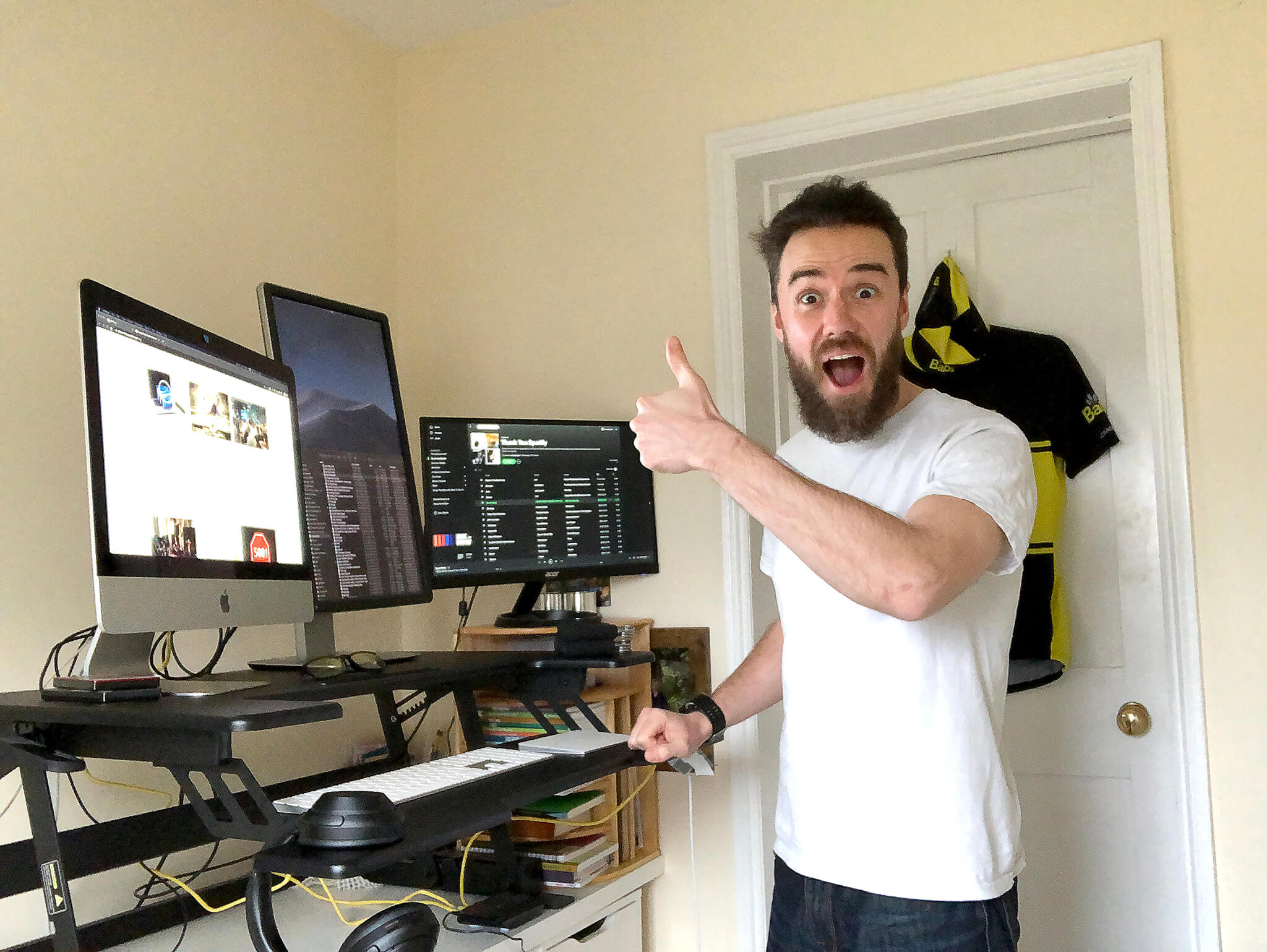
- Desk converters: Fit on top of an existing desk to lift your monitor and keyboard.
Key ergonomic principles
- Keep the top of the screen at eye level.
- Keep forearms roughly parallel to the floor.
- Use a supportive floor mat and comfortable shoes to reduce fatigue.

Health benefits and the evidence
Standing desks can reduce sitting time and help with several mild health issues. Evidence is mixed but leans toward modest gains when desks are used properly.
- Less back and neck pain for many users when ergonomics are correct.
- Slight increase in calorie burn compared to sitting.
- Small improvements in blood sugar and circulation after meals.
- Reduced sedentary time, which lowers risks linked to long sitting.
What research shows
- Most studies report modest improvements, not dramatic cures.
- Benefits are strongest when people alternate between sitting and standing regularly.
- Long-term effects on weight loss and major disease prevention are limited.
Limitations to know
- Standing all day can cause leg or foot pain and joint stress.
- Benefits fade if you simply stand without improving posture or movement.
- Results depend on frequency of transitions and overall activity level.
Productivity, focus, and comfort
Many people worry that standing desks hurt focus. The opposite is often true when used correctly.
How standing affects work
- Short bursts of standing can boost alertness and reduce afternoon slump.
- Complex tasks may need seated focus time; simple tasks often suit standing.
- Using a standing desk can encourage micro-movement, which helps mood.
Practical tip
- Alternate: use a sit-stand pattern like 30–60 minutes sitting, 30 minutes standing. Adjust to how you feel and the task.
Costs, ergonomics, and setup tips
Standing desks range from budget to premium. Spend smart by prioritizing ergonomics and durability.
Cost guide
- Budget converters: Low cost, OK for trial runs.
- Mid-range electric sit-stand desks: Best balance of price and function.
- High-end models: More stable, quieter motors, better warranties.
Ergonomic setup checklist
- Monitor top at eye level.
- Keyboard at elbow height so wrists are neutral.
- Screen 20–30 inches away, depending on vision.
- Use an anti-fatigue mat and supportive shoes.
- Keep feet moving and shift your weight often.
Transition tips
- Start slowly: add 15–20 minutes of standing per hour at first.
- Use reminders or an app to switch positions.
- Stand with posture cues: soft knees, core engaged, weight evenly on both feet.
Who should get a standing desk and who might skip it
Standing desks are not one-size-fits-all. Consider your needs and constraints.
Good candidates
- People with mild back pain linked to prolonged sitting.
- Remote workers seeking more movement during the day.
- People who do repetitive, low-complexity tasks and want more energy.
Think twice if
- You have certain joint or circulatory conditions that make standing painful.
- Your job requires long periods of deep seated concentration and no breaks.
- You can’t set up an ergonomic workstation due to space or budget limits.

Common concerns and myths
There are many myths about standing desks. Here’s the practical truth.
Myth: Standing cures back pain
- Reality: It helps some people but only with correct setup and movement.
Myth: Standing burns lots of calories
- Reality: Standing burns slightly more than sitting. It helps over time, but it is not a weight-loss solution alone.
Myth: You should stand all day
- Reality: Alternating is best. Too much standing can cause new problems.
Personal experience and lessons learned
I’ve used a sit-stand desk for years at home and in offices. I learned the hard way that habit is the biggest factor.
What worked for me
- I start my morning with standing for email and simple tasks. It wakes me up.
- I set reminders to change posture every 30–45 minutes.
- Investing in a stable electric desk reduced neck strain and saved time.
Mistakes to avoid
- Don’t expect immediate dramatic results.
- Don’t stand in shoes that lack support or on a hard floor without a mat.
- Don’t set the desk too high or too low — small adjustments made the biggest difference.
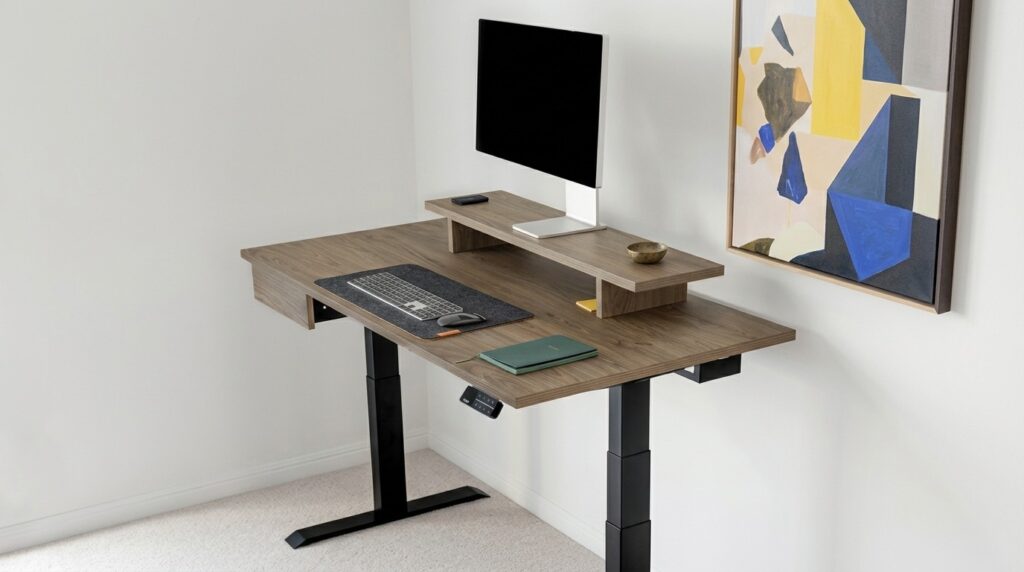
Frequently Asked Questions of Are standing desks worth it?
Do standing desks reduce back pain?
Many people report reduced lower back pain when they use a standing desk with good ergonomics. Results vary by person and depend on proper posture and frequent position changes.
Will standing all day help me lose weight?
Standing burns slightly more calories than sitting but not enough alone for major weight loss. Combine standing with regular activity and diet changes for better results.
How often should I switch between sitting and standing?
Aim to alternate every 30 to 60 minutes. Short, regular switches tend to feel best and reduce fatigue.
Are standing desks bad for my legs and feet?
Standing all day can cause leg or foot discomfort if you do not use a mat or supportive shoes. Breaks and movement prevent most issues.
Is an electric standing desk worth the extra cost?
Electric desks are worth it if you plan to adjust often. They are easier to use and encourage frequent position changes, which improves outcomes.
Conclusion
Standing desks can be worth it when chosen and used wisely. They reduce sitting time, ease some aches, and boost alertness for many people. The key is to focus on ergonomics, alternate positions, and view a standing desk as one tool in a broader healthy-work routine. Try a low-cost converter if unsure, set a clear transition plan, and adjust based on comfort and results. If this guide helped, consider subscribing for more practical ergonomics tips or leave a comment with your standing desk experience.

