

Yes, canister vacuums can pick up pet hair very well when they have the right tools and suction.
Canister vacuums are often a smart choice for homes with pets because they pair strong suction with flexible attachments that reach carpets, stairs, furniture, and tight corners. I’ve seen them handle everything from short dog fur to long cat hair, but the real results depend on the brush head, filtration, and how you use the vacuum. If you want a cleaner home and fewer tumbleweeds of fur rolling across the floor, this guide breaks down what works, what does not, and how to choose the right canister vacuum for pet hair.
Can canister vacuums pick up pet hair on different surfaces?
Yes, canister vacuums can pick up pet hair on many surfaces, including hardwood, tile, area rugs, stairs, and upholstery. In many homes, they do a better job than upright vacuums in tight spaces because the hose and wand give you more reach and control.
The key is matching the vacuum head to the surface. A bare floor brush works well on hard floors, while a motorized brush head or turbo tool helps lift hair from carpet fibers and fabric.
From my own experience, the biggest mistake people make is thinking suction alone is enough. Pet hair sticks like lint on a sweater, so agitation matters too. A good canister vacuum needs both strong airflow and the right attachment to pull hair free.

Why canister vacuums work so well for pet hair
Canister vacuums often shine in pet homes because the motor sits in a separate body, which makes the cleaning head lighter and easier to move. That helps you clean under couches, around chair legs, and up stairs without wrestling a heavy machine.
They also tend to come with useful accessories, such as:
• Motorized brush heads for carpet
• Mini turbo brushes for upholstery
• Crevice tools for baseboards and corners
• Dusting brushes for shelves and pet beds
Another advantage is maneuverability. If you have a shedding dog that naps on the sofa or a cat that leaves hair on window ledges, a canister vacuum can make those daily touch-ups much easier.
What features matter most for pet hair
Not every canister vacuum handles pet hair equally well. Some look powerful on paper but struggle once hair wraps around the brush or clogs the hose.
Here are the features that matter most:
• Strong suction and airflow: Suction helps pull hair into the machine, while airflow helps move it through without clogging.
• Motorized brush roll: This is one of the biggest factors for carpet and rugs because it agitates fibers and loosens embedded hair.
• Tangle-resistant design: Pet hair can wrap around brushes fast, so anti-wrap or easy-clean brush heads save time.
• HEPA filtration: According to allergy-focused guidance from major health organizations, sealed filtration helps trap fine particles like dander and dust.
• Adjustable height settings: Different floor types need different brush settings for the best pickup.
• Quiet operation: Some pets get nervous around loud vacuums, so lower noise can be a real bonus.
When I test vacuums, I always check two things first: whether the brush head grabs hair in one pass and whether the machine is easy to empty. A vacuum can perform well and still be annoying if it turns hair cleanup into a bigger chore.
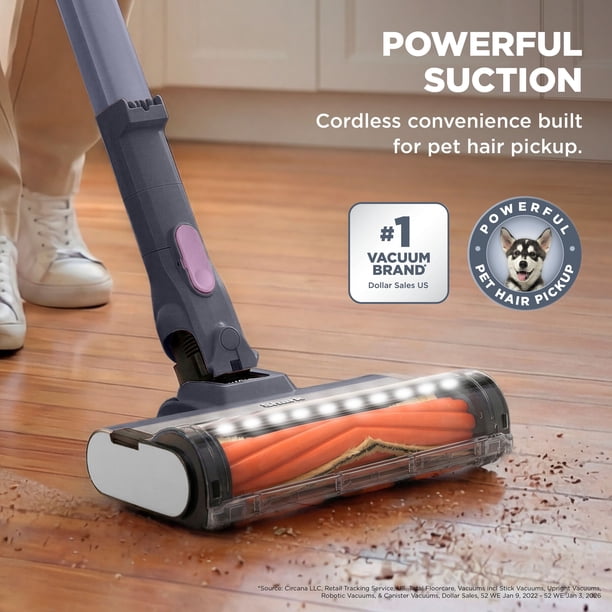
Canister vacuums for pet hair on carpet
Carpet is where pet hair becomes stubborn. It sinks between fibers, clings to loops, and often needs more than a simple suction pass to lift it out.
A canister vacuum with a motorized carpet head is usually the best setup for this job. The rotating brush agitates the carpet pile, loosens trapped fur, and helps the vacuum pull it up more effectively than suction alone.
For low-pile carpet and rugs, many canister vacuums do an excellent job. For thick plush carpet, you may need a stronger brush roll, slower passes, and possibly a second cleaning session in high-traffic areas.
A practical tip from real-world use: vacuum against the nap first, then with it. That helps loosen deeper pet hair and can improve pickup noticeably.
Canister vacuums for pet hair on hard floors
Canister vacuums are especially good on hardwood, laminate, tile, and vinyl. Pet hair tends to slide across hard floors, so you need good edge pickup and a floor head that won’t scatter debris.
A soft-bristle hard floor brush works best here. It lets the vacuum collect hair without scratching delicate floors or pushing fur into corners.
If you’ve ever swept pet hair into a pile only to watch it drift apart again, you already know why a canister vacuum helps. It works more like a controlled net than a broom in the wind.
Canister vacuums for pet hair on furniture and stairs
This is where canister vacuums often beat many uprights. The hose, wand, and handheld attachments make it easier to clean places where pets love to leave hair behind.
Use these tools for best results:
• Mini motorized brush: Great for couches, cushions, and pet beds
• Upholstery tool: Good for fabric seats and mattresses
• Crevice tool: Best for stair edges and sofa seams
• Dusting brush: Useful for lampshades and shelves with light fur
I once cleaned a fabric armchair after a shedding season, and the mini brush made a huge difference. Without that attachment, I would have spent twice as long picking hair out by hand.
What canister vacuums do better than uprights
Canister vacuums are not always the strongest choice for every home, but they do offer some real advantages for pet hair cleanup.
They often do better at:
• Reaching under low furniture
• Cleaning stairs without carrying a heavy upright
• Handling upholstery and above-floor messes
• Moving easily around tight spaces
• Switching between floor types
For homes with mixed flooring and lots of pet zones, that flexibility matters. It can save time and reduce the need for multiple cleaning tools.
Limitations of canister vacuums for pet hair
Canister vacuums are good, but they are not magic. If you choose the wrong model, pet hair can still become a problem.
Common limitations include:
• Weak brush heads on carpet: A canister with suction only may struggle with deep fur in rugs.
• Hair wrap on rollers: Long pet hair can tangle around the brush and slow performance.
• Smaller bins on compact models: Frequent emptying can be annoying in heavy-shedding homes.
• Hose clogs: Large clumps of fur can block airflow if you vacuum too slowly or clean wet hair.
One thing I always tell people is to avoid vacuuming wet pet hair. It can gum up the brush, clog the hose, and make cleanup much harder.
How to get the best results from a canister vacuum
If you already own a canister vacuum, a few simple habits can improve pet hair pickup right away.
Try this:
- Use the right attachment for each surface.
- Empty the bin before it gets too full.
- Clean the brush roll often.
- Vacuum in slow, overlapping passes.
- Pre-brush pets during heavy shedding seasons.
- Focus on pet resting spots first.
The first time I started cleaning in a more organized way, I noticed a big difference. Instead of chasing random fur around the house, I treated the sofa, rug, and hallway like a routine cleaning path. That saved time and cut down on missed spots.
How to choose the best canister vacuum for pet hair
If pet hair is a daily problem in your home, look for a canister vacuum built for real pet cleanup, not just general dusting.
A good option should have:
• A motorized floor head for carpet
• Strong suction and stable airflow
• HEPA or sealed filtration
• Easy-to-clean brush parts
• Useful pet tools in the box
• A long hose and wand for reach
If you have mostly hard floors, a lighter model with a strong hard floor brush may be enough. If you have carpets, pets, and allergies, I would prioritize a sealed system and a powered brush head first.
Do canister vacuums help with pet allergies?
Yes, they can help, especially when they use sealed filtration and HEPA filters. Pet allergies are often triggered by dander, dust, and tiny particles, not just visible hair.
A vacuum that traps fine debris instead of blowing it back into the room can make a noticeable difference. That said, no vacuum solves allergies alone. Regular cleaning, washing pet bedding, and grooming pets also matter.
Frequently Asked Questions
Do canister vacuums pick up long pet hair?
Yes, many canister vacuums pick up long pet hair well, especially models with a motorized brush and strong suction. The brush roll is important because long hair often needs help lifting off fabric and carpet.
Are canister vacuums good for homes with multiple pets?
Yes, canister vacuums can be a great fit for multi-pet homes because they are flexible and usually come with helpful attachments. Just make sure the model has a large enough dust bin and a brush head that resists tangling.
Do canister vacuums work better than uprights for pet hair?
It depends on your home, but canister vacuums often do better on stairs, furniture, and hard floors. Uprights may have an edge on wall-to-wall carpet, especially if they have a strong brush roll.
How often should I clean the brush roll?
If you have pets, check the brush roll after each few uses or at least once a week. Regular cleaning helps keep suction strong and prevents hair wrap from hurting performance.
Can a canister vacuum remove pet dander too?
Yes, if it has sealed filtration and a HEPA filter, it can help capture pet dander and other fine particles. This is especially helpful for people who want cleaner air along with cleaner floors.
Conclusion
Canister vacuums can absolutely pick up pet hair, and in many homes they do it very well. The best results come from pairing strong suction with the right attachments, especially a motorized brush for carpet and a soft brush for hard floors.
If you choose carefully and clean regularly, a canister vacuum can make pet hair far less of a daily battle. Take a close look at your floors, your pets, and your biggest trouble spots, then pick a machine that fits your real life. If you’re comparing models now, use this guide to narrow your options and leave a comment or keep exploring more pet-cleaning tips before you buy.

