

Canister vacuums are often better for reach, stairs, and hard floors; uprights usually win on speed and carpet cleaning.
If you have ever pushed one vacuum through a room and thought, “There has to be an easier way,” you are not alone. I have tested both canister vacuums and upright vacuums in real homes, on pet hair, dust, rugs, and awkward corners, and the truth is simple: are canister vacuums better than upright vacuums? Sometimes yes, but not for every home. The best choice depends on your floors, your space, and how you actually clean day to day.
What is the difference between canister vacuums and upright vacuums?
A canister vacuum has a separate body and hose with a cleaning head attached by a tube. The motor and dust bin sit in the canister, which you pull behind you. This design usually gives you more reach and flexibility.
An upright vacuum keeps the motor, bin, and cleaning head in one tall unit. You push it across the floor like a traditional sweeper. Many people like uprights because they feel fast, simple, and powerful on carpets.
When people ask, are canister vacuums better than upright vacuums, they are really asking which design works better for everyday cleaning. The answer changes based on surface type, room layout, and personal comfort.

Are canister vacuums better than upright vacuums for most homes?
In many homes, yes, canister vacuums can be better for comfort, reach, and multi surface cleaning. They are especially useful if you have stairs, furniture with tight gaps, delicate rugs, or a mix of hard floors and carpets. The hose and wand make it easier to clean places an upright struggles to reach.
That said, uprights are often better for large carpeted areas and quick weekly cleanups. If your home is mostly wall to wall carpet, an upright may save time and feel less awkward. So the real answer to are canister vacuums better than upright vacuums is this: canisters are more flexible, but uprights are often more convenient.
From my own testing, I noticed that canisters feel a little like using a tool set with the right attachment for every job. Uprights feel more like grabbing one solid tool and getting it done fast. Both can work well, but they solve different problems.
When a canister vacuum is the better choice
Canister vacuums tend to shine in homes with a mix of surfaces. They are often easier to guide under beds, around chair legs, and along baseboards. If you clean stairs often, the lighter wand and separate body can be a huge advantage.
They are also helpful for people who want better control over attachments. A canister vacuum usually makes it easier to switch between a floor head, upholstery tool, and crevice tool. That flexibility matters a lot if you clean more than just open floors.
Canister vacuums may be better if you:
• Have lots of hard floors like hardwood, tile, or laminate
• Need to clean stairs often
• Live in a home with furniture in tight spots
• Want easier reach under sofas and beds
• Prefer lighter handling at the cleaning end of the vacuum
One mistake I made early on was assuming suction alone would decide everything. It does not. A vacuum can have strong suction but still feel annoying if it is hard to steer or too bulky for your space.
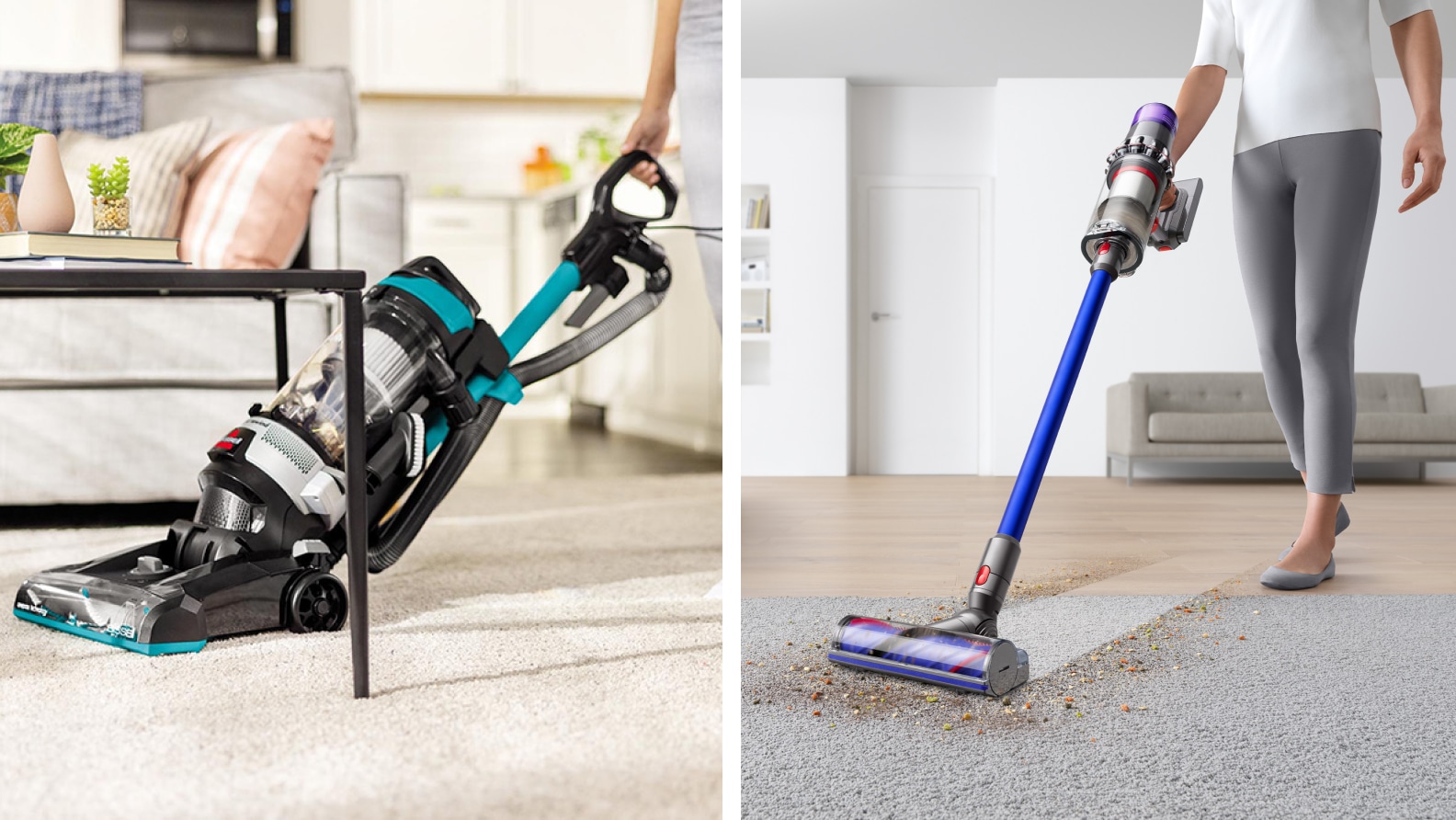
When an upright vacuum is the better choice
Upright vacuums often win when carpet is the main concern. Their brush rolls and direct floor contact can make them very effective at lifting dirt from rugs and thick carpet fibers. If you want fast cleaning with fewer parts to manage, an upright is hard to beat.
They are also easier for many people to store and set up. You usually do not have to drag a canister behind you, which can feel clumsy in a large open room. For a busy household, that simplicity matters.
Upright vacuums may be better if you:
• Have mostly carpeted floors
• Want faster whole room cleaning
• Prefer a simpler one piece design
• Do not want to manage a hose and canister
• Need strong agitation for pet hair in rugs
In my experience, uprights are the “grab and go” option. They are not always the most graceful, but they can be very efficient when the job is mostly floor coverage.
Cleaning performance: suction is not the whole story
A lot of shoppers focus only on suction power, but cleaning performance is more than that. Airflow, brush roll design, seal quality, filtration, and cleaning head style all matter. A well designed canister vacuum can outperform a weak upright, and vice versa.
On hard floors, canisters often do very well because the floor head can glide smoothly and capture fine dust without scattering it. On carpet, uprights often have the edge because of their brush roll and direct contact with fibers. That is why asking are canister vacuums better than upright vacuums is really about matching the machine to the surface.
If you want the best results, look for:
• Strong sealed suction
• A brush roll that suits your floor type
• Good edge cleaning
• Easy attachment changes
• HEPA or high efficiency filtration if allergies matter
Industry testing and consumer guides often show the same pattern: no single vacuum type is best for every surface. The right head and the right design matter just as much as raw motor power.
Comfort, weight, and ease of use
This is where many people change their minds after trying both styles. Canister vacuums often feel lighter in your hand because the motor is not in the wand. That can make cleaning less tiring, especially for long sessions or detailed work.
Uprights can feel simpler for large open spaces, but they may be heavier to push or lift. If you have mobility concerns, a canister may be easier for some tasks, while an upright may be easier for others. It depends on your body and your home.
Here is the practical rule I use:
• Choose a canister if lifting and reaching matter more
• Choose an upright if pushing across large floors matters more
• Choose based on what feels easy after 15 minutes, not after 30 seconds
I have seen people buy a powerful upright and then avoid using it because it feels tiring. That is a waste of money. A vacuum should make cleaning easier, not feel like a workout.
Best vacuum type for pet hair
Pet hair changes the game. If you have dogs or cats, you need a vacuum that can handle hair on carpet, upholstery, and corners. Both canister vacuums and upright vacuums can work, but the design details matter a lot.
Uprights often do a strong job on carpeted pet hair because the brush roll pulls hair from fibers. Canisters can be excellent for pet owners too, especially if they include a powered brush head for carpets and a mini tool for furniture. The wrong setup in either style will leave hair behind.
For pet homes, look for:
• Tangle resistant brush rolls
• Strong upholstery tools
• Good sealed filtration for dander
• Easy emptying to avoid hair clogs
• A floor head that works on both carpet and hard floors
If your pets shed everywhere, I would not choose based on marketing alone. I would choose based on the attachments included and whether hair wraps around the brush.

Best vacuum type for allergies and dust
For allergy control, filtration matters more than the shape of the vacuum. A vacuum with a true HEPA filter and a sealed system can help trap fine dust, pollen, and pet dander. This is important whether you choose a canister vacuum or an upright vacuum.
Canister vacuums sometimes have an advantage because they are often paired with more advanced filtration systems and specialized floor heads. But plenty of upright vacuums also offer HEPA filtration. The key is to check the full air path, not just the filter label.
If allergies are a concern, prioritize:
• Sealed filtration
• HEPA rated filtration
• Easy to empty dust bins without dust clouds
• Strong edge and corner pickup
• Quiet operation if noise triggers symptoms
I have learned that a vacuum can look clean on paper and still puff dust into the room when emptied badly. That is one of the most overlooked parts of the buying process.
Maintenance, storage, and long term convenience
Canister vacuums usually have more parts, which means a little more setup and storage planning. You need room for the canister, hose, wand, and attachments. If your closet is small, that can matter more than people expect.
Uprights are often easier to store because they stand on their own and take up less floor space in a closet. They can also be simpler to maintain if you want fewer attachments and fewer moving parts. Still, many modern uprights have advanced features that add complexity.
Think about:
• How much storage space you have
• How often you clean the filter
• Whether you want bagged or bagless models
• How easy it is to unclog hair and debris
• Whether replacement parts are easy to find
A vacuum is not just a purchase. It is a tool you live with. The more annoying it is to store and maintain, the less often you will use it.
Cost and value: which one gives more for the money?
Price depends more on brand and features than on vacuum style alone. You can find budget canisters and expensive uprights, as well as the reverse. In general, canisters may offer more versatility at mid to high price points, while uprights often offer strong value for carpet focused homes.
The best value is not the cheapest vacuum. It is the one that fits your floor plan and lasts long enough to justify the cost. If a vacuum misses dirt, feels awkward, or breaks down often, it is not a good value.
Before you buy, compare:
• Floor type compatibility
• Included tools
• Warranty length
• Filter replacement costs
• Bag or bin costs over time
I always tell people to look at total ownership cost. A vacuum with a lower sticker price can become expensive if filters, belts, or bags add up fast.
Which vacuum is better for apartments, large homes, and small spaces?
For apartments, a canister vacuum can be great if you have mixed floors and lots of corners. But a lightweight upright can be easier if you want fast cleanups and limited storage. Small spaces often favor whatever is easiest to grab and put away.
For large homes, canister vacuums can be better for detailed cleaning because they are easier to maneuver around furniture and stairs. Uprights can still be better for speeding through big carpeted zones. The best choice often depends on whether your home has more open floor space or more obstacles.
A simple way to think about it:
• Apartment with hard floors and stairs: canister may be better
• Large carpeted house: upright may be better
• Mixed surface home: canister often has the edge
• Minimalist storage space: upright is usually easier
This is why the question are canister vacuums better than upright vacuums never has one perfect answer. It comes down to your home layout.
Are canister vacuums better than upright vacuums for deep cleaning?
Yes, they can be, especially when deep cleaning includes more than carpet. Canister vacuums are often better at detailed cleaning in corners, under furniture, and on stairs. Their attachments make them useful for places where dust loves to hide.
Uprights are often better for deep cleaning carpet fibers in large rooms. Their brush rolls can pull out embedded dirt well, especially in models designed for carpet performance. So for deep cleaning, the winner depends on what “deep” means in your home.
If you mean:
• Deep carpet clean: upright may win
• Deep whole home clean with tools: canister may win
• Deep cleaning stairs and furniture: canister often wins
• Deep cleaning one large room quickly: upright may win
I have found the most practical solution is not loyalty to one style. It is choosing the vacuum that matches the kind of dirt you deal with most often.
Frequently Asked Questions
Are canister vacuums easier to use than upright vacuums?
They can be easier for reach and detailed cleaning, but not always for speed. Canister vacuums often feel lighter in the hand, while uprights are simpler for quick floor passes.
Do canister vacuums clean carpet as well as uprights?
Yes, if they have the right floor head and brush roll. A strong canister vacuum can clean carpet very well, but many uprights still have an edge on thick carpet because of their direct brush action.
Which vacuum is better for stairs?
Canister vacuums are usually better for stairs. The hose and lighter wand make it easier to clean each step without dragging a full machine up and down.
Are upright vacuums better for pet hair?
Often, yes on carpet, because their brush rolls can lift hair from fibers more aggressively. But a canister vacuum with a powered pet tool can also handle pet hair very well.
Which vacuum lasts longer, canister or upright?
It depends more on build quality than on the style. Well made models of both types can last for years if you clean filters, clear clogs, and replace worn parts on time.
Conclusion
So, are canister vacuums better than upright vacuums? For many homes, yes, especially if you want more reach, better maneuvering, and stronger flexibility across different floor types. But if your home is mostly carpet and you want a fast, simple cleanup tool, an upright vacuum may be the smarter choice.
The best vacuum is the one that fits your floors, your storage space, and your daily routine. If you can, think beyond the label and picture yourself actually using it every week. That is where the right choice becomes obvious.
Take a close look at your rooms, your stairs, and your cleaning habits, then choose the style that makes vacuuming feel less like a chore. If this guide helped, explore more vacuum buying tips and share your own experience in the comments.


9 Comments
Pingback: Can Canister Vacuums Clean Stairs: Best Guide - Vacuum Cleaner Tips
Pingback: What Is The Best Canister Vacuum For Hardwood Floors: Top Picks - Vacuum Cleaner Tips
Pingback: What Is The Best Canister Vacuum For Carpet: Top Picks - Vacuum Cleaner Tips
Pingback: What Is The Best Canister Vacuum For Pet Hair: Top Picks - Vacuum Cleaner Tips
Pingback: What Is The Best Lightweight Canister Vacuum: Top Picks - Vacuum Cleaner Tips
Pingback: What Is The Best Bagged Canister Vacuum: Top Picks - Vacuum Cleaner Tips
Pingback: What Is The Best Bagless Canister Vacuum: Top Picks - Vacuum Cleaner Tips
Pingback: What Is The Best Hepa Canister Vacuum: Top Picks - Vacuum Cleaner Tips
Pingback: How Do You Store A Canister Vacuum: Easy Tips - Vacuum Cleaner Tips