

An upright vacuum usually stops picking up dirt because of clogs, worn brushes, poor suction, or simple maintenance issues.
Today's Exclusive Deals
Limited-time Exclusive Deals. Check current discount on Amazon.
Check Price on Amazon As an Amazon Associate I earn from qualifying purchases.If your upright vacuum is not picking up dirt, you are not alone. I have seen this problem many times, and most of the time the fix is simpler than people expect. The trick is knowing where the loss is happening, whether it is airflow, brush roll action, height adjustment, or a full dust bin that is quietly choking the machine.

Why your upright vacuum is losing suction or cleaning power
When an upright vacuum is not picking up dirt, the problem usually comes down to one of three things: blocked airflow, weak brush action, or poor seal with the floor. Vacuums depend on a steady path for air to move dirt from the floor into the bag or bin. If that path gets interrupted anywhere, performance drops fast.
Today's Exclusive Deals
Limited-time Exclusive Deals. Check current discount on Amazon.
Check Price on Amazon As an Amazon Associate I earn from qualifying purchases.I learned this the hard way with a vacuum that looked fine from the outside but had a hidden clog deep in the hose. It still ran, but it was basically breathing through a straw. That is why the first step is always to inspect the full cleaning system, not just the head or the canister.
Common reasons an upright vacuum is not picking up dirt
1. The dust bin or vacuum bag is full
A full bag or overfilled dust cup is one of the most common causes of weak suction. When there is no room for air and debris to move freely, the vacuum cannot pull dirt off the floor well.
A good rule is to empty the bin before it looks packed tight. If you use a bagged model, replace the bag when it reaches the fill line. Some vacuums lose performance long before they appear “full,” so do not wait too long.
2. The filter is clogged
Filters catch fine dust, but they also trap airflow if they are dirty. Foam, felt, and HEPA filters can become restricted over time, especially in homes with pets, carpet dust, or heavy foot traffic.
Today's Exclusive Deals
Limited-time Exclusive Deals. Check current discount on Amazon.
Check Price on Amazon As an Amazon Associate I earn from qualifying purchases.If your upright vacuum is not picking up dirt, check both pre motor and post motor filters. Many washable filters need full drying before reuse, and putting them back damp can create odor or damage the motor over time.
3. There is a clog in the hose, wand, or nozzle
A clog can form anywhere along the airflow path. Common spots include the hose bend, the wand connection, or the entrance to the floor nozzle.
A simple test is to disconnect the hose and look through it with a flashlight. If light does not pass through clearly, you likely found the problem. Even a small blockage can make it seem like the vacuum has no suction at all.
4. The brush roll is not spinning properly
The brush roll helps lift dirt from carpet fibers. If it is not spinning, your upright vacuum may still suck a little debris from hard floors but struggle badly on carpet.
Common causes include tangled hair, broken belts, worn bearings, or a motorized brush setting that is turned off. I have fixed many vacuums by removing a tight hair wrap that was stopping the brush roll from moving.
5. The vacuum height setting is wrong
An upright vacuum needs the correct height for the floor type. If the setting is too high, the brush roll may not reach deep into carpet. If it is too low, the vacuum can drag and restrict airflow.
This is a surprisingly common issue. I have seen people assume the vacuum is broken when it was just set for thick carpet while they were cleaning low pile carpet or hard floors.
6. The belt is stretched or broken
The belt connects power to the brush roll on many upright vacuums. Over time, belts loosen, wear out, or snap.
When the belt is damaged, the brush may slow down or stop completely. That means dirt stays trapped in carpet fibers, even if the vacuum still sounds like it is working.
7. The floor nozzle is blocked or worn
The bottom head of the vacuum can collect string, dust clumps, and debris that restrict airflow. Cracked seals or worn gaskets can also reduce suction at the floor.
If the nozzle is damaged, air escapes before it can lift dirt. That is a bit like trying to fill a bucket with a hole in the bottom.
8. The vacuum has a leak
Small leaks in the hose, canister seal, or body housing can cut suction power. Air follows the path of least resistance, so if there is a crack or loose connection, the vacuum may pull from the wrong place.
Check for gaps where parts join together. Even one loose latch can weaken cleaning performance enough to make the machine seem useless.
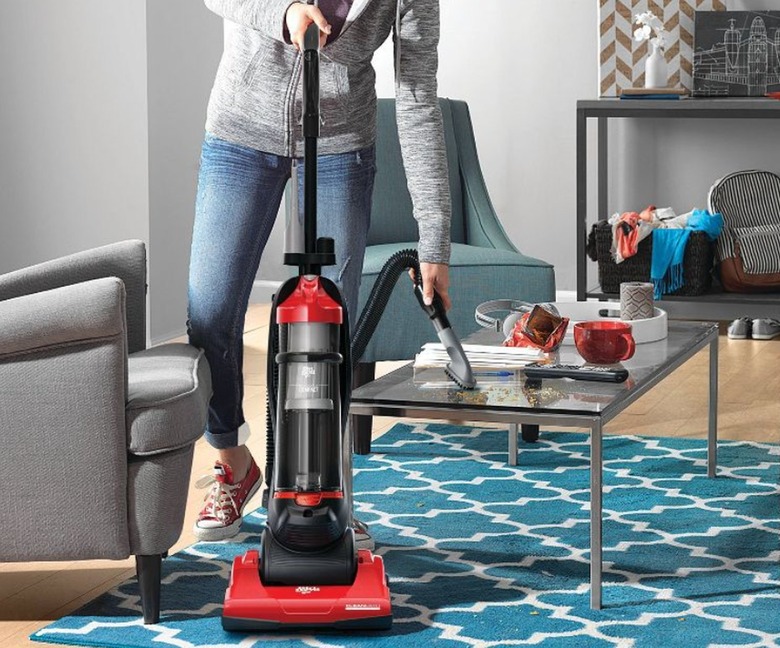
How to troubleshoot an upright vacuum not picking up dirt
Step 1: Check the easiest things first
Start with the dust bin or bag, since that takes only seconds. Then inspect the filters and make sure they are clean and dry.
This step fixes more problems than people expect. In my experience, a vacuum that seems “dead” is often just clogged with dirt it was supposed to collect.
Step 2: Inspect the brush roll
Flip the vacuum over and look for hair, thread, carpet fibers, or string wrapped around the brush. Turn the roll by hand if the model allows it.
If it feels stiff or will not move, the belt or bearings may need attention. A clean brush roll helps the vacuum agitate carpet fibers and release trapped debris.
Step 3: Test suction at different points
Put your hand near the hose opening, wand, and floor head. This helps you find where suction drops off.
If suction is strong at the main body but weak at the hose, the clog is likely farther down the line. If suction is weak everywhere, the issue may be the filter, bag, seal, or motor.
Step 4: Clear the hose and wand
Disconnect the hose and check for blockages using a flashlight. Gently push out debris with a flexible tool if the manufacturer allows it.
Do not use anything sharp that could puncture the hose. I have seen a quick fix turn into a bigger repair because someone used a metal hanger and tore the lining.
Step 5: Review the vacuum settings
Make sure the vacuum is set for your floor type. Check any brush roll on and off switch, carpet height adjustment, or suction control dial.
Sometimes the solution is as simple as changing one setting. It is worth taking a minute to read the control labels closely.
Step 6: Look for worn parts
Inspect the belt, brush roll, seals, and hose for signs of wear. If a part looks cracked, loose, or stretched, it may need replacement.
Most upright vacuums last longer when worn parts are replaced early. Waiting too long can cause extra strain on the motor.
Upright vacuum problems by floor type
On carpet
If your upright vacuum is not picking up dirt on carpet, the issue is often the brush roll, belt, or height setting. Carpet needs agitation to release dirt buried in the fibers.
A weak brush roll can make carpet look clean on the surface while leaving grit underneath. That is why carpets sometimes feel rough even after vacuuming.
On hard floors
On hard floors, weak pickup may come from suction loss, a badly adjusted nozzle, or a damaged seal. Some vacuums also scatter debris if the brush roll is too aggressive.
If your model has a hard floor setting, use it. That can improve pickup without blowing crumbs around.
On pet hair
Pet hair is tough because it wraps around brush rolls and clogs filters fast. If you have pets, your upright vacuum may need more frequent cleaning than the manual suggests.
I always tell pet owners to check the brush roll first. Hair buildup is often the silent troublemaker.

Maintenance habits that keep an upright vacuum working well
A little routine care makes a big difference. Vacuums are like cars in one simple way: ignore basic maintenance, and performance falls off fast.
Try these habits:
- Empty the dust bin or replace the bag often
- Clean filters on the schedule recommended by the manufacturer
- Remove hair and string from the brush roll weekly
- Check the hose for clogs every few uses
- Inspect belts and seals for wear
- Store the vacuum in a dry place
These small steps help your upright vacuum keep steady suction and reduce the chance of sudden failure.
When the problem may be the motor
If you have cleaned everything and your upright vacuum is still not picking up dirt, the motor may be weakening. A burning smell, loud grinding, or unusual heat are warning signs.
At that point, repair may be better than repeated cleaning. Some older vacuums are worth fixing, but others cost less to replace than to repair.
What reputable guidance says about vacuum care
Manufacturer manuals and home appliance guidance consistently stress the same basics: clean filters, clear clogs, check belts, and keep the brush roll free of debris. That lines up with what service technicians see in the field every day.
The reason is simple. Most vacuum problems are airflow problems, and airflow is easy to disrupt with dust, hair, or a full container. The good news is that many of these issues are easy to spot once you know where to look.
FAQ: Why is my upright vacuum not picking up dirt?
Why does my vacuum sound like it is running but not picking up dirt?
That usually means the motor is running, but airflow is blocked or the brush roll is not working. Check the bag, filters, hose, and brush roll first.
Can a dirty filter make an upright vacuum lose suction?
Yes, a clogged filter can reduce airflow enough to make the vacuum seem weak. If the filter is washable, let it dry fully before putting it back in.
Why is my vacuum not picking up on carpet but works on hard floors?
That often points to a brush roll, belt, or height setting issue. Carpet needs stronger agitation than hard floors, so the brush system matters more.
How often should I clean my upright vacuum filters?
It depends on the model, but many filters need cleaning every 1 to 3 months. If you have pets or heavy dust, you may need to check them more often.
When should I replace my vacuum belt?
Replace the belt if it is stretched, cracked, or broken, or if the brush roll has stopped spinning. A worn belt can make carpet cleaning much less effective.
What is the easiest fix if my upright vacuum is not picking up dirt?
The easiest fix is usually to empty the dust bin, check the bag, and clean the filters. After that, inspect the brush roll and hose for clogs.
Conclusion
If your upright vacuum is not picking up dirt, the cause is usually something practical and fixable. Start with airflow, then check the brush roll, belt, height setting, and seals. Most of the time, a little cleaning and a few simple checks bring the machine back to life.
The key lesson is not to assume the vacuum is broken right away. Work through the basics first, and you may save yourself time, money, and frustration. If you want, bookmark this guide, try the troubleshooting steps on your own vacuum, and leave a comment with what solved the problem.

