

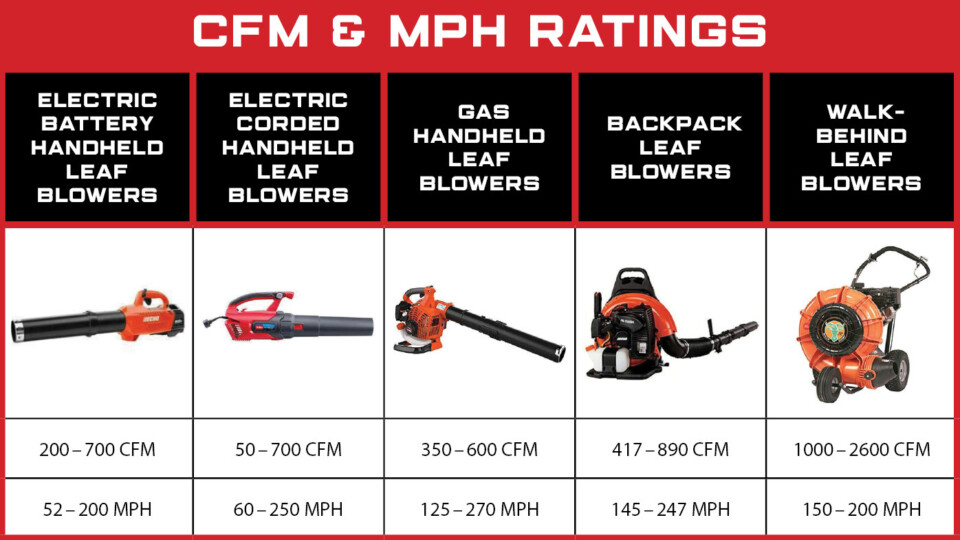
Most homeowners get best results with 350–600 CFM for typical leaf blowing.
I’ve used many blowers over the years and helped homeowners pick the right tool. This article explains what CFM is, why it matters, and how to choose the best CFM for a leaf blower for your yard and chores. I’ll give clear ranges, real-world tips from my own experience, and simple tests you can run at home to make a smart buy.

How CFM and MPH affect leaf blower performance
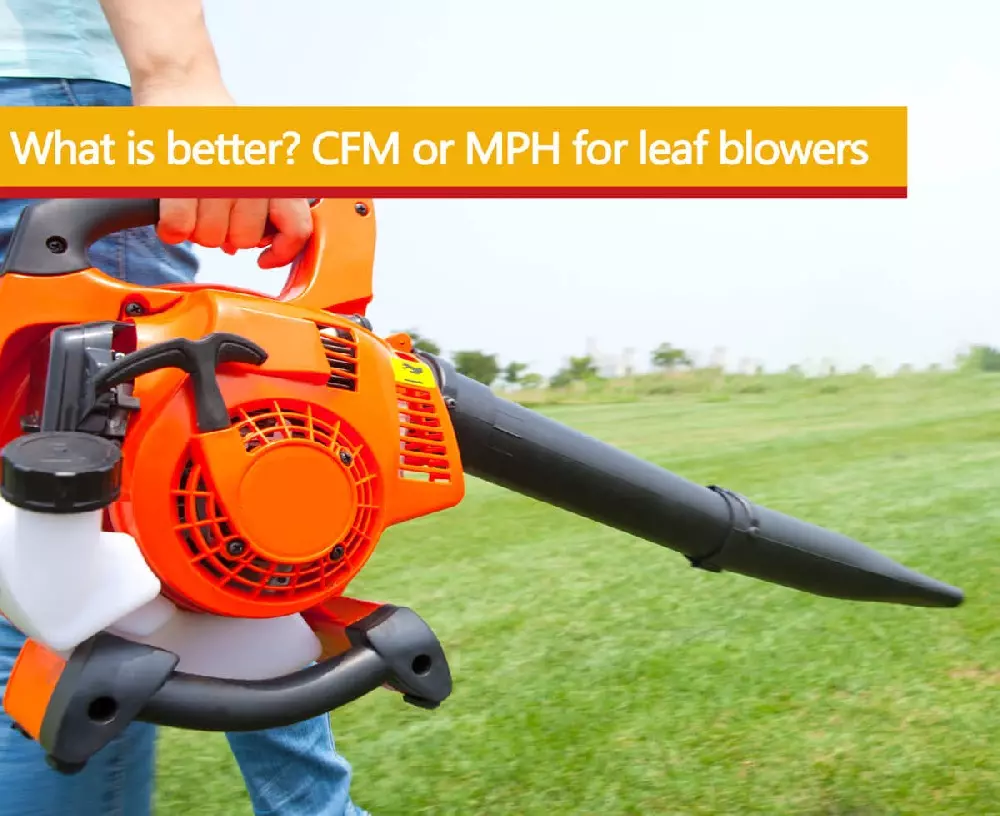
CFM means cubic feet per minute. It shows how much air the blower moves. MPH means miles per hour. It shows how fast that air travels.
Both matter. Higher CFM moves more volume. Higher MPH pushes heavier debris. For leaves, volume usually matters more. That is why the best CFM for a leaf blower often decides how fast you finish a job.
Practical view:
- Small yards need less CFM and more control.
- Large yards need high CFM to move lots of leaves fast.
- Wet leaves or heavy debris need higher CFM and reasonable MPH to break free.

What is the best CFM for a leaf blower?
Short answer: the best CFM for a leaf blower depends on your tasks. Use these ranges as a guide.
Recommended CFM ranges:
- Light cleanups and small patios — 200 to 350 CFM. Good for dry leaves and grass clippings.
- Typical suburban yards — 350 to 600 CFM. This is the sweet spot for most homeowners.
- Large properties and thick leaf fall — 600 to 900 CFM. Moves big piles fast.
- Professional and heavy-duty jobs — 900+ CFM. For contractors and large lots.
Examples from real life:
- I used a 400 CFM blower on a 0.25-acre yard. It cleared leaves well in one pass.
- For an acre with wet leaves, a 750 CFM unit finished the job in half the time.
Remember that the best CFM for a leaf blower is the one that matches the size of your yard, the type of debris, and how fast you want the job done.
How to choose the right CFM for your yard
Think about these factors before you buy.
Yard size
- Small yards under 0.25 acres — aim 200–350 CFM.
- Medium yards 0.25–1 acre — aim 350–600 CFM.
- Large yards over 1 acre — aim 600–900+ CFM.
Type of debris
- Dry leaves — lower CFM works.
- Wet leaves, twigs, pine needles — choose higher CFM.
- Heavy debris and mulch — look for high CFM plus good MPH.
Power source and runtime
- Cordless blowers trade CFM for runtime. Pick a battery and blower matched for the CFM you need.
- Gas blowers often give higher CFM for long jobs but weigh more and need maintenance.
Nozzle and accessories
- Wide nozzles help spread air for large areas.
- Concentrator nozzles boost MPH for tight spots.
- Collection kits work better when CFM is moderate and airflow suits suction.
Personal tip: test a friend’s blower or demo at a store. I once misjudged my need and bought a low-CFM blower. It handled dry leaves fine but failed on damp piles. Testing saved me a second purchase.

Trade-offs: higher CFM vs weight, run time, and control
Higher CFM sounds great, but there are trade-offs.
Weight and handling
* Higher CFM often means bigger motors and more weight.
- Heavier units tire you faster. For long jobs, balance matters.
Battery life and fuel use
- High CFM drains batteries faster or uses more gas.
- If your chores are short, high CFM may be fine. For long drives and big lots, consider fuel capacity or spare batteries.
Noise and regulation
- Higher CFM units can be loud. Check local noise rules.
- Some neighborhoods restrict gas blowers during certain hours.
Control and precision
- Low to mid CFM gives better control in tight spaces.
- High CFM is best for open areas and bulk moves.
Be honest about your needs. I once bought a top-CFM model for a small yard. It worked, but I found it hard to control near planters. I switched to a mid-CFM unit for finer work.

Tips to improve blower performance regardless of CFM
Small changes boost results fast.
Technique
- Sweep leaves into a pile with steady passes. One wide pass, then narrow final pass.
- Work with the wind when possible.
Use the right nozzle
- Wide nozzle for large areas.
- Narrow nozzle for dense piles.
Combine tools
- Rake stubborn spots first, then blow.
- Use a leaf vacuum or mulcher for collection tasks if your blower lacks suction.
Maintenance
- Clean air filters and vents.
- Keep batteries charged and fuel fresh.
- Tighten or replace worn nozzles.
Two-pass method
- First pass moves leaves to paths.
- Second pass piles them up for collection.
Small trick from experience: angle the nozzle slightly downward on the first pass. It picks up base debris and reduces scattering.
PAA-style quick questions
What CFM is best for wet leaves?
Wet leaves need higher CFM. Aim for 600 CFM or more for wet, clumped leaves to break their grip on the ground.
Is CFM more important than MPH?
For leaves, CFM often matters more because you need to move volume. For heavy debris or long-distance moves, MPH becomes important too.
How can I test a blower’s effective CFM at home?
Measure how quickly a known pile size moves with the blower. Note time and compare different units. Real-world tests reveal usable performance beyond specs.
Frequently Asked Questions of What is the best CFM for a leaf blower?
What CFM should I choose for a small yard?
For a small yard, choose 200 to 350 CFM. This range moves dry leaves well and gives good control near plants.
Does higher CFM always mean faster cleanup?
Higher CFM moves more volume and often speeds work, but handling, nozzle type, and leaf conditions also matter. Wet leaves or obstacles can slow cleanup regardless of CFM.
Can battery blowers match gas blower CFM?
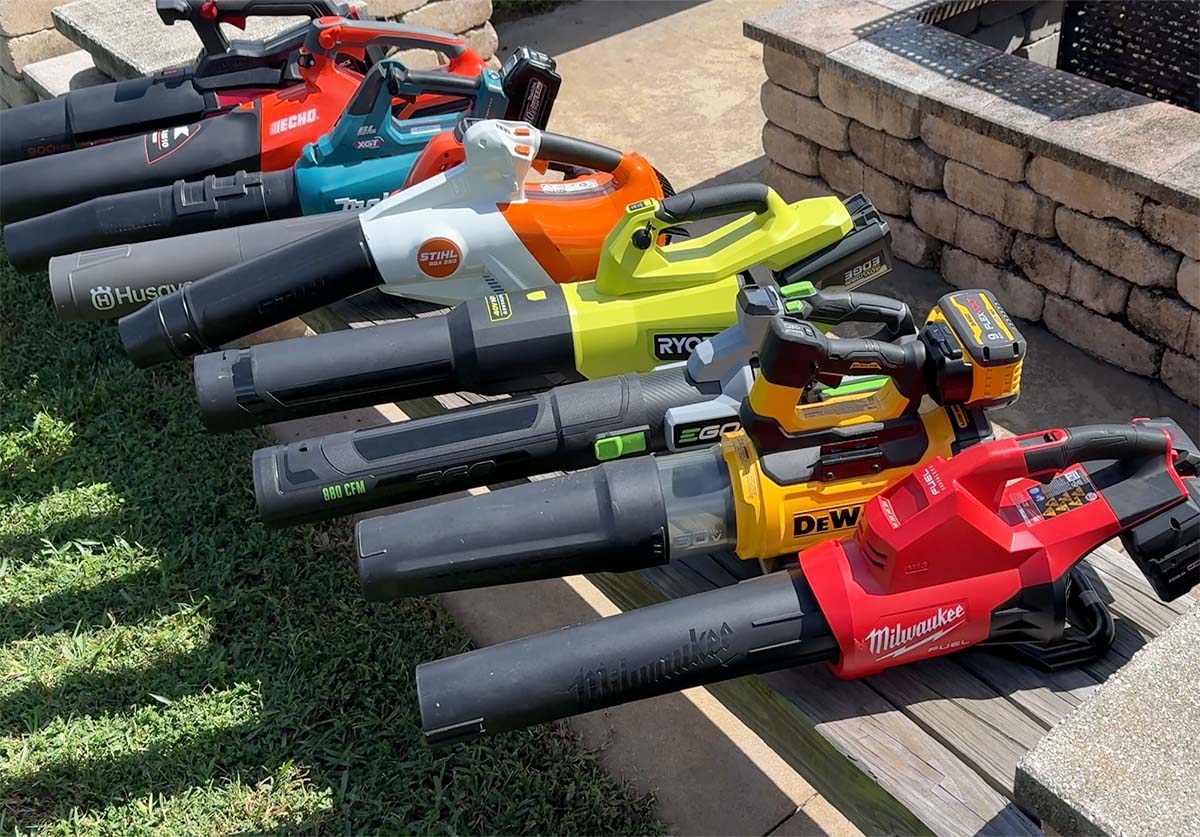
Modern battery blowers can reach 600–900 CFM and work well for many jobs. Runtime and battery size are the main limits compared to gas models.
How do I handle wet or compacted leaves?
Use a higher CFM blower and a narrow nozzle to add impact. Raking first or running a mulching attachment helps loosen compacted leaves.
Is MPH or CFM more important for moving piles?
CFM tends to be more important for moving piles because it delivers volume. MPH helps dislodge heavy items and push debris over longer distances.
Will a high-CFM blower damage my plants?
High CFM close to plants can blow mulch away or uproot small seedlings. Keep distance and use lower settings near sensitive plants.
Conclusion
Choosing the best CFM for a leaf blower means matching the blower to the job. For most homeowners, 350–600 CFM is the sweet spot. Small yards do fine with 200–350 CFM, while large or wet conditions call for 600+ CFM. Test a blower when you can, weigh the trade-offs, and think about runtime, weight, and control.
Take action: evaluate your yard size and leaf types, then choose a CFM range from this guide. Try a demo if possible, and leave a comment with your blower model and experience — I’ll help you pick the right CFM.

