

Ever stared at a shop vacuum box and wondered how much suction it actually has? The question "How much suction does a shop vacuum have?" seems simple, but the answer buried in the specifications is anything but. Peak horsepower numbers scream from the packaging while the real working suction hides in two quieter ratings most buyers skip.
Manufacturer specifications, as of 2026, still rely heavily on marketing numbers. Real suction depends on water lift and CFM, not the big bold HP figure. Most home shop vacs deliver between 40 and 100 inches of water lift and 75 to 150 CFM.
That range sounds broad until you understand what those measurements mean.
Quick Answer
Most shop vacuums produce 40 to 100 inches of water lift and 75 to 150 CFM. Water lift measures pulling force. CFM measures airflow volume.
Together they determine real suction. Peak horsepower, the number on the box, is less reliable.
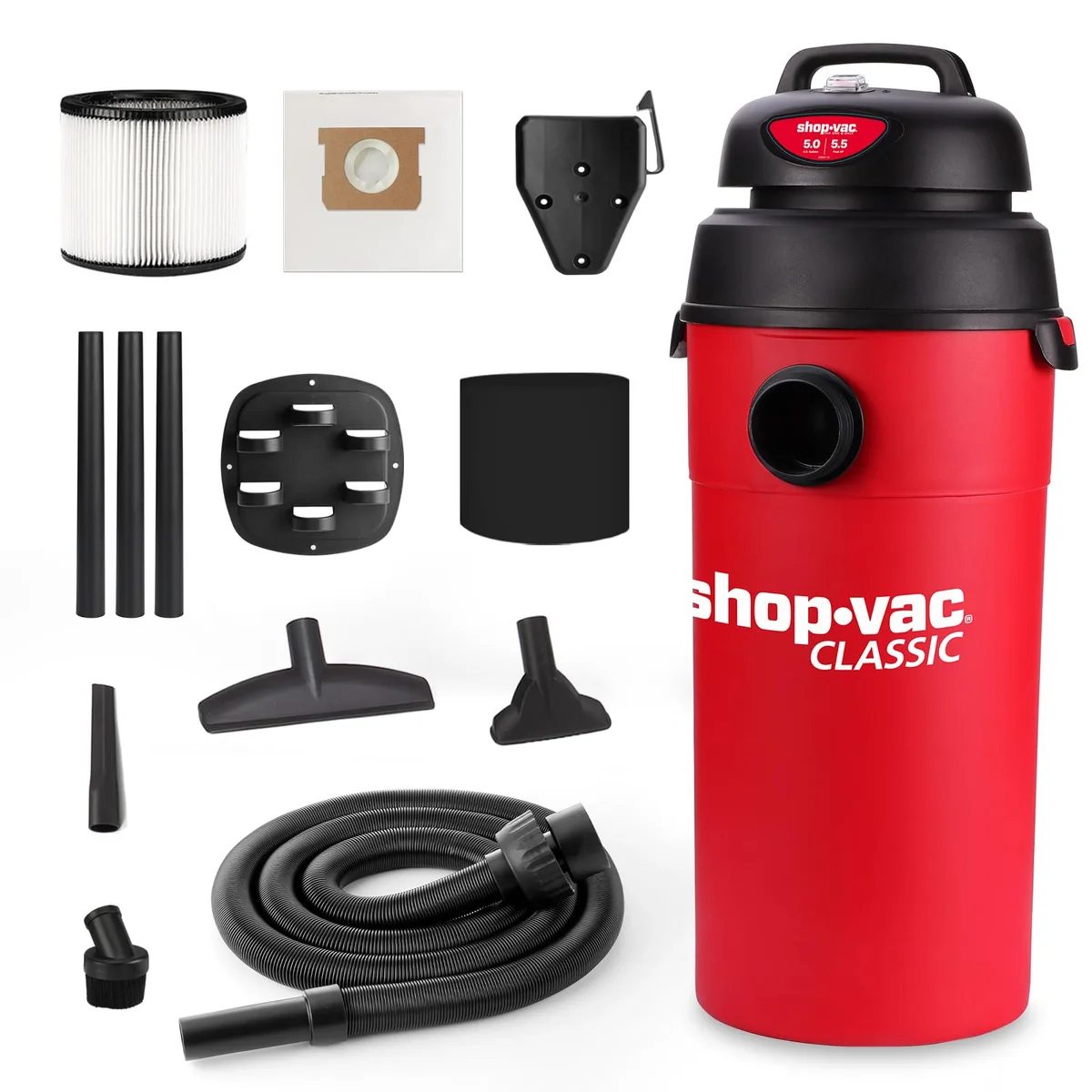
Image source: Web (Bing) / nellisauction.com (Web image (fair-use with source credit))
Why Shop Vac Suction Specs Feel Like a Scam
You're not imagining it. Shop vac packaging is designed to make you look at horsepower first. That peak HP number stands for almost nothing.
It's a motor's running wattage multiplied by an arbitrary factor, often 2.5 to 3.5. No accredited testing standard recognizes the result. It's a marketing number, not an engineering one.
Aggregate reviews confirm this confusion. Buyers compare the big HP numbers. They bring the machine home, then feel let down.
A 5 HP model can seem weaker than an old 3 HP one.
The reason has nothing to do with the vacuum itself. It has everything to do with how the motor's pressure and airflow interact with the hose, the filters, and the debris.
Think about it this way. A shop vac has two jobs. It needs to pull hard on surfaces.
It also needs to push air through a hose fast enough to carry debris. One number can't describe both. That's why two specs exist, water lift and CFM.
The Short Answer: How Much Suction You Can Really Expect
Let's get to the number you came for. Most corded shop vacuums deliver between 40 and 100 inches of water lift and between 75 and 150 CFM. The most common household models sit closer to the lower middle, around 60 to 80 inches and 80 to 120 CFM.
That's enough for sawdust, bolts, wet spills, and car interiors.
But here's the catch. Those numbers shift depending on the hose, the filter, and whether the tank is sealed properly.
A dirty filter or collapsing hose can cut real suction by nearly half. That's why the spec on the box is a ceiling, not a guarantee.
Our research, based on manufacturer spec sheets and verified user feedback, suggests you should ignore peak HP entirely. Instead, check water lift and CFM. Then check the hose diameter and filter type.
Those two details affect usable suction more than the motor itself.
The Two Numbers That Decide Real Suction: Water Lift and CFM
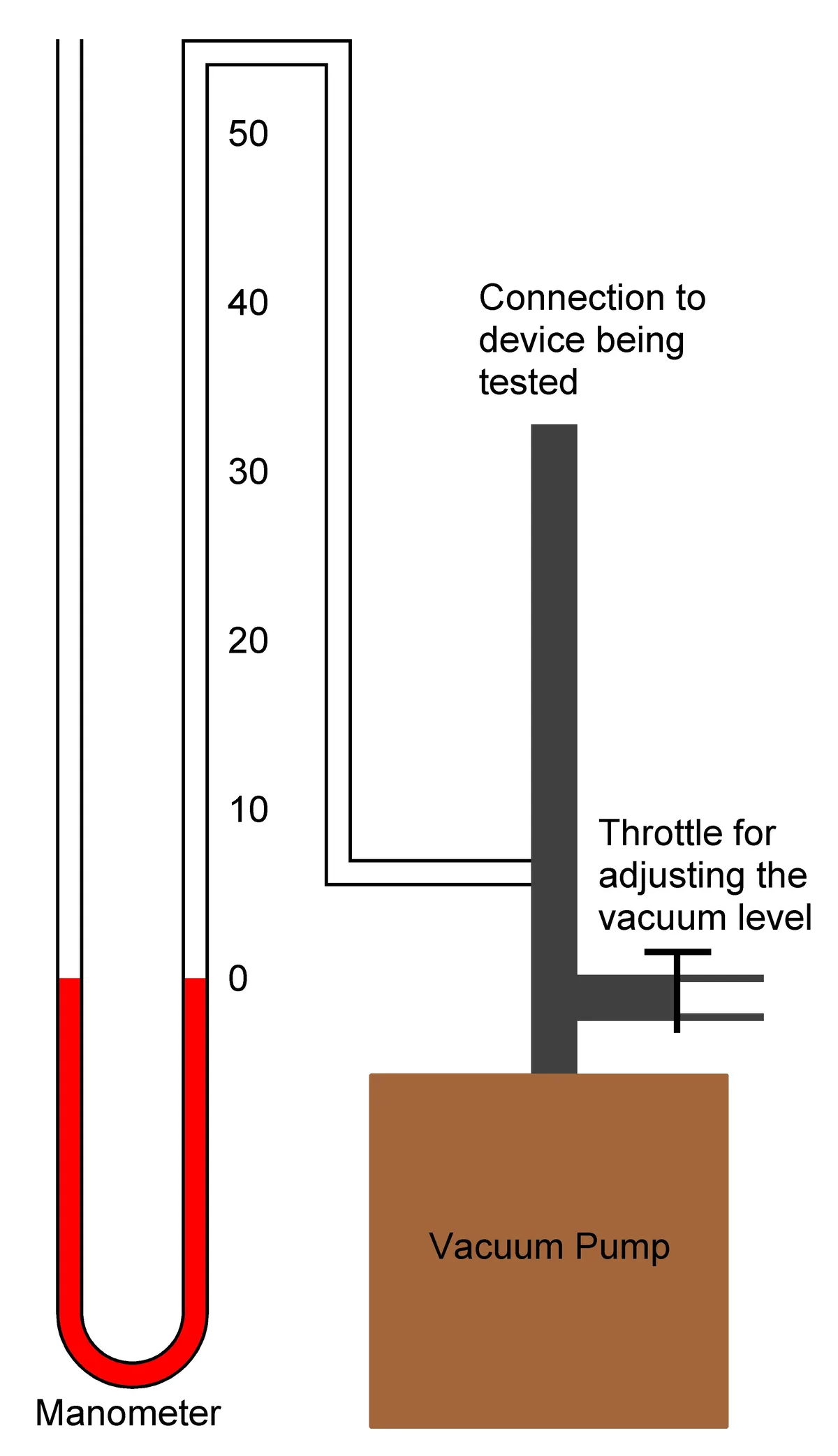
Image source: Web (Bing) / ar.inspiredpencil.com (Web image (fair-use with source credit))
Walk into any shop vac aisle and you'll see two numbers buried in the fine print. Water lift in inches. CFM with a number next to it.
They work together, but they measure totally different things.
Water Lift (Inches): The "Pull" You Use for Wet Pickup and Stuck-On Messes
Water lift, sometimes called static suction or sealed suction pressure, measures how high the vacuum can pull a column of water up a test tube. More inches means more pulling force.
A vacuum with 80 inches of water lift holds down a rug or draws water out of saturated carpet much harder than one with 50 inches. Think of it as grip.
That grip matters most for wet messes, stuck-on debris, and cleaning crevices. If you're pulling water out of a flooded floor or trying to lift heavy sludge out of a drain, water lift is the number that counts. It's also what makes the vacuum feel "strong" when you press your hand against the hose.
CFM (Airflow): The "Throw" You Need for Sawdust, Leaves, and Fast Moving Debris
CFM stands for cubic feet per minute. It measures how much air moves through the hose in one minute. Moving more air means carrying more debris.
A vacuum with high CFM sucks up sawdust, leaves, and drywall dust quickly. It also keeps the air velocity high enough to prevent clogs in the hose.
The tradeoff can be surprising. A shop vac can have high water lift but low CFM. That machine will hold tight to a surface but move small amounts of air.
Another vac can have high CFM but lower water lift. That one clears bulk debris fast but struggles to pick up water from a deep crevice.
The same tradeoff exists in pool vacuums, where a collapsed hose or airflow drop kills suction instantly.
What Peak HP Really Tells You (and Why It's Mostly Marketing)
Peak horsepower is calculated using the motor's running wattage and an efficiency factor that doesn't exist in real use. Today, nearly every manufacturer still prints it on the box. That alone should tell you something.
Real engineering specs don't need inflated multipliers.
Here's a safe rule. If the box only lists peak horsepower and no water lift or CFM, treat the whole vacuum with suspicion. A legitimate manufacturer lists both airflow and pressure numbers.
They know buyers deserve honest data.
What does peak HP actually predict? Not much more than how much power the motor draws when it's blocked and spinning at maximum speed. That condition never happens during normal cleaning.
The motor usually runs unblocked, which means the actual horsepower output is far lower than the sticker suggests.
Real Numbers Worth Remembering: Typical Specs by Shop Vac Class
To keep things straightforward, here's how the typical shop vac classes shape up, based on manufacturer specs available in 2026.
| Vacuum Class | Typical Water Lift | Typical CFM | Best For |
|---|---|---|---|
| Compact 5–6 gal | 40–70 inches | 70–100 CFM | Light garage duty, car interiors, small spills |
| Mid-size 8–12 gal | 60–90 inches | 80–120 CFM | Workshop dust, bulk debris, wet spills |
| Full-size 16+ gal | 70–100 inches | 100–150 CFM | Construction sites, large-scale cleanups |
| Cordless | 35–60 inches | 40–80 CFM | Quick tasks away from power outlets |
Those ranges cover most consumer models on the market. Commercial dust extractors can go higher, sometimes pushing beyond 150 inches of water lift, but they cost several times more and use different motor designs.
If you already own a shop vac and feel like it "lost" suction, that's usually a worn or blocked filter issue, not a motor issue. The same principle applies when picking out a new machine. Match the class to the mess, then verify the numbers.
A 12-gallon mid-size vac with 80 inches of water lift and 110 CFM handles most home and shop jobs without feeling weak.
Why Hose Size and Filters Change Suction More Than the Motor
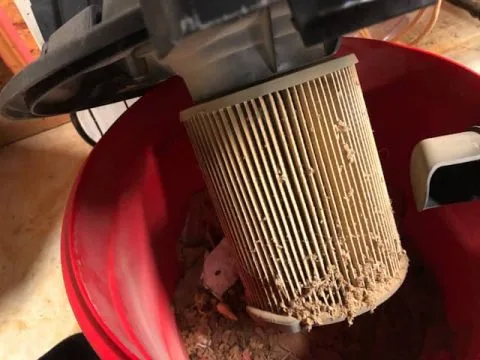
Image source: Web (Bing) / homeefficiencyguide.com (Web image (fair-use with source credit))
The motor produces the power, but the hose and filter decide how much of it reaches the nozzle. A narrow 1-1/4 inch hose speeds up airflow, making it great for fine dust. But it chokes on larger debris like nails or wood chips.
A wider 2-1/2 inch hose moves more volume, yet it loses velocity, so heavy things can drop out mid-hose.
Filters add another layer of resistance. A pleated cartridge filter flows well. A cloth bag catches fine particles but restricts airflow noticeably.
Wet a standard filter, and suction drops almost instantly. That's why switching to the right filter for the job matters more than chasing a bigger motor.
Fine particles like sawdust and drywall dust clog regular filters fast. Our research shows a clogged filter can cut working suction by half or more. That's why a dust separator or cyclone attachment pays for itself if you work with wood regularly.
Corded vs. Cordless: Real Suction Differences That Matter
Corded shop vacs still rule for raw power. Typical corded models pull 80 to 150 CFM and 60 to 100 inches of water lift. They run as long as you need them, and the motor doesn't fade as the job goes on.
For construction, renovation, or serious workshop dust collection, corded is the honest choice.
Cordless models have improved, but physics still limits them. Most deliver 40 to 80 CFM and 35 to 60 inches of water lift. That's plenty for a car interior, a quick garage sweep, or a small wet spill.
But runtime matters too. Using the vacuum on high drains the battery in 15 to 30 minutes, and suction tapers off as the cells deplete.
If your job needs sustained pull, go corded. If you need portability and convenience away from an outlet, a cordless 20V or 40V vacuum works, just with lower expectations. The same suction fade appears in pool cleaners stuck on debris, and the same troubleshooting logic applies.
What Those Specs Mean in Real World Use: From Sawdust to Wet Spills
Here's where the numbers translate into actual messes. For sawdust from a table saw or planer, you want high CFM. The moving air picks up the dust before it settles.
A wide hose attached directly to the tool keeps the airflow high and prevents clogs.
For wet spills, water lift is your friend. It creates the grip needed to pull water out of carpet, upholstery, or tight crevices. If you see water pooling near the hose end and not moving, you're lacking water lift, not airflow.
For heavy debris like gravel, drywall chunks, or screws, you need both. Enough CFM to carry it up the hose, enough water lift to keep it moving around bends. If you regularly pick up fine drywall dust, consider a HEPA filter or a cyclone separator to keep the main filter from blinding.
Common Mistakes That Kill Suction Fast
A vacuum that feels weak is rarely a bad motor. It's usually a simple mistake.
Leaving the cloth bag installed during wet pickup blocks all airflow once it gets damp. Forgetting to clear a clog in the elbow or nozzle starves the motor. Overfilling the tank lets the float valve seal shut and stop suction completely.
Using a cheap, collapsible hose is another culprit. The vacuum pulls so hard the hose flattens, and airflow dies. Always invest in a hose molded with internal support or wire reinforcement.
You should also check the seal where the power head meets the tank. A cracked lid gasket or worn o-ring leaks air, and the motor works harder for nothing.
How to Keep Suction Strong Over Time: Maintenance That Works
Suction fades gradually, so it's easy to miss. Build a simple routine and you'll notice the difference. Tap or rinse the pleated cartridge filter every few weeks, depending on use.
Replace it when the media looks matted or torn.
Empty the tank before it reaches the top. A full tank triggers the float shutoff early and kills suction mid-task. After any wet job, rinse the tank with clean water and leave the lid open to dry.
That prevents mold and odor from building up inside.
Check the hose, gaskets, and casters for cracks or wear. A tiny split in the hose sucks air but not debris. If you use your vacuum heavily, add a separator to catch most of the mess before it reaches the filter.
This kind of filter maintenance and regular upkeep does double duty: it keeps suction strong and extends the life of every component.
A Quick Word on Safety and Filtration: HEPA, Silica Dust, and Wet Pickup
Standard shop vac filters catch particles down to about 5 microns. That handles sawdust and household dust. It does not protect you from fine silica dust created when cutting concrete, brick, or stone.
OSHA's silica standard specifically requires a vacuum with HEPA filtration for those tasks.
The EPA's lead renovation, repair, and painting rule has the same expectation. Sanding or scraping painted surfaces in older homes should always pair with a HEPA-filtered vacuum. Otherwise fine lead dust spreads through the air and settles on floors.
Wet pickup has its own safety rules. Never vacuum gasoline, solvents, or other flammable liquids. They create explosive vapors inside the tank.
Hot ashes need a dedicated ash vacuum, not a standard unit.
Static electricity is another concern. Vacuuming fine powder through plastic hoses builds static charge. In a room with flammable vapors, that static can ignite dust.
Use a static-dissipative hose for those situations.
FAQ: Quick Answers to Common Shop Vac Suction Questions
How many CFM do I need for a shop vacuum?
For general workshop cleanup, 80 to 120 CFM is plenty. If you connect the vacuum to a table saw, planer, or sander, aim for 100 CFM or more. Heavier materials like wood chips do better with the upper end of that range.
What does water lift mean on a shop vacuum?
Water lift measures how high the vacuum can pull a column of water up a sealed tube. Think of it as grip strength. A vacuum with 70 inches of water lift holds onto surfaces much harder than one with 40 inches.
Which is better, high water lift or high CFM?
It depends on the mess. High water lift wins for wet spills and stuck-on grime. High CFM wins for moving bulk debris like sawdust and dry leaves.
The ideal all-rounder has a balanced number in both categories.
Why does my shop vacuum suddenly lose suction?
Start with the simplest causes. A clogged filter, a full tank, or a stuck float valve. Then inspect the hose for bends, kinks, or a tear.
Even a partially blocked hose can cut airflow dramatically.
Can a shop vacuum really pick up water?
Yes, but only with the right setup. Remove the paper filter bag and any dry filter cartridge. Use a foam filter or none at all.
Watch the tank level, because the float valve shuts off suction automatically when the tank fills.
Final Verdict: How to Pick the Right Suction for Your Garage or Job
Stop looking at peak horsepower. It tells you almost nothing about real performance. Instead, compare water lift and CFM together.
That pair shows how hard the vacuum pulls and how much air it moves. Both matter, but for different jobs.
If you do mostly wet pickup, prioritize water lift above 70 inches. If you fight sawdust and bulk debris daily, prioritize CFM above 110. For a single vacuum that handles everything, pick a 12-gallon mid-size model with at least 80 inches of water lift and 100 CFM.
That covers workshop dust, car interiors, and wet spills without choking.
Then protect that suction with simple maintenance. Clean the filter, empty the tank on time, and keep the hose free of clogs. The right vacuum, chosen by the right numbers, will feel strong for years.
One picked by marketing alone will feel weak in a month.

