

Understanding the electricity consumption of your central vacuum system is key to managing your home’s energy bills. While a central vacuum is generally more energy-efficient than portable vacuums, knowing its specific power draw helps in making informed decisions about its usage.
This article will break down how much electricity a central vacuum uses, what factors influence its consumption, and how it compares to other cleaning methods.
Central Vacuum Power Consumption Explained
Central vacuum systems are designed for power and efficiency, but their energy use can vary. The main component that draws electricity is the motor in the central unit. This motor powers both the suction and, in some models, the exhaust fan. Unlike a portable vacuum that you might use for 15-30 minutes a few times a week, a central vacuum is typically used for longer periods, especially in larger homes.
The power consumption is measured in watts (W) or kilowatts (kW), and the total energy used is measured in kilowatt-hours (kWh) over a period of time. A kilowatt-hour is the amount of energy used by a 1,000-watt device running for one hour. To calculate the cost, you multiply the kWh used by your local electricity rate.
Understanding Wattage And Amperage
Central vacuum motors are rated by their wattage, which indicates how much power they consume. A typical central vacuum motor might range from 800 watts to 1,500 watts. Some high-end or industrial models could even go higher. The amperage (A), which measures the electrical current, is also important. The relationship between watts, volts, and amps is: Watts = Volts x Amps. In North America, household voltage is typically 120V. So, a 1,200-watt motor running on 120V would draw about 10 amps (1200W / 120V = 10A).
How Often And How Long Do You Use It?
The actual electricity used depends heavily on how often you run your central vacuum and for how long each time. A quick 5-minute clean of a small apartment will use far less energy than a 30-minute deep clean of a large house. For example, running a 1,200-watt vacuum for 30 minutes (0.5 hours) would consume 0.6 kWh (1200W * 0.5h / 1000 = 0.6 kWh). If you do this twice a week, it adds up over the month and year.
Factors Affecting Electricity Use
Several factors influence how much electricity your central vacuum system consumes. Understanding these can help you optimize its use and potentially reduce your energy bills.
Motor Size And Efficiency
The size of the motor is the most significant factor. Larger, more powerful motors generally consume more electricity. However, not all large motors are inefficient. Newer central vacuum models often feature energy-efficient motors that provide strong suction while using less power than older or less advanced units. Look for models with high CFM (Cubic Feet per Minute) ratings, which indicate airflow, and good water lift (suction power), as these often correlate with efficient motor design.
Age And Maintenance Of The Unit
An older central vacuum system might be less efficient than a newer one, especially if its motor components have degraded. Regular maintenance is crucial. A clogged filter, a worn-out brush roll on your vacuum attachment, or a partially blocked hose can all force the motor to work harder, consuming more electricity. Cleaning or replacing filters regularly and ensuring hoses and pipes are clear can significantly improve efficiency.
Type Of Cleaning Task
The type of cleaning you are doing also plays a role. Vacuuming hard floors typically requires less suction power and thus less energy than deep cleaning carpets, especially if the carpets are thick or heavily soiled. Using the appropriate vacuum attachment for the surface can also make a difference; for instance, using a floor brush on a hard floor uses less energy than using a high-power carpet nozzle.
Included Accessories And Features
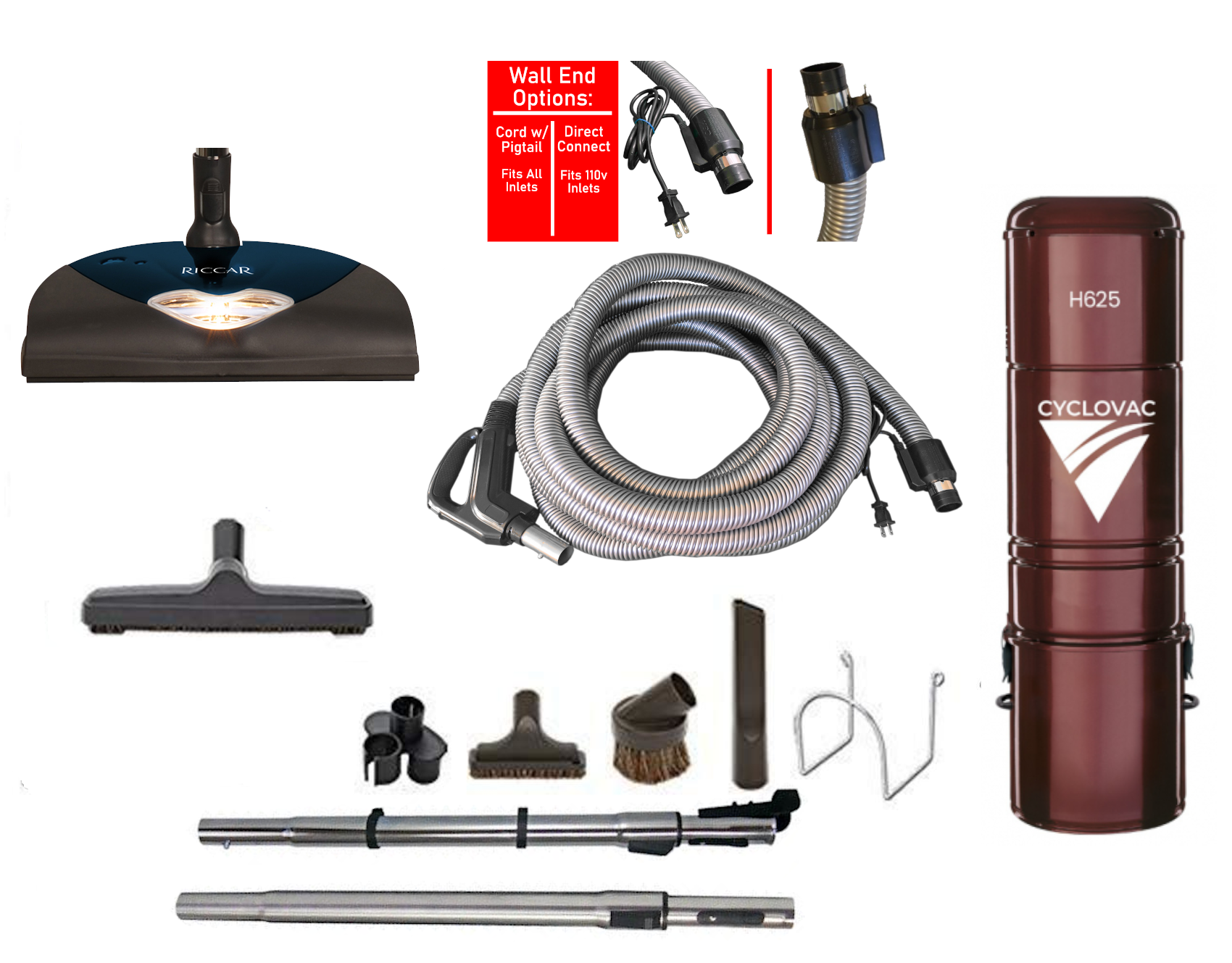
Some central vacuum systems come with various accessories and features, such as powered hoses with electric brushes or automatic dustpans. While these enhance convenience, they can add to the overall electricity consumption. The powered brush head, for example, has its own motor that draws additional power beyond the main unit’s motor.
Central Vacuum Vs. Other Vacuums: An Energy Comparison
When considering the electricity usage of a central vacuum, it’s helpful to compare it to traditional portable vacuums.
Portable Vacuums
Portable vacuums, including uprights and canisters, often have motors that range from 500 to 1,500 watts, with some high-powered models exceeding this. While they might seem less powerful than some central units, they are used directly in the room, meaning all their energy is focused on the immediate cleaning area. However, their motors are often running at full power for the entire duration of use, and they can be less efficient in terms of air movement and filtration.
Energy Consumption Over Time
A key difference is the duration of use. You might use a portable vacuum for 15-30 minutes per cleaning session. If a portable vacuum uses 1000 watts and is used for 30 minutes (0.5 hours), it consumes 0.5 kWh. If you do this three times a week, it’s 1.5 kWh per week, or about 6 kWh per month.
Now, consider a central vacuum using 1200 watts. If you use it for 30 minutes twice a week, that’s 1. 2 kWh per week, or about 4. 8 kWh per month. This scenario shows the central vacuum using slightly less energy per month, but this can change based on usage patterns.
Here’s a simplified comparison of estimated monthly energy usage for different vacuum types, assuming average usage:
| Vacuum Type | Average Wattage | Weekly Usage (minutes) | Estimated Monthly kWh | Estimated Monthly Cost (at $0.15/kWh) |
|---|---|---|---|---|
| Portable Vacuum | 1000 W | 90 (30 min x 3 times) | 6.0 kWh | $0.90 |
| Central Vacuum | 1200 W | 60 (30 min x 2 times) | 4.8 kWh | $0.72 |
| High-Power Central | 1500 W | 60 (30 min x 2 times) | 6.0 kWh | $0.90 |
*Note: These are estimates. Actual consumption will vary based on specific models, usage habits, and electricity rates.*
Efficiency Benefits Of Central Vacuums
Despite potentially higher wattage ratings, central vacuums can be more energy-efficient in the long run due to several factors:
- Better Airflow and Filtration: They vent exhaust air outside the living space, improving indoor air quality and reducing the need for multiple passes over an area. This means less overall run time might be needed.
- Durability and Longevity: Central vacuum units are built to last, often 20 years or more, whereas portable vacuums may need replacement every 5-10 years. This long lifespan can make them more cost-effective and environmentally friendly over time.
- Quieter Operation: While not directly related to electricity use, their quieter operation often means users are less bothered by noise and might clean more thoroughly or for slightly longer periods, but the overall efficiency often compensates.
Maximizing Efficiency And Minimizing Costs
To ensure your central vacuum operates as efficiently as possible, consider these practical tips.
Regular Maintenance Schedule
A consistent maintenance routine is the most effective way to keep your central vacuum running efficiently. This includes:
- Cleaning or Replacing Filters: Check your system’s filter monthly and clean or replace it as recommended by the

