

An upright vacuum cleaner works by creating suction that pulls dirt, dust, and debris from your floor into a bag or dust bin.
If you have ever pushed an upright vacuum across a carpet and watched crumbs disappear in seconds, you already know the basic magic. But there is a lot more going on inside that tall, familiar machine. In this article, I’ll break down how an upright vacuum cleaner works, why it cleans so well on carpets, and what each part does in real life.

What an upright vacuum cleaner is
An upright vacuum cleaner is a floor-cleaning machine with the motor, brush roll, and dust collection system built into one body. It is designed mainly for carpets, though many modern models also work well on hard floors.
Compared with canister vacuums, upright vacuums are easier to push in a straight line across large floor areas. That makes them a popular choice for homes with lots of carpeting. In my own testing and everyday use, I’ve found that an upright vacuum cleaner often feels like the “workhorse” of the cleaning closet because it combines power and convenience in one unit.
An upright vacuum cleaner works by using airflow, suction, and agitation together. First, the motor spins a fan that creates low air pressure inside the machine. That pressure difference pulls air in through the nozzle, carrying dust and debris with it.
At the same time, a rotating brush roll loosens dirt from carpet fibers. This matters because carpet traps particles deep down, and suction alone is not always enough to lift them out. The brush roll acts like fingers raking through the pile, while the suction acts like a quick breath that carries the mess away.
Inside the vacuum, the dirt moves through a pathway that may include a hose, filters, a dust bag, or a dust cup. Clean air is then pushed out through exhaust vents, usually after passing through one or more filters.
Main parts of an upright vacuum cleaner
An upright vacuum cleaner has several parts that all work together. If one part is weak or dirty, the whole machine can lose cleaning power.
Motor and fan
The motor powers the fan, which is the heart of the suction system. When the fan spins, it drops the air pressure inside the vacuum and draws air and debris upward.
A stronger motor does not always mean better cleaning, but it often helps the vacuum maintain suction when dirt loads up the bin or bag. Good airflow design is just as important as raw power.
Brush roll
The brush roll, sometimes called a beater bar, rotates at high speed and agitates carpet fibers. It helps pull out embedded dirt, pet hair, and crumbs stuck deep in the pile.
On some models, the brush roll can be turned off for delicate floors. That is useful because a spinning brush can scatter debris on hard surfaces if the nozzle is not designed for them.
Suction pathway
The suction pathway includes the intake opening, internal channels, hoses, and vents that guide air through the machine. A smooth airflow path helps the vacuum clean better because less air energy is wasted.
If the path is clogged by hair, lint, or a blocked hose, the vacuum can still run but clean poorly. I’ve seen many “broken” vacuums that were really just clogged vacuums.
Dust bag or dust bin
Some upright vacuum cleaner models use disposable bags, while others use a bagless dust bin. Both systems collect dirt, but they do it in different ways.
A bagged vacuum traps debris in a sealed bag, which can help reduce mess during disposal. A bagless design lets you empty the dust cup directly, but it needs frequent cleaning to keep airflow strong.
Filters
Filters capture fine dust that would otherwise blow back into the room. Many upright vacuums use a pre-motor filter and a post-motor filter, and some also use HEPA filtration.
HEPA filters are especially helpful for people with allergies because they can trap very small particles. Still, a HEPA label does not make a vacuum magical on its own; the machine also needs good sealing and airflow.
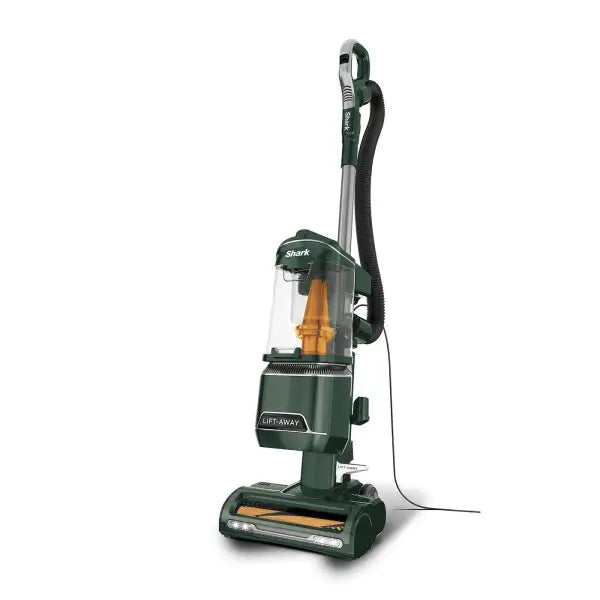
Step-by-step: how an upright vacuum cleaner works
Here is the cleaning process in simple terms.
- You turn on the vacuum and the motor starts spinning the fan.
- The fan creates suction by lowering air pressure inside the machine.
- Air rushes in through the nozzle, carrying dirt, dust, and debris.
- The brush roll agitates carpet fibers and loosens stuck particles.
- The dirt travels through the airflow path into the bag or dust bin.
- Filters catch fine dust before the air exits through the exhaust.
That sequence sounds simple, but each step matters. If suction is weak, the dirt may not move. If the brush roll is worn, carpet dirt may stay trapped. If the filter is dirty, airflow can choke down fast.
Why upright vacuums clean carpets so well
Carpet fibers hold onto dirt like Velcro. That is why upright vacuum cleaner models are often the best choice for carpet-heavy homes.
The upright shape also lets the machine press the brush roll close to the floor. That close contact helps it dig into dense fibers and remove debris that sits below the surface. In practical terms, it is the difference between skimming the top and getting into the weave.
Many uprights also have height adjustment settings. These settings help the cleaner work on low-pile carpet, thick carpet, and sometimes rugs without losing performance.
How suction and airflow really work
People often think suction is the only thing that cleans, but airflow is just as important. Suction is the pressure difference that pulls air in, while airflow is the movement of air through the machine.
A vacuum cleaner needs both. Strong suction without enough airflow may not move larger debris well, and strong airflow without enough suction may fail to lift dirt from carpet. The best upright vacuum cleaner balances both.
A good way to picture it is a straw. If the straw is pinched, you cannot drink well even if you try hard. That is what a clogged filter or blocked hose does to a vacuum.
Bagged vs bagless upright vacuum cleaner
Both styles can work well, but they feel different in daily use.
Bagged models
Bagged upright vacuum cleaner models collect dirt in a sealed bag. They tend to be cleaner to empty, since dust is less likely to puff back into the room.
They also work well for allergy control when paired with good filtration. The tradeoff is that you must keep buying replacement bags.
Bagless models
Bagless upright vacuum cleaner models use a dust cup that you empty into the trash. This can save money over time and makes it easy to see when the bin is full.
The downside is that emptying the cup can get messy. I’ve learned the hard way that overfilling a bagless bin is one of the fastest ways to weaken suction.
How an upright vacuum cleaner handles different floors
Not every upright vacuum cleaner works the same way on every floor type. The design is often optimized for carpets first, then adapted for hard floors.
On carpet, the brush roll and suction work together to remove embedded dirt. On hard floors, the machine may rely more on suction and a gentler brush setting.
Useful features for floor changes include:
- Brush roll shutoff for tile, wood, and laminate
- Adjustable suction for delicate rugs
- Rubber or soft wheels to reduce scratching
- Multi-surface cleaning heads for better debris pickup
If you have mixed flooring, choosing the right setting matters more than many people think. I’ve seen great vacuums underperform simply because the wrong mode was used.
Benefits of an upright vacuum cleaner
An upright vacuum cleaner has several practical advantages.
- Strong carpet cleaning: The combination of suction and agitation works well on deep carpet dirt.
- Easy to store: Many uprights stand on their own and fit neatly in closets.
- Fast coverage: The wide cleaning path helps cover large rooms quickly.
- Convenient controls: Many models keep the power switch and height settings within easy reach.
- Good for pet hair: Brush rolls and strong airflow help lift hair from fabric and carpet.
For a lot of homes, these benefits make an upright vacuum cleaner the most sensible all-around choice.
Limitations you should know about
No vacuum is perfect, and an upright vacuum cleaner has some tradeoffs.
- Heavier feel: Uprights can be harder to carry up stairs.
- Less flexible hose reach: Some models do not handle corners or upholstery as easily as canisters.
- Maintenance needs: Brush rolls, filters, and bins need regular cleaning.
- Noise: Many upright vacuums are louder than smaller cleaning tools.
- Carpet bias: Some models are much better on carpet than hard floors.
Knowing these limits helps you choose the right machine for your home. A great vacuum in the wrong setting can still disappoint.
What affects cleaning performance
Several things change how well an upright vacuum cleaner works.
- Clogged filters: Dirty filters block airflow and reduce suction.
- Full bag or bin: When debris builds up, air cannot move freely.
- Worn brush roll: Bent or tangled bristles lose agitation power.
- Belt wear: A stretched or broken belt can stop the brush roll.
- Air leaks: Loose seals let suction escape before it reaches the floor.
In my experience, most “the vacuum stopped working” complaints come down to maintenance, not failure. A quick check of the brush roll, filters, and bin often solves the problem.
Practical tips to get the best performance
If you want your upright vacuum cleaner to work at its best, a few habits make a big difference.
- Empty the dust bin before it gets too full.
- Replace or wash filters on schedule.
- Clear hair from the brush roll often.
- Check the hose for clogs.
- Match the height setting to the floor type.
- Use slow, steady passes on carpets for better pickup.
One mistake I see often is people rushing over the same area too fast. A vacuum cleaner is not a leaf blower. It needs a little time and contact to lift dirt from deep fibers.
How upright vacuums compare with other vacuum types
An upright vacuum cleaner is usually better for large carpeted rooms than a stick vacuum or handheld vacuum. It often has more power, a wider cleaning path, and a stronger brush roll.
Canister vacuums may be easier for stairs, drapes, and tight spaces. Stick vacuums are lighter and quicker for small messes. So the best choice depends on your home layout and cleaning habits.
A simple rule helps:
- Choose an upright vacuum cleaner if you have lots of carpet and want strong everyday cleaning.
- Choose a canister if you need more reach and flexibility.
- Choose a stick vacuum if you want light, quick cleanup.
Frequently Asked Questions
How does an upright vacuum cleaner create suction?
An upright vacuum cleaner creates suction with a motor-driven fan that lowers air pressure inside the machine. Air then rushes in from the floor opening, bringing dust and debris with it.
Why does an upright vacuum cleaner have a brush roll?
The brush roll loosens dirt from carpet fibers before suction pulls it away. This makes the vacuum much better at cleaning embedded debris than suction alone.
Do upright vacuum cleaners work on hard floors?
Yes, many do, but some work better than others. Models with brush roll shutoff or a hard-floor setting are usually the safest and most effective.
Why is my upright vacuum cleaner losing suction?
Common causes include a full bin, a clogged filter, a blocked hose, or tangled hair around the brush roll. A quick cleanup often restores normal airflow and performance.
Is a bagged or bagless upright vacuum cleaner better?
Bagged models are usually cleaner to empty and can be better for allergy control. Bagless models are more convenient and save money on replacement bags, but they need more frequent emptying and cleaning.
Conclusion
An upright vacuum cleaner works by combining suction, airflow, and brush roll agitation to lift dirt from floors and carpets. Once you understand how those parts work together, it becomes much easier to choose the right model, use the right settings, and keep the machine performing well.
The big takeaway is simple: regular maintenance makes a huge difference. Keep the filters clean, clear the brush roll, and empty the bin or replace the bag on time, and your upright vacuum cleaner will do a much better job for much longer. If this guide helped, explore more home cleaning tips or share your own vacuum questions in the comments.


2 Comments
Pingback: Are Upright Vacuum Cleaners Good: Best Choice Guide - Vacuum Cleaner Tips
Pingback: Why Does My Canister Vacuum Blow Out Dust: Fix It Fast - Vacuum Cleaner Tips