

Can wet/dry vacuums clean garage floors? Yes, they can, but the real answer is a bit more complicated. If you’ve stared at a concrete slab covered in sawdust, road salt, or water after a heavy rain, you know cleanup isn’t always obvious.
A wet/dry vacuum, often called a shop vac, is the right tool for many messes. But only when you set it up correctly and pick the right filter and nozzle.
In our research, most 8- to 12-amp wet/dry vacs move enough air for garage work. As of 2026, tank sizes typically run 5 to 16 gallons with airflow around 100 to 200 CFM. That’s plenty for most debris, but the right setup still makes the difference.
Let’s walk through the practical choices you’ll face.
Image source: Bing (Web (fair-use with source credit))
Quick Answer: Yes, But It Depends on Your Floor and Debris
Yes, wet/dry vacuums can clean garage floors effectively. They handle dirt, sawdust, water, and oil with the right setup. Choose the correct filter and nozzle for the material you’re removing.
Wet pickup requires removing the dry filter to protect the motor. Most garage messes are solved in one session with a shop vac.
How Wet/Dry Vacuums Actually Handle Garage Floors
A wet/dry vacuum works like a regular vacuum, but with a bigger motor and a tank that can hold liquids. Instead of a dust bag, air and debris get pulled into an open drum. The motor sits above the tank, so water never reaches it as long as the float shuts off at the right level.
The real power comes from airflow, measured in CFM, and suction, measured by static water lift. For garage floors, you need both. A high CFM moves loose dust and leaves quickly.
High water lift pulls stuck-on dirt or standing water out of small cracks and pores.
That combination is why shop vacs beat a broom, mop, or standard household vacuum on concrete. They don’t just push debris around. They pull it out and trap it in the tank.
Materials that would ruin a regular vacuum, like damp soil, fine dust, or metal shavings, are exactly what wet/dry vacs are built for.
Some models also work as blowers. Flip a hose to the exhaust port, and you can push leaves or sawdust out of the garage before vacuuming the rest. That second function alone saves a lot of time with big messes.
Before You Vacuum: Check These Three Things
Three variables will decide whether your wet/dry vac cleans well or leaves you with a clogged filter and a wet motor. Check these before you start.
Floor Surface: Bare Concrete vs. Epoxy or Paint
Bare concrete is forgiving. You can drag a rigid floor nozzle over it, vacuum up nails, and use aggressive tools without scratching the surface. Epoxy-coated or painted floors are different.
They look great, but they scratch easily and can peel if a stiff nozzle catches an edge.
If your garage floor is sealed or painted, use a floor nozzle with a soft bristle strip. Or wrap the nozzle with a microfiber cloth for larger areas. For tight spots, use a rubber squeegee attachment instead of a hard plastic tool.
That keeps the finish intact while still pulling up water and grime.
The other concern is oil and grease. On bare concrete, oil soaks in quickly and leaves a dark stain. On epoxy, it sits on top and is easier to clean, but it can also make the surface slippery.
Deal with spills before they spread.
Debris Type: Dirt, Water, Oil, or Fine Dust
Different garage messes behave differently. A wet/dry vac can handle all of them, but not with the same setup. The table below shows what to use for each common garage floor problem.
| Debris Type | Filter Setup | Nozzle / Tool | Special Notes |
|---|---|---|---|
| Loose dirt and sand | Cartridge filter | Floor nozzle | Fine sand may clog the filter over time. Empty when suction drops. |
| Standing water / slush | Foam wet sleeve | Rubber squeegee nozzle | Do not use a paper cartridge in wet mode. |
| Oil and grease | Cartridge filter (after absorbing) | Utility nozzle or crevice tool | Use absorbent granules first, then vacuum. |
| Sawdust / drywall dust | Cartridge filter or fine-dust bag | Floor nozzle | Fine dust requires a HEPA or fine-dust bag to avoid exhaust spray. |
Filter Setup: Dry Mode vs. Wet Mode
This is the step most people get wrong. Dry vacuuming uses a pleated cartridge filter. Wet vacuuming requires a foam sleeve, sometimes combined with a separate wet filter.
If you leave the dry filter on for liquids, the moisture ruins it and drops suction nearly instantly.
The swap takes two minutes. Open the top, lift the cartridge filter cage, slide the cartridge off, and slide the foam sleeve over the cage. Put the cage back and you’re ready for water.
The foam stops the motor from pulling through droplets of water.
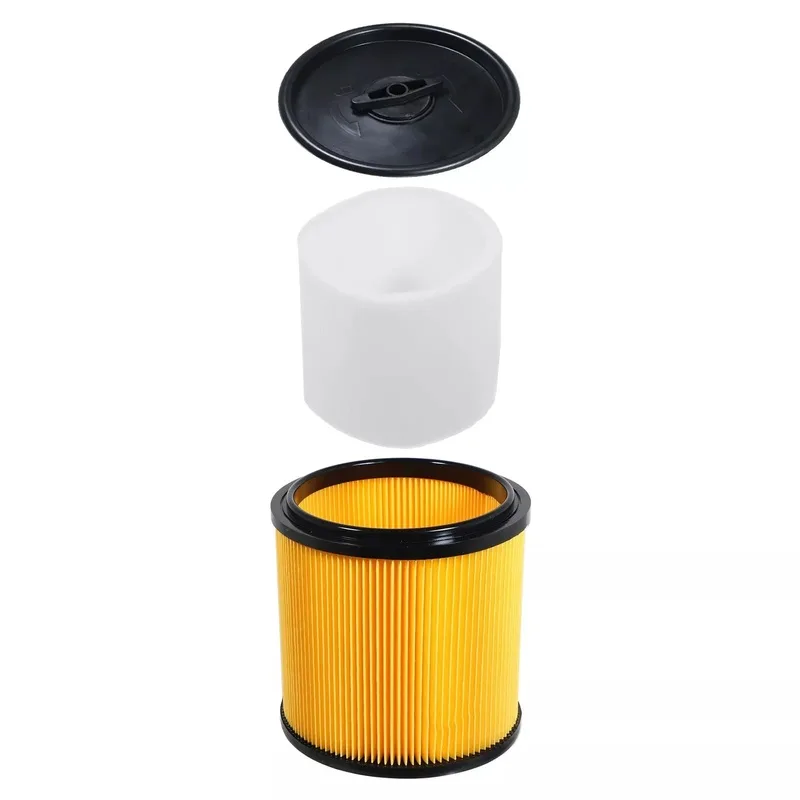
Image source: Web (Bing) / trimlawnhub.com (Web image (fair-use with source credit))
Some newer models have a removable drain plug for emptying liquid. That helps a lot after a big water cleanup. If your vac has one, unscrew the plug instead of lifting the whole tank to dump it.
The Decision Flow: What to Vacuum (And How)
Once you’ve checked the floor, the debris, and the filter, the actual vacuuming is straightforward. Here’s how to handle the four most common garage floor situations.
For Loose Dirt and Sand
Attach the floor nozzle and set the vac to dry mode with the cartridge filter in place. Run the nozzle over the floor in slow overlapping passes. Let the vacuum do the pulling, don’t press down hard.
If you’re cleaning a two-car garage, work from the back wall toward the garage door so you’re not dragging dirt back over clean concrete.
After the large area, switch to a crevice tool for the edges where the floor meets the wall. Sand tends to collect there and in the expansion joints. If the filter starts sounding louder, stop and tap it clean.
That usually means the pleats are clogged.
For Standing Water or Slush
Replace the cartridge filter with the foam sleeve first. Then attach the squeegee nozzle if you have one. The squeegee pulls water in a wide path and leaves less moisture behind.
Work slowly and keep the nozzle flat against the floor.
For water pooled in dips or along the garage door, put the nozzle down and let the vac suck for a few seconds without moving. You’ll see the puddle shrink. If the tank gets full, stop immediately.
The float shuts off suction when the liquid reaches the motor housing. That’s your sign to drain.
For Oil Leaks and Grease Spots
Oil will ruin a filter fast, so don’t vacuum it directly. Cover the spill with absorbent granules, clay cat litter, or baking soda. Let it sit for 20 minutes, then sweep up the loose powder with a broom.
The remaining residue can be vacuumed with the cartridge filter. For a garage floor, the granules absorb enough that the vacuum only handles dry residue.
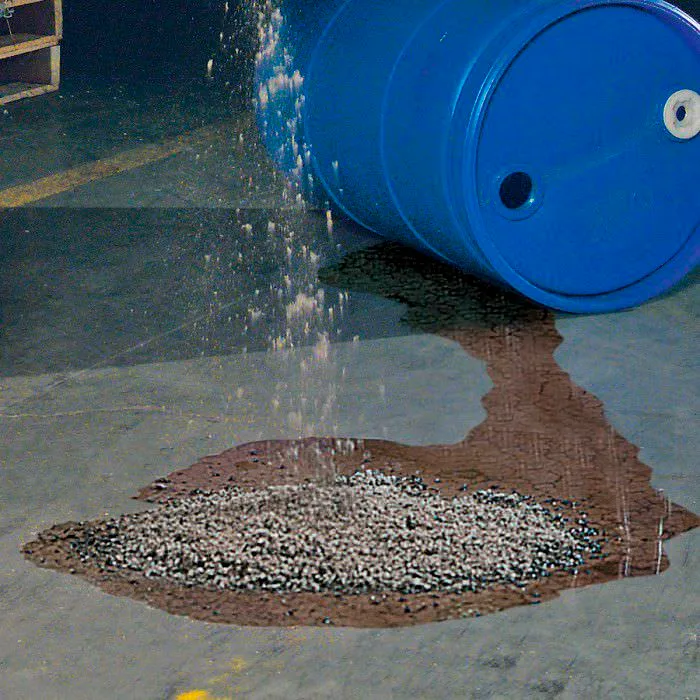
Image source: Web (Bing) / storage.googleapis.com (Web image (fair-use with source credit))
This approach also reduces the risk of oil coating the inside of your hose, which makes the vac smell and leaves oily residue on later dry pickups. If you vacuum a heavy oil spill without absorption, expect to clean the tank top and float thoroughly.
For Sawdust and Drywall Dust
Use a fine-dust bag inside the tank before the cartridge filter if you’re dealing with drywall or joint compound dust. The bag catches ultrafine particles that pass through the cartridge and blow out the exhaust. Per OSHA guidance on construction dust, controlling airborne silica and gypsum dust is important, not just for cleanup quality but for lung protection.
Inside a home garage, that dust can also settle on your car and tools. A bag keeps it contained. The same goes for sawdust from treated or heavily sawn lumber.
A standard cartridge filter will catch a lot, but the exhaust will still have a faint dust haze. A fine-dust bag eliminates that.
Step-by-Step: Wet/Dry Vacuum Cleanup That Works
If you follow no other advice, run through this sequence on your first garage cleanup.
- Clear the floor of tools, boxes, and large debris. Anything bigger than a pencil eraser should be picked up by hand.
- Check the floor type and select the right nozzle. Rigid nozzle for concrete, soft-bristle or squeegee for epoxy or paint.
- Install the correct filter. Cartridge for dry, foam sleeve for wet, and add a fine-dust bag for drywall or sawdust.
- Attach the hose and nozzle firmly. Some vacs lose suction with a loose hose connection.
- Start at the back of the garage and work toward the door. Keep the nozzle flat and pull slowly.
- Use the crevice tool for edges and corners after the main pass.
- Empty the tank after every session, even if it looks half-empty. Debris left in the tank smells and clumps.
- Rinse the tank with water if you used wet mode, then let it air dry with the lid off.
- Clean the filter. Tap out dry filters, rinse foam sleeves, and replace fine-dust bags when full.
- Store the hose and nozzle so they’re not kinked or crushed. A damaged hose kills airflow.
That’s the whole process. Most garage floors take 10 to 20 minutes once you know the setup. For heavier messes like oil or flooded corners, add time for absorbents and drying.
The vacuum itself does the heavy lifting. You just move it in the right order.
What Won’t a Wet/Dry Vac Handle Well on Garage Floors
A wet/dry vacuum is powerful, but it has limits. Know them before you drag the machine out. Otherwise, you’ll waste time or damage the vac.
Gravel and large rocks are the first problem. A 1¼-inch hose handles most debris, but stones bigger than a quarter will get stuck. Pick those up by hand first.
The same goes for screws, bolts, and large wood chips. They’ll clump together and block the airflow.
Fine powder is another challenge. Drywall dust and joint compound pass through the normal cartridge filter and blow out the exhaust. Without a fine-dust bag, you’ll just relocate the mess onto your car.
That’s where a proper bag setup matters.
Liquid cleanup has its own limits. A 12-gallon tank fills fast when you suck up a puddle. Once the float engages, suction stops completely.
You’ll need to drain and repeat. If you’re dealing with a flooded garage, that means many trips.
Heavy grease is the last tough case. If you vacuum straight motor oil, it coats the hose, the filter, and the inside of the tank. That haze lingers and makes every later dry pickup smell like an oily rag.
Absorbing spills with commercial granules first is a huge time saver.
Comparing Shop Vac Options for Garage Work
If you’re shopping for a wet/dry vac for garage duty, the right choice depends on tank size and power. A compact 5-gallon unit is portable. It fits in a tight corner and handles small spills.
But it fills quickly and loses airflow on big jobs.
A 12- to 16-gallon model is the sweet spot for most homeowners. It handles a two-car garage in one pass, picks up water without constant draining, and has room for a fine-dust bag. That size also tends to have the best motor ratings for daily use.
| Feature | 5-Gallon | 10-12 Gallon | 16-Gallon+ |
|---|---|---|---|
| Best for | Small spills, corners | Standard garage cleanup | Heavy workshops, flood water |
| Motor amp range | 8-10 amps | 10-12 amps | 12-14 amps |
| Price range (2026) | $50-$80 | $80-$150 | $130-$250 |
| Portability | Very easy | Manageable | Heavy, usually wheeled |
Hose diameter matters more than brand. A 2-inch hose moves more air and handles bigger debris, but it’s bulky. The standard 1¼-inch hose is easier to maneuver and works fine for most garage messes.
Cordless models are convenient, but battery runtime cuts into large cleanups. Aggregate user reviews consistently show corded models are the reliable choice for garage floors.
Mistakes That Ruin Filters, Motors, and Floors
The most expensive mistake is leaving the dry cartridge filter on for wet pickup. The paper pleats dissolve when they soak through. That forces water straight into the motor housing.
A soaked motor can bridge its internal contacts and fail completely.
Overfilling the tank is another motor killer. The float is there to protect the motor, and it works. But it only stops the motor, it doesn’t stop you from carrying a heavy tank that sloshes.
Stop at the float engagement, drain, and continue. Never let liquid sit in the tank for days either. It grows mildew, rusts the metal drum, and smells like a swamp.
Vacuuming fine dust with the wrong setup is a common but overlooked issue. The same goes for maintenance blunders, like never checking the float or letting the hose kink during storage. You can avoid most of these by cleaning the filter media regularly and keeping the tank dry between uses.
On epoxy floors, the mistake is using a rigid nozzle with a scratched edge. A single pass over a pebble can drag a visible white line across the finish. Always use a soft squeegee or wrap a microfiber cloth around the nozzle on painted surfaces.
Keeping Your Wet/Dry Vac Ready for the Next Mess
A shop vac is reliable if you treat it right. The number one rule is emptying it after every session. Leaving a tank full of wet debris invites rust, mold, and foul odors that cling to plastic parts.
Rinse the tank with water after wet pickup. Flip it over to drain the remaining drips, then leave the lid off overnight. That airflow dries the interior and stops mildew from taking root.
The same goes for the foam wet sleeve. Rinse it and squeeze it out before storing.
The cartridge filter needs a tap-out after each dry use. Take it outside, tap the pleats against a bin, and watch the dust cloud. Doing that once a month keeps suction strong.
If you use fine-dust bags, replace them when they’re half full. They cost a little, but they protect both your lungs and the motor.
Check the hose and nozzle connections for cracks every few months. A split in the hose kills suction silently. A nozzle with a broken clip will pop off mid-pass.
These are cheap fixes that stop a minor vacuum problem from becoming a hose replacement.
Safety and Disposal Rules Worth Following
Never vacuum flammable liquids. Gasoline, paint thinner, and mineral spirits produce vapors that the motor spark can ignite. A wet/dry vac is not explosion-proof.
If you spill fuel in the garage, use absorbent pads and a bucket. Do not run the vacuum.
For wet pickup, always plug into a circuit protected by a GFCI outlet. The National Electrical Code requires them in garage outlets for exactly this reason. Water and electricity don’t mix, and a GFCI cuts power before a shock becomes deadly.
Drywall dust and raw sawdust deserve lung protection. Per OSHA guidance on airborne silica and wood dust, regular dust masks aren’t enough for prolonged exposure. Wear an N95 respirator when vacuuming fine construction debris, and use a HEPA-rated filter if you can.
Dispose of oil-contaminated water properly. Don’t pour it down the storm drain or onto the driveway. Those oily residues eventually wash into local waterways.
Check with your local waste authority on hazardous waste drop-off days. Small amounts can be absorbed with cat litter and placed in the trash, but check EPA guidelines for the full picture in your area.
Final Decision Guide: When to Vacuum, Sweep, or Blow
If the floor is dry and dusty, vacuum it. If it's wet or slushy, vacuum it with the foam sleeve. If it's a large oil spill, use absorbents first.
Gravel and heavy debris should be swept by hand.
For routine garage upkeep, a wet/dry vacuum is the fastest tool. It pulls up dust that a broom leaves behind. It also handles water that a mop would just spread around.
Just match the filter to the mess.
Before you finish, drain the tank and rinse the hose. A clean shop vac is a ready shop vac. Store it with the right filter installed, and your next cleanup takes minutes.
That's the whole decision flow, and it works every time.
Frequently Asked Questions
Can a wet/dry vacuum pick up water off a garage floor?
Yes, with the foam wet sleeve installed. Remove the cartridge filter first. The foam blocks water from reaching the motor.
Drain the tank when the float shuts off. Let everything dry after use.
How do I clean oil out of my garage floor?
Cover the spill with absorbent granules or clay cat litter. Let it sit for 20 minutes. Sweep the loose powder into a dustpan.
Then vacuum the remaining residue with a dry cartridge filter.
Is it safe to vacuum drywall dust in my garage?
It's safe only with a fine-dust bag or HEPA filter. Plain cartridge filters let ultrafine particles blow out the exhaust. Wear an N95 respirator and open the garage door for ventilation.
What's the best wet/dry vacuum size for a garage?
A 10 to 12 gallon model is the practical middle ground. It handles a two-car garage without constant emptying. It also fits comfortably in a corner between cars.
Choose 16 gallons for heavy workshop debris.

