

Can shop vacuums pick up concrete dust? Yes, but the results depend almost entirely on what sits between the hose and the motor. Concrete dust isn't ordinary shop grime.
It's fine crystalline silica powder, and most stock filters let the most dangerous fraction blow straight back into the air you're breathing.
That's not a comfort issue. It's a health issue. OSHA limits respirable crystalline silica to 50 micrograms per cubic meter of air over an 8-hour work shift.
A true HEPA filter catches 99.97% of particles at 0.3 microns. So the real question isn't just "can it pick it up" but "what will it do with it afterward."
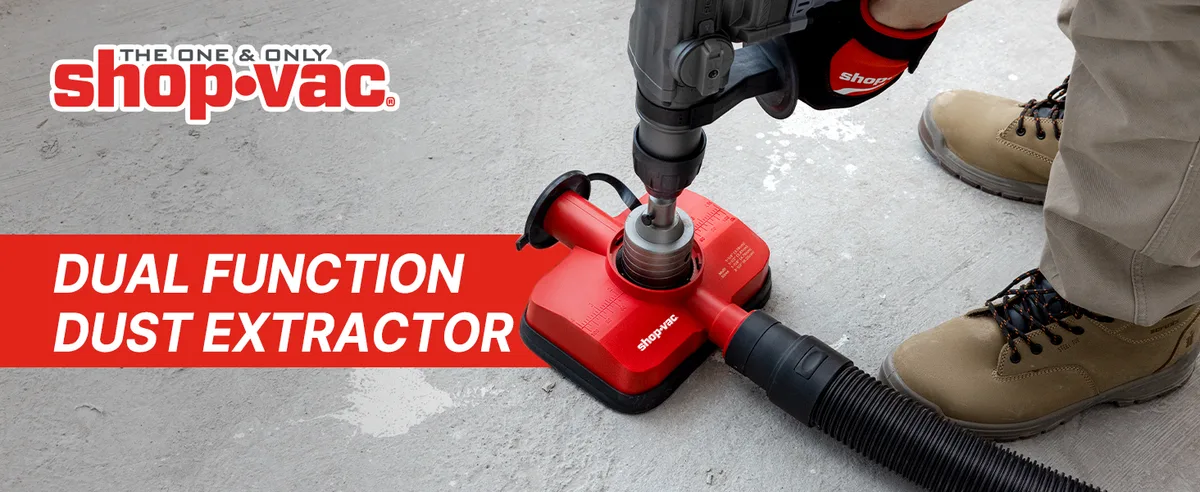
Image source: Web (Bing) / amazon.com (Web image (fair-use with source credit))
Quick Answer: Yes, But Check What's Between the Nozzle and Your Lungs
Yes, a shop vacuum can pick up concrete dust. But only with a true HEPA filter and a fine-dust bag. Standard pleated filters won't trap the smallest silica particles.
Those particles re-enter the air you breathe. Use the right filter setup, and a shop vac handles the job safely.
Why Concrete Dust Is Different From Regular Shop-Floor Dust
Concrete dust looks like ordinary dirt, but it's not. When you cut, grind, or drill concrete, you release crystalline silica. That mineral shatters into microscopic fragments sharp enough to scar lung tissue.
The visible dust settles in seconds. The dangerous part stays invisible and airborne for minutes.
The particle sizes explain the whole story:
- Coarse dust (over 10 microns). Easy to see. Your nose and throat trap most of it.
- Respirable dust (under 10 microns). Hard to see in normal light. Reaches deep into your lungs.
- The critical fraction (0.5 to 5 microns). Invisible. This is the zone linked to silicosis.
Manufacturer specs confirm why stock filters fail here. A typical pleated cartridge for a shop vacuum is rated at 5 microns or above. That catches sawdust fine, but it's nowhere near fine enough for silica.
As the filter loads, a shop vacuum's performance can drop off sharply, and fine dust slips through with the exhaust.
The health stakes are real. OSHA's respirable crystalline silica standards set a legal exposure limit of 50 micrograms per cubic meter over an 8-hour shift. That's an extremely small amount.
One teaspoon of silica dust can blow far past that limit in a small room.
The Branching Question: What Kind of Shop Vac Do You Have?
You can answer the original question in one word: it depends. Let's sort your machine into one of three branches. That decision tells you exactly what to change before you start.
Branch A: Standard Shop Vac with the Stock Pleated Filter
If nothing on the box says HEPA, you've got this branch. Don't vacuum concrete dust dry with it as-is.
The stock filter catches the big chunks, but the fine silica goes straight through. It's not a motor problem. It's a lung problem.
The fix: replace the cartridge with a true HEPA-rated filter, add a fine-dust bag, and check the tank lid gasket. That setup handles occasional DIY work fine.
Branch B: HEPA-Rated Shop Vac
Seeing "HEPA" on the label isn't enough. Confirm the filter is rated to 99.97% efficiency at 0.3 microns. Also check where the HEPA filter lives.
Some machines only put a HEPA filter on the exhaust, which means the incoming air still hits a standard filter first.
If yours has a true HEPA intake filter, add a dust bag and you're ready for homeowner-scale work. If it only has HEPA on the exhaust, treat it as Branch A.
Branch C: M-Class or H-Class Dust Extractor
If your machine is labeled as a dust extractor rather than a shop vac, you've already got the right tool. These units follow EN 60335-2-69 standards. M-class captures 99.9% of particles.
H-class captures 99.995%.
They're built with sealed housings and auto-cleaning filters. If this is you, grab a dust bag if the unit supports one. You're done here.
| Vacuum type | Filter rating | Safe for dry concrete dust? | What to add |
|---|---|---|---|
| Basic shop vac | Stock pleated, 5+ microns | Not without upgrades | HEPA cartridge + fine-dust bag |
| HEPA shop vac | 99.97% at 0.3 microns | Yes, for occasional jobs | Dust bag; verify intake filtration |
| M/H dust extractor | 99.9% to 99.995% | Yes, for daily use | None, unless you want longer bag life |
Here's the decision split in plain terms. If concrete dust is a once-a-year event, a filter upgrade is plenty. If you're cutting, grinding, or drilling concrete every week, the filter costs pile up.
That's when an extractor, or at least a cyclone separator, becomes the sensible route. As of 2026, you can find HEPA-rated upgrade filters for nearly every major shop vac brand, so the one-time DIY path is more affordable than ever.
The Filter Is the Whole Game (Not the Motor)
Here's what aggregate user reviews and repair forums show: the motor rarely dies first. The filter does. Concrete dust is abrasive, and it cakes into filter media fast.
But the bigger issue is what passes through.
Micron math puts this in perspective. A human hair is about 70 microns wide. Fine silica dust sits at 5 microns and smaller.
You can't see those particles in the air. By the time a room looks clear, the fine fraction is still floating.
That's why a true HEPA filter matters. Its dense fiber mat catches particles by interception, impaction, and diffusion. The trade-off is airflow.
Dense filters clog faster than open pleated ones, which is why you need a pre-separator.
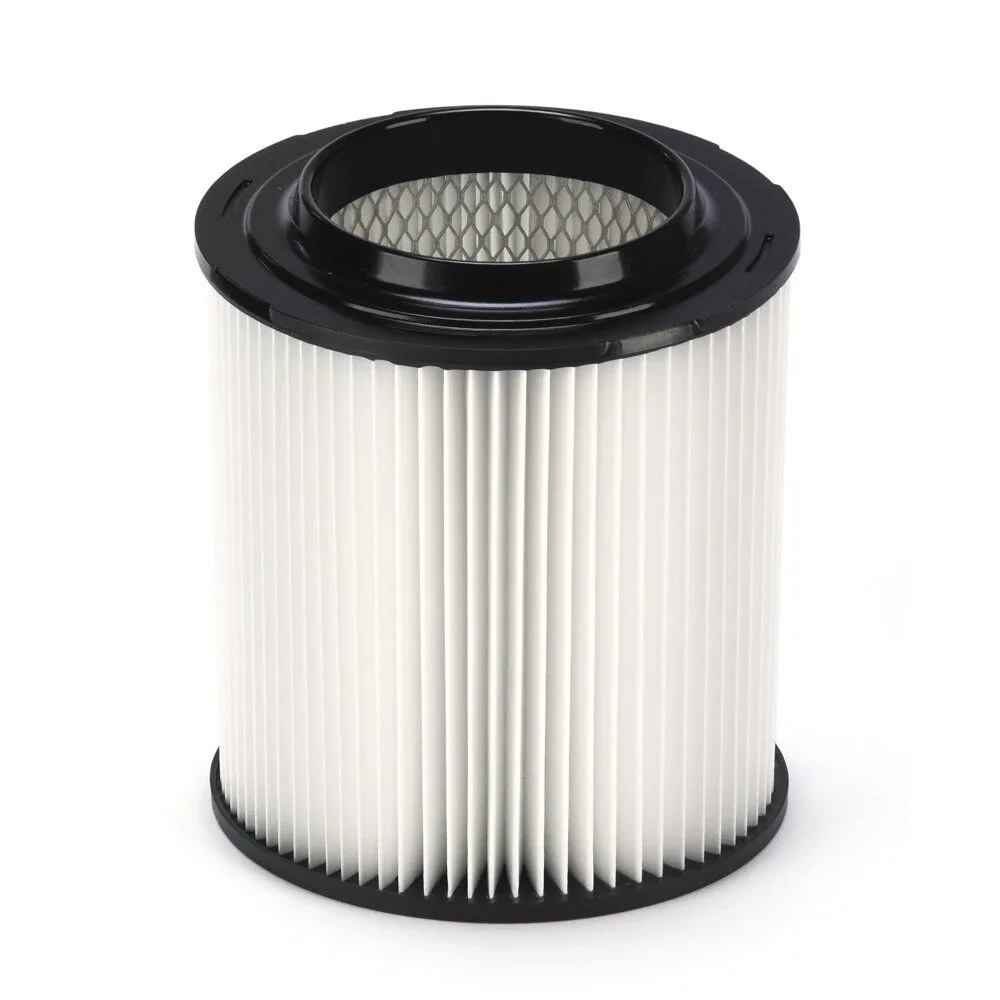
Image source: Web (Bing) / acmetools.com (Web image (fair-use with source credit))
A cyclone separator spins the heavy debris into its own drum before the air reaches the filter. It bolts onto the hose intake and costs a fraction of what you'd spend on replacement filters. For concrete dust, it's the difference between finishing a room and stopping to unclog every ten minutes.
Filter cleaning matters more than the brand name on the tank. Regular routine upkeep, like tapping out the filter and checking the gaskets, stretches a HEPA cartridge across several jobs. Skip that maintenance, and the same airflow restriction that can collapse a hose will kill your suction and recirculate dust.
A dust bag adds another layer. It catches the abrasive particles before they reach the filter, so the filter stays cleaner and the motor stays protected. It also makes disposal safer.
You seal the bag and toss it, instead of shaking silica dust off the filter into your face.
Should You Pick It Up Dry or Wet? The Slurry Option
Not all concrete dust has to be vacuumed dry. The wet method works well for small jobs. Spray a fine water mist over the dust or the cutting area, then vacuum the resulting slurry.
The water binds the silica particles and keeps them out of the air entirely.
For drilling a few holes in a foundation wall or making one cut with an angle grinder, wet pickup is the cleanest approach. It sidesteps most of the filter concerns, because the dust stays trapped in liquid.
The downside is cleanup. Concrete slurry hardens. If it sits in the tank overnight, you'll be chipping it out with a screwdriver.
Rinse the tank, hose, and floor nozzle immediately after you finish. And never vacuum dry concrete dust into a tank that already has water inside. That combo turns into a hardened layer at the bottom, and it makes the vacuum feel stuck the next time you use it.
| Method | Air quality | Filter impact | Cleanup effort |
|---|---|---|---|
| Dry with HEPA + cyclone | Good | Filter loads; cyclone extends life | Empty the bag, check the filter |
| Wet (slurry) | Excellent | Minimal, if you rinse | Rinse tank and hose right away |
One more wet-pickup warning. Before you run water through the system, make sure the shop vac is set up for liquids. Most are.
That usually means removing the paper cartridge and swapping to a foam sleeve, because a wet HEPA filter loses efficiency and can suffocate the motor's airflow.
Choose based on scale. Wet for small jobs. Dry with a cyclone and HEPA for anything that covers a whole floor.
How to Set Up a Shop Vac for Concrete Dust: Step-by-Step
Getting the setup right takes about ten minutes. Get it wrong, and you'll recirculate dust or clog a filter in five seconds. Here's the order that actually works.
- Pull out the stock pleated cartridge. Set it aside for wood and general cleanups.
- Fit a fine-dust bag onto the intake port inside the tank. That catches the abrasive bulk before it reaches the filter.
- Attach a cyclone separator to the hose before the tank intake. It spins the heavy debris into a separate drum. Your HEPA filter stays clean much longer.
- Check every gasket and seal. The lid and intake port are the usual leak points. A tiny gap leaks fine dust you can't see.
- Lock the HEPA cartridge into place. Close the lid fully and press until the clips seat.
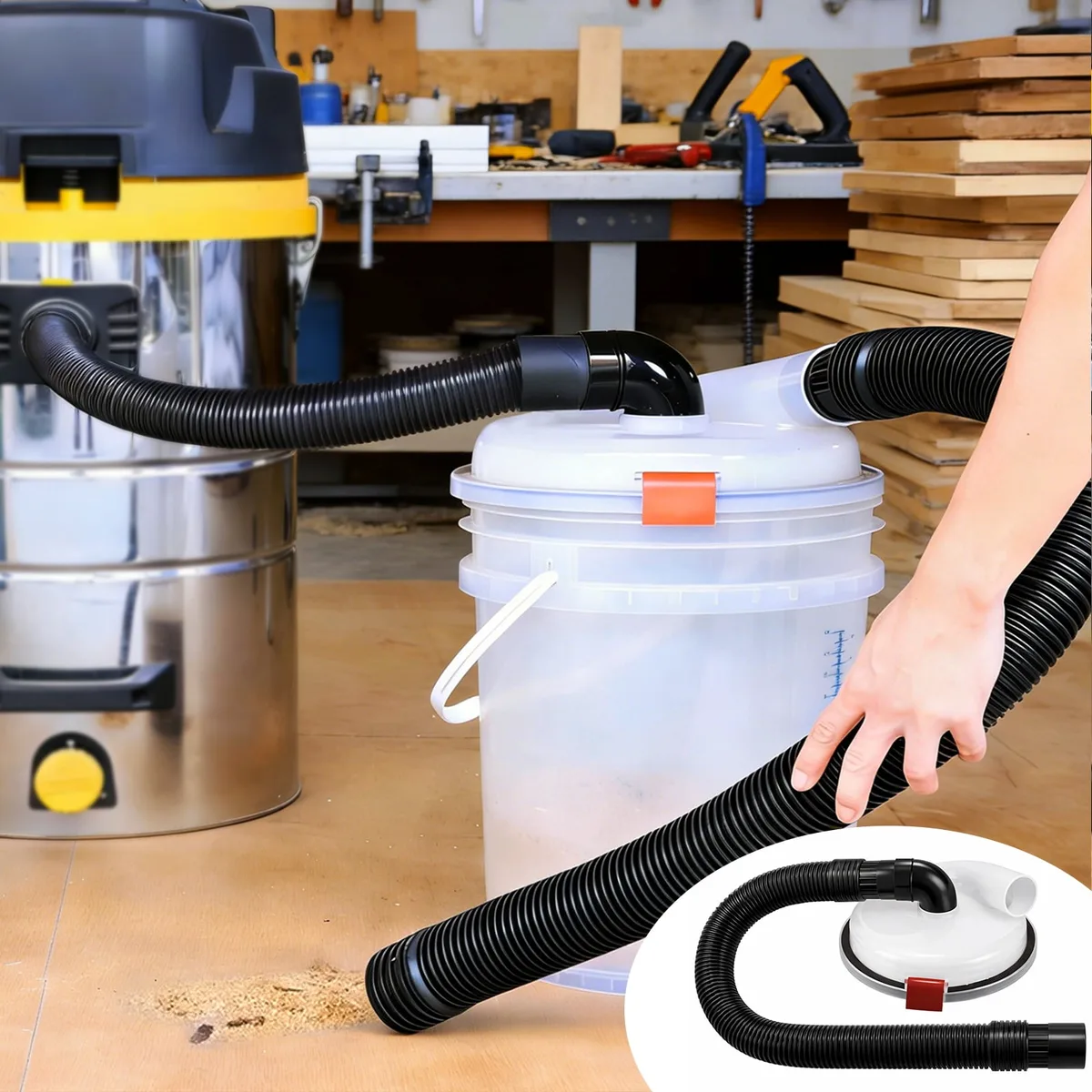
Image source: Bing (Web (fair-use with source credit))
Run a quick leak test before you start. Hold your hand over the hose end and feel along the tank seams. Any air pushing out means a poor seal.
The same airflow-loss pattern causes a pool vacuum hose collapse when water flow drops. Seals and suction always go hand in hand.
Budget Reality: What You Need to Buy (and What You Should Never Cheap Out On)
For a standard shop vac, three parts do the heavy lifting. A HEPA cartridge runs $25 to $60 depending on brand. A pack of fine-dust bags costs $10 to $20.
A cyclone separator is the biggest upfront expense at $30 to $80.
| Item | Typical price | Why it matters | The catch |
|---|---|---|---|
| True HEPA cartridge | $25–$60 | Traps 99.97% of particles at 0.3 microns | Many "HEPA-type" filters don't meet that spec |
| Fine-dust bag | $10–$20 per pack | Protects the filter and gives you sealed disposal | Uncoated paper bags rip open under silica |
| Cyclone separator | $30–$80 | Keeps the HEPA filter from clogging in minutes | Thin plastic housings crack when dropped |
Never buy anything labeled "HEPA-type" or "HEPA-like." Those words mean nothing. Look for a stated micron rating or a certification mark like EN 1822 or ISO 29463.
Verified buyer feedback also flags cheap cyclones that leak at the lid seam. Spending an extra $15 on a well-sealed unit usually pays for itself in extended filter life. The same principle applies to robotic pool cleaners, where regular maintenance is the main factor in how long the equipment lasts.
The OSHA Connection: Legal Limits, Not Just Comfort
This isn't just a home-workshop topic. OSHA's Respirable Crystalline Silica Standard (29 CFR 1926.1153) covers any workplace where concrete gets cut, ground, or drilled. The exposure limit is 50 micrograms per cubic meter over an 8-hour shift.
That's a tiny amount. One short pass with an angle grinder in an enclosed room can blow right past it.
The standard includes Table 1, which specifies compliant control methods for common tools. For hand-held angle grinders, for example, the accepted setup includes a vacuum with a HEPA filter rated at 99.97% or better. That's the same threshold discussed throughout this article.
For a DIYer, OSHA won't send anyone to your basement. But the limit still works as a safety benchmark. If you're doing serious concrete work with a standard shop vac, wear an N95 or N100 respirator at minimum.
It's the only real protection if your vacuum setup isn't perfect.
Common Mistakes That Turn a Cleanup into a Health Hassle
- Leaving the stock filter in place. It passes respirable silica straight through the exhaust. Always switch to HEPA.
- Skipping the dust bag. The HEPA filter loads up twice as fast, and disposal turns into a dusty mess.
- Emptying the tank indoors. The moment you unseal the lid, a dust cloud blooms. Take the whole tank outside or remove the sealed bag.
- Vacuuming dry dust into a wet tank. It hardens into concrete. Once that cures, you're chipping it out with a screwdriver.
- Hovering the hose above the dust. That stirs fine particles back into the air. Keep the nozzle low and move slowly.
One more error people make is "fixing" a clogged HEPA filter with tape or a hard shake. If the media is torn or visibly caked, replace it. Nothing restores its rated efficiency after that.
The future of any shop vac depends on regular care. The same applies on the pool side of things. Owners who keep up with routine robotic pool vacuum maintenance see far fewer motor and filter failures.
Real-Life Scenario: One-Off DIY Job vs Everyday Crew Work
Let's split this by real usage. Drilling four holes to mount a TV is a completely different job than grinding 200 square feet of slab. Your setup should reflect that.
One-off DIY job. A HEPA-equipped shop vac is plenty. Use the wet method where possible and rinse the tank immediately. Expect 15 minutes of setup and cleanup, and the filter will last through many future projects.
Weekend remodel. Add a cyclone separator and dust bags. The cyclone stops the HEPA filter from clogging after every few minutes of work. Plan on replacing the cartridge every two to four major jobs, depending on how much cutting and grinding you do.
Everyday crew work. A HEPA shop vac burns through filters too quickly. This is where M-class or H-class dust extractors earn their price. They include auto-cleaning filters, sealed housings, and much tighter tolerances.
For a full-time crew, that cost is a business necessity.
The same build-versus-buy logic applies to pool vacuums. A cheaper unit handles light work, but you start weighing whether the upgrade is worth the money once the workload grows. Match the tool to the particle size you're fighting.
FAQs: Quick Answers to the Follow-Up Questions
Can I use my regular shop vac for concrete dust?
Yes, but only after upgrading the filter. A standard pleated cartridge passes fine crystalline silica straight through the exhaust. Install a true HEPA filter and a fine-dust bag before any dry pickup.
That setup handles occasional DIY work safely.
What's the difference between a HEPA filter and a regular filter?
A regular pleated filter catches particles down to about 5 microns. A true HEPA filter catches 99.97% of particles at 0.3 microns. That difference matters because respirable silica dust sits in that smaller range.
Check labels for a stated micron rating.
How do I clean a HEPA filter after concrete dust?
Tap it gently outside to release loose dust. Never use compressed air, which drives particles deeper into the media. If the filter looks caked or smears when wiped, replace it.
Silica dust embeds quickly and won't shake out completely.
Is wet vacuuming safer than dry vacuuming for concrete dust?
Yes for air quality, but riskier for your tank. Water binds the silica so it can't float into your lungs. Rinse the tank, hose, and nozzle immediately afterward, because concrete slurry hardens fast.
A dry setup with HEPA filtration still beats a wet tank cleanup.
The Bottom-Line Decision Guide
Here's the simple version. For occasional DIY work, upgrade your shop vac with a true HEPA filter and a dust bag. For weekly projects, add a cyclone separator to protect the filter.
For daily crew use, buy an M-class or H-class dust extractor.
The filter is the whole system. A shop vac can pick up concrete dust, but its safety depends entirely on what catches the fine silica before it reaches the exhaust. Rooms look clear while dangerous particles float for minutes.
Use the wet method whenever the job is small. Wear an N95 or N100 respirator if there's any doubt about your setup. And always dispose of the sealed bag rather than opening the tank and breathing a fresh dust cloud.
A sudden loss of suction usually points to a clogged filter or a bad gasket. The same troubleshooting logic applies to any sealed vacuum system, whether it's a shop vac or a pool cleaner that keeps losing suction. Check the filter, check the seals, and replace anything that's worn.

