

Can robot vacuums clean stairs? Not the way most people hope. A standard robot vacuum will clean the flat landing at the top and bottom of your stairs, but the steps themselves are off limits.
Cliff sensors stop the robot at the edge so it doesn't tumble down, and that means each stair tread stays out of reach.
That's frustrating when you live in a two-story home. You're still hauling a full-size vacuum up and down, or bending over each step with a handheld. Manufacturer specifications indicate that most robot vacuums weigh between 6 and 12 lbs and stand roughly 3 to 5 inches tall.
Size and weight aren't the real issue. The sensor logic is. Let's walk through what these robots can and can't do, and where you'll still need a handle.
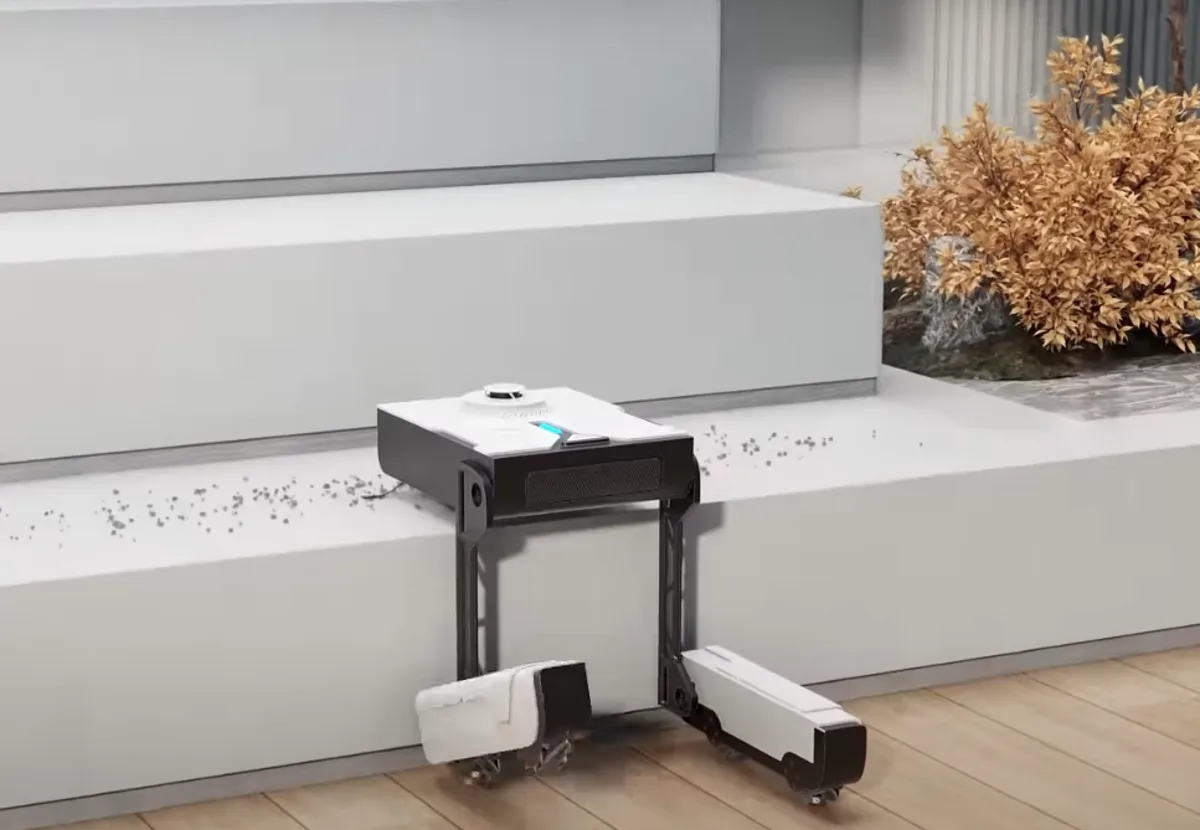
Image source: Bing (Web (fair-use with source credit))
The Short Answer: Yes for Landings, No for the Steps
The short answer is yes, but only up to a point. A standard robot vacuum handles landings and hallways. It won't climb steps, and it won't clean stair treads.
You can carry it up and place it on a step. A spot clean will tidy that one tread. That's a manual process, not automation.
As of 2026, consumer robot vacuums still cannot climb stairs on their own.
Why Most Robot Vacuums Stop at the Top Edge
If you've ever watched a robot vacuum approach a staircase, you've seen the dramatic stop at the edge. That's not the robot being polite. It's a row of infrared or laser sensors called cliff sensors, or drop sensors.
They shoot a beam downward. When the beam doesn't bounce back, the robot reverses course.
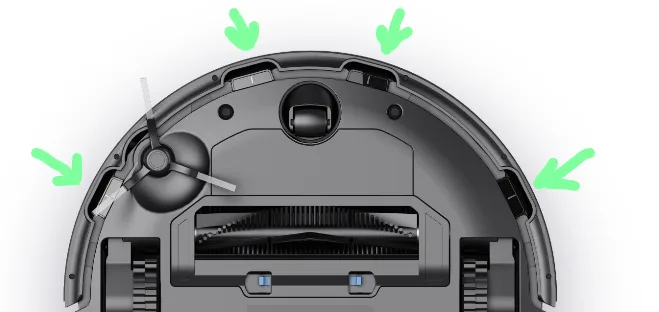
Image source: Bing (Web (fair-use with source credit))
Most standard robot vacuums have between four and eight of these sensors, depending on the model. They sit around the bottom edge of the chassis. This setup works fine on normal floors.
On stairs, though, the robot can't tell a cliff from a step, so it treats the whole drop as danger.
Cliff sensors are designed for safety, but they're not perfect. Dark or glossy stair treads can confuse them, causing the robot to brake too early or, in rare cases, keep going. Dust buildup can also blind the sensors over time.
If you have open-riser stairs, where you can see through the gaps between steps, the sensors will treat every gap as a cliff, so the robot avoids more area than it cleans.
A traditional upright vacuum doesn't have this problem. You angle the nozzle over the edge and clean each step one by one. That's why many homes end up with a hybrid setup: a robot for the floors and a manual vacuum for the steps.
If you're weighing whether that's the right call, our honest take on upright vacuums lays out the real trade-offs.
Do the Specs Matter? Which Features Actually Decide
Before you assume a robot vacuum can't touch your stairs, you should know which specs actually matter. Some features make a real difference. Others just look good on the box.
Here's a quick breakdown of the features that affect stair-related cleaning.
| Feature | Does It Matter for Stairs? | Why |
|---|---|---|
| Cliff sensors | Yes | These keep the robot from falling, but also block stair cleaning. |
| Navigation system (LiDAR / vSLAM) | Somewhat | Good mapping lets you set no-go zones near stairs and run zone cleans on landings. |
| Battery runtime | Yes | Cleaning multiple floors means multiple trips, which drains the battery faster. |
| Suction power | No | Once the robot can't reach the treads, suction on the steps is irrelevant. |
| Edge brushes | Somewhat | They help sweep debris off the top landing toward the vacuum, but they don't clean the drop edge. |
| HEPA filtration | Not for stairs | It helps with allergies, but it doesn't change how the robot handles steps. |
The feature that matters most for stair safety is the cliff sensor array. Robots with four sensors usually do the minimum. Robots with six or eight sensors tend to detect edges earlier and more consistently.
That's worth checking if you want the robot to run near a staircase without worrying about a fall.
Multi-floor mapping is also important. If you own a two-story home, you want the robot to remember a separate map for each floor. That way you can carry it upstairs and start it without relearning the layout.
Without multi-floor mapping, the robot may act confused and need to remap the whole level.
Filtration doesn't help with stairs, but it's still worth a thought. Many robot vacuums now include HEPA filters, which is great if you have allergies. If you're comparing models and you want better indoor air quality, our top HEPA vacuum picks give you a strong starting point.
Just don't expect the filter to solve the staircase problem.
No-go zones are another spec that shines here. You can draw a line across the top of the stairs in most apps. The robot will treat that line as a wall and stay away from the edge.
That's the safest setup for any staircase.
Decision Tree: Which Path Fits Your Home?
Now that you know how the tech works, here's the decision tree. Your next step depends on what you already own, what you're willing to spend, and how much manual effort you can live with.
Path 1: You Already Own a Standard Robot Vacuum
If you already have a robot vacuum at home, the simplest move is to use it for what it's good at. Let it clean the landing, the hallway, and the area at the bottom of the stairs. Then pick up a handheld or stick vacuum for the steps.
Set a no-go zone across the top edge of the stairs before you run it. Most apps make this easy. You can also draw a boundary around the stair opening at the bottom, since the robot doesn't need to clean that open drop area either.
This is the most realistic path for most people. It won't give you a fully automated staircase, but it cuts your manual cleaning time by a lot. For the steps themselves, many people find lightweight car vacuums easy to carry upstairs and handy for tight treads.
Path 2: You're Shopping for a Robot That Can Handle Stairs
If you haven't bought a robot yet and stairs are your top concern, set realistic expectations. Consumer robot vacuums still don't climb stairs. There are stair-climbing concepts and prototypes, but they're expensive, heavy, and not widely available.
That means you're choosing between two compromises. Buy a standard robot and use it on flat surfaces, or buy a stair-climbing model and treat it as a specialty tool. The stair-climbing options you'll find are mostly aimed at industrial use, and they cost well above typical robot vacuums.
If you decide to go with a standard model, focus on features that help with multi-floor cleaning: good mapping, easy carry weight, and strong battery life. Also consider your floor type. If you have LVP or other hard surfaces on your landings, you'll want a model that handles those floors well.
Our LVP-safe robot options cover the features to compare. But no spec sheet will give you a vacuum that walks down the stairs on its own.
Path 3: You're Willing to Carry It Between Floors
This path is for people who don't mind a little manual work in exchange for automation on each floor. You keep one robot, and you physically carry it up and down the stairs when you want to clean the upstairs level.
The workflow looks like this:
- Carry the robot upstairs.
- Place it on the landing.
- Open the app and start a zone clean.
- Let it finish the entire upstairs floor.
- Carry it back down when it's done.
This works best in smaller homes where carrying a 6 to 12 lb robot isn't a big deal. It also requires a dock on the main floor, since the robot will need to return there for charging. If you only have one dock, you'll need to move it as well, which makes the whole process less convenient.
Still, many owners find this is the best compromise between automation and cost.
Stair Design Factors That Change Everything: Open Risers, Spiral Stairs, and Dark Treads
Stairs aren't all the same. The design of your staircase can change how a robot vacuum behaves at the edge, and it can also change how easily you can clean the steps manually.
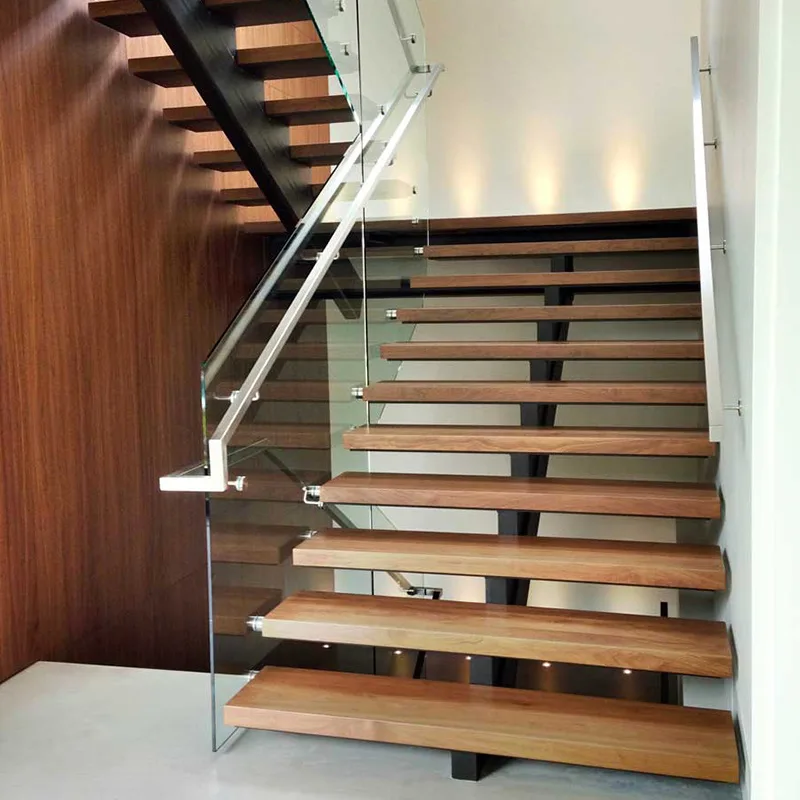
Image source: Web (Bing) / primaindustry.en.made-in-china.com (Web image (fair-use with source credit))
- Open-riser stairs. These have visible gaps between treads. A robot's cliff sensors see those gaps as open drops and stop well before the actual edge.
- Spiral staircases. Tight curves confuse most navigation systems. The robot may bump into the center post, get stuck on narrow wedge-shaped treads, or refuse to approach entirely.
- Dark or glossy treads. Cliff sensors use reflected light to detect the floor. Dark surfaces absorb the beam, and glossy surfaces reflect it unpredictably. Both cause false triggers.
- Deep-pile carpet on stairs. The sensors sit low on the chassis. Deep carpet can block them, which is a safety risk because the robot might not detect the edge at all.
- Narrow landings. If your upstairs landing is barely wider than the robot, it may struggle to turn around and could bump over the edge.
The safest approach, regardless of stair design, is to use a physical barrier or an in-app no-go zone. Don't rely on the sensors alone. For carpeted stairs, you also need to think about pile height and the right power head setting.
Getting the height wrong can leave your stair carpet looking streaked. Our guide on carpet height and vacuum settings explains the basics clearly.
Step-by-Step: How to Safely Use a Robot Vacuum Around Stairs
Start by opening the app and drawing a no-go zone across the top of the stairs. That keeps the robot from getting close enough to the edge to fall. Do the same at the bottom, unless the bottom opens into a large open room.
Next, clean the cliff sensors. They sit on the underside of the robot, near the wheels. A quick wipe with a dry cloth removes dust that can blind them.
Do this before every run.
- Set a no-go zone at the top and bottom of each staircase.
- Clear toys, cables, and rugs from the landing before cleaning.
- Run the robot once in front of you to see where it stops.
- If it creeps too close to the edge, widen the no-go zone.
To clean an upstairs floor, carry the robot up and place it on the landing. Start a zone clean from the app. Let it finish, then carry it back down to the dock.
The Biggest Risks and How to Prevent a Fall Down the Stairs
A falling robot is the biggest risk. A 10 lb robot can crack on hardwood, break on tile, or take a chunk out of drywall when it bounces. Worse, small children or pets often stand at the bottom of stairs.
Cliff sensors fail more often than you'd think. Dust buildup, dark treads, glossy surfaces, and direct sunlight can all trick them. That's why you should never rely on sensors alone.
Physical barriers work better. A lightweight board, a box, or a folded towel placed at the top edge stops the robot before it gets close.
Firmware updates help too. Manufacturers push navigation fixes that improve edge detection. Check the app every month for updates.
And before buying a used or off-brand robot, look up the model in the U.S. Consumer Product Safety Commission database for recall history. Independent safety testing under UL standards covers edge detection for these devices, but that doesn't guarantee every drop will be caught.
You still need physical barriers and no-go zones.
Common Mistakes That Mess Up Stair Cleaning
The most common mistake is assuming the sensors make stairs a non-issue. They don't. Sensors reduce falls, but they don't eliminate them.
Letting a robot run overnight near an open staircase is asking for trouble.
Another mistake is skipping the no-go zone. Many owners think the robot will just stop, so they don't draw boundaries. Then when the sensor misses a dark tread, the robot goes over the edge.
That's a costly lesson.
People also forget to update their floor maps. After moving a sofa or adding a rug, the robot's map becomes outdated, and it may take a new path toward the stairs. Re-run the mapping function after any major furniture change.
Finally, don't try to block stairs with everyday objects like a shoe or a small box. The robot will push them aside. Use a heavy barrier or a proper in-app boundary.
Manual Stair Cleaning vs. Robot-Only: The Honest Comparison
Let's be honest about what each approach delivers. A robot alone cleans landings and hallways, but not steps. Manual cleaning covers everything, but takes your time.
The best setup for most homes is a hybrid.
| Option | Stair Coverage | Effort | Best For |
|---|---|---|---|
| Robot only | Landings only | Very low | Single-level homes |
| Robot + manual | Full stairs | Medium | Two-story homes |
| Manual only | Full stairs | High | Small homes with few steps |
If you have carpeted stairs, an upright vacuum with a hose attachment usually gives the deepest clean. Aggregated reviews consistently praise uprights for stair power and edge control. For homes with more than a few steps, seeing how upright vacuums handle large spaces can help you decide.
For quick stair touch-ups, a compact handheld is easier to carry than a full-size vacuum. Many of the best lightweight car vacuums work perfectly on stairs.
What Stair-Climbing Robots Cost (and Whether They're Worth It)
Standard robot vacuums range from $200 to $1,500. Stair-climbing models, where they exist, push past $1,800 and still aren't mainstream. Consumer reviews of these units report heavy designs, slow battery burn, and navigation quirks.
As of 2026, no major manufacturer sells a practical robot that climbs carpeted stairs safely in a normal home. The few prototypes are more about proving the tech than solving your cleaning problem.
Here's the math. A solid robot vacuum for landings costs about $400. A good cordless handheld for the steps costs $100 to $200.
Add one upright for deep cleaning and the total stays near $700. That's far less than a single stair-climbing unit, and you get better results on every surface.
If you already own a robot, the cheapest upgrade is a handheld, not a second robot. Buy the handheld, carry the robot upstairs, and you've automated most of the work without a huge investment.
Your Decision Guide: What to Do Next Based on Your Setup
If you own a standard robot vacuum, set no-go zones at the stair edges and keep a handheld for the steps. If you're shopping, buy a robot with strong multi-floor mapping and accept that you'll carry it upstairs manually. If you live in a two-story home, skipping the second robot and buying a cordless handheld is the most practical move.
Maintenance and Long-Term Optimization
Clean the cliff sensors weekly with a dry cloth. Dust and pet hair blind them over time, and a blind sensor can miss a drop edge. Keep the app updated too.
Navigation fixes come through frequently, and they directly improve edge detection.
Re-map your floor after moving furniture. An outdated map can send the robot down a new path toward the staircase. Check the wheels and brush roll monthly for hair tangles.
A clogged brush changes how the robot tracks, making edge detection less reliable.
Real Scenarios: How Others Handle Stair Cleaning
One family in a two-story home uses a standard robot on both landings and a lightweight handheld for eight carpeted steps. Their routine cuts daily cleaning time from 45 minutes to about 15. The robot handles the flat surfaces, and the handheld tackles the treads while they watch TV.
Another owner with open-riser stairs found the robot avoided the staircase entirely. After setting a no-go zone, they stopped worrying about falls. They now use a small car vacuum for the treads, which is light enough to carry in one hand.
Common Questions About Robot Vacuums and Stairs
Can robot vacuums fall down stairs?
Yes, if the cliff sensors are dirty or blocked by deep carpet. Dark or glossy treads can also confuse sensors. Physical barriers and no-go zones are the only reliable safeguards.
Is a stair-climbing robot worth the cost?
No, as of 2026. Models that claim stair-climbing are expensive, heavy, and still unreliable on carpeted steps. A standard robot plus a handheld or upright vacuum costs less and works better.
How do I clean the top landing with a robot?
Draw a no-go zone across the stair edge first. Wipe the cliff sensors. Then start a zone clean from the app.
Watch the first run to confirm it stops well before the drop.
The Bottom Line on Robot Vacuums and Stairs
Standard robot vacuums clean landings and hallway floors near stairs, but they don't climb or clean the treads themselves. That's not a flaw. It's a design choice that keeps them from falling off edges.
Pair your robot with a compact handheld or a quality upright, and every part of your stairs gets cleaned. The robot handles the open floor, you handle the steps, and your whole home stays dust-free without the back strain.

