

Can robot vacuums clean laminate floors? Yes, but the honest answer comes with a long list of conditions. The real question is whether your specific robot can handle laminate without scratching the boards or leaving moisture behind.
That depends on the type of robot, the finish on your laminate, and how carefully you set it up.
Laminate is not solid hardwood. It's a floating floor with a fiberboard core and a printed decorative layer. Most laminate sold today carries an abrasion class rating from AC1 to AC5, set by standards like those from ASTM International.
That rating tells you surface toughness, not water resistance. The water-resistance part is what trips people up.
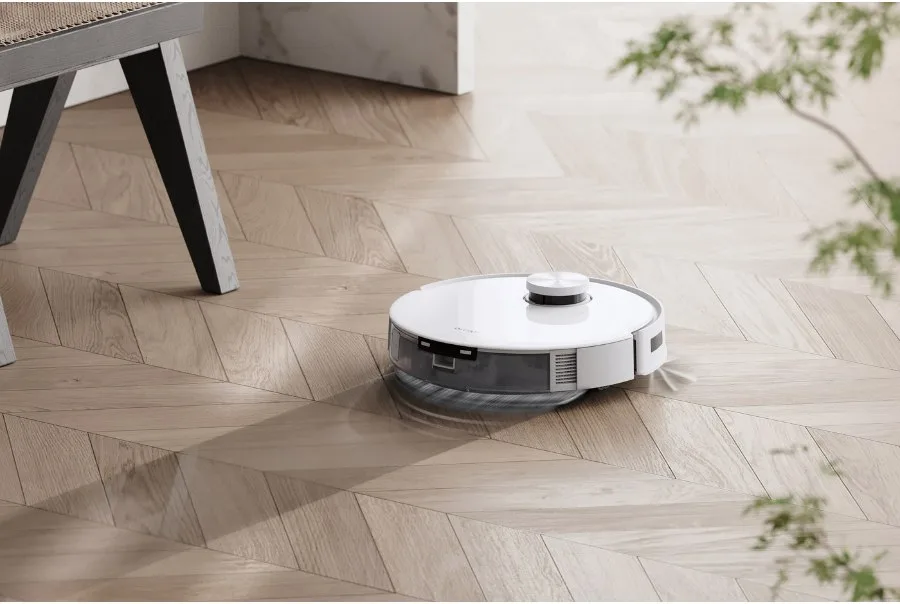
Image source: Web (Bing) / ecovacs.com (Web image (fair-use with source credit))
Quick Answer: Yes, But It Depends on the Robot and the Mop
Can robot vacuums clean laminate floors? Yes, they can, with one condition. Vacuum-only robots are safe on every type of laminate.
Vacuum-mop combos work only when moisture stays low. Use low water flow, block sensitive zones, and check the warranty first.
How Robot Vacuums Actually Work on Laminate
Robot vacuums clean laminate the same way they clean any hard floor. Suction lifts loose debris, a roller loosens stuck bits, and side brushes sweep crumbs away from edges. On carpet, the brush roll needs to dig in deep.
On laminate, it just glides across the surface. That's why most robots do a surprisingly good job with daily dirt.
The key difference comes down to whether the robot has a mop attached. A vacuum-only robot uses no water at all. A robot vacuum-mop combo carries a small tank, and some models let you attach a damp pad.
That one design choice changes the whole risk profile.
There's also the brush roll material to consider. Bristle brushes can trap grit and act like fine sandpaper on a sealed surface. Rubber rollers are gentler.
The same physics explains why bristle brushes can scratch hardwood floors, and the takeaway holds for laminate too.
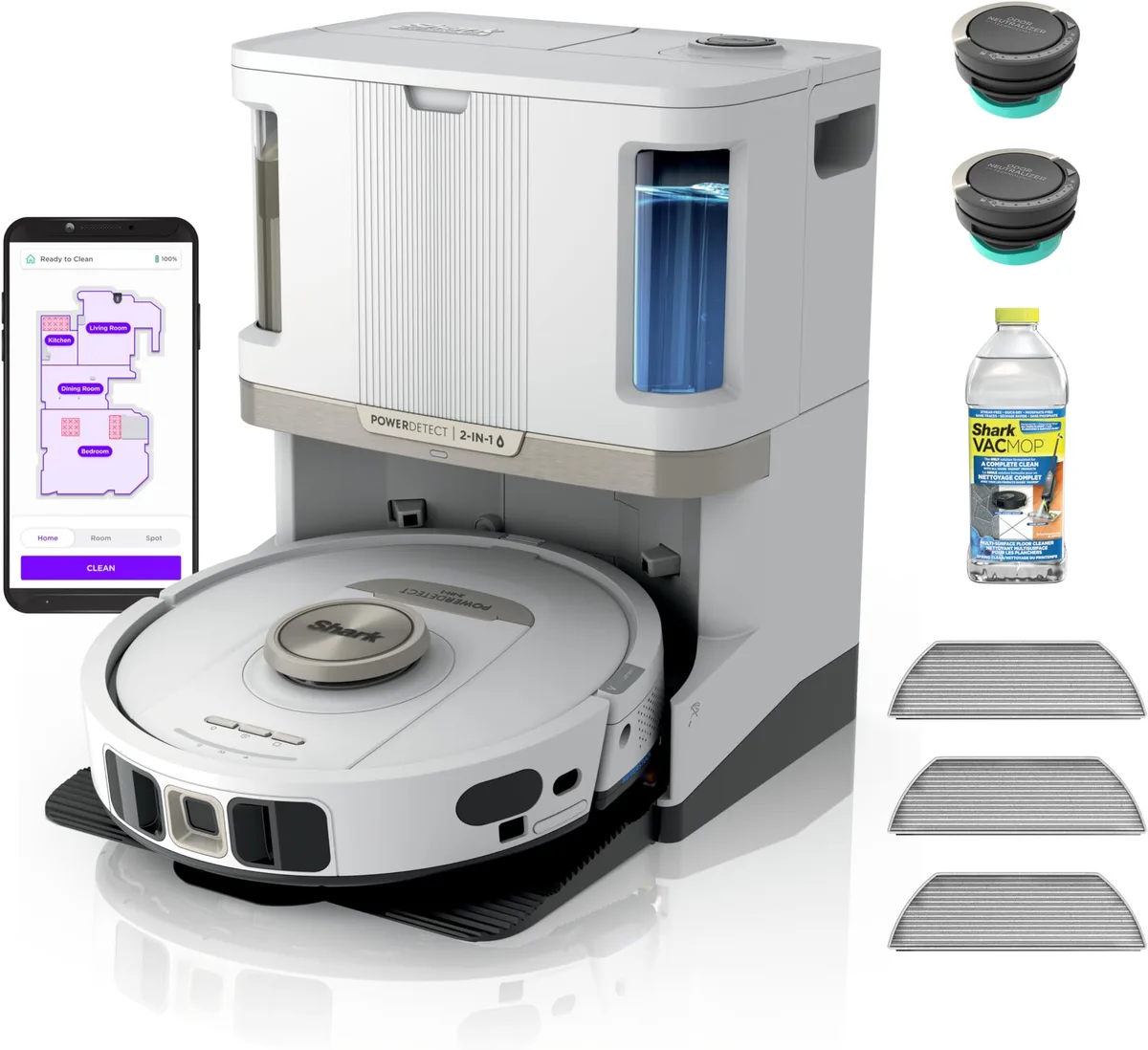
Image source: Web (Bing) / amazon.com (Web image (fair-use with source credit))
The Real Risk: Moisture Damage, Scratches, and Warranty Voids
Here's the thing most people miss. Laminate can be damaged by standing water, and the damage is permanent.
Laminate boards start with a high-density fiberboard core. If water sits on top and seeps into the seams, the core swells. You'll see it as a raised puffiness along the joint lines.
It won't flatten back down, no matter how long you wait.
The European Producers of Laminate Floors has warned for years about using excess water or steam cleaners on laminate. That's not a marketing line. It's based on how the product is engineered.
Most laminate warranties also specifically exclude water damage. If a mop robot causes swelling, you likely won't get a replacement.
Scratches are a slower problem. A robot side brush can flick grit across the floor every pass. Over time, that creates fine swirl marks.
Glossy laminate shows them quickly. Textured or embossed laminate hides them better.
If your floors are luxury vinyl plank rather than laminate, the moisture rules are close but not identical. We cover that separately in our guide to robot vacuums for LVP floors.
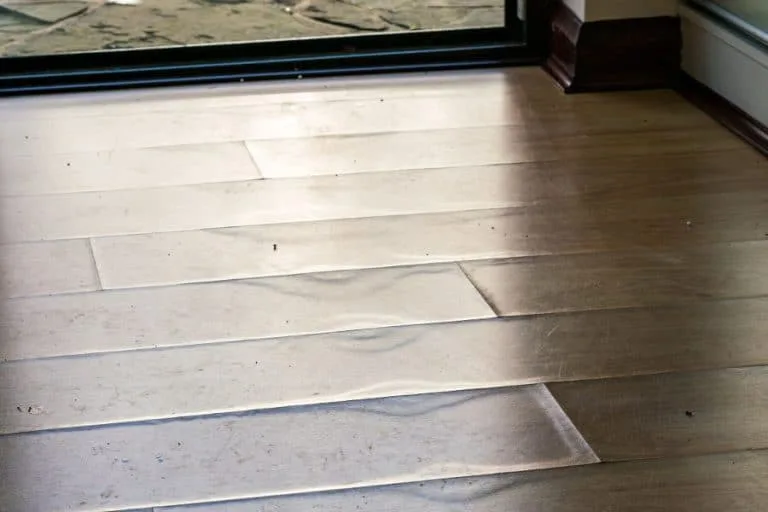
Image source: Bing (Web (fair-use with source credit))
Decision Maker: Pick Your Robot Type
The safest choice depends on what kind of robot you already own or plan to buy. Use this if/then logic:
- If you have a vacuum-only robot, you're safe. Run it as often as you like.
- If you have a combo robot with adjustable water flow, you're fine on sealed laminate, but set the water to low.
- If you have a budget combo with a fixed damp pad, treat it like a vacuum and avoid wet cleaning.
- If your laminate is old, textured, or shows wear near seams, keep water away completely.
Here's a quick table for the main types:
| Robot type | Laminate safety | What it handles best |
|---|---|---|
| Vacuum-only | Safest option | Daily dust, pet hair, crumbs |
| Combo with adjustable water | Safe when set low | Dry vacuum plus occasional damp mop |
| Combo with fixed water drip | Risky on seams | Better used as a vacuum only |
| Mop-only robot | Risky on older boards | Large, sealed laminate areas |
A combo robot is worth considering only if it gives you control. Look for adjustable water flow, not just a "mop mode" button. As of 2026, many premium robots let you set exact water levels in the app.
That level of control makes the difference between a helpful tool and a floor hazard.
Step-by-Step: How to Use a Robot Vacuum on Laminate Floors
Follow this sequence the first time you run any robot on laminate. It takes ten minutes and saves you a lot of regret later.
- Check the laminate care guide first. Your floor's warranty wording tells you whether wet cleaning is allowed. When in doubt, follow the EPLF guidance and use the least moisture possible.
- Test one seam in an inconspicuous spot. Put a damp cloth on a seam near a wall or under a cabinet. Wait 20 minutes. If the edge swells or darkens, never use the mop function.
- Set the water flow to the lowest available setting. You want a damp pad, not a wet one. There should be no puddles behind the robot.
- Create no-go zones for sensitive areas. Use the app to block rooms with damaged seams, old laminate, or boards that meet carpet transitions.
- Remove the mop pad for daily runs. For routine vacuum passes, take the mop bracket off or switch to vacuum-only mode.
- Let the floor dry after mopping. A damp pad pass usually dries in 30 to 60 minutes. Keep foot traffic off until it does.
What Robot Vacuums Do Well on Laminate
On laminate, a robot vacuum earns its place. The surface is smooth, so the robot doesn't have to fight deep carpet pile. It can make several passes in the time it takes a manual vac to do one room.
Robots are also excellent for consistent maintenance. A scheduled daily run keeps dust, pet hair, and tracked-in grit from building up. That alone prevents a lot of the scratching people blame on the robot.
If allergies are a concern, many models use HEPA filters. That's a real advantage over sweeping, which just pushes dust around. We've rounded up top-rated vacuum options for allergen control if you want to dig deeper into specific models.
They also fit under low furniture. Couches, beds, and cabinets typically leave enough clearance for a robot to slide underneath and pull out dust bunnies you'd never reach otherwise.
What They Do Poorly or Can't Do
Let's be honest about the limits. A robot vacuum can't scrub away dried-on grime. It can't get into tight corners with the same angle as a manual tool.
And a robot mop can't deep-clean like a person on hands and knees.
The biggest weakness is spot cleaning. If something spills, you still need a cloth or a mop. Waiting for the robot's scheduled run is a mess you don't want.
Robots also leave streaks when the mop pad is dirty. A grimy pad just spreads the grime around. That's why you have to wash it after every wet cycle.
That's one reason a traditional upright still makes sense for deeper sessions. More suction and more control matter when you're doing a full clean rather than daily maintenance.
Mistakes That Damage Laminate (and How to Avoid Them)
Most laminate damage from robots comes down to a handful of avoidable mistakes.
- Running a mop combo on high water flow. This is the number one cause of seam swelling.
- Mopping with a dirty pad. You're polishing dirt into the surface.
- Letting the robot cross wet transition strips from a kitchen or entryway. That drags water across laminate seams.
- Ignoring visible wear. If the boards already show wear near the edges, they're not sealed anymore.
- Using a steam mop anywhere near laminate. Steam is too hot and too wet for the core.
Set your robot's water flow low, and you avoid most of these. The rest is just paying attention.
Maintenance and Long-Term Care Tips
A robot needs the same maintenance as any other vacuum. The routine upkeep keeps it running well and keeps your floors safe.
Clean the brush roll and side brushes every week or two. Hair and thread wrap around the axles and reduce cleaning efficiency. Worse, they can trap grit against the floor.
Wash the mop pad after every single wet cycle. A damp pad left to sit grows bacteria and smells. The pad also picks up fine debris, and you don't want that dragged over your floor the next time.
Dry the water tank and mop bracket between uses. Standing water in the tank can develop a film, especially in warm weather.
Check the robot's sensors and wheels occasionally. Worn wheels can collect grit and leave scuff marks. A quick wipe prevents that.
Finally, replace worn parts before they become a problem. Brush rolls, filters, and pads all wear out. Using an old, brittle brush roll on laminate is asking for micro-scratches.
Costs, Specs, and What Features Actually Matter
Laminate floors don't need a flagship robot. The features that matter are water control, brush material, and mapping. Suction power is less important on a smooth surface.
Budget robots land around $150 to $400. Mid-range combo models run $400 to $800. Premium robots with self-emptying bases go up to $1,200.
You don't need the pricey ones for laminate. You need adjustable water flow and a rubber brush roll.
| Feature | Why it matters on laminate |
|---|---|
| Water flow control | The single most important safety feature |
| Rubber brush roll | Gentler than bristle on sealed surfaces |
| No-go zones | Blocks wet cleaning from sensitive areas |
| Suction power | 1,500 to 2,500 Pa is plenty on hard floors |
| Battery runtime | 90 minutes covers most homes |
Laminate wear resistance is graded AC1 through AC5 under ASTM International standards. AC3 is the sweet spot for most homes with pets or kids. If you're buying a robot and a new floor together, aim for AC3 or higher.
Frequently Asked Questions
Can a robot vacuum scratch laminate floors?
Yes, but usually indirectly. The brush itself rarely scratches. The real problem is grit.
A robot picks up abrasive particles and drags them along the surface. Rubber brush rolls and frequent cleaning reduce the risk. If you keep the floor reasonably clean, scratches stay minimal.
Is wet mopping with a robot safe on laminate?
It can be safe on newer, well-sealed laminate if the water flow is set to low. The pad should feel damp, not wet. On older, textured, or damaged laminate, skip wet mopping entirely.
The seam swelling risk is too high.
What's the safest robot vacuum for laminate?
A vacuum-only model with a rubber brush roll and good mapping is the safest choice. It uses no water at all. If you want a combo robot, choose one with adjustable water flow and reliable no-go zones.
That combination gives you the most control.
Do I need a self-emptying base for laminate?
No. A self-emptying base is about convenience, not floor safety. It reduces how often you empty the dustbin.
If you have pets or a large home, it's worth the price. For a small laminate apartment, it's overkill.
Can I use a robot mop on old laminate?
Old laminate is a gamble. Once the surface wears thin near the seams, moisture can get into the core. If the boards are more than ten years old or you notice swelling anywhere, keep the mop off.
Use vacuum-only mode and clean manually with a barely damp mop.
Final Decision Guide: What You Should Do Based on Your Situation
Here's the plain-language version of everything above:
- If you have a vacuum-only robot, you're clear. Vacuum freely and spot-mop by hand.
- If you have a premium combo with app water control, you're likely fine. Set the water to low and use no-go zones.
- If you have a budget combo with a fixed damp pad, treat it as a vacuum. Avoid the mop function on laminate.
- If your laminate is embossed, textured, or older, keep moisture away entirely.
- If you're shopping now, buy for water control and brush material first. Everything else is secondary.
Robot vacuums can clean laminate floors very well. They handle daily dust, pet hair, and the endless crumbs that make hard floors look tired. The secret is simple: keep moisture low, keep the brushes clean, and respect your floor's warranty.
Do that, and your robot will feel like the best cleaning decision you've made in years.

