

Are robot vacuums good for pet hair? The honest answer is yes, but with a catch. They handle daily fur buildup well on hard floors and low-pile carpet.
They struggle with high-pile rugs, stairs, and furniture. If your home is mostly hard flooring and your dog sheds constantly, a robot can genuinely change your routine.
As of 2026, most pet-focused models advertise suction between 2,500 and 8,000 Pa. Anti-tangle rubber brush rolls reduce hair wrap compared with older bristle designs. Manufacturer specifications confirm this matters for long-haired dogs and cats.
Before you buy, it helps to understand how these machines work and where they fall short. Let's start there.
Are Robot Vacuums Good for Pet Hair?
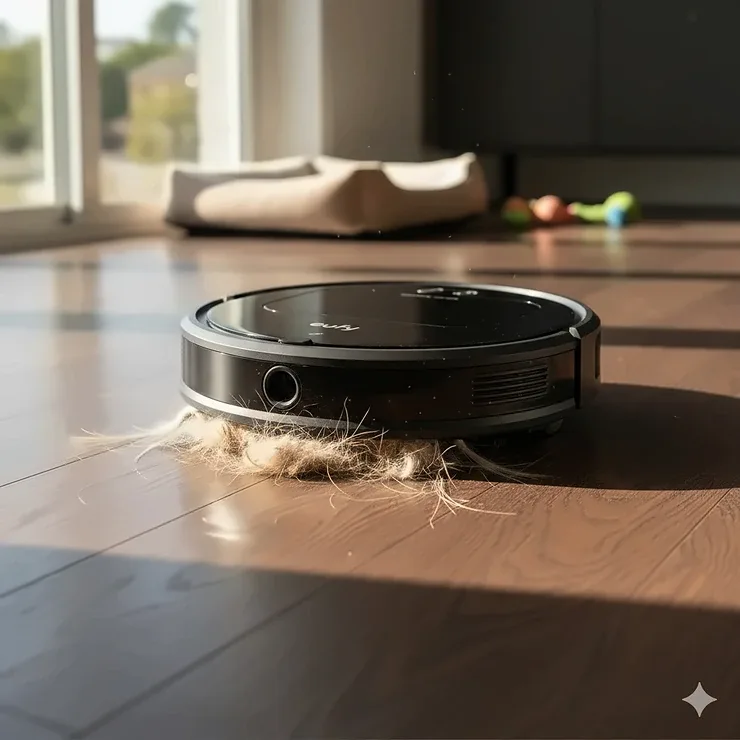
Image source: Bing (Web (fair-use with source credit))
Why This Question Isn't a Simple Yes or No
The answer changes based on your flooring and your pet's coat. Short, coarse fur from a Labrador settles on the surface and gets swept up easily. Long, silky hair from a Golden Retriever or a Maine Coon cat can wrap around brush rollers.
Modern anti-tangle designs handle it much better.
Hardwood, tile, and laminate are a robot's best environment. Fur sits on the surface and gets pulled straight into the suction path. Low-pile carpet works too because the roller can grab hair off the fibers.
High-pile carpet is where robots usually fail.
| Floor type | Robot vacuum performance | What you'll notice |
|---|---|---|
| Hardwood, tile, laminate | Excellent | Fur disappears quickly, minimal tangling |
| Low-pile carpet | Good | Needs regular brush checks, picks up surface fur |
| High-pile carpet or shag | Poor | Hair stays embedded, robot can get stuck |
So before you pick a machine, map out your home. If most of your square footage is hard flooring, you're a strong candidate. If thick carpet dominates and you have a heavy shedder, keep your manual vacuum handy.
These hard-surface robot picks show which models handle those floors best.
Quick Answer: What Robot Vacuums Can and Can't Handle
Are robot vacuums good for pet hair? Yes, on hard floors and low-pile carpet. They handle daily fur buildup well.
They can't replace a full-size vacuum for deep carpets. Anti-tangle rubber rollers make the biggest difference.
Here's what they do well:
- Hardwood, tile, laminate, and low-pile carpet
- Reaching under beds, sofas, and cabinets
- Running on a schedule while you're away or asleep
And what they can't do:
- Stairs
- High-pile carpets and shag rugs
- Furniture, pet beds, and car seats
- Deep extraction of fur embedded in thick carpet
For allergy sufferers, a robot with a sealed HEPA filter helps. If you want stronger dander capture, true HEPA filtration in a full-size vacuum is still the tougher tool.
How Robot Vacuums Actually Pick Up Pet Hair
Robot vacuums pick up pet hair differently than full-size vacuums. They use a smaller motor, a shorter roller, and limited suction. Smart navigation and repeated passes make up for that.
Here's what matters inside the machine.
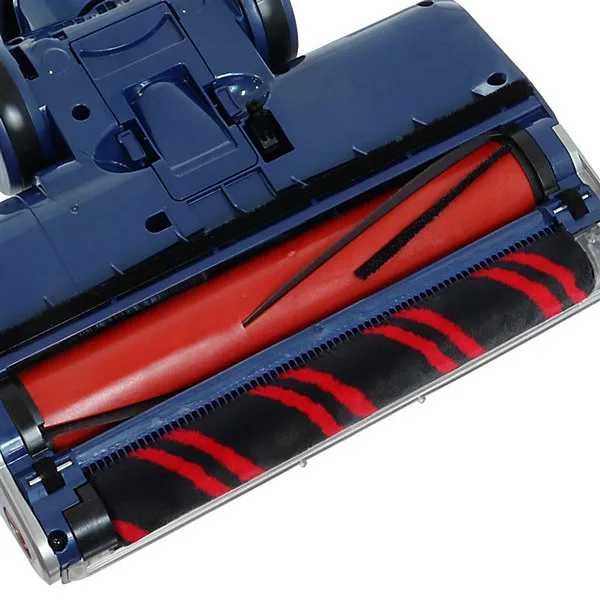
Image source: Web (Bing) / diy.com (Web image (fair-use with source credit))
Brush Roll Types: Bristle vs. Anti-Tangle Rubber
Older robots use bristle brushes. They tangle quickly when a heavy shedder lives in the house. Newer models use a flexible rubber roller with a wave or zigzag shape.
Hair catches on the rubber and slides into the suction path instead of wrapping around the axle.
Manufacturer specifications indicate that rubber rollers, like the one used in many iRobot Roomba models, are shaped to prevent hair wrap. Aggregate reviews from pet owners show that this design cuts brush cleanouts dramatically. Long-haired dogs and cats benefit the most.
Suction Power and Airflow
Suction is measured in Pascals (Pa). As of 2026, budget robots sit around 2,000 to 3,000 Pa. Mid-range models reach 4,000 to 5,500 Pa.
Premium robots advertise 6,000 to 8,000 Pa.
On hard floors, even 2,000 Pa is enough to pull fur off the surface. On carpets, agitation matters more than raw suction. A robot with 5,000 Pa but a bristle roller can still miss deeply embedded hair.
Rubber rollers plus high airflow are the winning combo.
Filtration and Dander
Pet hair is heavy and mostly falls to the floor, but dander floats. A robot can stir up dander from carpet fibers while it cleans. That is why filters matter.
Standard foam filters trap the biggest particles. HEPA filters capture finer allergens, but only if the dustbin is sealed. A leaky bin sends dander right back into the air.
If someone in the house has allergies, look for a robot with a sealed HEPA filter. Empty the bin outside when possible. Hair wrapping isn't a robot-only issue, either.
The same thing happens on a full-size vacuum, and clearing the tangled roller is a skill worth learning.
Breaking Down the Main Options
Once you know how robots work, the buying part gets easier. But "robot vacuum" covers a lot of different machines. As of 2026, the main differences are self-emptying, navigation, and price.
| Feature | Budget | Mid-range | Premium |
|---|---|---|---|
| Suction | 2,000 to 3,000 Pa | 3,500 to 5,500 Pa | 5,500 to 8,000+ Pa |
| Brush roll | Bristle | Rubber mix | Anti-tangle rubber |
| Self-emptying base | No | Optional | Yes |
| Pet-waste detection | No | Sometimes | Often |
| Best for | Small hard-floor homes | Pet households with rugs | Heavy shedders with carpets |
Self-Emptying Bins vs. Standard Dustbins
Standard dustbins hold roughly 300 to 800 mL. A Golden Retriever's daily fur can fill one in two or three days. Self-emptying bases dump the bin into a 2 to 4 liter bag inside the dock.
That sounds convenient, but pet fur can clog the base's transfer chute. Check the chute weekly and clear any built-up hair.
LiDAR Navigation vs. Camera Navigation
LiDAR uses lasers to map the room. It works in the dark and plans efficient paths. Camera navigation uses visual sensors to recognize obstacles.
Some camera models can detect pet waste, which is a lifesaver if your dog has accidents. If you have a puppy in potty training, look for a model with both LiDAR mapping and a dedicated pet-waste camera.
Budget vs. Premium
Budget robots work fine on hard floors with small dogs or cats. Premium robots earn their price for large, heavy shedders and carpeted rooms. A $1,000 model with anti-tangle rollers, a self-empty dock, and pet-waste detection is wasted on a cat that barely sheds.
For carpeted homes, an upright vacuum may be a stronger primary tool. Read our honest take on upright vacuums before you commit. Whichever robot you choose, follow battery safety guidance.
The U.S. Consumer Product Safety Commission has published recommendations for lithium-ion batteries in cordless appliances. Don't leave a robot charging unsupervised on a flammable surface.
Side-by-Side Comparison: Robot vs. Manual Vacuum for Pet Hair
So, are robot vacuums good for pet hair compared to a manual vacuum? It depends on the task. For daily fur patrol, robots win.
For deep cleaning, a manual vacuum still comes out ahead.
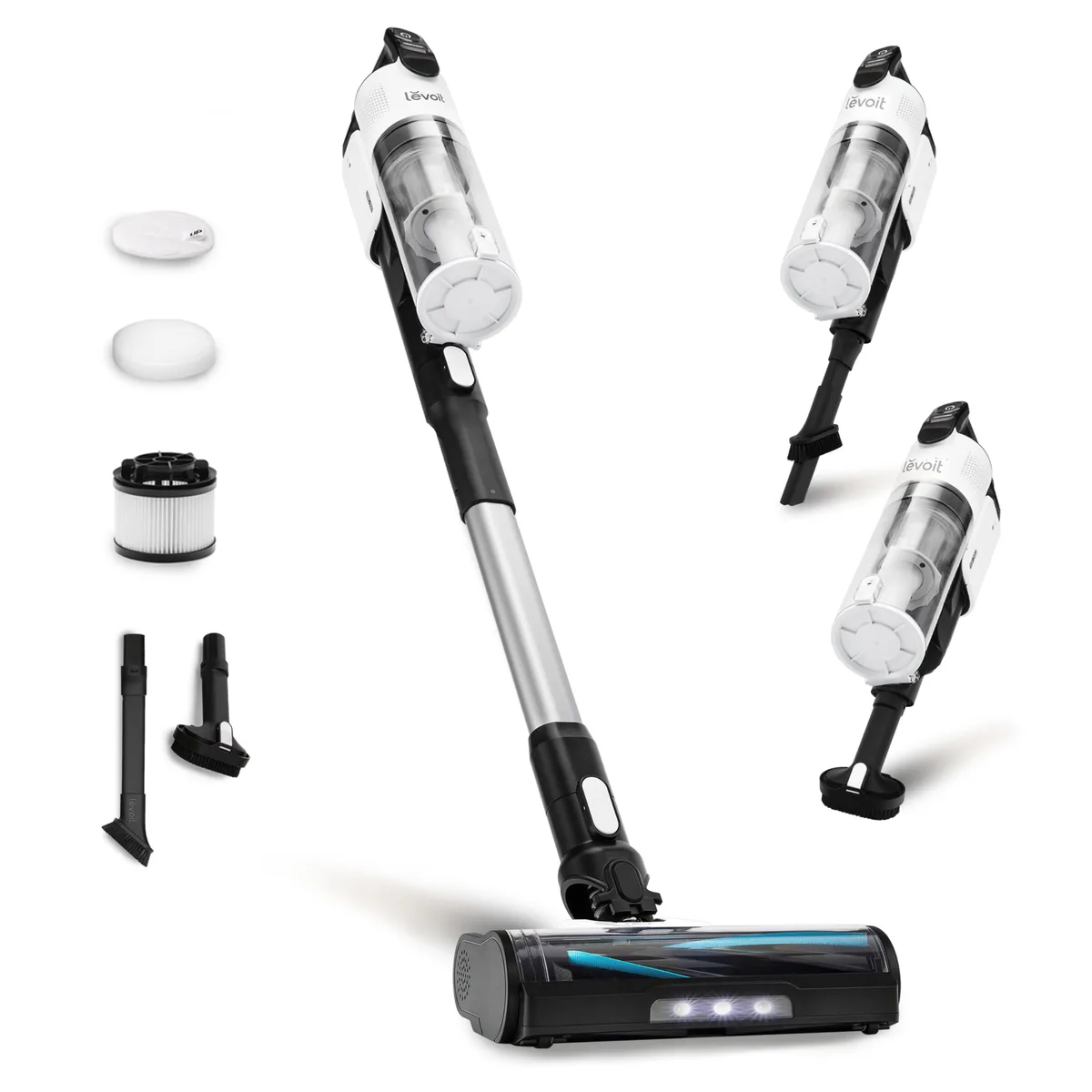
Image source: Web (Bing) / hometosight.com (Web image (fair-use with source credit))
| Task | Robot vacuum | Manual vacuum |
|---|---|---|
| Hardwood and tile fur pickup | Excellent | Good |
| Low-pile carpet | Good | Better |
| High-pile carpet | Poor | Excellent |
| Stairs | Doesn't do them | Good with hose tools |
| Furniture and pet beds | Doesn't do them | Yes with attachments |
| Daily time you spend | Near zero | 10 to 20 minutes |
A cordless stick vacuum is a useful middle ground. It doesn't replace a robot, but it gives you quick pickup on furniture, stairs, and car seats. For a larger carpeted home, an upright is still the hardest worker.
Our larger-home upright guidance explains why that matters.
The strongest setup for serious shedders: run the robot daily and use a manual vacuum weekly. The robot handles the fur that would otherwise end up everywhere. The manual vacuum does the deep extraction that a robot physically cannot.
For apartment dwellers with hard floors and a single cat, a robot alone is enough. For everyone else, a combo saves time and sanity.
Best Use Cases: Who Really Benefits from a Robot Vacuum?
The ideal robot vacuum owner has hard floors, a shedding pet, and not much free time. If that sounds like you, a robot will quickly become your favorite appliance. Aggregate reviews from thousands of pet owners confirm the same pattern: daily robots reduce visible fur dramatically in homes with tile, laminate, and hardwood.
Multi-pet households with cats and dogs see the biggest improvement. Cats shed in short bursts year-round. Dogs blow their coats seasonally.
A robot running daily keeps that fur from building up into tumbleweeds across the room.
Single-level homes are perfect candidates. A robot can map the whole floor in a few runs and clean without supervision. In multi-story homes, you either move the robot between floors or buy two.
Our small home and apartment guidance shows that a robot alone can cover an entire apartment with zero help.
Busy professionals benefit most. A morning schedule means fur gets picked up before you're even out of bed. For someone who travels or works long hours, that convenience is hard to beat.
Who Should Skip Robot Vacuums (and Use a Manual Alternative)
Not everyone should buy a robot vacuum. If your home has high-pile carpet in most rooms, a robot will frustrate you. The motor and roller simply aren't powerful enough to pull embedded fur from deep fibers.
You'll still need a full-size vacuum for decent results.
Stairs are another dealbreaker. A robot can't climb them. If you have a split-level home or multiple staircases, you'll hand-vacuum those areas anyway.
That defeats part of the convenience factor.
Homes with lots of area rugs and tassels cause problems too. Robots catch fringe edges and pull at the fabric. Some models get stuck on the lip between a rug and hard flooring.
You can set no-go zones, but heavy rug coverage makes the robot's route awkward.
Pet owners who prefer deep weekly cleaning can skip a robot entirely. If you don't mind spending 20 minutes vacuuming each week, a traditional upright handles everything in a single pass. Finally, very tight budgets point toward a manual vacuum.
A $150 stick or upright will outperform a $150 robot on pet hair almost every time.
Common Mistakes Pet Owners Make with Robot Vacuums
The biggest mistake is letting the robot run overnight without checking the floor first. A small sock, a phone cord, or a forgotten chew toy can jam the brush roll and halt the cleaning cycle. Worse, the robot may drag a soiled item across clean floors.
Always do a quick sweep before scheduling a run.
Ignoring the brush roll is another common error. Anti-tangle rollers reduce hair wrap, but they don't eliminate it. Long hair from dogs and cats can still loop around the bearing caps at the roller ends.
Check the roller once a week and clear any buildup.
Letting the dustbin overflow hurts performance. A full bin means reduced airflow, which means worse pickup. Some robots pause and ask to be emptied.
Others just keep cleaning with visibly weaker suction. Empty the bin after every run in heavy-shedding households.
Skipping self-emptying base maintenance causes clogs. The transfer chute and bag fill up with fur and dust. When the bag fills, the robot's self-empty cycle fails.
Check the bag indicator and replace it before it reaches capacity.
The most expensive mistake is running the robot during a pet accident. If your dog vomits or has a bathroom mishap, the robot spreads it across the entire floor. A dedicated pet-waste camera helps, but no camera is perfect.
If you smell something suspicious, let the robot skip its cycle.
Maintenance That Keeps a Robot Vacuum Working on Pet Hair
A robot vacuum needs more care than a manual one because it runs more often. The good news is that maintenance takes only a few minutes each week. Build a simple routine and your robot will keep working for years.
| Task | Frequency | What to look for |
|---|---|---|
| Empty dustbin | After heavy runs | Full bin, reduced suction |
| Check brush roll | Weekly | Hair wrap at roller ends |
| Clean filters | Weekly | Dust buildup, clogged mesh |
| Inspect wheels | Monthly | Hair wrapped around axles |
| Replace filter | Every 3 to 6 months | Visible wear, poor airflow |
| Check self-empty base | Every 2 weeks | Clogged chute, full bag |
Start with the dustbin. Open it over a trash can and tap out the debris. Fur clumps together and comes out easily.
Wash the bin with warm water if it gets sticky, but check the manual first. Many bins have sensors that stop working if they stay wet.
The brush roll deserves a weekly check. Spin it by hand and look for hair built up at the ends. Use scissors to snip any wrapped fur, then pull it free.
Rubber anti-tangle rollers shed hair much quicker than bristle brushes.
Filters need attention every week. Tap loose dust off and rinse if the manufacturer allows it. HEPA filters lose efficiency as they clog.
If you notice weaker suction or visible damage, replace the filter early.
Check the side brushes and wheels monthly. Hair wraps around the base of side brushes and can jam the wheel axles. A few cuts with scissors clear most tangles.
Regular wheel checks prevent the most common "robot stuck" errors.
Finally, keep the charging contacts clean. Dust buildup on the base contacts and robot's metal pads prevents proper charging. Wipe them with a dry cloth every couple of weeks.
What Real Pet Owners Notice: Cost, Time, and Cleanliness
Real-world feedback from pet owners paints a consistent picture. The time savings are real, and so are the limitations. Most people report that a robot keeps floors visible fur-free, but they still pull out a manual vacuum for stairs, furniture, and thick carpets.
Cost matters more than most buyers expect. A decent mid-range robot with anti-tangle rollers and a self-emptying base runs $400 to $800. Add replacement filters, brushes, and bags, and the running cost lands around $60 to $120 per year.
That's comparable to maintaining a full-size vacuum.
The biggest sticker shock comes from flagship models. Premium robots with pet-waste detection and LiDAR navigation sell for over $1,000. For a heavy shedding household on mostly hard floors, that money buys real convenience.
For a single cat owner in an apartment, it's wasted.
Time savings follow a clear pattern. Owners who run their robot daily report spending zero minutes on floor vacuuming during the week. They reserve manual vacuuming for a weekly session, usually 10 to 15 minutes for stairs and furniture.
The robot cuts total cleaning time by about 75 percent.
Cleanliness results depend heavily on floor type. Hardwood and tile owners are consistently impressed. Carpet owners with thick pile report that the robot handles surface fur but misses embedded hair.
Those same carpet owners say a manual vacuum every few days is still necessary.
One clear finding stands out: the "fur tumbleweed" problem disappears. Even budget robots catch the loose hair balls that roll across hard floors. That visual improvement is what makes most pet owners feel the purchase was worth it.
FAQs: Pet Hair, Dander, and Robot Vacuum Questions
Will a robot vacuum handle long dog hair?
Yes, if you choose an anti-tangle rubber brush roll. Long hair wraps around bristle rollers and jams them. Rubber designs let hair slide into the suction path instead.
Look for a model with rubber rollers and at least 4,000 Pa of suction for the best results.
Can robot vacuums help with pet dander?
They reduce dander on floors, but only with a sealed HEPA filter. Standard filters let particles escape. Empty the bin outside to avoid spreading allergens.
For serious allergies, pair a robot with a full-size HEPA vacuum for weekly deep cleaning.
How often should I run a robot vacuum for a pet?
Run it daily. A daily schedule keeps fur and dander under control. During heavy shedding seasons, run it twice a day.
A robot with a self-emptying base makes this easier because you won't have to empty the bin every few days.
Do robot vacuums work on high-pile carpet?
Not well. A robot lacks the suction and agitation to pull embedded hair from thick carpet. It will pick up surface fur, but deep hair stays put.
Use a manual vacuum for deep carpet cleaning. If most of your home has high-pile carpet, skip a robot.
Can a robot vacuum replace my regular vacuum for pet hair?
No, not entirely. A robot handles daily maintenance on hard floors and low-pile carpet. A manual vacuum handles stairs, furniture, and deep carpet.
Most pet owners need both. The best setup is a robot that runs daily plus a cordless stick or upright for weekly deep cleaning.
Final Verdict: Is a Robot Vacuum Worth It for Your Pet Hair Setup?
For most pet owners, yes. If you have hard floors or low-pile carpet, a robot will cut your daily cleaning time dramatically. It won't replace a manual vacuum for stairs, furniture, and deep carpet, but it stops the fur from taking over.
Choose a model with an anti-tangle rubber roller, around 4,000 Pa or more of suction, and a self-emptying base if your budget allows. Pair it with a stick or upright for weekly deep cleaning, and you have a system that handles real shedding.

