

Central vacuums are often touted as offering superior power compared to traditional portable vacuums. But is this claim true? Understanding the differences in how each system works, their design, and the technology involved is key to answering whether central vacuums are indeed more powerful.
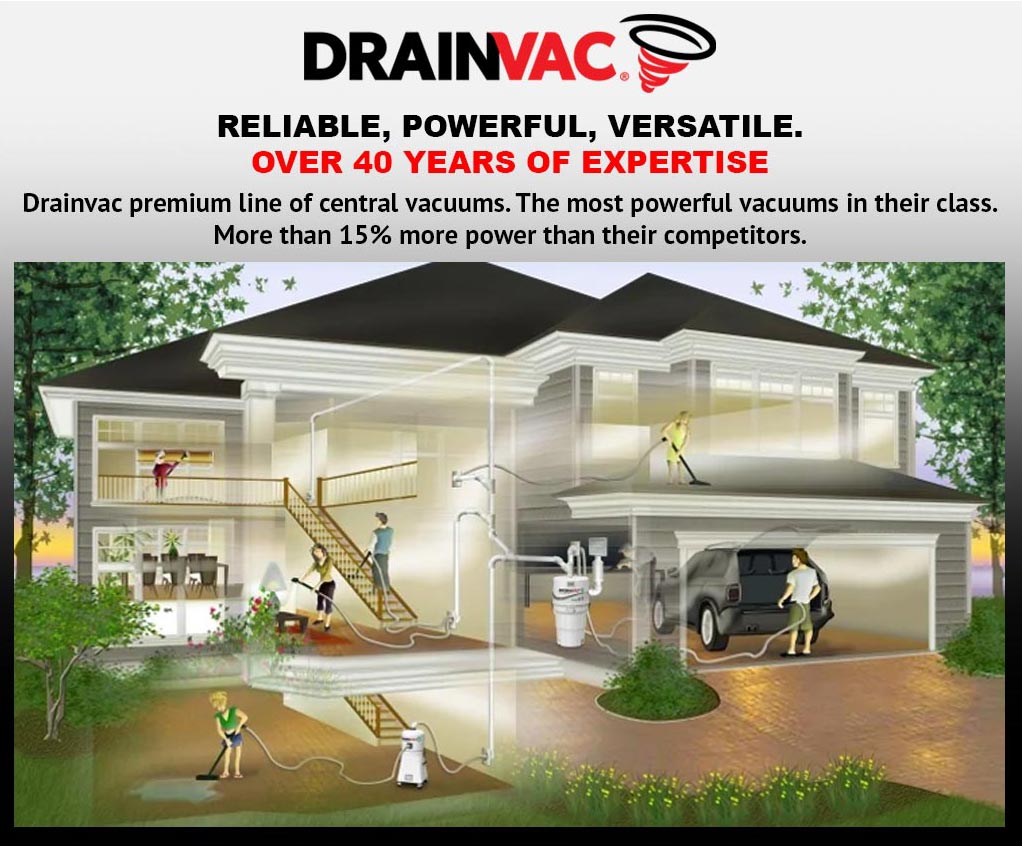
When you compare a central vacuum system to a standard upright or canister vacuum, several factors contribute to perceived and actual power differences. Central vacuums have a larger, stationary power unit, typically installed in a garage or basement, with a network of pipes running through the walls to inlets in various rooms.
This setup allows for a more robust motor and a larger collection receptacle, which can translate to stronger suction.
How Central Vacuums Generate Power
The power of a central vacuum system comes from its central unit. This unit houses a motor and a dust collection bin. Because this unit is not designed to be moved around, manufacturers can install larger, more powerful motors than those found in portable vacuums.
These motors are often two-stage or three-stage, meaning they have multiple fans or impellers that work in sequence to increase airflow and suction.
The larger motor size and design mean central vacuums can generate higher air watts, a common measurement of vacuum cleaner efficiency that combines airflow and suction power. For instance, many central vacuum systems can achieve air watt ratings of 600 or more, while high-end portable vacuums might range from 200 to 450 air watts. This higher air watt number directly indicates greater suction force.
The Role Of Airflow And Suction
Power in a vacuum cleaner is not just about how strong the suction is (lifting power), but also about how much air it moves (airflow). Both are crucial for effective cleaning. Central vacuums excel because their design minimizes restrictions. The pipes running through the walls are generally larger in diameter than the hoses of portable vacuums, allowing for better airflow.
The stationary power unit can also be vented outside, meaning it doesn’t recirculate fine dust particles back into the room, which can be an issue with some portable vacuums. This cleaner exhaust contributes to a healthier indoor environment and can help maintain consistent suction power over time, as the large collection bin fills up more slowly and doesn’t clog the airflow as quickly as a portable vacuum’s bag or smaller bin.

Portable Vacuum Power Limitations
Portable vacuums, while increasingly powerful and technologically advanced, face inherent limitations due to their design. They must be compact and lightweight enough to be easily maneuvered. This often means smaller motors and a design that prioritizes portability over maximum power.
The hoses and internal pathways of portable vacuums are also narrower, which can create more resistance to airflow. Even if a portable vacuum has a strong motor, these design constraints can reduce its overall effectiveness compared to a central system.
Furthermore, as portable vacuums fill up, their suction power often diminishes significantly, requiring frequent emptying or bag changes.
Comparing Power Metrics
When comparing vacuum power, air watts is the most widely accepted metric. It’s calculated by multiplying suction (in inches of water lift) by airflow (in cubic feet per minute) and dividing by 1000. A higher air watt number generally means a more powerful vacuum.
For example, a typical portable vacuum might have an air watt rating between 200-450 AW. In contrast, central vacuum systems frequently offer ratings from 500 AW up to 700 AW or even higher for premium models. This significant difference highlights the potential for greater cleaning efficiency with central systems.
Here’s a look at typical power ranges:
| Vacuum Type | Typical Air Watts (AW) | Key Power Features |
|---|---|---|
| Portable (Upright/Canister) | 200 – 450 AW | Compact motor, smaller dust capacity, potential airflow restriction |
| Central Vacuum System | 500 – 700+ AW | Large, stationary motor, larger dust capacity, less airflow restriction, outdoor venting |
Beyond Raw Suction: Other Factors
While raw suction power is important, other factors contribute to a vacuum’s effectiveness. The design of the cleaning head or nozzle plays a significant role. A powerful motor is less effective if the brush roll or suction port on the cleaning head is poorly designed and doesn’t agitate dirt or seal well against the floor.
Central vacuums often use a wider variety of attachments and powerheads, some of which are electrically driven and designed for deep cleaning carpets. The consistent, high airflow from a central system can make these attachments more effective. However, a high-quality portable vacuum with an excellent powerhead can still perform very well on many surfaces.
Are Central Vacuums Always More Powerful?
While central vacuums generally offer higher raw suction power due to their larger motors and less restricted airflow, it’s not a universal guarantee. A poorly installed or low-quality central vacuum system might not perform as well as a top-tier portable vacuum.
The quality of the pipes, inlets, and the central unit itself all matter.
Conversely, a very high-end, specialized portable vacuum might outperform a budget central system. The effectiveness of the cleaning head and attachments is also critical. A powerful central unit attached to a weak or poorly designed hose and wand assembly will not clean as well as expected.
Installation And Maintenance Impact
The installation of a central vacuum system is crucial for its performance. Incorrect pipe angling, excessive bends, or leaks in the system can significantly reduce suction power at the inlet. Professional installation is highly recommended to ensure optimal performance.
Maintenance also plays a part. While central vacuums require less frequent emptying of their large collection bins, the filters need to be cleaned or replaced periodically. Over time, if filters become clogged, suction power will decrease. Regular maintenance ensures that the system continues to operate at its peak potential.
When Is A Central Vacuum Worth It?
The decision between a central vacuum and a portable one often comes down to lifestyle, home size, and cleaning needs. For larger homes, central vacuums offer convenience by eliminating the need to carry a heavy vacuum up and down stairs or from room to room.
The quiet operation of the central unit (only the hose makes noise) is another significant advantage.
If you or someone in your household suffers from allergies or asthma, the ability of many central vacuums to vent fine dust outside the home is a major benefit for indoor air quality. This is a distinct advantage over most portable vacuums, which tend to recirculate some dust.
For smaller apartments or homes where storage is a concern, a compact portable vacuum might be a more practical choice.
:max_bytes(150000):strip_icc()/spr-primary-vacuums-dburreson-001-bba02d45bc954c3ba87b3a1a6ab07533.jpeg)
The Verdict On Power
In most direct comparisons, central vacuum systems generally possess more raw suction power than their portable counterparts. This is primarily due to their larger, more robust motors and less restrictive airflow paths. This increased power can lead to more efficient and deeper cleaning, especially on carpets and for removing fine dust.
However, it’s essential to consider the entire system, installation quality, attachment design, and regular maintenance. A well-designed and properly installed central vacuum will likely outperform almost any portable vacuum in terms of sheer power. But for certain situations and smaller spaces, advanced portable vacuums offer excellent cleaning performance with greater flexibility.
Frequently Asked Questions
What Is The Primary Advantage Of A Central Vacuum’s Power?
The primary advantage of a central vacuum’s superior power is its ability to achieve deeper cleaning. The higher air watts mean it can lift more dirt, debris, and microscopic particles from carpets and surfaces. This also contributes to better indoor air quality because less fine dust is left behind or recirculated.
Can A Portable Vacuum Be As Powerful As A Central Vacuum?
While some high-end portable vacuums are very powerful, they typically do not reach the same peak air watt ratings as most central vacuum systems. Portable vacuums are limited by their size and the need for portability, often requiring compromises in motor size and airflow design compared to stationary central units.
How Does A Central Vacuum’s Large Dust Capacity Affect Its Power?
A central vacuum’s large dust capacity helps maintain consistent power over longer cleaning periods. Unlike portable vacu

