

Elgin sweeper troubleshooting starts with checking hydraulic oil levels, water spray nozzles, and debris hopper seals before touching any controls. Most sweep failures happen because debris blocks the intake tube or low fluid pressure stops the brooms. You’ll solve over half of all sweeping faults just by clearing clogs and topping off fluids.
Why this happens
 Photo: www.scribd.com on Google
Street sweepers handle tons of abrasive dirt, gravel, and wet trash every shift. Three main issues cause almost all operating failures. First, heavy dirt packs into the pickup nozzle and suction hoses, which cuts airflow and leaves trash on the road. Second, hydraulic oil runs hot or leaks out through fittings, starving the broom motors of the pressure they need to spin under load. Third, fine dust passes worn spray nozzles and builds a thick crust inside the fan housing, throwing the impeller off balance. Mechanical linkages also stretch over time, which stops brooms from making full contact with the pavement.
Clear suction tubes and hopper screens
This fix is for sweepers that start normally but leave trails of dirt behind on the road. Turn off the auxiliary engine, remove the ignition key, and open the hopper dump door. Shine a flashlight up into the suction tube and pull out packed leaves, sticks, or beverage cans by hand while wearing heavy leather work gloves. Next, unlatch the internal hopper screens and wash off caked mud using a garden hose at normal street pressure. You’ll know it worked when air moves freely through the chamber and dirt stops blowing out around the side skirts. If the main blower fan impeller is bent or cracked, stop immediately and call a certified diesel equipment mechanic, as high-speed fan damage creates severe safety hazards.
Restore proper broom down-pressure
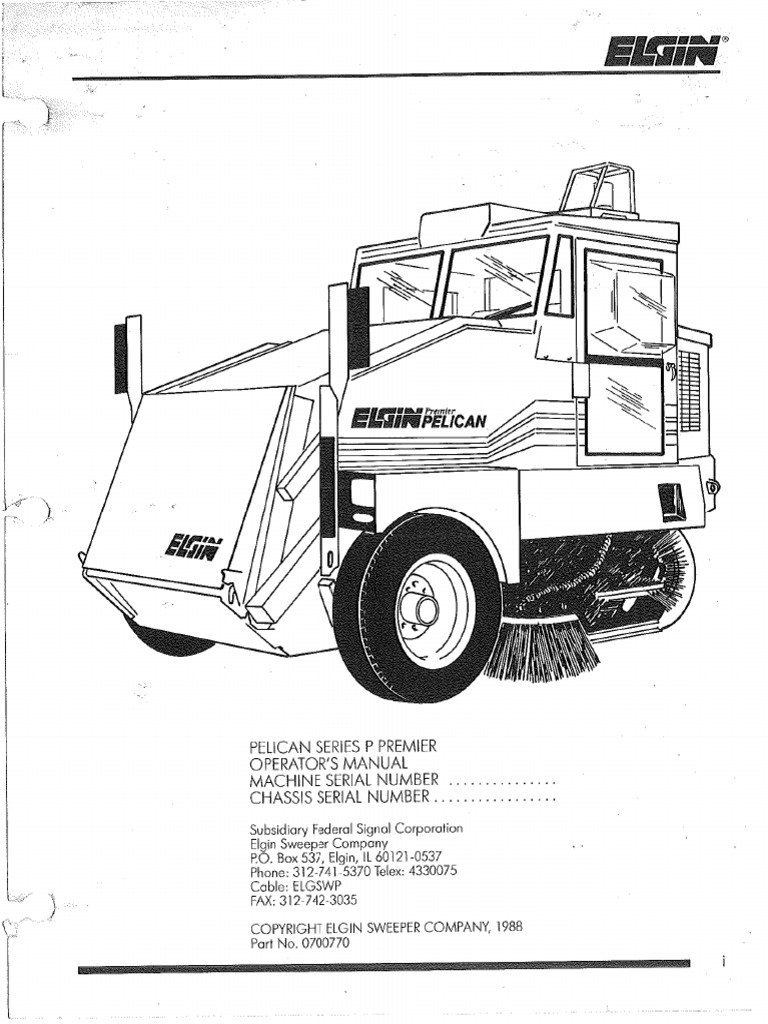 Photo: www.scribd.com on Google
Adjusting down-pressure solves problems where the main broom skips debris or wears out unevenly across the middle. Park the unit on smooth, level concrete, lower the brooms, and run them for 2 minutes while parked to make a clean polish pattern on the ground. Check the mark: a correct sweeping pattern measures between 4 and 6 inches wide across the entire length of the broom. If the pattern is narrower than 4 inches, turn the manual pressure control valve 1 half-turn clockwise to lower the suspension. If it’s wider than 6 inches, turn the valve counter-clockwise to raise it. You’ll know you fixed it when the swept pattern shows a uniform rectangular strip without heavy gouging on the edges.
Flush clogged water spray systems
This fix clears dry dust clouds trailing behind the truck during operation. A common mistake people make is running the sweep cycle dry to finish a shift quickly, which causes heavy dust clouds and accelerates abrasive wear on vacuum components. Check the water tank sight glass to confirm you have clean water, then unscrew the brass spray nozzles along the front bumper and side brooms. Soak the tips in white vinegar for 15 minutes and poke the orifice open with a soft copper wire or stiff nylon bristle. Flush the manifold lines by switching the electric water pump on for 10 seconds before screwing the clean nozzles back into place. Proper spray coverage should show an unbroken fan pattern across the full path of both gutter brooms.
What not to do
- Don’t crawl under an open hopper without setting the steel safety prop bars in place, because hydraulic cylinder seals can fail without warning.
- Don’t clean clogged water nozzle tips with hardened steel drill bits or nails, because you’ll widen the orifice and ruin the water pressure balance.
- Don’t tighten loose hydraulic hoses while the auxiliary engine runs, since pinhole fluid injection through skin causes permanent tissue damage.
- Don’t operate sweeping brooms at full speed over large solid obstacles like raised manhole covers, as this bends the broom arms and breaks drive motor splines.
How to stop it happening again
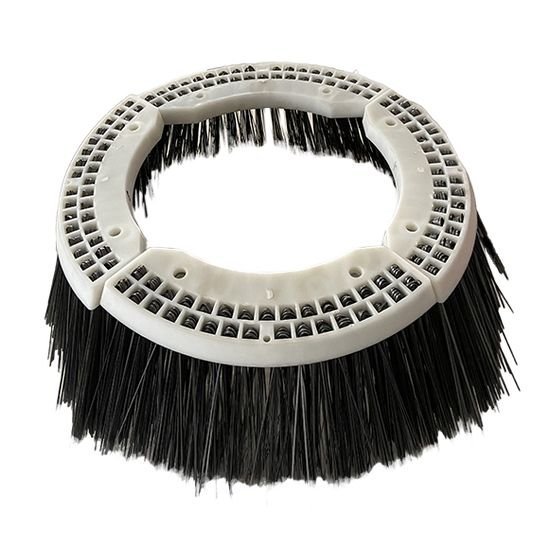 Photo: hmbrush.en.made-in-china.com on Google
Daily preventative care stops mechanical breakdowns before a sweeping shift begins. Review official maintenance procedures directly through the Elgin Sweeper product support documentation to match your exact chassis specifications.
| If you’re doing this | Do this instead | Why |
|---|---|---|
| Storing the unit with full hoppers | Dump and wash the hopper after every single shift | Wet street sweepings turn acidic and rot steel floor plates |
| Sweeping with bone-dry pavement | Keep water tanks filled and sprayers active | Water lubricates rubber seals and prevents toxic dust clouds |
| Leaving brooms lowered while parked | Lift brooms completely before shutting down engine | Constant resting weight bends broom bristles permanently into flat spots |
| Ignoring hydraulic sight gauges | Check fluid levels cold each morning before startup | Low oil starves pumps and causes costly motor cavitation |
Frequently asked questions
Why is my street sweeper leaving dirt behind?
Suction loss causes trailing dirt in almost every case. Check for packed leaves inside the pickup nozzle, clean the hopper intake screen, and verify the main broom down-pressure leaves an even 5-inch sweep pattern on flat ground.
How often should sweeper hydraulic fluid be changed?
Every 1,000 operating hours is standard, assuming normal working temperatures. Check your operator manual for exact intervals, because working in heavy summer heat or fine desert dust cuts that fluid life in half.
Can worn gutter brooms damage street curbs?
Yes, worn gutter brooms let the steel drive plate rub directly against concrete curb edges. This grinds down the curb face, bends the motor shaft, and destroys the expensive broom drive hub within a few shifts.
What happens if hydraulic oil overheats in a sweeper?
Overheated oil thins out and loses its ability to lift heavy dirt loads. The brooms will slow down under normal debris, hydraulic cylinder seals will harden and leak, and internal pump bearings will seize up completely.
Is it safe to clear sweeper clogs with the engine idling?
No, never reach into broom assemblies or suction hoses while any engine runs. Moving brooms and vacuum impellers cause catastrophic pinch injuries, so remove the ignition key before touching the sweeping gear.

