

Can robot vacuums clean vinyl floors? Yes, they can, but only if you match the robot to the floor's condition. Most modern robot vacuums handle luxury vinyl plank, luxury vinyl tile, and sheet vinyl without a problem.
The catch is that not every robot is safe on every vinyl surface. Poor brush design, excess water, or a worn wear layer can turn a convenient cleaning tool into a flooring nightmare.
In our research, the biggest deciding factor is the wear layer. Vinyl flooring is sold with wear layers measured in mils, and budget planks with 6 mil surfaces scuff far faster than commercial 20 mil ones. As of 2026, most robot vacuums in the $300-to-$800 range support moisture-aware mopping and soft rollers.
Before you schedule your first run, you need to know exactly what's under your feet.
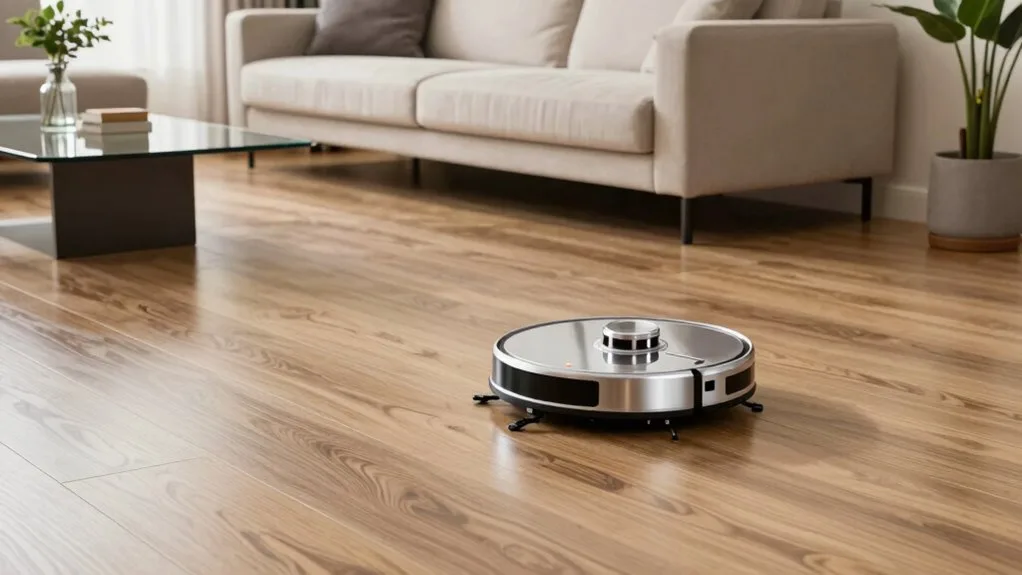
Image source: Bing (Web (fair-use with source credit))
The Short Answer: Yes, But It Depends on Your Vinyl
Robot vacuums can clean vinyl floors safely. The safe ones use soft rubber rollers and low water flow. The risky ones use bristle brushes or drag soaking wet mop pads.
Check your vinyl's wear layer and condition first. And skip wet mopping on loose seams.
Why Vinyl Floors Aren’t Like Other Hard Floors
Vinyl flooring is a multi-layer sandwich. The top layer is a clear wear layer that protects the printed design underneath. Below that sits a vinyl or rigid core like SPC or WPC.
That core is what gives luxury vinyl plank its forgiving, slightly springy feel.
Hardwood and tile barely flex. Vinyl does. That's why the Resilient Floor Covering Institute classifies it as a resilient floor.
The same flexibility that feels great underfoot means the surface scratches and dents more easily.
The same hard-floor caution applies here as it does with upright vacuums on hardwood. The wrong brush head can do real damage over time.
- Wear layers range from 6 mil to 20 mil. Thinner means faster scratches.
- Textured surfaces trap dust more than smooth tile.
- Seams expand and contract with temperature and humidity.
- Water can sneak into seams and swell the core.
Robot vacuums have to respect those traits. The good ones do. The cheap ones often don't.
First, Identify What Type of Vinyl You Have
Before you trust any robot on your vinyl, find out which vinyl you actually have. The three main types are luxury vinyl plank (LVP), luxury vinyl tile (LVT), and sheet vinyl. Rigid core types like SPC and WPC are subsets of LVP and LVT.
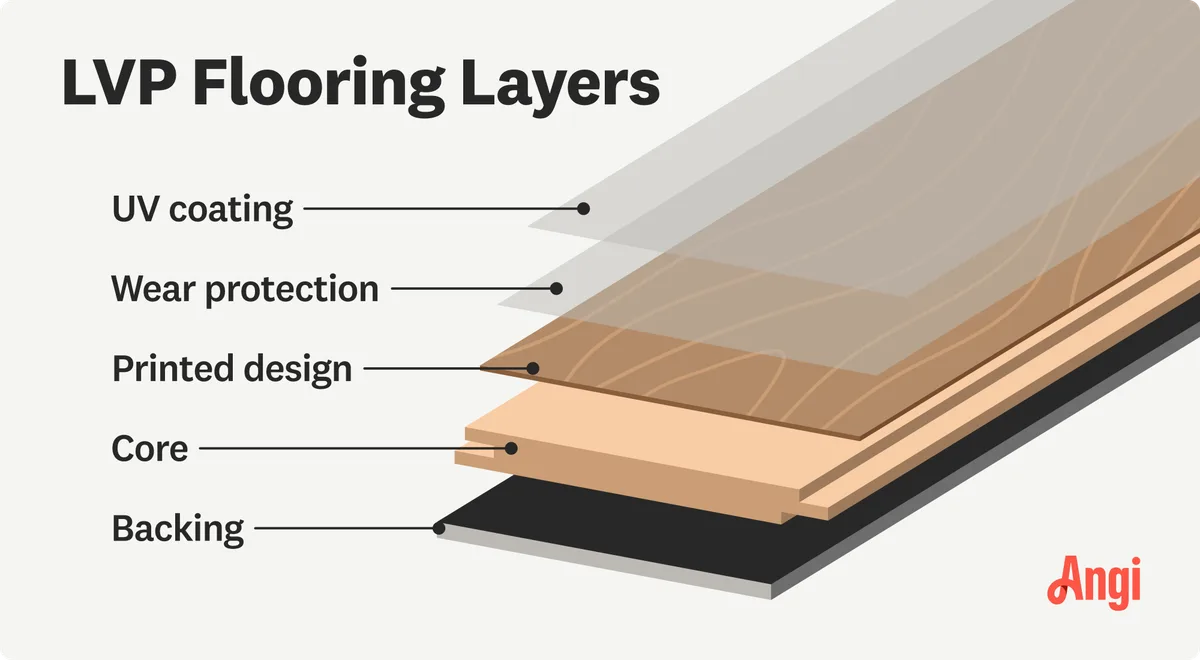
Image source: Bing (Web (fair-use with source credit))
LVP vs. LVT vs. Sheet Vinyl: What’s Under You?
| Type | Form | Typical room | | LVP | Long planks | Living rooms, bedrooms | | LVT | Tile-shaped squares | Bathrooms, kitchens | | Sheet vinyl | Large rolled sheets | Budget, seamless spaces |
The easiest way to tell them apart is size and seam pattern. Planks look like wood. Tiles look like ceramic.
Sheet vinyl has fewer seams and often runs wall to wall.
How to Check Your Vinyl’s Wear Layer
The wear layer is the protective clear coat on top. It is measured in mils, not millimeters. One mil equals one thousandth of an inch.
- Look for the phrase "wear layer" on the original packaging.
- You will see a number like "6 mil" or "20 mil".
- No packaging? Check the brand stamp in a closet cutout or under a vent.
- Run a fingernail across the surface. If it leaves a mark, treat the floor like delicate glass.
Once you know the wear layer, picking a robot becomes easier because you can filter out models with aggressive bristles. A 12 mil floor gives you plenty of safe options. A 6 mil floor narrows the list quickly.
Key Condition Variables That Decide the Outcome
Four variables decide whether a robot vacuum helps or harms your vinyl.
- Wear layer thickness. 6 mil floors need a gentle robot. 12 mil floors handle most models. 20 mil floors are near bulletproof.
- Seam integrity. Tight seams stay sealed. Loose seams invite water and moisture damage.
- Brush roll design. Rubber rolls are gentle. Stiff bristle rolls can micro-scratch glossy finishes.
- Robot mop mode. High water flow is dangerous. Damp is fine. Soaked is not.
Manufacturer specifications confirm that most robot vacuums now include hard floor modes. These modes lower suction and stop the brush from spinning as fast. It helps, but it doesn't fix a fundamentally aggressive brush head.
Floor-care documentation from major brands like Shaw Floors says the same. Dry vacuuming is always safe. Wet mopping depends entirely on the floor's age and seam condition.
| Variable | Safe setup | Risky setup | | 6 mil wear layer | Soft rubber roller, vacuum only | Stiff bristle brush, wet mop | | Textured LVT | LiDAR navigation, hard floor detection | High suction brush with no sensor | | Old sheet vinyl | Dry vacuum only, no-go zones | Water tank mopping | | Seams lifting | Dry vacuum, avoid edges | Wet mop that pools water |
If allergies are part of the picture, HEPA-filtered robot vacuums trap the fine dust that vinyl attracts. That matters because vinyl's texture hides settled particles that a regular dustbin just recirculates.
Decision Tree: Is a Robot Vacuum Right for Your Vinyl Floor?
Work through these branches in order. Stop at the first branch that matches your situation. Each branch gives you a yes, a no, or a "with caution."
Branch 1: Floor Type and Condition
Start here. If the floor itself is damaged, nothing else matters.
- If you have loose sheet vinyl or curled edges, do not use a robot vacuum. It will catch the edge and peel more.
- If the vinyl is locked tight and smooth, move to branch 2.
- If the finish is visibly scratched, use a soft roller model only.
Branch 2: Brush Roll Type
The brush is the first thing that touches your floor.
- Rubber roller? Yes. Safe on vinyl.
- Soft bristle? Use with caution. It can work, but inspect the floor for fine scratches.
- Stiff bristle? Not recommended. It will wear down glossy finishes over time.
Plastic side brushes are usually mild. The main risk is the main beater bar underneath.
Branch 3: Vacuum-Only vs. Vacuum-and-Mop
This is where most vinyl damage happens.
- Vacuum-only robots are the safest choice for sheet vinyl and floating LVP.
- 2-in-1 robots work on tightly sealed LVP and LVT.
- Never use a wet mop pad on lifted seams, peeled corners, or old sheet vinyl.
If your robot has water flow control, set it to low. The pad should feel damp to the touch, not dripping.
Branch 4: Smart Features That Matter
These features turn a risky robot into a safe one.
No-go zones are a must if vinyl meets area rugs or entry mats. Hard floor sensors prevent the brush from grinding debris into baseboards. Water flow control keeps the pad damp, not soaked.
If you pass all four branches, a robot vacuum is a safe daily tool. If you hit a red flag at any branch, switch to vacuum-only mode or clean manually for now.
Routine upkeep matters too. Removing tangled hair from a brush roll applies to robot vacuums just the same. A dirty roller loses its gentle touch and starts dragging grit across the finish.
In a large house, an upright vacuum for large houses still has a place for weekly deep cleans. But for daily maintenance, the right robot vacuum is genuinely useful on vinyl.
Recommended Actions for Each Branch
If Branch 1 shows loose edges, stop there. Do not run any robot, dry or wet. Use a stick vacuum or a gentle upright model until the floor is repaired or replaced.
If you made it through all four branches with a pass, here's your action plan.
- 6 mil wear layer: Use vacuum-only mode with a soft rubber roller. Set the robot to reduced suction.
- 12 mil wear layer: A 2-in-1 robot with low water flow works well. Keep the mop pad damp, not saturated.
- 20 mil wear layer: You have freedom. Most robots and mop modes are safe on a commercial-grade surface.
- Textured LVT or embossed vinyl: Check for a dedicated "hard floor" setting. It lowers suction and stops the brush from scattering grit into the texture.
- Loose seam anywhere: Draw a no-go zone around that area. Water and brush chatter will make the seam worse.
These are safe starting points. Run your first cycle while you're at home. Watch how the robot handles threshold strips and area rugs.
Adjust your no-go zones based on what you see.
Best Robot Vacuum Features for Vinyl Plank and Tile
Not every robot is built for vinyl. The safest ones share a few specific features worth paying attention to.
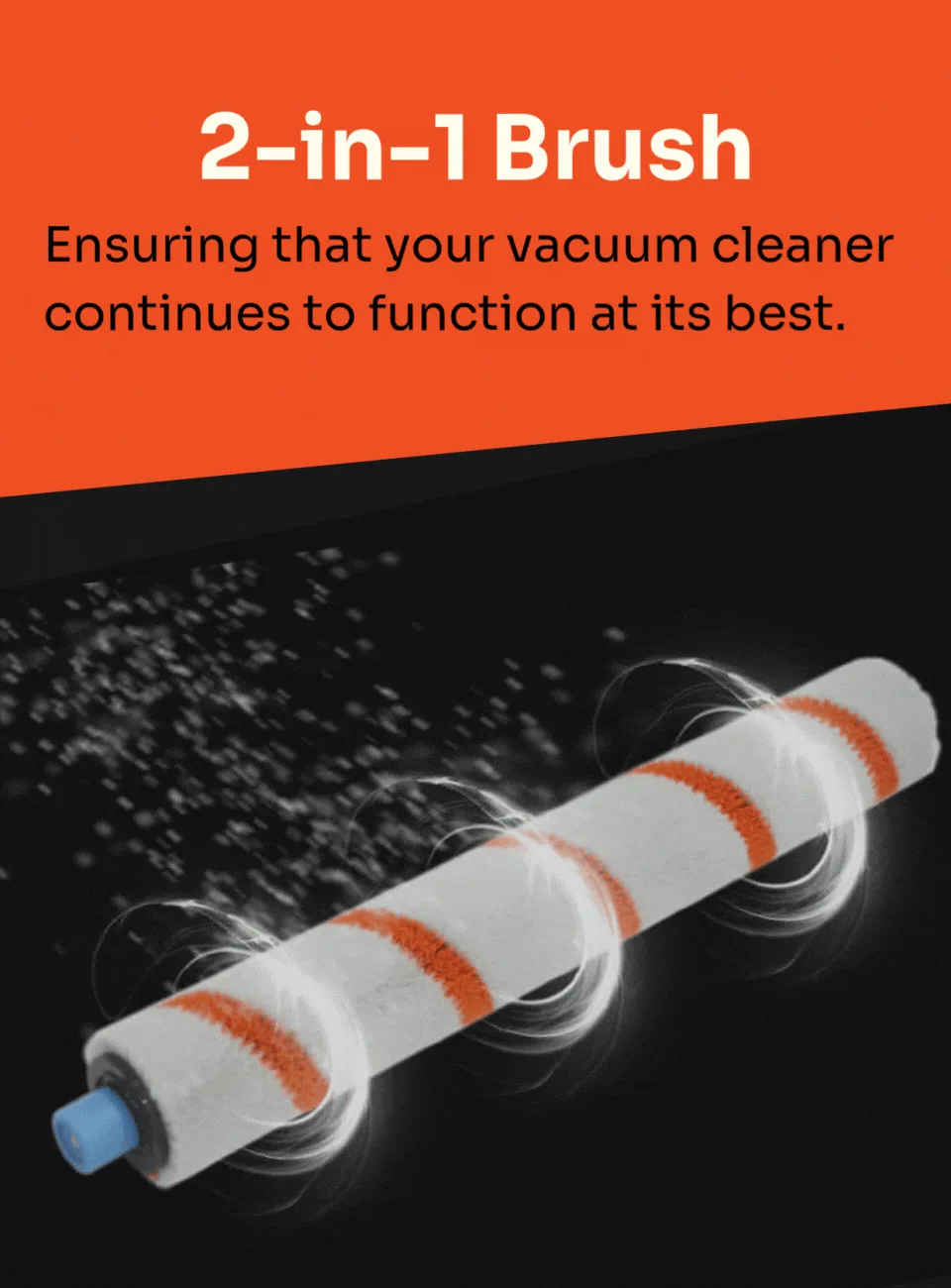
Image source: Web (Bing) / ilifecare.in (Web image (fair-use with source credit))
First, look for a rubber brush roll. These are usually black and flexible. They don't have the stiff nylon bristles that leave micro-scratches on glossy wear layers.
Rubber also handles pet hair better because hair wraps around the roller instead of tangling into bristles.
Second, check whether the robot has hard floor detection. This sensor tells the robot to drop suction power when it leaves carpet. Less suction means less debris being slammed against baseboards and grout lines.
Third, examine the mop pad system if you want a 2-in-1 model. The best ones use vibration or oscillation instead of dragging a wet pad across the floor. That reduces the chance of water pooling at seams.
| Feature | Why it matters for vinyl |
|---|---|
| Rubber roller brushes | No fine scratches on the wear layer |
| Hard floor sensors | Reduces suction and protects seams |
| Water flow control | Prevents moisture damage and swelling |
| No-go zones | Keeps the robot away from rugs and loose areas |
| LiDAR navigation | Maps your floor plan so the robot avoids repeated rubbing in one spot |
Navigation matters more than people think. A robot that wanders randomly will cross the same seam fifty times per cycle. A mapped robot cleans efficiently and touches each spot briefly.
Robot Mop vs. Vacuum-Only: What’s Safer on Vinyl?
A vacuum-only robot is the safest choice for any vinyl floor. It removes dry debris without introducing moisture. If you have sheet vinyl, older LVP, or visible seam swelling, stick with vacuum-only.
A 2-in-1 robot mop is safe on tightly sealed LVP and LVT. The key is controlled water usage. Look for models with adjustable flow or automatic detection that stops water on hard floors.
Real-world feedback shows why this matters. Aggregate reviews report that seasoned floors absorb moisture differently than new ones. A damp pad on a 10-year-old floor in a humid climate is far riskier than the same pad on fresh, sealed LVP.
- You choose vacuum-only if: you have sheet vinyl, lifted seams, or a 6 mil wear layer.
- You choose 2-in-1 if: you have new LVP/LVT with tight seams and a 12 mil-plus wear layer.
- Best of both worlds: run vacuum-only daily and mop manually once a week.
There's something to be said for keeping a proper upright vacuum around. Robot vacuums maintain, but a full-size vacuum still does the deepest work, especially on textured vinyl that hides grit in its grain.
Common Mistakes That Scratch or Damage Vinyl Floors
Most robot-caused vinyl damage isn't subtle. It comes from a few predictable errors.
- Letting sand or dirt sit for days before running the robot. Grit acts like sandpaper under the brush.
- Using a robot with a spinning side brush on a 6 mil floor. The plastic bristles push dust into the edge seams.
- Leaving the mop pad on between cycles. A dried pad becomes stiff and scratches during the next run.
- Forgetting to clean the brush roll. Hair wraps tightly around it, turning a soft roller into a rough one.
- Scheduling a wet mop run after a rainy day. Damp floors plus a wet pad is a recipe for water intrusion.
The same scratch risks show up with upright vacuums on hardwood, which is why the wrong equipment can leave permanent marks. Vinyl is tougher than hardwood in some ways, but more vulnerable beneath its thin wear layer.
A quick visual check helps. After your first week, kneel down and look at the floor in low-angled light. Fine swirl marks mean the brush is too aggressive.
Address it early before the issue spreads.
How to Prep Your Room Before Running the Robot
Preparation takes two minutes but saves you from hours of troubleshooting.
- Pick up loose items. Socks, charging cables, pet toys, and paper scraps are the top causes of robot jams on vinyl.
- Inspect room edges. Vinyl seams along walls can loosen over time. If any edge is raised, mark it with a physical boundary.
- Lift rug corners. Area rugs with low-profile edges look flat to LiDAR sensors. The robot can ride over the edge and drag the rug onto the vinyl.
- Dry obvious spills first. A puddle of water or coffee will turn the mop pad into a smearing tool.
- Hide exposed cables. The robot will chew through a phone charger and drag it across the floor.
Once the room is clear, set your no-go zones in the app. Circle any spots with loose seams or floor vents. Give area rugs a small buffer so the robot transitions onto them cleanly.
After three or four runs, you won't need to prep much. The robot will memorize the layout and you'll recognize which spots cause problems. That's when daily cleaning on vinyl becomes genuinely effortless.
Maintenance Routine to Keep Vinyl Looking New
Empty the dustbin after every run. Fine dust fills it fast. Clean the brush roll weekly.
Hair wraps around rubber rollers quickly. A dirty roller drags grit across the wear layer.
Wash the mop pad after each wet use. Dry pads turn stiff and scratch vinyl. Wipe the navigation sensors monthly.
Dirty sensors mess with the map. Inspect seams every few weeks. Early fixes beat expensive replacements.
Real-World Scenarios: When It Works, When It Fails
New LVP, 12 mil wear layer: A 2-in-1 robot with rubber rollers runs daily on vacuum mode and damp mops twice a week. Six months in, a low-angle light check shows no scratches and tight, dry seams.
Old sheet vinyl, 6 mil: A bristle brush robot catches a lifted seam. Water from the mop pools under the edge. The core swells and the floor needs patching.
Textured LVT with a dog, 20 mil: A LiDAR-guided robot with no-go zones handles daily pet hair. Damp mop cycles run every other day. A full year later, the finish still looks new.
Frequently Asked Questions
Can robot vacuums scratch vinyl floors?
Yes, the wrong brush roll can leave fine scratches. Stiff bristles and trapped grit cause the worst damage. Rubber rollers are the safest choice.
Check the wear layer first. If it's under 6 mil, stick to vacuum-only mode.
Is it safe to use a robot mop on vinyl plank?
Yes, when the seams are tight and the wear layer is at least 12 mil. Keep the water flow low so the pad stays damp, not dripping. Never wet-mop sheet vinyl with loose edges.
Water can creep into the core and cause swelling.
What features matter most for vinyl floors?
Prioritize a rubber brush roll, hard floor detection, and adjustable water flow. LiDAR navigation maps the room cleanly. No-go zones keep the robot away from rugs and damaged seams.
Clean sensors regularly so the robot keeps mapping reliably.
How often should I run a robot vacuum on vinyl?
Daily dry runs are fine and prevent grit buildup. Wet mopping is different. Twice a week is plenty for a 2-in-1 model.
Over-wetting is the biggest risk. Avoid daily mop cycles on any vinyl surface. Reserve wet cleaning for the weekend.
Final Verdict: Should You Use a Robot Vacuum on Vinyl Floors?
Yes, if you match the robot to your floor. Check the wear layer and seams first. Choose rubber rollers over stiff bristles.
Keep the mop pad damp and protect seams with no-go zones. A robot is a maintenance tool, not a deep cleaner.
Run it daily in vacuum mode, mop in moderation, and your vinyl will stay smooth and sealed for years. The four decision branches above give you the safe path. Follow them and enjoy the convenience.

