

Can handheld vacuums pick up sand? The short answer is yes, but only under the right conditions. A handheld vacuum can lift dry sand from hard floors, car mats, and low-pile carpet.
It will struggle with thick piles, wet sand, and deep carpet fibers. The real issue usually isn't suction. It's the filter.
In our research on handheld vacuum performance, standard models typically deliver 20 to 60 air watts. That's enough for sand duty if the dust path stays clear. As of 2026, most handhelds fail on sand because of clogged filters, not weak motors.
Let's break down exactly what makes the difference.
Let's Start With the Honest Answer
Here's the quick version: yes, a handheld vacuum can pick up dry sand. No, it can't handle every sand situation. The type of sand, the surface, and the vacuum's design decide the outcome.
For a light dusting of beach sand on a garage floor, almost any handheld works. For a packed layer of damp sand in a car trunk, you need a different tool. Aggregate reviews report that models with a washable filter and cyclonic separation handle sand far better than basic stick vacuums.
- Dry sand on hard surfaces: usually fine.
- Dry sand in low-pile carpet: doable with slow passes.
- Thick piles or packed sand: reach for a shop vac.
- Wet sand: wait until it dries or use a wet/dry vacuum.
One more thing matters. Sand is abrasive. Every grain grinds against the filter and fan blades as it moves through the machine.
That's not a problem for a single cleanup. It becomes a problem when the filter clogs halfway through.
Why Sand Breaks Most Handheld Vacuums (and Why Some Handle It Just Fine)
Sand is heavier than regular household dust. It drops out of the airstream quickly, settling in the nozzle or the bottom of the dust cup. If your filter is pleated, the finest grains wedge into the folds.
That's why suction fades halfway through the job.
Airflow matters just as much as suction. Suction gets the headlines, but airflow in CFM keeps sand moving. A vacuum with high air watts but low CFM can let heavy sand fall out early.
Manufacturer specifications confirm that most compact handhelds fall in the 15 to 30 CFM range, which is fine for light sand but weak for big jobs.
Here's what a clogged filter looks like after sand duty.
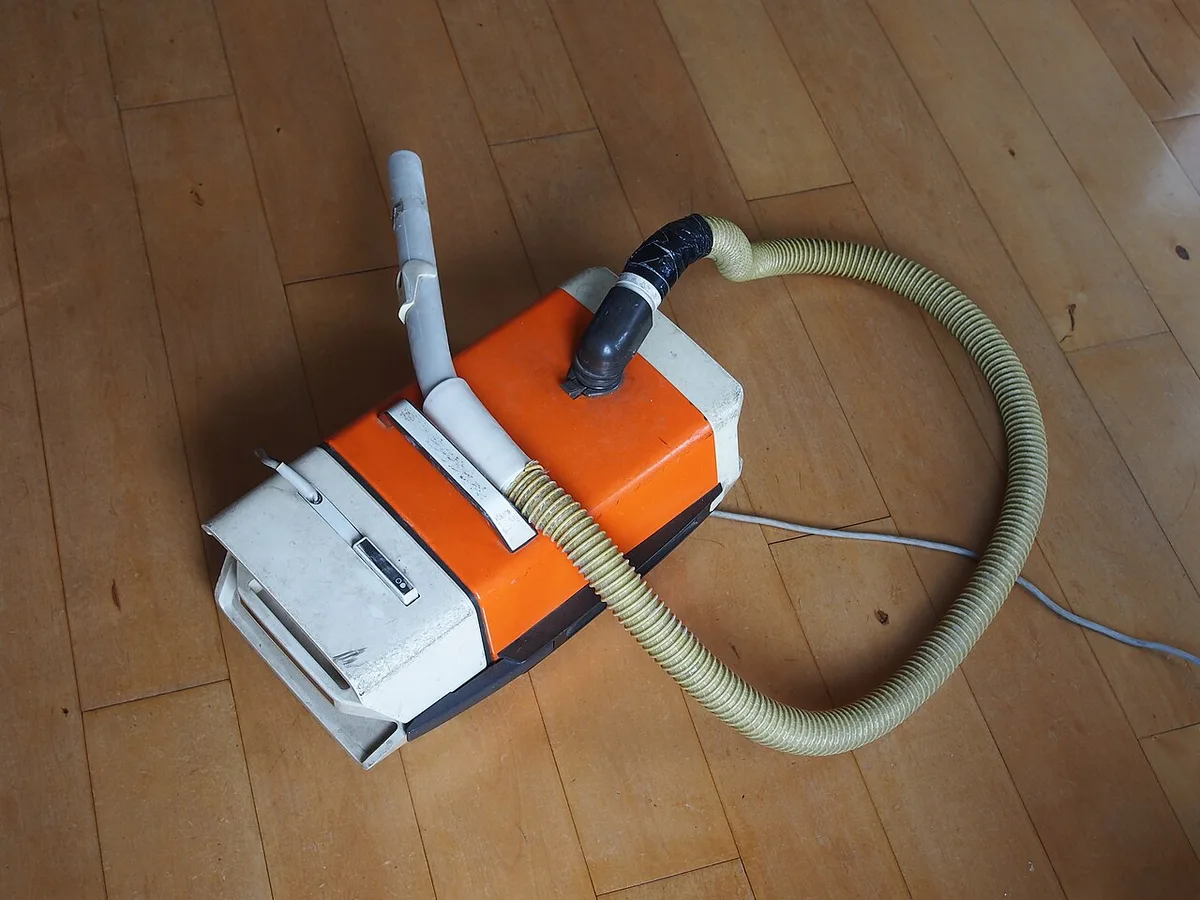
Image source: Wikimedia Commons / Alf van Beem
Sand also leaks around poor seals. In a non-sealed vacuum, fine dust bypasses the filter and heads straight for the motor. That can kill the motor in just a few cleanups.
The Occupational Safety and Health Administration monitors silica dust in workplaces for good reason. At home, the fix is a sealed dust path and a HEPA filter.
Some handhelds avoid these problems because of design. Cyclonic separation spins the sand into the dust cup before it ever reaches the filter. A washable foam or HEPA filter can be rinsed instead of replaced.
A sealed system keeps the motor clean. Add a rubber-edged crevice tool, and you have a handheld that genuinely handles sand.
| Problem | What sand does | What helps |
|---|---|---|
| Heavy grains | Drop out of the airstream and clog the nozzle | High CFM, wider nozzles |
| Fine dust | Plugs pleated filters fast | Cyclonic separation, washable filter |
| Abrasive particles | Scratch fan blades, hoses, and seals | Sealed motor path, replaceable parts |
| Air leaks | Send fine sand into the motor | Sealed system, inspected gaskets |
The good news? None of this is complicated. Once you know where sand causes damage, you know which specs to look for.
The First Question: Is the Sand Wet or Dry?
Start here. Wet sand changes everything.
Run your fingers through the sand. If it clumps together, it's wet. If it powders apart, you're clear to vacuum.
Damp sand may not look wet, but it still carries enough moisture to damage a standard handheld.
Standard handheld vacuums are not designed for liquids. Pulling water through the motor can cause a short circuit, and it will ruin a paper or HEPA filter. Wet sand also sticks to the dust cup walls and jams the filter.
Even if the vacuum survives, you'll spend twenty minutes scrubbing sand out of the cup.
Rule of thumb: if the sand is wet, don't use a standard handheld. Let it dry first, or grab a wet/dry vacuum. Models labeled wet/dry can pick up water without sparking.
| Sand condition | Handheld vacuum | Better option |
|---|---|---|
| Dry, loose | Works well | Handheld is fine |
| Dry, packed | Struggles without agitation | Upright with brush roll |
| Damp | Filter and motor risk | Wait to dry |
| Wet | Shock hazard, clogs everything | Wet/dry shop vac |
This is the biggest decision branch in the whole process. Get this one right, and the rest gets much easier.
How to Check if Your Handheld Vacuum Is Sand-Ready
Not every handheld is built for sand. Check your model before you commit.
Start with the filter. Is it washable or disposable? A washable filter is almost essential for sand, because you'll need to rinse it after every real session.
A disposable paper filter can work, but it will need replacing quickly.
Next, look at the dust path. Is there a filter directly in line with the intake, or is there a cyclonic chamber? Cyclonic separation keeps sand out of the filter.
If your vacuum doesn't have it, the filter becomes the first stop for every grain.
Check the nozzle options too. A crevice tool gets into car seats and floor mat grooves. A brush nozzle helps loosen sand from fabric.
If your handheld only has a wide flat head, it'll push sand around instead of picking it up.
| Check | What to look for |
|---|---|
| Filter | Washable foam or HEPA, not flimsy paper |
| Dust path | Cyclonic separation or a pre-filter |
| Sealed system | No gaps around the motor and filter |
| Nozzles | Crevice tool plus a brush head |
| Airflow spec | At least 20 CFM for sand duty |
| Dust cup size | 0.4L or larger so you don't stop constantly |
Manufacturer websites will list these specs. If you can't find a CFM or air watt number, the model might not be serious about heavy jobs. The Carpet and Rug Institute tests vacuums for carpet performance, and a certified model is a safer pick for embedded sand.
One last thing: if your vacuum uses a foam filter, it must be completely dry before you put it back in. A damp foam filter blocks airflow and can trap moisture. Aggregate reviews show this is one of the most common causes of lost suction after cleaning.
Quick Decision Tree: Use Your Handheld or Grab Something Else?
Here's how to decide in about ten seconds. Ask three questions. Is the sand wet?
What surface is it on? How deep is the pile?
- Wet sand: stop. Let it dry, or use a wet/dry vacuum.
- Dry sand on hard floors: handheld works. Move slowly and keep the nozzle flat.
- Dry sand in car mats: handheld is perfect. Use the crevice tool for edges.
- Dry sand in low-pile carpet: handheld works if you press down and go slow.
- Dry sand in thick carpet: grab a full-size upright with a brush roll.
- Sand piles thicker than a coin: empty the dust cup halfway through.
- Sand mixed with ashes or embers: never vacuum it. Use a broom and dustpan.
If you have a wet/dry shop vac, this is the tool that makes sand a non-issue.
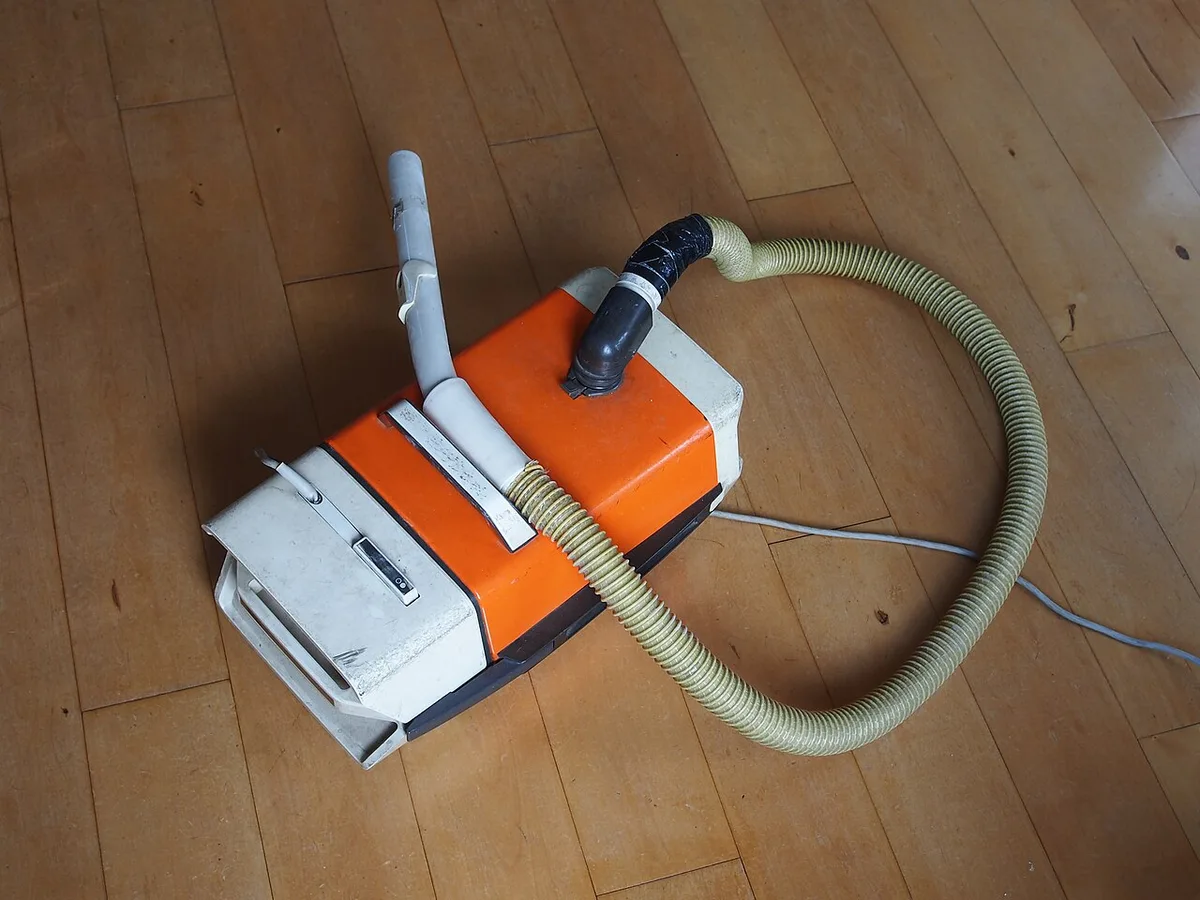
Image source: Wikimedia Commons / Alf van Beem
A wet/dry vacuum pulls water and sand into a plastic tank, so there's no filter to clog. You can even rinse the tank out when you're done. As of 2026, it's still the most reliable tool for any serious sand cleanup.
But if you only have a handheld, don't panic. You can handle the majority of dry sand messes with the right technique. The next decision is whether to use a crevice tool or a brush nozzle.
That choice depends on the surface, not the amount of sand.
| Condition | Best move |
|---|---|
| Light dry sand, hard floor | Handheld with brush nozzle |
| Dry sand in car seams | Handheld with crevice tool |
| Dry sand in low-pile carpet | Handheld, slow passes |
| Dry sand in shag carpet | Upright vacuum |
| Wet or damp sand | Wet/dry vacuum or wait |
| Thick pile (more than a coin) | Wet/dry vacuum or empty often |
The decision tree pretty much runs itself after the first branch. Wet sand always goes to the shop vac. Dry sand on smooth surfaces is easy.
Dry sand in deep carpet is where the handheld runs out of ability. Match the tool to that reality, and you'll stop fighting the vacuum.
How to Vacuum Dry Sand the Right Way (Step-by-Step)
Empty the dust cup and check the filter before you start. A clean filter is the difference between a quick cleanup and a mid-job failure.
Start with the crevice tool. It reaches deep into car seat tracks, floor mat grooves, and window channels where sand collects. Use slow, overlapping passes so suction has time to pull the grains up.
Switch to the brush nozzle for fabric surfaces. The bristles agitate sand loose from carpet fibers and towel weaves. Press down gently and move at half your normal speed.
If the sand pile is thicker than a coin, stop halfway and empty the dust cup. A full cup kills airflow fast. Two quick empties give you better results than one long fight.
Here's the shortest path:
- Empty the dust cup and clean the filter first.
- Use the crevice tool on seams, tracks, and edges.
- Use the brush nozzle on carpet and fabric.
- Go slow and overlap each pass.
- Empty the cup halfway through.
That's the whole trick. Sand is heavy, so it needs slower passes. Give it the time, and it comes up clean.
How to Handle Wet Sand Without Ruining Your Vacuum
Wet sand is the fastest way to kill a standard handheld vacuum. Let it dry first. Once dry, it vacuums up just like any other sand.
If you can't wait, grab a wet/dry shop vac instead. These are built to handle liquids and won't short-circuit when moisture hits the motor. You can also rinse the tank out afterward.
What if you already sucked up wet sand? Turn the vacuum off immediately. Unplug or remove the battery.
Empty the dust cup and rinse it thoroughly. Wash the filter if it's washable, and let every part dry completely before reassembly.
A damp filter will clog almost instantly and can grow mold. Drying takes a day or two, which beats buying a new vacuum. Manufacturer warnings on most handheld models explicitly state they're not for liquid pickup.
Follow that line.
The Handheld Specs That Actually Matter for Sand
Not all specs matter equally. Focus on four numbers.
Airflow in CFM matters most for sand. Sand is heavy, so it needs moving air to carry it. Look for at least 20 CFM.
Air watts measure suction, which matters for carpet, but airflow pulls the particles through the hose.
Filter type comes next. Washable foam or HEPA filters outperform disposable paper filters for sand. Cyclonic separation is a bonus that keeps sand out of the filter entirely.
Dust cup capacity is more practical than you'd think. A 0.4L cup fills fast with sand. Bigger is better if you're cleaning a car or a beach entryway.
| Spec | What to aim for |
|---|---|
| Airflow | 20+ CFM |
| Suction | 40+ air watts |
| Filter | Washable, sealed path |
| Dust cup | 0.5L or larger |
One more spec: weight. A 3-pound handheld gets heavy when you're bent into a car for ten minutes. That's not a dealbreaker, but it's worth knowing.
Best Handheld Types for Sand (and the Ones to Skip)
If you're shopping, look for a handheld with a washable filter and a crevice tool. Wet/dry handhelds are the gold standard for sand because they handle moisture too.
Corded handhelds beat cordless for sand work. They deliver constant power, so suction doesn't fade mid-job. The cord is annoying, but battery drain is a real issue with sand because it's heavy work.
Skip stick vacuums with a non-detachable head. They lack the fine nozzles you need for sand in tight spaces. Also skip models with disposable paper filters.
Replacement filters get expensive when you're vacuuming sand regularly.
Best picks:
- Wet/dry handheld or compact shop vac: ideal.
- Corded handheld with washable filter: great.
- Cordless with cyclonic separation: good for quick jobs.
- Stick vac without handheld mode: not ideal.
- Paper filter model: disappoints fast.
Honestly, a $50 wet/dry shop vac will outclean a $200 cordless stick vac for sand. It's not glamorous, but it works.
Common Mistakes That Kill a Handheld Vacuum Fast
The biggest mistake people make is vacuuming wet sand with a regular handheld. The second is vacuuming ashes or embers from a fire pit. Both can destroy the motor.
Emptying the dust cup wrong is another one. If you dump it indoors, fine sand gets right back in the air. Take it outside and empty it low to the ground.
Pressing too hard on carpet doesn't help. It just pushes debris deeper into the fibers, then you burn the battery. Don't let the dust cup get overfull, either.
A packed cup kills airflow and makes the motor work harder.
Finally, don't set your vacuum down in the sand. Grit gets in the nozzle and scratches the body. Rest it on a towel or a hard surface instead.
Small habits, longer life.
When to Just Grab a Wet/Dry Shop Vac Instead
You can stop fiddling with a handheld when the sand pile is thick or the area is large. A wet/dry shop vac simply does the job faster.
Think about cleaning out a car trunk after a beach trip. A handheld will work, but you'll empty the dust cup four times. A shop vac with a 5-gallon tank swallows the whole mess in one pass.
Here's the honest comparison:
| Situation | Handheld | Wet/dry shop vac |
|---|---|---|
| Small spills, car seats | Best | Overkill |
| Dry sand on hard floors | Good | Better |
| Full car trunk of sand | Painful | Easy |
| Wet sand | Risky | Made for it |
| Thick pile, multiple areas | Frustrating | One-pass job |
If you clean up sand more than once a month, a compact wet/dry vac is worth owning. They start around $40 and never clog on sand.
How to Clean and Maintain Your Vacuum After Sand Duty
Sand is abrasive, so post-cleanup maintenance is not optional. The good news is it takes about five minutes.
First, empty the dust cup outside. Tap the cup upside down to release fine grains stuck to the walls. Then remove the filter and tap it gently against a trash can.
If the filter is washable, rinse it under lukewarm water until it runs clear. No soap needed. Squeeze, don't twist, and let it dry for at least 24 hours.
Check the nozzle and hose for sand clogs. A blocked crevice tool kills suction. Use a chopstick or a thin brush to push the sand out.
Check the filter every few sessions. Premium HEPA filters are getting a lot of wear with sand. Washable ones last years, while some cheaper pleated filters are $10 to $15 to replace.
Frequently Asked Questions
Can sand ruin a handheld vacuum?
Yes, if it gets past the filter. Fine sand can damage the motor and fan blades. A sealed system with a HEPA filter prevents that.
Empty the dust cup regularly.
What's the best attachment for vacuuming sand?
The crevice tool for tight spaces, the brush nozzle for carpets. Switch between them. The brush loosens sand from fabric, and the crevice tool reaches deep seams.
Is it safe to vacuum wet sand?
Not with a standard handheld. It's a shock hazard and can ruin the filter. Let it dry first, or use a wet/dry vacuum.
Why did my vacuum lose suction halfway through?
The filter clogged. Sand fills the pores fast. Stop, empty the dust cup, and tap the filter clean.
This happens more with pleated filters.
How often should I clean the filter after sand duty?
After every serious sand cleanup. Dry sand on a hard floor is gentle. A sandy car seat is a full filter workout.
Are corded handhelds better for sand than cordless?
Yes. They deliver constant power, so suction doesn't fade as the battery drains. Sand is heavy work, and batteries run down quickly.
Final Verdict: Should You Trust Your Handheld With Sand?
Yes, with the right conditions. Dry sand on hard surfaces, low-pile carpet, and car mats is fair game. Wet sand is not.
Deep piles and thick carpet need a bigger tool.
The deciding factors are the filter and the airflow. A washable filter and at least 20 CFM make a handheld genuinely useful for sand. Without them, you're fighting a losing battle.
If you have the right tool, the technique is simple. Slow passes, proper nozzles, and frequent emptying. That combination handles most sand messes without dragging out the big vacuum.
If the sand is wet or the pile is deep, stop trying. Let it dry or grab a shop vac. Your handheld will last longer, and you'll finish faster.
That's the whole honest answer.

