

Are handheld vacuums good for crumbs? Yes, for most everyday dry crumb spills, but the honest answer depends on three things: the crumb type, the surface, and the mess size. A handheld vacuum is ideal for toast crumbs scattered across a kitchen counter, cracker crumbs trapped in car seats, or the pile under a toddler's high chair.
It starts to fail the moment the mess gets wet, sticky, or spans a whole floor.
Manufacturer specifications tell us a typical cordless handheld produces 20 to 60 air watts of suction, holds 0.1 to 0.5 liters of debris, and runs 10 to 25 minutes per charge. That's a spot-cleaning tool, not a whole-house workhorse. As of 2026, better lithium-ion batteries and washable filters have made handhelds genuinely useful for crumb patrol.
The trick is knowing where they fit, and where they don't.
Quick Answer: Yes, But Only for the Right Mess
The 60-Second Verdict on Handheld Vacuum Performance with Crumbs
Handheld vacuums are good at dry crumbs on hard surfaces and upholstery. They are not good at large spills, wet food, or high-pile carpet. If your mess is small, dry, and contained, a handheld wins.
If the mess is big or wet, grab something else.
- What a handheld does well: loose chips, cereal, toast crumbs, and debris on tile, hardwood, laminate, car interiors, and sofa cushions.
- Where it can't help: spilled soup, sticky jam, a floor covered in crackers, and crumbs buried in deep carpet.
The decision rule is simple, but most people skip it. They grab the nearest vacuum and hope for the best. Let's break down the variables so you know before you start.
Know Your Mess: Crumb Types, Surfaces, and Locations
The Three Variables That Decide Everything
Before you reach for any vacuum, classify the mess. Three variables determine whether your handheld will shine or struggle.
- Crumb texture: dry and crumbly, soft and greasy, or sticky and smeared.
- Surface type: hard floors, upholstery, low-pile carpet, or high-pile carpet.
- Mess scale: a single spot, a small cluster, or a whole floor.
Dry, crumbly, and discrete is the handheld's sweet spot. Soft, greasy, and smeared is where filters and suction paths get into trouble.
| Crumb scenario | Surface | Handheld verdict |
|---|---|---|
| Dry cracker crumbs | Hardwood or tile | Great |
| Dry toast crumbs | Laminate counter | Great |
| Food crumbs | Low-pile carpet | Okay, with a brush nozzle |
| Food crumbs | High-pile rug | Poor |
| Greasy or sticky residue | Any surface | Poor |
| Large floor spill | Any floor | Wrong tool |
If your scenario sits in the top two rows, a handheld is the right call. The bottom rows need a different plan.
When a Handheld Vacuum Is the Right Call
Your Best Crumb-Cleaning Scenarios
A handheld shines in quick, grab-and-go cleanups. If you keep one docked where crumbs happen, you'll save yourself a lot of bending and hauling.
- Kitchen counters and dining tables: Use a wide-mouth nozzle or brush attachment to pull crumbs into the dust cup in seconds.
- Under the high chair: A 30-second pass after meals keeps the floor from becoming a hazard zone.
- Car seats and floor mats: The crevice tool reaches between cushions and alongside seat rails where crumbs collect.
- Sofas and upholstery: A brush nozzle helps lift crumbs without scratching fabric.
- Office desks and keyboard trays: Quick cleanup of snack debris without unplugging your computer.
- Dorm rooms, RVs, and campers: Small spaces where a full-size vacuum is overkill and storage is limited.
For most of these, if the mess is dry and smaller than a dinner plate, the handheld is the fastest tool in the house. It also beats the broom because there's no bending over a dustpan.
If you find yourself grabbing the handheld more than twice a day, it's carrying its weight. If you're still fetching the stick vacuum afterward, the mess was too big to begin with.
When It Will Let You Down
The Situations Where a Handheld Just Won't Cut It
No handheld can fix every crumb situation. Understanding the limits will save you from standing there watching it spray crumbs across the floor.
- Large kitchen-floor spills: A full floor of scattered cereal or flour can fill the dust cup in seconds and drain the battery before you finish.
- High-pile carpet: Crumbs sink below the surface, and a handheld lacks the suction and brush roll to dig them out.
- Wet, sticky, or oily messes: Moisture damages dry-only filters, leaves smears, and makes the dust cup smell like old food.
- Whole-room cleanups: Move from room to room and a cordless handheld's battery will likely die mid-task.
- Hard objects: Coins, screws, or staples can rattle through the nozzle and damage the impeller.
Aggregate reviews report that battery life, not suction, is the most common complaint among handheld owners. That lines up with the numbers. Most cordless handhelds run 10 to 25 minutes per charge, with 3 to 4 hours of recharge time.
As of 2026, that's still the norm, even on premium models.
Why Users Get Frustrated: The Dust Cup and Battery Reality Check
The dust cup on a typical handheld holds between 0.1 and 0.5 liters. That's around half a soda can. A handful of biscuit crumbs is nothing, but a large spill will have you emptying it three times.
On top of that, reputable models ship with chargers that carry UL certification. Underwriters Laboratories sets those electrical safety standards, and it's worth looking for their mark before you buy. When the battery finally stops holding a charge, follow EPA guidance on lithium-ion battery recycling rather than tossing it in the trash.
Handheld vs. the Alternatives
Which Tool Actually Wins for Crumbs?
Here's where a lot of households overbuy or underbuy. We compared the main options based on what they handle best.
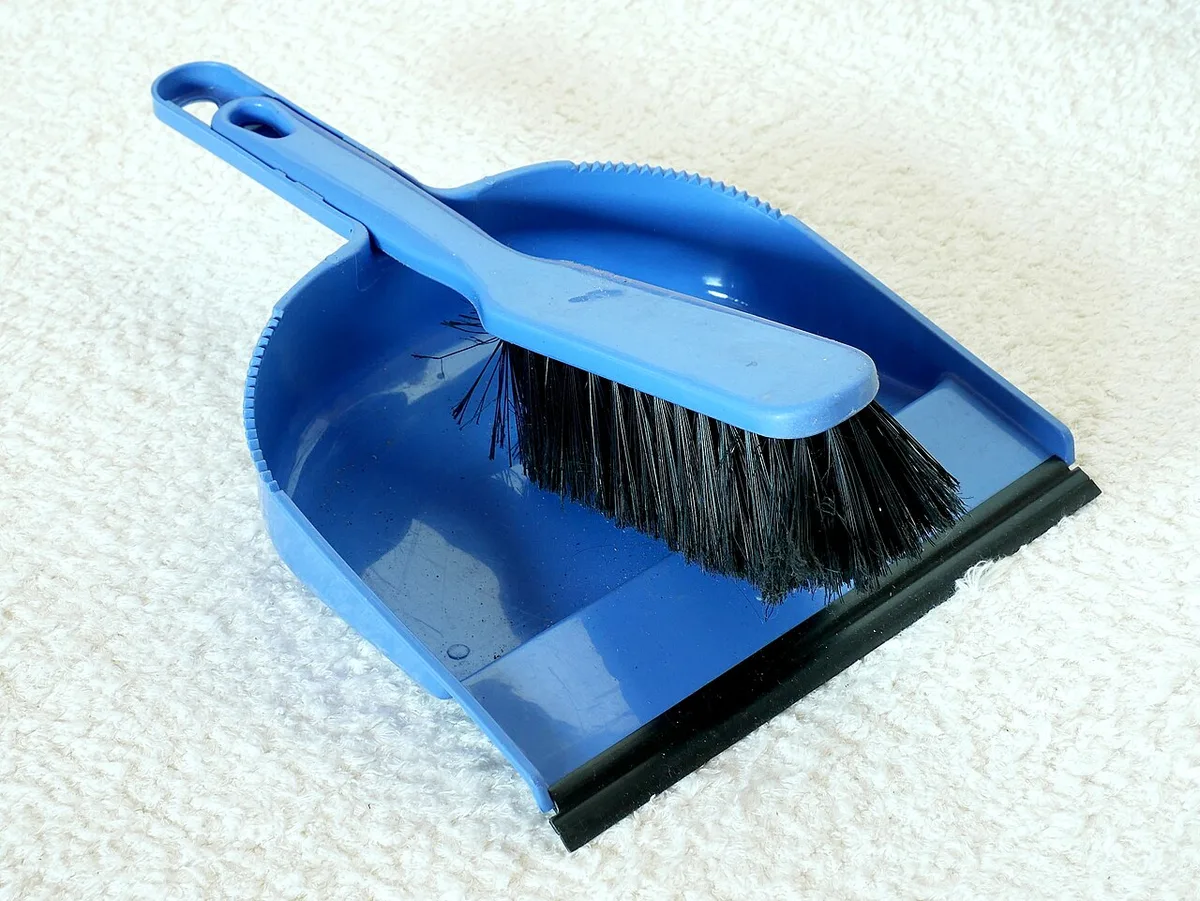
Image source: Wikimedia Commons / Santeri Viinamäki (CC BY-SA)
- Broom and dustpan: Best for large, dry floor messes. Cheap, quiet, and never needs charging.
- Cordless stick vacuum: Best for daily whole-floor cleaning and quick transitions between hard floors and low-pile carpet. Many models include a detachable handheld section.
- Full-size canister or upright vacuum: Best for deep carpet cleaning and whole-house routines. Overkill for one crumb spot.
- Robot vacuum: Best for maintaining floors between deep cleans, but not for instant, targeted crumb control.
- Paper towel or damp cloth: Best for sticky or greasy crumbs you should never vacuum dry.
| Tool | Sweet spot | Weak spot |
|---|---|---|
| Handheld vacuum | Spot cleaning dry crumbs on counters, cars, and upholstery | Large areas, wet messes, high-pile carpet |
| Broom and dustpan | Big dry floor spills | Tight corners and car interiors |
| Stick vacuum | Daily floor maintenance across rooms | Small countertop or console crumbs |
| Full-size vacuum | Deep carpet and whole-house cleaning | Heavy to drag out for a single crumb |
| Robot vacuum | Maintaining floors on a schedule | Instant spot cleaning and dry counter crumbs |
Suction claims on these tools follow standardized test methods from organizations like ASTM International. That makes the numbers on the box more comparable than they first appear.
The real deciding factor is frequency. A once-a-week counter crumb is a paper towel job. A daily under-the-high-chair crumb pile is a handheld job.
A nightly whole-kitchen sweep is a stick vacuum job. Match the tool to the routine, not the occasional accident.
What to Look For in a Crumb-Fighting Handheld
The Features That Actually Matter
Not every handheld is built for crumb duty. Some are engineered for shop debris or car interiors. Others are barely more than toys.
If your main job is dry food crumbs, here's what matters most.
- Suction power: Look for 20 to 60 air watts or 3 to 8 kilopascals. That range covers light snack crumbs with room to spare.
- Nozzle design: A wide-mouth nozzle covers open surfaces fast. A crevice tool reaches between seat cushions and under cabinet edges.
- Dust cup capacity: Aim for at least 0.2 liters. Anything smaller has you emptying mid-cleanup.
- Trigger vs. switch: A switch holds power without finger fatigue. A trigger saves battery but gets tiring after a minute.
- Washable filter: Non-negotiable. You'll be rinsing it monthly, and replacement filters cost money over time.
- Weight and balance: Under 4 lbs keeps one-handed use comfortable. Balance matters more than raw weight.
A brush nozzle is the unsung hero for crumbs on upholstery and carpet edges. It lifts debris without letting the suction suck the fabric into the port. If your handheld didn't come with one, purchase a compatible brush attachment.
It's worth the few extra dollars.
The $30 vs. the $200 Handheld — Does It Matter for Crumbs?
What Budget Really Buys You
Entry-level handhelds around $30 handle dry crumbs on hard surfaces. Their suction is modest, their batteries fade faster, and their filters clog quicker. But for a countertop crumb or a car console, they get the job done.
- Entry-level ($30 to $60): Good for light, daily crumb spot-cleaning. Expect shorter runtime and more frequent filter washes.
- Mid-range ($60 to $120): The sweet spot for most homes. Better suction, longer battery life, and washable filters that actually stay clean.
- Premium ($120 to $200): Stronger airflow, better ergonomics, and sometimes a second battery. You're paying for convenience, not a different crumb result.
Aggregate reviews show that mid-range models satisfy most buyers. Premium units earn their price when you're vacuuming a car interior regularly or dealing with crumb-heavy households like toddler homes and pet owners.
Here's the honest take. A $30 handheld will pick up the same toast crumbs as a $200 one. It just takes longer, empties more, and needs a filter refresh sooner.
If crumbs are a twice-a-day reality, the mid-range price is worth it. If they're a once-a-week accident, save the cash.
Step-by-Step: How to Clean Crumbs Like a Pro
The Right Way to Use a Handheld Vacuum on Crumbs
There's a wrong way to vacuum crumbs. Shoving the nozzle over a pile at full speed just scatters half of it across the floor. The right way takes about 30 seconds and leaves nothing behind.
- Assess the mess before you grab the tool. Check if the crumbs are dry and not sticky. If they're wet, the vacuum isn't the answer.
- Choose the right attachment. Wide-mouth nozzle for counters and floors. Crevice tool for corners, seat gaps, and keyboard trays. Brush for upholstery.
- Position the nozzle directly over the crumbs. Touch the surface lightly. Don't approach at an angle or you'll push debris sideways.
- Work from the edges inward. Pull the outer crumbs toward the center pile first. Then sweep the pile into the nozzle at a slow pace.
- Handle crevices and corners separately. Use the crevice tool with the handheld tipped at a 45-degree angle to catch crumbs wedged in seams.
- Empty the dust cup immediately after use. Don't let crumbs sit and dry inside. A quick empty keeps odor and bacterial growth away.
Speed is the enemy here. Slow, deliberate passes pull more debris than fast swipes. Imagine you're sweeping the surface with the nozzle, not racing it across the counter.
Common Crumb-Cleaning Mistakes to Avoid
Why Your Handheld Isn't Working Better (and How to Fix It)
If your handheld seems useless on crumbs, you're probably making one of these mistakes. They're all easy to correct.
- Moving the nozzle too fast: That just launches crumbs forward instead of suctioning them. Slow down and let the airflow do the work.
- Using a crevice tool on open surfaces: The narrow port concentrates suction but misses the wide spread. Swap to the wide-mouth nozzle for counters.
- Vacuuming wet or sticky food: Moisture clogs the filter instantly and leaves residue that smells. Use a cloth for sticky messes.
- Letting the dust cup overflow: A full cup kills airflow and suction. Empty it when it's half full, not packed to the top.
- Ignoring the filter: A clogged filter drops suction dramatically. If your vacuum sounds strained, check the filter first.
- Using the wrong power setting: Some handhelds have boost modes. For light crumbs, the standard mode is fine. Boost just drains the battery.
Troubleshooting tip: weak suction is almost always a clogged filter or a full dust cup. Check those two before you blame the motor. In our research, those two causes cover the majority of "my handheld stopped working" complaints.
Maintenance That Keeps It Sucking Strong
Caring for Your Handheld Vacuum Over Time
A handheld is a small machine with a big responsibility. Neglect it for two months and you'll wonder why you bought it. Give it ten minutes of care monthly and it'll stay strong for years.
Image source: Wikimedia Commons / Wikideas1
- Empty after every use: Crumbs absorb odors as they sit. A quick empty prevents stale smells and bacterial growth.
- Wash the filter every 4 to 6 weeks: Rinse it under lukewarm water until the water runs clear. Let it air-dry completely for 24 hours before reinserting. A damp filter blocks airflow and leaves moisture in the motor path.
- Wipe the nozzle and dust cup rim: A damp cloth removes grease from kitchen crumbs that dried onto surfaces.
- Check the battery's charging habit: Lithium-ion cells prefer partial charges over full drains. Dock your handheld after heavy use rather than running it dead first.
- Store it docked and upright: The wall dock keeps it charged and ready. Loose storage lets debris settle into the nozzle.
For clogs, look where the nozzle meets the dust cup. Biscuit chunks and hard cereal pieces lodge right at that joint. Use a long, soft object to push the clog through.
Never poke with a metal tool near the filter.
Real-Life Scenarios
How Different Households Use (or Abuse) Their Handhelds
Every home has a crumb personality. Yours determines whether a handheld earns its place on the dock or sits forgotten in a drawer.
- The toddler-parent kitchen: Crumbs appear under the high chair three times a day. A docked handheld with a wide-mouth nozzle turns a two-minute cleanup into a 30-second pass.
- The daily commuter: Car crumbs gather in seat crevices and console gaps. A crevice tool and a brush nozzle handle the job. Cordless freedom matters here, since outlets are rarely nearby.
- The apartment dweller: Hard floors and a small kitchen mean crumbs stay visible and contained. A lightweight handheld under 3 lbs covers counters, floors, and desk crumbs without hauling out a stick vacuum.
- The pet owner: Kibble crumbs scatter during mealtimes. Aggregated reviews show pet households prefer models with bigger dust cups, because kibble fills a 0.1-liter cup fast.
- The weekend baker: Flour dust and sugar spills coat the counter. These are dry but fine. A HEPA-filtered handheld traps the dust instead of puffing it back into the air.
The pattern is clear. Households that use handhelds daily treat them like a dish sponge. They live where the mess happens.
They get emptied after every use. The ones that abandon theirs treat them like a stored appliance, buried in a closet until the next big spill.
Frequently Asked Questions
Should I use a handheld vacuum for crumbs on carpet?
For low-pile carpet, yes, if you use a brush nozzle. For high-pile carpet, no. Handhelds lack the brush roll that agitates deep fibers.
Crumbs stay buried, and you'll end up pushing debris sideways instead of lifting it out. For low-pile rugs, a slow pass with a brush nozzle works fine.
Which handheld vacuum is best for kitchen crumbs?
The best one has a wide-mouth nozzle, a washable filter, and at least a 0.2-liter dust cup. Suction around 20 to 30 air watts handles crumbs easily. Battery runtimes of 15 minutes are enough for spot cleaning, as long as you're not doing a whole kitchen floor.
The brand matters less than those specs.
Is a corded or cordless handheld better for crumbs?
Cordless is more convenient for quick crumb spot-cleaning. You grab it, use it, and dock it. Corded models never lose suction to a draining battery and run indefinitely, but the cord limits you to spots near an outlet.
For counter and car crumbs, cordless wins on convenience.
Can a handheld vacuum handle whole-floor crumb spills?
No, not comfortably. A kitchen floor covered in cereal or crackers fills a small dust cup quickly and drains the battery before you finish. For that scenario, use a broom and dustpan or a cordless stick vacuum.
Reserve the handheld for spills smaller than a dinner plate.
How do I get the baked-on crumb smell out of my handheld?
Wash the dust cup and filter with warm water and a drop of dish soap. Let both air-dry completely for 24 hours. A vinegar rinse neutralizes stubborn odors.
Clean the nozzle too, since grease from kitchen crumbs lingers there. Repeat monthly to keep odors from building up.
The Final Decision Guide
Your Crumb-Cleaning Action Plan
If you've read this far, you know the answer isn't a simple yes or no. It's about matching the tool to the mess. Here's your plan:
- Assess your crumb frequency: Daily snack messes justify a dedicated handheld. Weekly accidents don't.
- Evaluate your surfaces: Hard floors and upholstery are handheld-friendly. High-pile carpet is not.
- Size up your typical messes: Countertop crumbs and car debris are ideal. Whole-floor spills need a broom or a stick vacuum.
- Set a realistic budget: Mid-range models between $60 and $120 offer the best value for most households.
- Check the maintenance commitment: Washable filters need attention every 4 to 6 weeks. If that sounds like too much, stick with a broom.
The one-sentence verdict: a handheld vacuum is a great crumb tool when the mess is dry, small, and on a hard surface. When it's wet, large, or buried in deep carpet, don't bother. Pick the tool to match the mess, and you'll never fight your vacuum again.
For battery disposal when the time comes, follow EPA guidance on lithium-ion recycling to keep hazardous cells out of landfills.

