

The question "handheld vs car vacuum: which is better?" usually pops up right after you've vacuumed out the backseat twice a week and you're sick of it. Or maybe you're finally ready to tackle that sand-and-dog-hair situation in the floor mats. Either way, there's no single winner that fits every driver, every car, and every mess.
The two main categories are battery-powered handhelds and car vacuums, where "car vacuum" often means a cordless stick model or a corded wet/dry shop vac. The power gap between them is real. Manufacturer specifications show basic 12V handhelds often move just 10 to 20 CFM of air, while many corded shop vacs pull 100 CFM or more.
That difference changes what each tool can actually do for your ride. As of 2026, better lithium-ion batteries have narrowed the gap, but not completely.
Why This Comparison Matters and Which Type You Actually Have
The first problem is that "car vacuum" is a fuzzy term, and it makes shopping confusing. One person says they bought a car vacuum and it's the size of a thermos. Another person's "car vacuum" is a massive green bucket with a hose.
Both technically work, but they're completely different tools.
Here's the breakdown you'll actually see when you start shopping:
- Handheld vacuums. Compact, one-handed, battery-powered. Think Dustbuster-style devices, plus a newer generation of premium cordless handhelds. They're built for quick, light duty.
- Cordless stick vacuums. Also battery-powered, but with a longer body, bigger motor, and larger dust cup. Some function as floor vacuums for the house, and they do double duty in the car.
- Corded wet/dry shop vacuums. The big ones. They plug into a 120V wall outlet, have a hose, and bring serious suction. Most people already own one in the garage.
The reason this distinction matters is that your daily routine determines which category fits. If you just need to clear out the kid's Goldfish crumbs before school drop-off, a handheld is plenty. If you're hauling muddy gear, dealing with pet hair, or cleaning a truck cab, you'll want something with more muscle.
Real-world use is the deciding factor, not brand names or fancy specs.
Quick Answer: Handheld vs Car Vacuum in a Nutshell
A handheld vacuum is better for quick spills, small cars, and storage-limited drivers. A car vacuum is better for deep cleaning, pet hair, and larger vehicles. Choose handheld for convenience.
Choose a car vacuum for power. Most households realistically end up with both.
Those tiny handheld units aren't trying to be full-size vacuums, and judging them as such misses the point. They shine at short, targeted cleaning sessions. Car vacuums, particularly the corded wet/dry type, are the heavy lifters.
If your interior cleaning session lasts longer than ten minutes, a handheld will likely run out of battery and fill up its dust cup before you're done.
Here's the practical rule of thumb:
- If you clean your car's interior every couple of weeks for 5 to 10 minutes, get a handheld.
- If you detail your car on a weekend, own a pet, or drive on dirt roads, get a proper car vacuum.
Breakdown: What a Handheld Vacuum Really Does Well
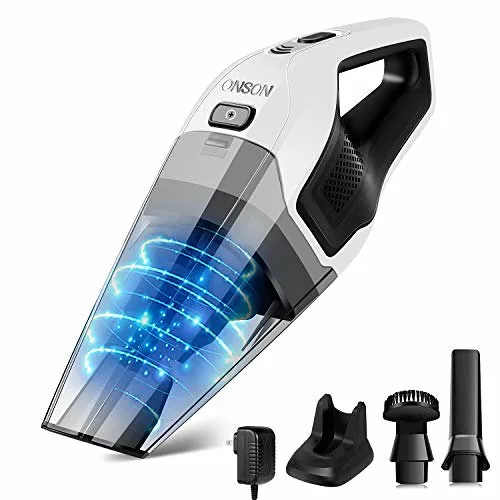
Image source: Openverse / shop8447
Handheld vacuums win on convenience, full stop. There's no cord to untangle, no big unit to haul out of the garage, and no wrestling with a hose around the side mirrors. You grab it, zip it across the seats, and put it back.
That low friction matters more than people expect. A vacuum that's easy to use gets used. A great vacuum that's a pain to set up stays in the trunk.
The best use cases are quick, repetitive messes. Think car seats after a road trip, crumbs under the booster seat, the sand in the center console, or the dust on the dashboard. Most handhelds come with a crevice tool and a small brush, so getting into tight spaces is easy.
The heavier-duty cordless handhelds can also pick up pet hair on seat fabric if you have the rubber or motorized brush attachment.
Strengths of Handheld Vacuums for Car Cleaning
- Instant access. No setup time. Just press the trigger and go.
- Little storage footprint. Many fit in a door pocket, under a seat, or in a small corner of the trunk.
- Good for families. Parents and pet owners reach for these more than any other vacuum type.
- Quieter and lighter. Most weigh between 1.5 and 4 pounds, so you're not straining your shoulder.
Where Handhelds Fall Short
The trade-off shows up when you need real suction or extra capacity. A dust cup that holds half a cup of debris fills up fast. Empty it twice during a single pass and you'll feel the frustration.
Battery life is another limitation. Advertised runtimes sound decent, but that number is usually measured with the motor running under no load, not while you're dragging the nozzle through packed carpet.
Filters also clog quickly. Fine dust and pet dander pack into the foam or pleated filter, causing suction to drop noticeably halfway through the session. Cleaning the filter helps, but it's one more step that steals time.
And heat is a factor too. Running a handheld at full power for more than a few minutes can trigger thermal shutdown in budget models.
Breakdown: What a Car Vacuum Brings to the Table
When we talk about "car vacuums" in the broader sense, we're really talking about two sub-categories that perform differently. Both beat handhelds on suction, but each has its own quirks.
Cordless Stick Vacuums vs Corded Shop Vacs
Cordless stick vacuums sit between a handheld and a shop vac. They have bigger batteries, usually 20V to 60V, and better airflow. Many double as indoor floor vacuums, which is a huge advantage if you don't want a single-purpose gadget.
The downside is size. They're awkward to slide into tight spaces behind seats, and the long body makes them clunky inside a car cabin. If you can't store it standing upright, it's a problem.
Corded wet/dry shop vacuums are the strongest option. They plug into a standard household outlet, so there's no battery anxiety, and their suction rating is dramatically higher than any cordless model. Plus, they can pick up liquids after a spilled drink or indoor pet accident.
The challenge is maneuverability. You're dragging a large bucket-style base, a 20 foot hose, and a power cord through the garage to reach wherever the car is parked. It works, but it's not convenient for a 30 second cleanup.
Where Car Vacuums Come Up Short
Neither type is perfect. Cordless sticks are expensive for what they offer, with quality models running $150 to $300. Shop vacs are cheap, often under $60, but they're noisy and bulky.
You also need to be near a power outlet, which is a dealbreaker for apartment dwellers who park on the street or in a shared garage.
Side-by-Side Comparison: Suction, Runtime, Storage, and Price
Here's how the three categories stack up on the specs that really matter. These numbers are based on typical manufacturer specifications and aggregate reviews, not marketing hype.
| Metric | Handheld Vacuum | Cordless Stick Vacuum | Corded Wet/Dry Shop Vac |
|---|---|---|---|
| Typical airflow | 10 to 25 CFM | 30 to 50 CFM | 100+ CFM |
| Runtime | 10 to 30 minutes | 20 to 40 minutes | Unlimited (corded) |
| Dust cup capacity | 0.1 to 0.5 gallons | 0.5 to 1 gallon | 2 to 5+ gallons |
| Weight | 1.5 to 4 pounds | 5 to 10 pounds | 10 to 20+ pounds |
| Storage space | Door pocket or glovebox | Closet floor or trunk | Garage shelf or corner |
| Typical price | $20 to $100 | $100 to $300 | $50 to $150 |
The table tells one clear story. If you value a small footprint and quick access, the handheld wins. If you need sustained power and large capacity, the shop vac wins.
The cordless stick sits in the middle, trading suction for cordless freedom and dual-duty home use.
One thing to pay attention to is battery voltage. That's the headline number on the box, but it doesn't guarantee suction performance. A 20V model from one brand can outperform a 40V model from another because motor design and airflow path matter just as much.
Look at CFM and air watt ratings rather than voltage alone.
And before you buy anything with a lithium-ion battery, check for a UL safety certification. That mark covers the charger and the battery pack, which matters when you're leaving a device sitting in a hot car.
Real-World Use Cases: Which One Fits Your Habits and Vehicle?
The right choice depends on how you actually live with your car. If you're a parent with kids who snack on the go, you'll be cleaning crumbs constantly. A handheld vacuum makes that a 60 second task.
If you're a rideshare driver cleaning between passengers, same deal. Grab the handheld, suck up whatever is back there, and you're back on the road.
But if you own a dog that sheds, or you take your truck off-road, the math changes. Fine hair and heavy dirt clog small dust cups fast. You'll spend more time emptying the thing than actually vacuuming.
In that case, a corded wet/dry shop vac with a big capacity is a better partner. It handles deep cleans on weekends without dying mid-task.
Think about where you park too. Apartment dwellers without a garage outlet need a battery-powered option. Homeowners with driveway access can use a corded vacuum without much hassle.
If you have no storage space, a handheld that tucks into a door pocket beats anything else. If you have a garage shelf, the size of a shop vac doesn't matter.
Here's a quick decision guide based on common scenarios:
- Daily quick cleanups: Handheld vacuum, no question.
- Pet hair on seats every week: Cordless stick or corded shop vac with a rubber brush.
- Deep spring cleaning / detailing: Corded wet/dry shop vac.
- Truck or van interiors: Corded shop vac, because of larger floor area.
- Parked on the street, no outlet nearby: Handheld or cordless stick, charged in advance.
Best Attachments and Nozzles for Car Interior Cleaning

Image source: Openverse / P. Cox (PDM 1.0)
Your vacuum is only as good as the nozzle you put on it. A crevice tool is the first thing you need. It reaches between the seat and center console, where French fries and coins hide.
A stiff brush is next. It loosens caked dirt on carpet and works well on rubber floor mats.
The pet hair attachment matters if you have a shedding dog. It usually has rubber bristles that catch hair instead of just blowing it around. For fabric seats, a wider upholstery nozzle covers more surface area quickly.
For leather or vinyl, a soft brush prevents scratches.
Most handheld vacuums and cordless sticks come with a couple of these attachments. Shop vacs take it further with universal hoses and adapters. Before you buy anything, check the hose diameter.
Standard shop vacs use 1.25-inch or 1.5-inch openings. Many handhelds use smaller proprietary ports, so you're stuck with whatever the brand makes.
The trick is to store the attachments with the vacuum. A detergent bottle or junk drawer full of nozzles is a nightmare. Keep at least two things attached at all times: a crevice tool and a brush.
That combination handles 80 percent of car messes.
Common Mistakes to Avoid When Buying or Using a Car Vacuum
Image source: Openverse / comedy_nose (PDM 1.0)
The biggest mistake is buying on voltage alone. A 60V battery doesn't guarantee strong suction if the motor is weak. Look for airflow ratings like CFM, or simply read review summaries that measure real-world performance.
Another mistake is expecting a handheld to do deep cleaning. It's a spot cleaner. Leave it at that.
People also ignore the filter. A clogged filter kills suction fast, and many owners never clean them. Check your filter after every few uses.
Wash foam filters with warm water and let them dry completely. Pleated HEPA filters need a gentle tap or rinse, depending on the maker's instructions.
Adding wet debris to a dry-only vacuum is a classic mess. If you've ever tried to pick up a spilled latte with a normal vacuum, you know the result. Either get a wet/dry model or handle spills with a towel first.
Another common error is storing the vacuum with a full dust cup. Dirt compresses, smells, and gets into the motor over time. Empty it after every session.
Finally, don't leave lithium-ion batteries in a hot car all summer. High heat degrades battery life. Some manufacturers recommend storing batteries indoors when the vehicle sits in direct sun.
Check your warranty terms too, because heat damage isn't always covered.
Specs and Reality: What the Numbers on the Box Don't Tell You
Manufacturer specifications list numbers that sound impressive but often mislead. Battery voltage is the prime example. Higher voltage usually means a bigger motor, but it also means more weight and cost.
What matters more is airflow, measured in CFM (cubic feet per minute). A handheld with 20 CFM works for tiny crumbs. A shop vac with 100 CFM feels completely different.
Air watts is another metric. It combines suction, airflow, and motor efficiency. Higher air watts generally mean better cleaning power.
But brands rarely use the same testing method, so compare carefully. Water lift tells you how much suction a vacuum has against a sealed column of water. That number matters less for car interiors and more for liquid pickup.
Runtime figures on cordless models are usually measured with the motor at a lower speed, not on max power. Expect half the stated time when you run the turbo setting. Noise level is also worth checking.
Most car vacuums run at 75 to 85 decibels. That's loud enough to need ear protection for a long session. A shop vac can push past 90 decibels.
Filters matter too. HEPA filters capture fine particles, but they clog faster on pet hair. Non-washable filters add replacement costs.
Check whether the replacement filter is easy to find before you commit to a brand. Common filters are easy to buy. Proprietary filters can be a headache.
Maintenance: Keeping Your Vacuum Working Like New
A little maintenance goes a long way, no matter which type you pick. Empty the dust cup after each use. That takes ten seconds and prevents loss of suction.
Then, inspect the filter. If it's visibly dirty, clean it right away. Most foam filters are washable, but pleated HEPA filters may need replacement every few months.
Check for clogs in the hose or nozzle. Small objects like coins or sunflower seeds get stuck. A blocked hose cuts suction power dramatically.
Look down the hose while the vacuum is off. Clear any debris with a long stick or a bent wire. Do not push the vacuum's own brush through while it's running.
For cordless models, store the battery separately if you can. Avoid letting it drain completely before charging. Lithium-ion batteries prefer partial charges over full drains.
If you're storing the vacuum for months, keep the battery at around 50 percent charge in a cool place.
Wipe down the exterior and wash the dust cup occasionally with mild soap. Dirt builds up in the seams and can smell over time. For shop vacs, check the float valve for wet pickup.
That valve stops water from reaching the motor, and it gets stuck if dirty. A quick rinse keeps it working.
Costs Over Time: Budget Picks vs Premium Tools
The sticker price tells only part of the story. A $30 handheld looks like a deal, but cheap filters and a fading battery can double the cost in two years. Premium handhelds and cordless sticks often include washable filters and replaceable lithium-ion batteries, which lowers long-term ownership costs.
Corded shop vacs are the cheapest to run. No battery replacement, no expensive filters, and parts are widely available. Many models under $100 last a decade or more.
If you only care about cost per clean, a shop vac wins every time. Just make sure you have somewhere to store it.
FAQs: Handheld vs Car Vacuum Questions People Actually Ask
Can I use a regular home vacuum for my car?
Yes, you can, if the hose reaches and you have space to maneuver. Upright vacuums are bulky, but canisters work well. The main downside is cord length, so park near an outlet.
How often should I clean the filter?
Clean the filter every few uses, and definitely when suction drops. Foam filters rinse with water and dry overnight. Pleated HEPA filters need more frequent replacement, usually every few months.
What is the best wattage for a car vacuum?
Ignore wattage alone. Look for CFM or air watts instead. Handhelds with 20 to 30 CFM handle crumbs.
Shop vacs with 100 CFM or more handle heavy dirt and pet hair.
Should I get a wet/dry vacuum for car spills?
Yes, a wet/dry vacuum is the only safe option for liquids. Dry-only vacuums risk electric shock and motor damage. A wet/dry model handles the spill now and every future one.
Final Verdict: What To Choose Based on Your Situation
If you want quick, grab-and-go cleanup, get a handheld vacuum. It fits in your trunk, powers through Goldfish crumbs, and works when you're parked anywhere. If you want deep cleaning power and long sessions, get a car vacuum, specifically a corded shop vac or a quality cordless stick.
The honest answer is that most drivers settle on one. Parents and pet owners often buy both eventually. Match the tool to your biggest mess, not the one you want to handle.

