

Are cordless handheld vacuums worth it? That question pops up after every small disaster. You spill coffee grounds, knock over a plant, or track sand into the car, and you don't want to drag out the full-size machine.
The honest answer: they're worth it for quick, small messes, but not for whole-home cleaning. Get that distinction right, and you'll love having one.
The average cordless handheld holds about 0.1 to 0.5 liters of debris, runs for 10 to 25 minutes under real load, and needs a few hours to recharge. That makes it a spot-cleaning tool, not a primary vacuum. Let's walk through what that means for your cleaning routine, your budget, and your sanity.
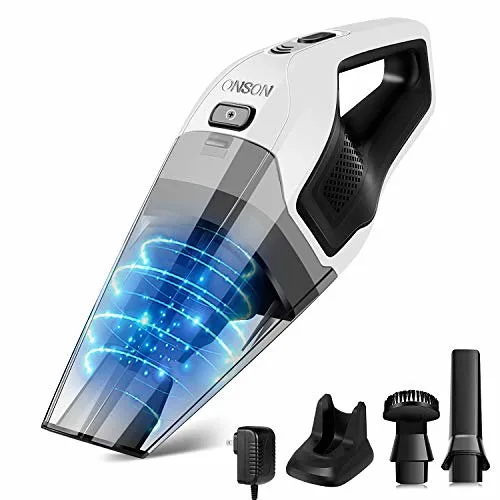
Image source: Openverse / shop8447
Quick Answer
Yes, cordless handheld vacuums are worth it for spot cleaning. No, they cannot replace a full-size vacuum. They excel at pet hair, crumbs, and car interiors.
Buy one as a secondary tool, not a primary one.
Why This Comparison Matters More Than You Think
Every major appliance brand sells a cordless handheld vacuum. Dyson has one. Black+Decker has sold the Dustbuster for decades.
Shark, Bissell, Ryobi, and Hoover all have models.
They all promise cordless freedom, strong suction, and instant cleanup. That's why the real question isn't which brand to choose. It's whether the tool fits your home.
In our research, the people who swear by their handheld vac and the people who threw it in a drawer after three weeks made the same purchase for different reasons. The first group bought it as a quick-reach secondary tool. The second group expected it to replace their full-size vacuum.
You can spend $30 or $400. Either way, the tool is only as good as the job you give it. This comparison matters because most buyers never stop to think about what role the vacuum should play in their home.
They just see a gadget that looks handy. That's exactly where the disappointment starts.
What a Cordless Handheld Vacuum Actually Is (and Isn't)
A cordless handheld vacuum is a compact, battery-powered vacuum you hold in one hand. No hose, no wand, no long handle. Just a body, a dustbin, and a nozzle.
Most weigh between 1 and 2.5 kilograms and hold 0.1 to 0.5 liters of debris, roughly one coffee mug's worth.
Performance testing under ASTM F558, the standard method for measuring vacuum airflow, puts handhelds in a far lower suction class than full-size machines. Typical models generate around 5 to 20 air watts. Stick vacuums often reach 20 to 35.
Corded uprights can push 100 or more.
That gap is by design. Handhelds trade power for portability. They are built to grab a quick mess in seconds, not to deep-clean a carpet.
What it isn't, then, is any kind of upgrade path to whole-home cleaning. It won't handle a family's weekly dust and crumbs in one pass. It won't remove embedded dirt from a thick rug.
It won't last through a long cleaning session. As of 2026, no cordless handheld on the market does any of those things well.
The Big Trade-Off: Convenience vs. Compromise
Every cordless handheld vacuum is built around the same promise: instant access to power. No cord to unravel. No vacuum to haul out of a closet.
No wand to assemble. You pick it up and go. That convenience is real, and it changes how often you clean.
The catch is that convenience only helps if the tool can actually finish the job. The dustbin fills fast. The battery drains faster.
A bag of chips spilled across a kitchen floor might fill the bin once, maybe twice. Pet hair on a full staircase means emptying the bin three or four times.
That's not a malfunction. It's just the physics of a small machine. The real question is whether the trade-off fits your messes.
If your cleaning needs are mostly small, scattered, and time-sensitive, the compromise is easy to live with. If you regularly deal with large areas or heavy debris, you'll outgrow the tool within a week. That's the quick test for whether a cordless handheld vacuum makes sense for you.
Cordless Handheld vs. Stick vs. Upright: A Side-by-Side Comparison
The most useful way to judge a cordless handheld is to stack it against the machines people usually compare it to.
| Feature | Cordless Handheld | Stick Vacuum | Upright Vacuum |
|---|---|---|---|
| Typical suction (air watts) | 5-20 | 20-35 | 100-300+ |
| Real-world runtime | 10-25 min | 25-60 min | Corded, no limit |
| Weight | 1-2.5 kg | 2.5-4.5 kg | 5-9 kg |
| Dustbin capacity | 0.1-0.5 L | 0.3-1 L | 1-2 L or bag |
| Price range | $30-$400 | $150-$700 | $100-$500 |
| Storage footprint | Drawer or shelf | Wall dock / floor space | Closet or floor space |
Suction and Real-World Power
Stick vacuums are the closest competitor. They use the same cordless idea but trade portability for power. Most stick models deliver two to three times the suction of a typical handheld.
Corded uprights go much higher still.
If raw suction is the only metric, the full-size machines win every time. But compare the right way. The question isn't which one sucks harder.
It's whether the handheld has enough power for the messes you actually deal with. For crumbs, dust bunnies, car dirt, and pet hair on fabric, 5 to 20 air watts is plenty. For deep carpet piles, it's not.
Runtime and Battery Life
Runtime is where expectations usually crash. Manufacturer specs advertise 20 to 60 minutes. Real-world use under load lands between 10 and 25 minutes.
The motor works harder when it's picking up debris, and battery chemistry drains faster than the marketing math suggests.
Replacement batteries add another layer. Some models use built-in packs that cost $30 to $80 to replace. Others share batteries with power tools, which means you can swap in a fresh pack and keep going.
Whichever route you take, the US Consumer Product Safety Commission recommends sticking with the charger that shipped with the device to avoid lithium-ion battery risks.
The honest advice: if you need more than 15 minutes of runtime, you bought the wrong tool. A cordless handheld is built for fast cleanups, not marathon sessions.
Size, Weight, and Storage
Hold a cordless handheld and it feels almost like a toy. That's deliberate. You can store it in a kitchen drawer, a closet shelf, or a car door pocket.
A stick vacuum needs a charging dock and floor space. An upright needs an entire closet corner.
That storage advantage quietly determines how often you use the tool. A vacuum that lives inside a drawer gets used for every small mess. One that lives in a closet two rooms away gets ignored.
Price and Long-Term Cost
Entry-level handhelds start around $30. Premium models reach $400. At the low end, you get modest suction and a battery that fades fast.
At the high end, you get cyclonic filtration, better materials, and noticeably stronger performance.
If you already own a stick or upright, adding a $50 to $150 handheld is a small investment that closes a real gap. Just factor in battery replacement every two to three years. A $60 handheld that needs a $40 battery is less of a bargain than it first appears.
What a Cordless Handheld Does Really Well (And What It Can't Do)
Strengths first. Anything smaller than a dinner plate is this tool's perfect territory. Spilled cereal, coffee grounds on the counter, sand tracked into the car, crumbs under the toaster.
Each cleanup takes less than a minute.
Pet hair is another sweet spot. Many handhelds include a motorized brush head designed to lift embedded fur from upholstery and stairs. You can do that one-handed instead of dragging a full-size hose across the living room.
What a cordless handheld does well:
- Quick kitchen and dining-area messes
- Car interiors, cupholders, and car seat seams
- Upholstery, curtains, and pet beds
- Stairs, since one hand holds the vacuum and the other stays free
- High shelves, vents, and tight corners
- Workshop benches and garage debris
What it can't do:
- Vacuum whole rooms or large carpeted areas
- Hold more than a small amount of debris
- Run longer than 10 to 25 minutes under load
- Deep-clean carpets or handle heavy renovation dust
- Match the agitation of a full-size brush roll
The pattern is obvious. If your messes are small and frequent, this tool will earn its place. If your messes are big and rare, it will frustrate you.
Common Pitfalls and Mistakes to Avoid
Battery and Charging Mistakes
The most common error is leaving the vacuum plugged in permanently. Many models use lithium-ion cells, and keeping them at 100% charge for weeks degrades capacity faster than normal use. Manufacturer documentation recommends charging when the battery is low and unplugging when full.
Another mistake is ignoring the warning signs of battery aging. When runtime drops below half of the original spec, the battery needs replacement. Pushing it further just means stopping mid-cleanup every few minutes.
Some tool-compatible models let you swap in a fresh pack. Most self-contained units require a replacement part order.
Filter Maintenance Errors
A clogged filter kills suction faster than any other issue. Handheld vacuums rely on cyclonic or foam filtration to keep airflow moving. When the filter fills with fine dust, the motor works harder and draws less air.
Wash the filter every one to three months, depending on use. Let it dry completely before reinstalling. A damp filter clumps and blocks airflow just as badly as a dirty one.
Aggregate reviews show that "lost suction" complaints usually trace back to a filter that never got cleaned.
Overestimating the Dustbin
A 0.3-liter dustbin looks bigger in photos than it performs in real life. Three dog treats crumbled across a rug will nearly fill it. Pet hair from one car seat can pack it solid.
Empty the bin after every single use. Don't wait until it looks full. Debris compacts and traps fine dust, which reduces airflow and forces you to dig out clumps by hand.
The extra 10 seconds per clean saves you a clogged nozzle later.
Who Actually Needs a Cordless Handheld Vacuum?
If you live in an apartment or small condo, a cordless handheld can cover a surprising amount of your daily mess. Kitchens, entryways, and bathroom floors fit within its reach. A stick vacuum still handles the bigger weekly pass, but the handheld often becomes the tool you grab most.
Car owners are the clearest match. Cupholders, door pockets, and seat crevices are impossible to reach with a full-size machine. A handheld with a crevice tool does that job in minutes.
Pet owners who deal with fur on upholstery and stairs get similar value.
Parents of toddlers also benefit. Crumbs, sand, and small debris appear constantly and need immediate cleanup. A handheld that lives on a kitchen shelf beats a stick vacuum that lives in a closet.
If your home is large, heavily carpeted, or prone to serious messes, skip it. You'll end up using the full-size vacuum anyway, and the handheld will collect dust in a drawer.
Tool-Battery Handhelds vs. Self-Contained Models: Which Is Smarter?
Two design philosophies dominate the market. Self-contained models, like the classic Dustbuster, include a built-in battery and charger. Tool-battery models, from brands like Ryobi, DeWalt, and Milwaukee, run on the same packs that power your drills and saws.
| Decision Factor | Self-Contained | Tool-Battery Compatible |
|---|---|---|
| Entry price | $30-$200 | $60-$150 body only |
| Replacement battery | $30-$80, often proprietary | $50-$200, but shared with other tools |
| Runtime | 10-25 minutes | 15-30 minutes with newer packs |
| Best for | Kitchen and quick indoor messes | Garage, workshop, and car use |
| Long-term cost | Higher if battery can't be replaced | Lower if you already own the platform |
If you already own a tool-battery ecosystem, a compatible handheld is usually the smarter buy. You skip the extra charger and the replacement battery cost drops dramatically. If you just want a small vacuum for the kitchen, a self-contained model is simpler and cheaper.
Real Costs: Price Ranges, Replacement Batteries, and Hidden Expenses
Entry-level handhelds cost $30 to $60. They offer basic suction, short runtime, and a battery that fades noticeably after a year or two. Mid-range models run $80 to $150 and add cyclonic filtration, better pet attachments, and more consistent power.
Premium models hit $200 to $400. Dyson, for example, packs in higher air watts, longer runtime, and better build quality. The extra cost buys performance, not necessarily longevity.
Aggregate reviews suggest premium batteries still degrade after two to three years of regular use.
Replacement parts add up. A new battery for a mid-range model costs $30 to $50. A filter runs $10 to $20.
Over five years, a $100 vacuum might need $80 worth of parts. That's still a fair deal if the tool gets used weekly.
Expert Pro Tips: Getting the Most From a Handheld Vacuum
Empty the bin after every use. It takes seconds and prevents odor buildup and fine dust from coating the filter. Wash the filter on a schedule, not just when suction drops.
Use the right attachment for the job. The crevice tool handles corners and car seams. The motorized brush lifts pet hair from fabric.
The bare floor nozzle picks up larger debris without clogging.
Store the vacuum where the messes happen. A kitchen dock, a garage hook, or a car trunk placement beats charging it in a utility closet. The faster you can reach it, the more often you'll use it.
For trigger-style models, take breaks during longer cleanups. Holding the trigger for five continuous minutes causes hand fatigue. Work in short bursts instead.
Quick Maintenance Guide: Keeping Suction Strong for Years
A cordless handheld vacuum doesn't need much care. But the little care it does need matters. Start by emptying the dustbin after every single use.
That prevents debris from compacting and blocking airflow.
Wash the filter monthly, or every two months if you use the vacuum lightly. Rinse it under warm water until it runs clear. Let it dry for 24 hours before reinstalling.
Never put a damp filter back in, it clumps and cuts suction immediately.
Check the nozzle and brush roll for tangled hair every few weeks. A wrap of hair around the brush stops it spinning. Clear it with scissors or a seam ripper.
Also check the airflow path from nozzle to vent for clogs, especially after vacuuming rice, sand, or fine gravel.
Charge the battery fully after use, but unplug it when full. Avoid leaving it on the dock for weeks at a time. If the runtime drops below 10 minutes, replace the battery.
Most models offer replacement packs for $30 to $80.
Still Unsure? A Simple Decision Guide for Your Situation
Work through this quickly. If you own a car, a pet, or a toddler, the answer is yes. Those messes are small, frequent, and perfect for a handheld vacuum.
If you live in a small apartment with hard floors, the answer is also yes. The handheld covers most daily cleanups. A stick vacuum handles the rest once a week.
If you live in a large home with wall-to-wall carpet, the answer is maybe, but only as a secondary tool. Use it for stairs, upholstery, and car interiors. Keep your full-size upright or canister vacuum for the main floors.
If you expect a handheld to vacuum whole rooms, the answer is no. That's the wrong tool. Save your money or invest in a better stick vacuum instead.
Final Verdict: Are Cordless Handheld Vacuums Worth It?
Yes, for most households. They earn their keep as a spot-cleaning tool, not a primary vacuum. The convenience of grabbing it off a shelf for a 30-second mess is hard to beat.
In our research, buyers who understood this role were happy. They used it weekly for kitchen spills, pet fur, and car interiors. Those who expected whole-home performance were disappointed.
Set the right expectation, and the tool pays for itself.
Pair a cordless handheld with a stick or upright vacuum and you have a complete cleaning system. That combination covers quick messes and deep cleans without dragging heavy equipment everywhere. For $50 to $150, it's one of the more useful small appliances you can buy.
Frequently Asked Questions
How long does a cordless handheld vacuum battery last?
Most batteries last 10 to 25 minutes under real load. Charging takes one to five hours. Over two to three years of regular use, capacity drops noticeably.
Replacement batteries cost $30 to $80 depending on the model.
Can a cordless handheld vacuum replace a regular vacuum?
No. It lacks the suction, bin size, and runtime for whole-room cleaning. Use it for spot messes, cars, stairs, and upholstery.
Keep a stick or upright vacuum for floors and large areas.
What's the best suction power for a handheld vacuum?
Look for 5 to 20 air watts for typical household messes. Pet hair and fabric cleaning need closer to 15 or more. Anything below 5 air watts struggles with anything beyond loose crumbs.
Do cordless handheld vacuums work well for pet hair?
Yes, with the right attachment. A motorized brush roll lifts embedded fur from sofas and car seats. Standard nozzles push hair around.
Choose a pet-specific model or one with a turbo brush for best results.

