

If you've ever stared at crumbs spread across the kitchen counter and wished there was a quicker fix than dragging out the big vacuum, you already understand what a handheld vacuum cleaner is for. What is a handheld vacuum cleaner? It's a compact, portable vacuum built to handle small messes, tight spaces, and quick daily pickups.
As of 2026, most models run on 12V to 20V lithium-ion batteries, with runtimes between 10 and 30 minutes.
That combination makes them ideal for car interiors, stairs, upholstery, and anywhere a full-size vacuum feels like overkill. They're not designed to replace your main vacuum, but they can absolutely save you time every single day. Let's unpack how they work, what they're actually good at, and how to pick one based on the messes you deal with most.
When It's the Right Tool (and When It's Not)
A handheld vacuum is a brilliant tool for certain jobs and a frustrating one for others. The rule of thumb is simple: if the mess is small, scattered, or tucked into a tight spot, a handheld is perfect.
Here's an if/then breakdown:
- If you clean your car regularly, a handheld vacuum is nearly essential. Seat creases and cup holders collect every crumb you eat on the go.
- If you have pets, a handheld with a motorized brush tool lifts hair from couches, cat trees, and car seats faster than any lint roller.
- If you find yourself sweeping the kitchen counter into your palm twice a day, a handheld makes that a three-second task.
- If you're vacuuming whole rooms, thick carpets, or large rug areas, keep your full-size vacuum. A handheld will just frustrate you.
The biggest limitation is dust capacity. A typical handheld dust cup holds only 0.1 to 0.5 liters, roughly the size of a coffee mug. That's fine for cereal spills and pet hair, but it will fill up fast on a whole-car interior or a staircase.
Also, most handhelds are strictly dry vacuums. Unless the label explicitly says wet/dry, do not suck up spilled drinks, melted ice, or anything damp. Water can damage the motor and create a mold problem inside the dust cup.
Start With Your Mess: The Biggest Decision Branch
Before you look at specs, think about what you'll actually vacuum. The right handheld for a car guy is not the same as the right one for someone chasing cat hair. Your main mess should drive every decision.
Car Cleanups
If your priority is the car, you need a crevice nozzle that reaches between the seat and center console. A skinny, angled nozzle matters more than high voltage. You also want a model with a dust cup that empties cleanly, because car debris includes sand and gravel that scrape against plastic.
Pet Hair Patrol
Pet hair needs a motorized tool with a brush roll. Plain suction alone pushes hair around fabric without lifting it. Look for a brush roll designed to resist tangling.
Hair wraps happen, but anti-tangle bristle patterns make cleanup much easier. On a couch covered in labrador fur, a motorized brush turns an annoying job into a two-minute pass.
Quick Kitchen and Counter Spills
For crumbs and dry spills around the kitchen, almost any handheld will do. Decent suction and a trigger switch you can hold without hand fatigue are the main things. A wide dust cup opening helps catch larger debris like cereal before it clogs the nozzle.
Stairs, Corners, and Above-the-Floor Dust
For stairs, corners, and cobwebs, weight matters. You'll be holding the vacuum at odd angles, sometimes overhead. A heavy unit gets old fast.
Look for one under 3 pounds if you plan to use it for dusting high shelves, ceiling corners, and stair treads.
If you have several different messes, prioritize the one you'll clean most often. Then check that the handheld comes with the attachment for it, or that an accessory is available.
Quick-Clean Essentials: The Features That Actually Matter
Once you know your main mess, the next step is understanding the specs that genuinely affect performance. Most marketing materials focus on battery voltage, but that number alone doesn't tell you how strong the suction is.
Here's a quick reference for what to look for and why it matters:
| Feature | What to look for | Why it matters |
|---|---|---|
| Suction power | Look for Air Watts or pascals, not just volts | Measures actual cleaning ability |
| Battery voltage | 12V is light duty, 18V-20V is solid, 40V is premium | Higher voltage usually means more power, but not always |
| Runtime | 10-15 minutes is basic, 20-30 is comfortable | Long enough to finish the job without recharging |
| Dust cup | 0.1L is tiny, 0.3L+ is more forgiving | Bigger cup means fewer trips to the trash |
| Filter | Washable is standard, HEPA is a bonus | Cheaper long-term and better for allergy sufferers |
| Weight | Under 3 lb is ideal for overhead use | Heavier units tire your arm quickly |
Suction power is the tricky one. Many manufacturers list voltage because it's easy to compare. But a 20V model with a weak motor can still underperform a 12V model with a well-designed cyclonic chamber.
When available, Air Watts give you a fairer sense of real suction. As a general benchmark, anything above 30 Air Watts is respectable for a handheld.
Battery runtime matters more in real life than peak power. A powerful unit that dies in eight minutes is frustrating when you're halfway through the car. Aggregate user reviews consistently reward models that balance power with at least 20 minutes of run time.
Power & Freedom: Cordless vs. Corded Handhelds
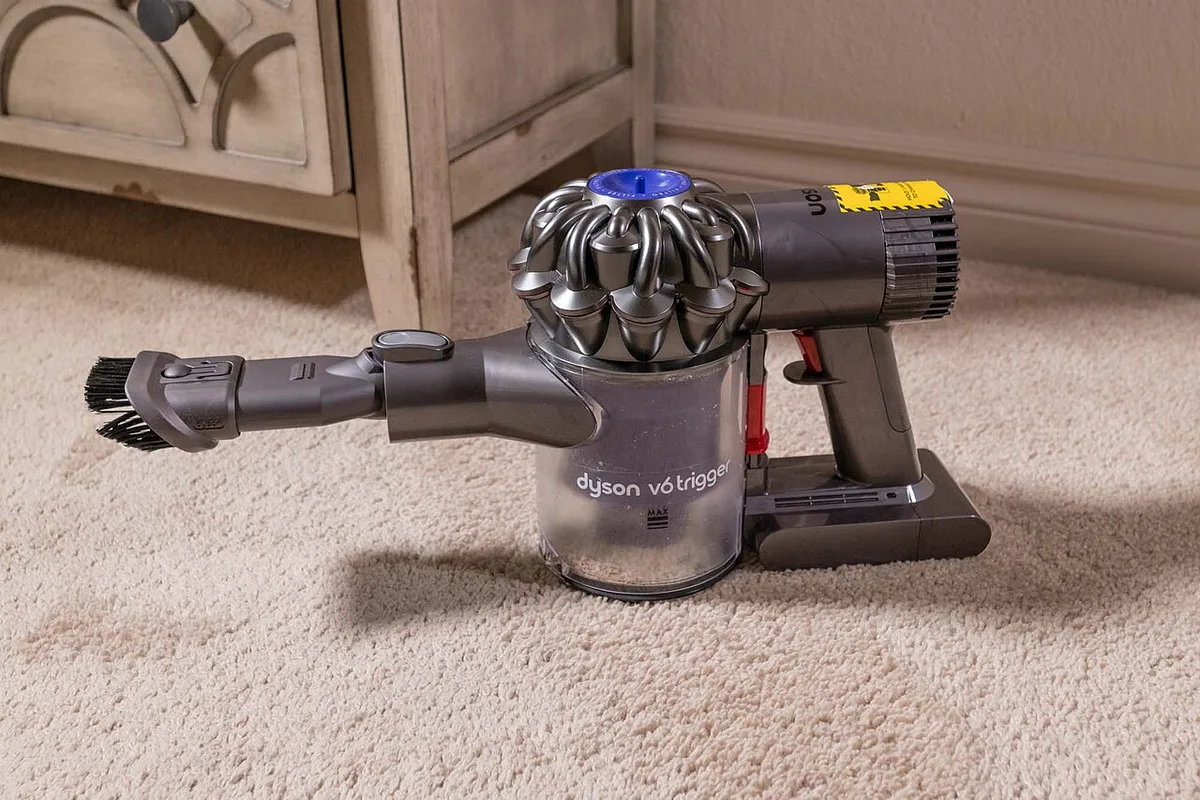
Image source: Wikimedia Commons / Your Best Digs (CC BY)
The biggest power decision is simple: do you cut the cord or keep it? Cordless models make up the bulk of the market for good reason. They're the ones you can grab from a wall mount, take to the driveway, or store in a kitchen drawer.
No cord means no hunting for an outlet and no tangling around chair legs.
Corded handhelds still exist, and they have a die-hard following. You get endless run time and usually stronger, steadier suction. The downside is the tether.
You'll work within the length of the cord, which is fine for a garage, workshop, or utility closet, but annoying for car interiors and stairs.
| Factor | Cordless handheld | Corded handheld |
|---|---|---|
| Power source | Rechargeable battery | Wall outlet |
| Runtime | 10-30 minutes per charge | Unlimited |
| Suction | Good, can drop as battery drains | Consistent |
| Weight | Lighter, usually 1.5-5 lb | Similar weight, plus cord |
| Best for | Cars, quick pickups, stairs | Garages, workshops, extended use |
| Charge time | 2-4 hours | None |
There's a clever middle path if you already own power tools. Brands like DeWalt, Milwaukee, Ryobi, Bosch, and Makita make handheld vacuums that run on the same rechargeable batteries as their drills and impact drivers. You pay more upfront, but you skip the extra charging dock and get months of battery life from your existing kit.
If you're deep into one platform, that's worth a long look.
Safety is worth a mention here. Lithium-ion batteries can fail, so stick with models that carry recognized safety certification. UL Solutions tests consumer electronics for electrical and fire safety.
You'll see their mark on reputable chargers and appliances, and it's a fair sign the battery pack meets current standards. If a bargain model lacks that certification, treat it with caution.
One more thing about cordless models: battery health fades. After a few hundred charge cycles, you'll notice shorter run times. Some models let you swap in a fresh battery, which effectively doubles the life of the vacuum.
Others have a permanently sealed battery, and once it degrades, the whole unit becomes a paperweight. If you want a long-term tool, look for a replaceable battery.
Attachments & Tools: What Gets You the Best Clean
The nozzle you get in the box decides how useful the vacuum actually is. A bare suction tube alone won't cut it for most real-world messes. Here's what actually matters:
- Crevice nozzle. This is the long, thin, angled tool that reaches between seats, along baseboards, and into deep seams. If you clean a car, it's the single most important attachment.
- Motorized pet tool. A brush roll powered by the vacuum that lifts embedded hair from fabric. It's a game-changer for couches, pet beds, and carpeted stairs.
- Upholstery brush. A wide, flat head with soft bristles. It's ideal for dusting lampshades, vents, and delicate fabric without scratching.
- Extension hose. Some models offer a short flexible hose. It adds reach and lets you keep the heavier body resting on the floor while you work the nozzle overhead.
You usually can't buy these attachments separately, so check what's included before you buy. If pet hair is your main problem and the model doesn't offer a motorized tool, skip it. There's no way to add that later.
Take a Closer Look: What's Inside the Dust Cup
The dust cup seems simple, but its design affects how often you'll empty it and how long the vacuum stays strong. There are two main approaches.
Standard bagless design simply pulls air through a flat filter. Debris collects in the cup, and the filter catches fine dust. That works fine, but the filter clogs faster as the cup fills.
Cyclonic filtration spins incoming air at high speed inside the cup. That centrifugal force flings heavier debris outward while cleaner air reaches the filter. Manufacturers using cyclonic chambers can keep suction steadier for longer between empties.
HEPA filters are worth a look if you have allergies. They trap smaller particles that standard filters let through. That said, it's only useful if the vacuum body is fully sealed, so dirty air never bypasses the filter around the edges.
Most handhelds in the budget range aren't fully sealed even when they claim HEPA.
One more thing to check: how the cup empties. The best models pop open from the bottom or release with a single latch. The worst require you to dig debris out with your fingers.
Scrolling through verified buyer photos before buying can tell you a lot.
The 5-Step Process to Choosing the Right Handheld
Use this simple workflow to narrow your options to just one or two models.
Rank your messes. Write down the three cleaning jobs you'll do most. Cars, pet hair, and kitchen crumbs all demand different tools.
Set your runtime floor. If your main job takes over 10 minutes, plan for a battery rated higher or a swappable pack. Eight-minute runtimes only suit quick counter wipes.
Check the emptying system on paper. Look at dust cup capacity and the release mechanism. Under 0.2 liters means constant trips to the bin.
Match attachments to your surfaces. Confirm the exact tools in the box, not the ones in the marketing photos. Pet hair needs that motorized brush.
Weigh the balance. Hold positions matter. A 4-pound handheld feels great at your side but terrible overhead. Check the weight distribution before committing.
If one model falls short on any of these, cross it off. There are enough good options that you shouldn't compromise on more than one point.
Smart Spending: How Much Should You Pay?
Handheld vacuums range from about $30 to $300, and the price says a lot about build quality and real suction.
| Price Tier | Typical Price | What You Get | Best For |
|---|---|---|---|
| Basic | Under $50 | 12V motor, small dust cup, basic tools | Light crumbs and occasional use |
| Mid-range | $50–$100 | 18-20V battery, cyclonic separation, better tools | Regular kitchen, car, and stair duty |
| Premium | $100–$300+ | HEPA filtration, motorized pet tool, replaceable battery | Pet owners and daily heavy use |
Our research shows the $50 to $100 range is the sweet spot for most homes. It delivers good suction, an 18V or 20V battery, and a bagless cyclonic cup that empties cleanly.
Below $50, you'll notice weak suction on fabric and plastic brushes that feel flimsy. Premium models above $100 earn their price when you need pet hair lift and durable internals, not for routine crumb duty.
Common Mistakes to Avoid When Buying a Handheld Vacuum
These are the errors that come up constantly in verified buyer feedback and return-rate reports.
Buying for a big mess with a tiny cup. A 0.1-liter dust cup fills up before you finish a single car floor. Match the cup size to the job you'll actually do.
Ignoring the pet hair tool. Plain suction flattens hair onto fabric instead of lifting it. If you have pets, the motorized brush is not optional.
Choosing cordless when you need endurance. A corded model beats every cordless for garage sawdust or a full vehicle interior. Endless run time trumps convenience.
Forgetting the filter's upkeep. A clogged filter destroys suction fast. You won't know it until the vacuum sounds strained and picks up nothing. Check the manual for cleaning intervals before you buy.
Skipping safety certification. Unknown brands with bargain lithium-ion batteries aren't worth the risk. Sticking with UL-certified models keeps the charging process far safer.
Maintenance & Long-Term Care
A handheld vacuum lasts years if you treat the moving parts right. Most wear and tear comes from neglect, not regular use. Here's the simple routine.
Empty the dust cup after every use. Leaving debris sitting lets odors bake into the plastic and clogs the filter faster. For pet hair, empty it right away.
Clean the filter on schedule. Most washable filters need a rinse every month or so. Tap off loose dust first, then wash with cool water and air dry completely before reinstalling.
Here's what happens if you let a filter go too long, per manufacturer care guides: suction fades, the motor strains, and you lose power mid-clean. If your vacuum picks up less than before, the filter is always the first suspect.
Detangle the brush roll monthly if you use the pet tool. Hair wraps around the axle and slows the bristles. Most designs let you pop the roll out, scrape it clean, and snap it back.
For battery health, avoid leaving a swollen or fully drained pack on the charger for days. Store the vacuum in a cool, dry spot. Heat is the worst enemy of lithium-ion cells.
Frequently Asked Questions
Are handheld vacuums good for whole-home cleaning?
No. A handheld vacuum is built for spot cleaning, not entire rooms. The dust cup is small and the suction is limited.
Use a full-size vacuum for flooring and save the handheld for the quick stuff.
Can I vacuum up spilled liquids?
Only if the label clearly says wet/dry. Standard handhelds are dry-only. Liquids can short out the motor and create mold inside the dust cup.
Check the manual before trying anything damp.
How long should a handheld vacuum last?
With proper care, expect three to five years. The battery is the weak link, usually degrading after 300 to 500 charge cycles. Models with replaceable batteries outlast the rest.
Do I need a wet/dry model for the garage?
If you regularly clean sawdust, nails, or water spills, yes. A wet/dry handheld handles workshop debris that would destroy a standard unit. For basic garage dust, a corded regular handheld works fine.
How often should I replace the filter?
Washable filters last the life of the vacuum if you clean them monthly. Non-washable filters need replacement every three to six months. Manufacturer instructions list exact intervals for each model.
The Final Verdict: Picking What Works for Your Home
You now know the specs, the trade-offs, and the hidden gotchas. The final step is just matching the tool to the mess.
| Your Mess | Best Choice |
|---|---|
| Car cleanups | Cordless with crevice nozzle and big dust cup |
| Pet hair | Cordless with motorized pet tool |
| Kitchen crumbs | Lightweight basic cordless, any price |
| Garage and workshop | Corded wet/dry model |
| Tool platform loyalty | Vacuum using your existing drill batteries |
If you still feel stuck, anchor on this thought. The best handheld vacuum is the one you'll actually grab. A $40 model next to the coffee maker beats a $200 model mounted in a closet across the house.
Set a budget, confirm the attachment you need is in the box, and pick the lightest option that meets your runtime floor. That formula lands you on a reliable tool every single time.

