

The safest way to carry an upright vacuum upstairs is to lift it by the main body, keep it close, and take one step at a time.
Today's Exclusive Deals
Limited-time Exclusive Deals. Check current discount on Amazon.
Check Price on Amazon As an Amazon Associate I earn from qualifying purchases.If you’ve ever tried to drag a bulky upright vacuum up a staircase, you already know it can feel awkward fast. The good news is that learning how to carry an upright vacuum upstairs is simple once you use the right grip, body position, and pace. I’ve done this many times in real homes, and the difference between a smooth trip and a near slip usually comes down to preparation, balance, and not fighting the machine.
Why carrying an upright vacuum upstairs takes care and technique
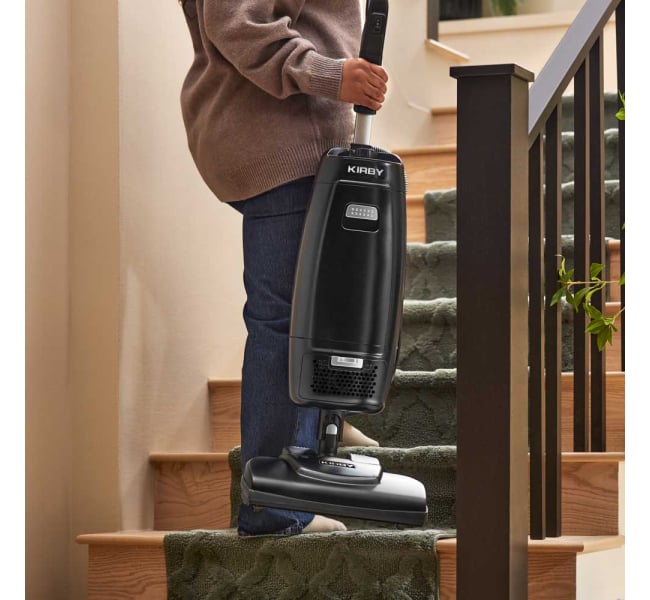
An upright vacuum is not shaped like a stair-friendly object. It is tall, front-heavy, and often clunky near the handle or dust bin. That makes carrying it upstairs more about control than strength.
Today's Exclusive Deals
Limited-time Exclusive Deals. Check current discount on Amazon.
Check Price on Amazon As an Amazon Associate I earn from qualifying purchases.A bad grip can strain your back, twist your wrist, or throw off your balance. On stairs, that matters even more because one small mistake can become a fall. Knowing how to carry an upright vacuum upstairs is really about keeping yourself stable while protecting the vacuum from damage too.
I have seen people try to “swing” the vacuum by the hose or lift it with one hand far from the body. That almost always makes the load feel heavier. When you keep the vacuum close and move deliberately, it feels more like carrying a box than wrestling a piece of furniture.
Before you lift the vacuum
Before you head up, take 20 seconds to prep. That tiny pause can save you a lot of trouble.
Here’s what helps most:
Today's Exclusive Deals
Limited-time Exclusive Deals. Check current discount on Amazon.
Check Price on Amazon As an Amazon Associate I earn from qualifying purchases.• Unplug the vacuum completely so the cord does not snag on the stairs.
• Empty the dust cup or bag if it is full, since a lighter vacuum is easier to carry.
• Remove loose attachments if they can fall off during the climb.
• Check the handle, latch, and canister area so nothing shifts mid-step.
• Make sure the staircase is clear of shoes, toys, or anything that could catch your foot.
If your vacuum has a detachable hose or wand, secure it so it does not swing. The less movement the machine has, the easier it is to keep your balance. That is one of the simplest ways to carry an upright vacuum upstairs without making the task feel harder than it should.
The best way to carry an upright vacuum upstairs
The most reliable method is to hold the vacuum by the main body with both hands when possible. Keep it upright if the design allows it, and press it close to your torso. That keeps the center of gravity near you, which makes the vacuum feel lighter and easier to control.
Follow these steps:
- Stand at the bottom of the stairs with both feet planted firmly.
- Bend at your knees, not your waist, and grip the vacuum body or base.
- Keep one hand on the main body and the other on the handle if that gives you better control.
- Lift the vacuum close to your chest or hip area, not far away from your body.
- Take one step at a time and pause if you feel your grip slipping.
- Turn your whole body carefully at landings instead of twisting your back.
If the upright vacuum is especially heavy, use the handrail with your free hand whenever possible. That extra point of contact helps a lot on narrow or steep stairs. In my experience, the safest carry is never the fastest one.
One hand or two hands?
For most people, two hands are better when carrying an upright vacuum upstairs. Two hands give you more control, less wobble, and better balance on each step.
A one-hand carry can work only if the vacuum is very light and you have full confidence in the stair width and footing. Even then, it is usually better to keep the load centered and avoid reaching too far out from your body. When I’ve seen people get into trouble, it’s usually because they wanted to move too quickly with one hand and ended up fighting the vacuum’s shape.
If you must use one hand, keep the other hand on the railing. That way, you still have support if the vacuum shifts unexpectedly.
How to carry an upright vacuum upstairs with less strain
If your back or shoulders tend to get sore, small changes can make a big difference. This is where good lifting habits matter as much as the vacuum itself.
Try these practical tips:
• Tighten your core before lifting so your torso stays steady.
• Keep your elbows close to your sides instead of flaring outward.
• Avoid turning your upper body while stepping. Turn your feet instead.
• Rest the vacuum on a landing if you need a short break.
• Wear shoes with good traction so your feet stay secure on each step.
I also recommend checking the vacuum weight before you buy one, especially if you know you will carry it often. Consumer product testing groups and ergonomic guidance consistently show that lower weight and better balance reduce strain during repeated lifting. That does not mean a lighter vacuum is always better, but it does make stair handling easier for many homes.
Common mistakes to avoid
The biggest mistake is trying to rush. Staircases do not reward speed when you are carrying a bulky appliance.
Watch out for these errors:
• Carrying the vacuum by the hose or cord
• Leaving the cord loosely wrapped so it dangles
• Twisting your back while stepping
• Holding the vacuum far away from your body
• Wearing socks or slippery slippers on hard stairs
• Trying to carry something else at the same time
Another mistake is assuming all uprights behave the same. Some are compact and well balanced, while others are top-heavy and awkward. If the vacuum feels unstable even before you start, take an extra moment to regrip or break the task into smaller moves.
What to do if the vacuum is too heavy
If the upright vacuum feels too heavy to carry safely, do not force it. It is better to pause than to risk a fall.
You have a few options:
• Remove detachable parts to reduce weight.
• Carry the base and handle separately if the design allows it.
• Use a stair landing as a rest point.
• Ask for help if the vacuum is bulky or your stairs are steep.
• Consider a lighter model for future use if this is a regular problem.
I’ve worked with people who insisted they should be able to do it alone because it “is just a vacuum.” But stairs change the game. A load that feels manageable on flat ground can feel twice as awkward on steps.
Upright vacuum vs canister or cordless models on stairs
If stair cleaning is a regular chore, the type of vacuum matters. Upright vacuums are great on large floor areas, but they are not always the easiest option for stairs.
Here is the simple tradeoff:
• Upright vacuums are often powerful and good for carpets, but harder to carry upstairs.
• Canister vacuums usually separate the motor from the wand, which can make stairs easier.
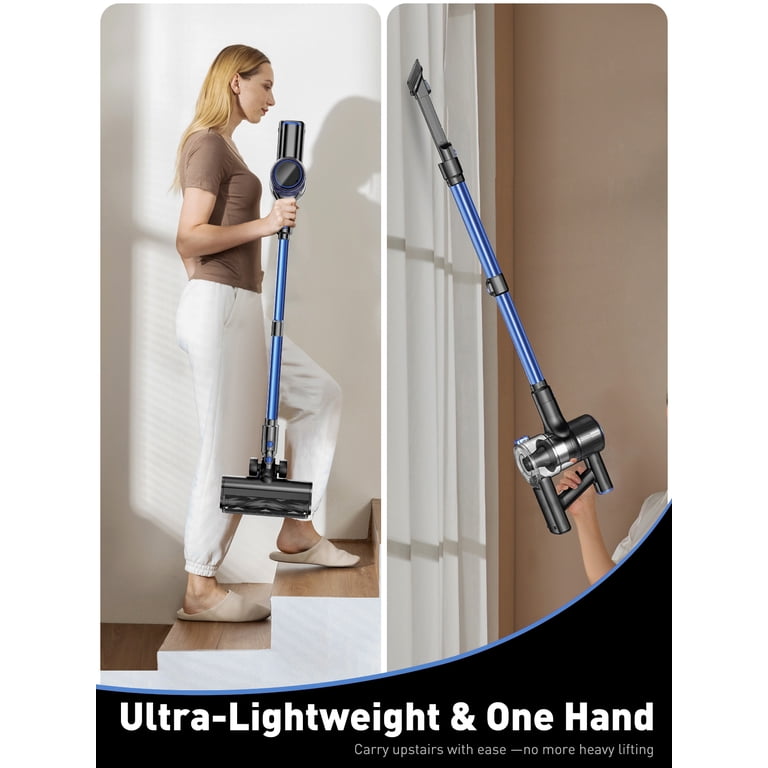
• Cordless stick vacuums are often the lightest and most stair-friendly, though they may have shorter run times.
That said, if you already own an upright vacuum, you do not need to replace it just to clean upstairs. Learning how to carry an upright vacuum upstairs safely can make the tool work well enough for your needs.
Real-life stair carrying tips from experience
One lesson I learned early is that most of the stress comes from poor planning, not the vacuum itself. If the cord is wrapped badly or an attachment is loose, the whole carry becomes annoying before you even reach the first step.
A simple habit that helps is to set the vacuum where you can grab it cleanly before starting. I also like to face the stairs directly instead of turning sideways too soon. That keeps my hips aligned and reduces the chance of slipping on the first few steps.
Another helpful trick is to stop at the landing and reset your grip if the staircase has one. Think of it like climbing a hill with a backpack: short pauses beat one awkward push. That mindset makes how to carry an upright vacuum upstairs feel much more manageable.
When to ask for help
Sometimes the smartest move is simply to get another person involved. That is especially true if the vacuum is very heavy, the stairs are narrow, or you have any history of back, shoulder, or knee pain.
Ask for help if:
• The vacuum is larger than you can control safely
• You are carrying other items at the same time
• The stairs are steep, slippery, or poorly lit
• You feel unsteady, weak, or sore that day
• You are moving the vacuum up several floors
There is no prize for doing it alone. The safest method is the one that gets the vacuum upstairs without injury or damage.
Frequently Asked Questions
How do you carry an upright vacuum upstairs without dropping it?
Hold the vacuum close to your body and use both hands if you can. Move slowly, keep your feet planted on each step, and use the railing for extra support.
Is it better to carry an upright vacuum by the handle or the base?
Usually, the main body or base is safer than the handle alone, especially if the vacuum is front-heavy. The handle can shift or flex, while the body gives you more control.
Can one person carry an upright vacuum upstairs safely?
Yes, if the vacuum is not too heavy and the staircase is clear. Keep the load close, avoid twisting, and stop if the vacuum feels unstable.
Should I remove the hose or attachments before carrying it upstairs?
Yes, if possible. Removing loose parts reduces snag risk and keeps the vacuum more balanced during the climb.
What if my staircase is very narrow?
Use extra caution and move slowly with one hand on the vacuum and one hand on the railing if needed. If the fit feels too tight, ask for help rather than forcing the carry.
Conclusion
Knowing how to carry an upright vacuum upstairs safely comes down to simple habits: prep the vacuum, keep it close, use steady steps, and never rush the climb. A little planning can protect your back, your balance, and the vacuum itself.
If stairs are part of your weekly cleaning routine, these techniques can make the job feel much easier and less tiring. Try them the next time you vacuum upstairs, and see how much smoother it feels. If you found this helpful, explore more cleaning tips or leave a comment with your own stair-carrying trick.

